Skip to content

Complete Guide to Fly Fishing the Arkansas River in Colorado

Most Colorado rivers give you a hatch and then take it away. You show up hoping for caddis, get twenty minutes of confused rising fish, and spend the rest of the day nymphing. The Arkansas River works differently. Learning how to fly fish the Arkansas River in Colorado means learning to work with hatches that actually hold together for weeks at a time, which is unusual in this state and a big part of why the river has the reputation it does.

A sound plan for how to fly fish Arkansas River Colorado connects the part of the river you fish with the presentation and food available that day.

That consistency changes how you plan. On a lot of water, you carry a little of everything and hope. Here, you can look at a calendar, pick a window, and show up with a fly box built around what you know will be happening. Spring caddis on the lower river. Blue-winged olives that stack up on cloudy days. Stoneflies that give you legitimate big-dry-fly fishing on a Colorado freestone. In the winter, when everything upstream is locked in ice and slush, the tailwater below Pueblo Reservoir is still handing out small-dry-fly opportunities.

The other thing the Arkansas gives you is length. This is Colorado’s newest and longest stretch of Gold Medal Water, which puts it in the top ten percent of the state’s fishable rivers for the size and quantity of trout. But that length is also the planning problem. The river runs from small braided headwaters near Leadville, through a big freestone middle, into a canyon, and then out to a heavily stocked tailwater in Pueblo. Those pieces do not fish alike. They do not peak at the same time. The Upper Section around Hayden Meadows is loaded with willing fish that are not very big. The middle and lower reaches hold plenty of trout in the 12 to 18 inch class and get the famous hatches. The tailwater is a winter fishery with small stocked rainbows and the occasional surprise.

So the real question is not what fly to use. It is which piece of this river fits the week you can actually get away, and then what to do once you are standing in it. That is what this guide is built to answer. We are going to walk the river from the headwaters down, sort out what each section does well, build a fly box off the river’s food, and then get into presentation and gear. Location first, then flies, then how you fish them. That order matters, and I will explain why in a minute.

What is the quick plan for fly fishing the Arkansas River?

If you only have a few minutes, here is the short version.

Where to go. Pick your section by season and by what you want out of the day. The Upper Section through Hayden Meadows is small, braided, easy to wade, and holds a lot of eager rainbows and browns that run smaller. It is the most consistent producer after runoff drops out. The Middle Section from Buena Vista down to Salida is big freestone water with more fishable river than you can cover in a month, healthy insect life, and trout mostly in the 12 to 18 inch range. The Lower Section from Salida down to Pueblo Reservoir is the easiest access on the river, good for beginners, and where the big spring and summer hatches start in the canyon before working upstream. The Tailwater Section below Pueblo Reservoir is a winter fishery with warmer water than most of the state, heavy rainbow stocking, and real dry-fly opportunity in January.

How to fish it. Nymphing, dry-fly fishing, and streamers all produce on this river, so you have room to mix it up. Indicator nymphing covers water and gets you through runoff and off-hatch hours. Dry-dropper is the best all-around approach on the Upper Section and in pocket water everywhere. Straight dry-fly fishing earns its keep during the caddis, blue-winged olive, and stonefly windows on the middle and lower river. Euro or tight-line nymphing is effective in the pocket water and short seams of the headwaters and canyon. Streamers work when water is high, off-color, or cold and you want to move a bigger brown.

What to carry. A short list of the essentials, with practical sizes:

  • CDC Elk Hair Caddis, tan, olive, brown, or black, #10 through #20
  • CDC Caddis Emerger, tan, olive, or brown, #12 through #20
  • Beadhead Caddis Pupa, olive, tan, green, or amber, #12 through #20
  • Electric Caddis Pupa, olive, #14 through #18
  • Beadhead Pheasant Tail Nymph, natural brown, olive, or flashback, #14 through #22
  • Pats Rubberleg Stonefly, black, brown, coffee, tan, or olive, #4 through #12
  • CDC BWO Tailwater Dun, olive to dark olive, #16 through #24
  • CDC PMD Tailwater Dun, pale yellow, cream, or light olive, #14 through #20
  • Chubby Chernobyl, golden, tan, orange, black, or purple, #4 through #12
  • Adult Salmonfly, tan and orange, #8 through #12
  • UV Sparkle Midge Emerger, red, #18 through #22
  • Beadhead San Juan Worm, brown, #10 through #14
  • Double Bunny, black and olive, #2 through #6

DIY trip snapshot. Check current flows and water temperature before you commit to a section. Verify public access and property boundaries for the specific stretch you plan to walk. Plan on a 9-foot 5-weight, a nymph rig and a dry rig if you can carry two rods, and a willingness to move until you find the water type that is producing.

Guided trip snapshot. A guide earns their money here on two things: knowing which of many access points is fishing right now, and reading a hatch that is changing hour to hour. If you are new to the river or coming during the big spring hatches when the crowds show up, a day with someone local shortens the learning curve considerably.

Gear snapshot. Nine-foot 5-weight for most of the river, 4-weight if you are only fishing the Upper Section or the tailwater, 6-weight if you want to throw big stonefly dries or streamers into wind. Leaders from 9 to 12 feet, tippet from 3X down to 6X depending on section and fly size, split shot or tungsten beads for depth, and an indicator you can move quickly.

How to Use the Three Pillars Method

Everything in this guide runs on three decisions, made in the same order every time: Location, Fly Selection, Presentation.

Location comes first because it is the decision with the most leverage. You cannot out-fly-select a stretch of river with no fish in it. On a river as long as the Arkansas, location works at two scales. The big scale is which section you drive to, and that is mostly a seasonal question. The small scale is where you stand and where you cast once you are there, and that is a water-reading question. Both matter, and the second one is where most anglers lose fish they never knew were there.

Fly Selection comes second because once you have found fish, the fly narrows the guess. And it is a guess. Anyone who tells you they know exactly what a trout will eat on a given afternoon is overselling it. What you can do is stack the odds. You learn what lives in this river, you learn roughly when it is active, you carry a range of sizes and colors in the forms that matter, and you show the fish something plausible. On the Arkansas that gets easier than on most Colorado water, because the insect life here is genuinely rich and the hatches are long enough to be predictable.

Presentation comes third, but third does not mean least. It means it is the pillar you adjust most often during the day. You picked your section this morning. You picked a fly ten minutes ago. But you are adjusting depth, drift, angle, and speed on every single cast. When something is not working and you are sure you are in the right water with a reasonable fly, presentation is almost always the thing to change.

Here is why the order matters practically. When you are not catching fish, work back up the list instead of down. Most anglers start by changing flies, because that is the easiest thing to change. But if you are standing in the wrong water, no fly helps. And if your drift is dragging, no fly helps either. So ask in this order: Am I in water that holds fish right now? Is my presentation getting the fly to them at the right depth and speed? And only then: is my fly wrong?

That sequence also organizes this guide. The sections that follow work through the river’s reaches, then the food and the fly box, then presentation and gear. By the time you get to the end, you should be able to run the same three decisions yourself on a stretch of water nobody described to you.

Trout University

The Best Way to Master Fly Fishing for Trout

Everything you need to learn how to fly fish for trout.
From fly selection to presentation and location, all in one place.


8 Premium Courses

~1,600 Pages & 30+ hrs of Video covering the most important topics
 
trout-university-courses

15 Video Classes

1-2hr Power Classes on Key Subjects and solidify your learnings

video-classes-trout-university

6 Streamside Courses

10+ Hours of Fishing to See Our Methods in Action

streamside-courses-trout-university

Arkansas River at a Glance

The Arkansas in Colorado is a long river with four distinct personalities, and knowing which one you are dealing with is most of the planning work.

It starts high, near Leadville, as a small freestone stream. Down through Hayden Meadows it braids and winds through open country with the Collegiate Peaks standing up behind it. This is the Upper Section, and it is small water with a short practical season. Below that it collects tributaries and picks up size through Buena Vista, and by the time it reaches the Middle Section it is a large freestone river. From Salida down it runs into canyon water and continues as the Lower Section all the way to Pueblo Reservoir. Below the dam, in Pueblo, it becomes a tailwater with an entirely different character and season.

Brown trout and rainbows make up nearly all of what you will catch through the freestone reaches. Sizes are honest rather than spectacular. Some fish are small, but the majority in the middle and lower river fall in that 12 to 18 inch band that makes for a genuinely good day. The tailwater runs smaller on average, with a lot of stocked rainbows in the 8 to 14 inch range, plus cutbows and browns and periodic shots at something bigger. Nobody should come to the Arkansas expecting a trophy river. Come expecting a lot of fish of good size, with the occasional better one.

What makes this fishery unusual in Colorado is the insect life. The middle river is one of the healthiest in the state for bugs, and there is almost always something going on from spring through fall. That richness shows up as hatches that hold together. Most Colorado rivers give you intermittent bursts of all kinds. The Arkansas gives you big blue-winged olive, caddis, and stonefly emergences that can keep you and the trout busy for weeks in a row. That is the practical reason people plan trips around this river instead of just stopping by.

Access is the other big draw. The lower river in particular is easy to reach and easy to fish, which makes it a good place for someone new to fly fishing to get real traction. There is usually water you can get to without a crowd, with two predictable exceptions: holidays, and the Mother’s Day caddis hatch, which draws a lot of attention for good reason. The Gold Medal designation covers a long stretch here, and it is worth understanding what that means. It is a state assessment that puts this water in the top ten percent for size and quantity of trout. It is not a promise about any particular day.

One thing to keep in mind throughout: this is a working river valley with a mix of public and private ground, active commercial rafting, and flows that move a lot between snowmelt and irrigation season. Access points, regulations, and conditions change. Verify what you need before you go, and treat everything in this guide as a planning framework rather than a current report.

Arkansas River Seasonal Overview

The Arkansas changes more through the year than most rivers, partly because it spans so much elevation and partly because the tailwater runs on a completely different clock than the freestone above it.

Winter belongs to the tailwater. From roughly December into March, the freestone reaches are cold, low, and slow, and while you can find fish, it is hard work for modest reward. Meanwhile the tailwater below Pueblo Reservoir settles into a consistent flow, the fish settle into a rhythm, and you get something genuinely rare: reliable winter dry-fly fishing. Strong midge and blue-winged olive hatches run through the winter months, and because Pueblo sits low and south, the water sees warmer days than most Colorado rivers in January. Fish small. Sizes down to #18 and smaller, focused on midges and blue-winged olives. On the freestone water in winter, if you go, fish deep and slow through the middle of the day with small nymphs, worms, and midge patterns, and expect fish to be concentrated in a fraction of the water.

Spring is when the river gets famous. Blue-winged olives come first, usually starting on the lower river and canyon water and gradually pushing upstream. These are your cloudy-day, mid-day hatches, and they can be excellent. Then the caddis show up, and the caddis on the Arkansas are the real event. The hatch begins down in the canyon area and works its way up toward Buena Vista, where it usually fades out. Following that progression upstream over several weeks is one of the most reliable ways to get consistent dry-fly fishing anywhere in Colorado. The stoneflies overlap into this period too. Spring is also when runoff arrives, and the timing varies year to year with snowpack and temperature. When the freestone goes high and off-color, the tailwater and the very upper reaches stay fishable, and streamers and heavy nymph rigs along the edges become the play.

Summer starts with the tail end of runoff and then settles into good conditions through the middle and lower river. Pale morning duns, yellow sallies, golden stoneflies, and continuing caddis give you variety, and by mid-summer the terrestrials matter. Ants, beetles, and grasshoppers are all part of the food base here, and hopper-dropper fishing along grassy banks becomes a legitimate approach. The Upper Section really comes into its own after runoff drops, and through summer it is often the most consistent producer on the whole river. High-country afternoons bring thunderstorms, so plan to fish mornings and early afternoons and watch the sky. Water temperature is worth monitoring in the lower river during hot stretches, both for the fishing and for the fish.

Fall brings cooler water, less traffic, and blue-winged olives again. The fall BWO window on the middle and lower river can be very good, especially on gray, damp days when the hatch runs longer. Brown trout get aggressive as they move toward spawning, and streamer fishing picks up. Terrestrials hang on into early fall, especially on warm afternoons. This is my favorite time on the middle river: fewer people, comfortable weather, and fish that are willing to eat.

The practical takeaway is that this river offers something almost every month, but not everywhere at once. Match your section to your calendar rather than trying to force a section into a season it does not fit.

Fishable Sections of the Arkansas River

We are going to work from the top down. Each of these reaches asks something different from you.

Arkansas River – Headwaters: Leadville to Lake Fork

The uppermost water, from Leadville down to Lake Fork, is a small freestone stream with a short practical season. Realistically you are looking at summer and fall here. It sits high, it comes into shape late, and it goes cold early.

This is intimate water. Think small stream tactics, short casts, and careful approach. The trout are rainbows and browns, and they are not big, but they are willing. The food base includes midges, blue-winged olives, caddis, and golden stoneflies, plus a solid terrestrial component of ants, beetles, and grasshoppers, and leeches in the slower pockets.

Classic nymphing and tight-line nymphing both fit this water well, because you are usually fishing short, defined pockets and seams where a controlled drift matters more than distance. Difficulty is easy and access is easy, which makes this a nice place to learn without pressure. If you are camping in the Leadville area or working through the surrounding creeks, this is worth a day.

Before you plan around this reach, check current discharge, water temperature, and clarity. Small high-elevation water swings quickly with weather.

Arkansas River – Upper Section

Below the very top, through Hayden Meadows, the river becomes braided and windy. This is small freestone water with easy access and easy wading, and it fishes spring through fall.

Here is what makes this section valuable: after runoff drops out, it usually produces more consistently than any other reach on the river. The fish seem less educated and easier to fool. They are not as big as what you will find in the middle and lower river, but they eat well and there are a lot of them.

Dry-dropper is the approach that fits best here. A visible dry with a small nymph below it covers both feeding levels and works through the braided channels and cut banks without requiring precise depth control. If you cannot find fish willing to look up, a two-nymph rig under an indicator will get them.

One habit worth breaking on this water: do not wait for a hatch to fish a dry fly. A lot of anglers only tie on a dry when they see naturals coming off, and they miss most of the season standing around waiting. The trout in this section are opportunistic. A well-presented attractor dry will get eaten on plenty of days when nothing is hatching at all. Try it before you decide the fish are not looking up.

The setting helps too. The Collegiate Peaks stand up behind the meadows, there is ample camping nearby, and feeder creeks like Tennessee Creek, Cottonwood Creek, and Clear Creek give you options if the main river is not cooperating. It makes for a good day trip or weekend, and honestly the scenery carries a slow day here better than most places.

Arkansas River – Middle Section

From Buena Vista downstream to Salida, the Arkansas becomes a large freestone river, and this is where the fishery gets serious. Difficulty is medium, access is easy, and the season runs spring through fall.

There is more fishable water in this section than you could cover in a month. That is not a figure of speech. If you come here for a few days and try to see all of it, you will spend more time driving than fishing. Pick two or three access areas and learn them.

This is one of the healthiest rivers in Colorado for insect life, and it shows. From spring through fall there is nearly always a variety of hatches going on, and you can find good fishing anywhere you get access. Browns and rainbows dominate, and while some are small, most run in that 12 to 18 inch range. There are a lot of fish here, and this reach is part of the Gold Medal stretch that puts the river in the top ten percent of Colorado water for size and quantity.

All three main approaches work. Nymphing, dry-fly fishing, and streamers all produce, which means you can fish this section with friends who like different things and everybody catches fish. If you are used to rivers where you have to nymph or go home, that flexibility is a nice change.

The one thing that trips up newer anglers here is the same thing that makes the section great: there are so many insects that identifying what the fish are actually eating takes some work. Know your bugs. If you cannot tell which insect is on the water and match a fly to the feeding pattern, all that richness turns into frustration. Spend a minute looking before you spend an hour casting. Turn over a rock, watch what is drifting in the film, and pay attention to how fish are rising. A gentle sipping rise and a slashing rise tell you different things.

Water type here is classic big freestone: long runs, defined riffles, pocket water around boulders, deeper slots against banks and ledges, and pools at bends. Learn to identify the seam where fast water meets slow, because that is where most of the feeding fish sit.

Arkansas River – Lower Section

From Salida downstream to Pueblo Reservoir, you get the longest and in many ways most accessible piece of the river. Large freestone water, medium difficulty, easy access, and it fishes all four seasons.

This is the reach I would send a beginner to. It is easily accessible water, it is often easy to find success here, and there is nearly always water you can get to without fighting a crowd. The exceptions are holidays and the Mother’s Day caddis hatch, when the river gets a lot of company.

The famous hatches begin in the canyon portion of this section and then work their way upstream toward Buena Vista, where they typically die out. Huge blue-winged olive, caddis, and stonefly hatches come off every spring into summer, and this can be some of the most consistent dry-fly fishing available in Colorado. That word consistent is doing real work in that sentence. Most of this state gives you intermittent hatches of all kinds, which means a lot of guessing. The Arkansas provides excellent, sustained hatches that keep both you and the trout busy for weeks at a stretch. If you have ever wanted to actually learn dry-fly fishing rather than just occasionally get lucky at it, this is a good place to do it.

Browns and rainbows again, with most fish in the 12 to 18 inch class and a lot of them. This is Colorado’s newest and longest Gold Medal Water.

The canyon water in particular has character worth understanding. It is bigger, pushier water with strong seams, deep slots, and heavy pocket water. Fish hold tight to structure and along the edges of the main current tongue. It rewards good drift control and punishes sloppy line management. The water upstream of the canyon, closer to Salida, tends to be somewhat more open and forgiving.

Commercial rafting is a real presence on parts of this reach during the summer season, particularly through the canyon. That is not a reason to avoid it, but it does mean the fishing is often better early and late in the day during peak rafting months.

Arkansas River – Tailwater Section

Below Pueblo Reservoir, the river becomes something else entirely. This is a medium-sized tailwater, medium difficulty, easy access, and its best season is winter.

The tailwater has grown a lot in popularity over the last decade, and for good reason. It is heavily stocked with rainbows each year, so you get the chance to catch a lot of fish in the 8 to 14 inch range, with opportunities throughout the river to find something bigger. Rainbows, cutbows, and browns are all in play.

It fishes well as a nymph fishery, but the real draw is the chance to fish dry flies in the middle of winter. Strong midge and blue-winged olive hatches occur through the winter months, and because Pueblo sits low and warm relative to the rest of the state, the river sees warmer water days than most Colorado water in December and January. That combination makes this both a place to escape the cold and a place to find genuinely good fishing when your other options are frozen.

Some practical notes on fishing it. You can fish this water year round except during runoff, but winter is when it is best. Flows drop to a consistent level and the fish settle into a stride, and that consistency is what makes them findable. When you fish dries here, keep the sizes honest. Leave the hoppers and big foam at home. Size #18 is about as large as you need, and you are mostly working blue-winged olive and midge patterns. Small flies mean light tippet and careful presentation, and the fish here see enough anglers that a sloppy drift gets ignored.

Because this water sits inside a metro area, it also gets a lot of use. Plan around that, fish the less obvious water, and be prepared for company on nice weekend days.

Across all of these sections, verify current public access, property boundaries, regulations, closures, and conditions before your trip. I will say that once here rather than repeating it under every reach, but it applies everywhere on this river.

River Explorer Pro

Find a River | Plan Your Trip | Catch More Fish

Already a Member? Login Here

River Explorer Membership
Currently Only for Colorado

  • Explore and Research 275+ Rivers in Colorado
  • View Over 5000+ Access Points to Fish
  • Save Your Findings & Plan Your Trip
  • Get Real-Time Weather & Streamflow Data
  • Get Interactive Access Maps
  • Private/Public Property Maps (via partner app)
  • Offline Smartphone App and GPS (via partner app)

Only $4/Month
Paid Annually

Fly Selection for Arkansas River

Arkansas River Hatch and Trout Food Calendar

Arkansas River, Colorado · Seasonal hatches and trout food activity

Aquatic Hatches and Terrestrial Activity

Adult aquatic insects and seasonal terrestrial foods, shown in the windows when anglers are most likely to encounter them.

Hatch or foodJanJFebFMarMAprAMayMJunJJulJAugASepSOctONovNDecD
MayfliesJanFebMarAprMayJunJulAugSepOctNovDec
Blue-Winged Olive (Baetis)Seasonal hatch activityNo supported activity windowNo supported activity windowHatch / Emergence / Spinner FallHatch / Emergence / Spinner FallHatch / Emergence / Spinner FallNo supported activity windowNo supported activity windowNo supported activity windowHatch / Emergence / Spinner FallHatch / Emergence / Spinner FallHatch / Emergence / Spinner FallNo supported activity window
March BrownSeasonal hatch activityNo supported activity windowNo supported activity windowSpinner Fall / Hatch / EmergenceSpinner Fall / Hatch / EmergenceSpinner Fall / Hatch / EmergenceNo supported activity windowNo supported activity windowNo supported activity windowNo supported activity windowNo supported activity windowNo supported activity windowNo supported activity window
Pale Morning Dun (PMD)Seasonal hatch activityNo supported activity windowNo supported activity windowNo supported activity windowHatch / Emergence / Spinner FallHatch / Emergence / Spinner FallHatch / Emergence / Spinner FallHatch / Emergence / Spinner FallHatch / Emergence / Spinner FallHatch / Emergence / Spinner FallHatch / Emergence / Spinner FallNo supported activity windowNo supported activity window
Gray DrakeSeasonal hatch activityNo supported activity windowNo supported activity windowNo supported activity windowNo supported activity windowHatch / Emergence / Spinner FallHatch / Emergence / Spinner FallHatch / Emergence / Spinner FallNo supported activity windowNo supported activity windowNo supported activity windowNo supported activity windowNo supported activity window
Brown DrakeSeasonal hatch activityNo supported activity windowNo supported activity windowNo supported activity windowNo supported activity windowNo supported activity windowSpinner Fall / Hatch / EmergenceSpinner Fall / Hatch / EmergenceNo supported activity windowNo supported activity windowNo supported activity windowNo supported activity windowNo supported activity window
Red QuillSeasonal hatch activityNo supported activity windowNo supported activity windowNo supported activity windowNo supported activity windowNo supported activity windowHatch / Emergence / Spinner FallHatch / Emergence / Spinner FallHatch / Emergence / Spinner FallHatch / Emergence / Spinner FallHatch / Emergence / Spinner FallNo supported activity windowNo supported activity window
TricoSeasonal hatch activityNo supported activity windowNo supported activity windowNo supported activity windowNo supported activity windowNo supported activity windowHatch / Emergence / Spinner FallHatch / Emergence / Spinner FallHatch / Emergence / Spinner FallNo supported activity windowNo supported activity windowNo supported activity windowNo supported activity window
Green DrakeSeasonal hatch activityNo supported activity windowNo supported activity windowNo supported activity windowNo supported activity windowNo supported activity windowNo supported activity windowHatch / Emergence / Spinner FallHatch / Emergence / Spinner FallNo supported activity windowNo supported activity windowNo supported activity windowNo supported activity window
Mahogany DunSeasonal hatch activityNo supported activity windowNo supported activity windowNo supported activity windowNo supported activity windowNo supported activity windowNo supported activity windowNo supported activity windowSpinner Fall / Hatch / EmergenceSpinner Fall / Hatch / EmergenceSpinner Fall / Hatch / EmergenceNo supported activity windowNo supported activity window
CaddisfliesJanFebMarAprMayJunJulAugSepOctNovDec
Mother's Day Caddis (Grannom)Seasonal hatch activityNo supported activity windowNo supported activity windowNo supported activity windowHatch / EmergenceHatch / EmergenceNo supported activity windowNo supported activity windowHatch / EmergenceHatch / EmergenceNo supported activity windowNo supported activity windowNo supported activity window
Green SedgeSeasonal hatch activityNo supported activity windowNo supported activity windowNo supported activity windowNo supported activity windowHatch / EmergenceHatch / EmergenceHatch / EmergenceHatch / EmergenceNo supported activity windowNo supported activity windowNo supported activity windowNo supported activity window
Spotted SedgeSeasonal hatch activityNo supported activity windowNo supported activity windowNo supported activity windowNo supported activity windowHatch / EmergenceHatch / EmergenceHatch / EmergenceHatch / EmergenceHatch / EmergenceNo supported activity windowNo supported activity windowNo supported activity window
Little Black CaddisSeasonal hatch activityNo supported activity windowNo supported activity windowNo supported activity windowNo supported activity windowNo supported activity windowHatch / EmergenceHatch / EmergenceHatch / EmergenceNo supported activity windowNo supported activity windowNo supported activity windowNo supported activity window
October CaddisSeasonal hatch activityNo supported activity windowNo supported activity windowNo supported activity windowNo supported activity windowNo supported activity windowNo supported activity windowNo supported activity windowNo supported activity windowHatch / EmergenceHatch / EmergenceHatch / EmergenceNo supported activity window
StonefliesJanFebMarAprMayJunJulAugSepOctNovDec
Little Black StoneflySeasonal hatch activityNo supported activity windowHatch / EmergenceHatch / EmergenceHatch / EmergenceNo supported activity windowNo supported activity windowNo supported activity windowNo supported activity windowNo supported activity windowNo supported activity windowNo supported activity windowNo supported activity window
Skwala StoneflySeasonal hatch activityNo supported activity windowHatch / EmergenceHatch / EmergenceHatch / EmergenceHatch / EmergenceNo supported activity windowNo supported activity windowNo supported activity windowNo supported activity windowNo supported activity windowNo supported activity windowNo supported activity window
Golden StoneflySeasonal hatch activityNo supported activity windowNo supported activity windowNo supported activity windowNo supported activity windowHatch / EmergenceHatch / EmergenceHatch / EmergenceNo supported activity windowHatch / EmergenceNo supported activity windowNo supported activity windowNo supported activity window
Green StoneflySeasonal hatch activityNo supported activity windowNo supported activity windowNo supported activity windowNo supported activity windowHatch / EmergenceHatch / EmergenceHatch / EmergenceHatch / EmergenceNo supported activity windowNo supported activity windowNo supported activity windowNo supported activity window
SalmonflySeasonal hatch activityNo supported activity windowNo supported activity windowNo supported activity windowNo supported activity windowHatch / EmergenceHatch / EmergenceNo supported activity windowNo supported activity windowNo supported activity windowNo supported activity windowNo supported activity windowNo supported activity window
Yellow SallySeasonal hatch activityNo supported activity windowNo supported activity windowNo supported activity windowNo supported activity windowHatch / EmergenceHatch / EmergenceHatch / EmergenceNo supported activity windowNo supported activity windowNo supported activity windowNo supported activity windowNo supported activity window
MidgesJanFebMarAprMayJunJulAugSepOctNovDec
MidgeSeasonal hatch activityHatch / EmergenceHatch / EmergenceHatch / EmergenceHatch / EmergenceHatch / EmergenceHatch / EmergenceHatch / EmergenceHatch / EmergenceHatch / EmergenceHatch / EmergenceHatch / EmergenceHatch / Emergence
TerrestrialsJanFebMarAprMayJunJulAugSepOctNovDec
AntSeasonal terrestrial activityNo supported activity windowNo supported activity windowNo supported activity windowNo supported activity windowNo supported activity windowTerrestrial ActivityTerrestrial ActivityTerrestrial ActivityTerrestrial ActivityNo supported activity windowNo supported activity windowNo supported activity window
BeetleSeasonal terrestrial activityNo supported activity windowNo supported activity windowNo supported activity windowNo supported activity windowNo supported activity windowTerrestrial ActivityTerrestrial ActivityTerrestrial ActivityTerrestrial ActivityNo supported activity windowNo supported activity windowNo supported activity window
GrasshopperSeasonal terrestrial activityNo supported activity windowNo supported activity windowNo supported activity windowNo supported activity windowNo supported activity windowTerrestrial ActivityTerrestrial ActivityTerrestrial ActivityTerrestrial ActivityNo supported activity windowNo supported activity windowNo supported activity window
KeyHatch or seasonal surface activityNo supported activity window

Subsurface Foods

Foods available below the surface. Lighter months show general presence; darker months show a stronger seasonal activity window.

Food and stageJanJFebFMarMAprAMayMJunJJulJAugASepSOctONovNDecD
MayfliesJanFebMarAprMayJunJulAugSepOctNovDec
Blue-Winged Olive (Baetis)Nymph · Below-surface availabilityPresent below the surfacePresent below the surfacePresent Below Surface / Active Below SurfacePresent Below Surface / Active Below SurfacePresent Below Surface / Active Below SurfacePresent below the surfacePresent below the surfacePresent below the surfacePresent Below Surface / Active Below SurfacePresent Below Surface / Active Below SurfacePresent Below Surface / Active Below SurfacePresent below the surface
March BrownNymph · Below-surface availabilityPresent below the surfacePresent below the surfacePresent Below Surface / Active Below SurfacePresent Below Surface / Active Below SurfacePresent Below Surface / Active Below SurfacePresent below the surfacePresent below the surfacePresent below the surfacePresent below the surfacePresent below the surfacePresent below the surfacePresent below the surface
Gray DrakeNymph · Below-surface availabilityPresent below the surfacePresent below the surfacePresent below the surfacePresent below the surfacePresent Below Surface / Active Below SurfacePresent Below Surface / Active Below SurfacePresent Below Surface / Active Below SurfacePresent below the surfacePresent below the surfacePresent below the surfacePresent below the surfacePresent below the surface
Brown DrakeNymph · Below-surface availabilityPresent below the surfacePresent below the surfacePresent below the surfacePresent below the surfacePresent below the surfacePresent Below Surface / Active Below SurfacePresent Below Surface / Active Below SurfacePresent below the surfacePresent below the surfacePresent below the surfacePresent below the surfacePresent below the surface
Pale Morning Dun (PMD)Nymph · Below-surface availabilityPresent below the surfacePresent below the surfacePresent below the surfacePresent below the surfacePresent below the surfacePresent Below Surface / Active Below SurfacePresent Below Surface / Active Below SurfacePresent Below Surface / Active Below SurfacePresent below the surfacePresent below the surfacePresent below the surfacePresent below the surface
Red QuillNymph · Below-surface availabilityPresent below the surfacePresent below the surfacePresent below the surfacePresent below the surfacePresent below the surfacePresent Below Surface / Active Below SurfacePresent Below Surface / Active Below SurfacePresent Below Surface / Active Below SurfacePresent Below Surface / Active Below SurfacePresent Below Surface / Active Below SurfacePresent below the surfacePresent below the surface
Green DrakeNymph · Below-surface availabilityPresent below the surfacePresent below the surfacePresent below the surfacePresent below the surfacePresent below the surfacePresent below the surfacePresent Below Surface / Active Below SurfacePresent Below Surface / Active Below SurfacePresent below the surfacePresent below the surfacePresent below the surfacePresent below the surface
TricoNymph · Below-surface availabilityPresent below the surfacePresent below the surfacePresent below the surfacePresent below the surfacePresent below the surfacePresent below the surfacePresent Below Surface / Active Below SurfacePresent Below Surface / Active Below SurfacePresent Below Surface / Active Below SurfacePresent below the surfacePresent below the surfacePresent below the surface
Mahogany DunNymph · Below-surface availabilityPresent below the surfacePresent below the surfacePresent below the surfacePresent below the surfacePresent below the surfacePresent below the surfacePresent below the surfacePresent Below Surface / Active Below SurfacePresent Below Surface / Active Below SurfacePresent Below Surface / Active Below SurfacePresent below the surfacePresent below the surface
CaddisfliesJanFebMarAprMayJunJulAugSepOctNovDec
Mother's Day Caddis (Grannom)Nymph · Below-surface availabilityPresent below the surfacePresent below the surfacePresent below the surfacePresent Below Surface / Active Below SurfacePresent Below Surface / Active Below SurfacePresent below the surfacePresent below the surfacePresent Below Surface / Active Below SurfacePresent Below Surface / Active Below SurfacePresent below the surfacePresent below the surfacePresent below the surface
Green SedgeNymph · Below-surface availabilityPresent below the surfacePresent below the surfacePresent below the surfacePresent below the surfacePresent Below Surface / Active Below SurfacePresent Below Surface / Active Below SurfacePresent Below Surface / Active Below SurfacePresent Below Surface / Active Below SurfacePresent below the surfacePresent below the surfacePresent below the surfacePresent below the surface
Spotted SedgeNymph · Below-surface availabilityPresent below the surfacePresent below the surfacePresent below the surfacePresent below the surfacePresent Below Surface / Active Below SurfacePresent Below Surface / Active Below SurfacePresent Below Surface / Active Below SurfacePresent Below Surface / Active Below SurfacePresent Below Surface / Active Below SurfacePresent below the surfacePresent below the surfacePresent below the surface
Little Black CaddisNymph · Below-surface availabilityPresent below the surfacePresent below the surfacePresent below the surfacePresent below the surfacePresent below the surfacePresent Below Surface / Active Below SurfacePresent Below Surface / Active Below SurfacePresent Below Surface / Active Below SurfacePresent below the surfacePresent below the surfacePresent below the surfacePresent below the surface
October CaddisNymph · Below-surface availabilityPresent below the surfacePresent below the surfacePresent below the surfacePresent below the surfacePresent below the surfacePresent below the surfacePresent below the surfacePresent below the surfacePresent Below Surface / Active Below SurfacePresent Below Surface / Active Below SurfacePresent Below Surface / Active Below SurfacePresent below the surface
StonefliesJanFebMarAprMayJunJulAugSepOctNovDec
Little Black StoneflyNymph · Below-surface availabilityPresent below the surfacePresent Below Surface / Active Below SurfacePresent Below Surface / Active Below SurfacePresent Below Surface / Active Below SurfacePresent below the surfacePresent below the surfacePresent below the surfacePresent below the surfacePresent below the surfacePresent below the surfacePresent below the surfacePresent below the surface
Skwala StoneflyNymph · Below-surface availabilityPresent below the surfacePresent Below Surface / Active Below SurfacePresent Below Surface / Active Below SurfacePresent Below Surface / Active Below SurfacePresent Below Surface / Active Below SurfacePresent below the surfacePresent below the surfacePresent below the surfacePresent below the surfacePresent below the surfacePresent below the surfacePresent below the surface
Golden StoneflyNymph · Below-surface availabilityPresent below the surfacePresent below the surfacePresent below the surfacePresent below the surfacePresent Below Surface / Active Below SurfacePresent Below Surface / Active Below SurfacePresent Below Surface / Active Below SurfacePresent below the surfacePresent below the surfacePresent below the surfacePresent below the surfacePresent below the surface
Green StoneflyNymph · Below-surface availabilityPresent below the surfacePresent below the surfacePresent below the surfacePresent below the surfacePresent Below Surface / Active Below SurfacePresent Below Surface / Active Below SurfacePresent Below Surface / Active Below SurfacePresent Below Surface / Active Below SurfacePresent below the surfacePresent below the surfacePresent below the surfacePresent below the surface
SalmonflyNymph · Below-surface availabilityPresent below the surfacePresent below the surfacePresent below the surfacePresent below the surfacePresent Below Surface / Active Below SurfacePresent Below Surface / Active Below SurfacePresent Below Surface / Active Below SurfacePresent below the surfacePresent below the surfacePresent below the surfacePresent below the surfacePresent below the surface
Yellow SallyNymph · Below-surface availabilityPresent below the surfacePresent below the surfacePresent below the surfacePresent below the surfacePresent Below Surface / Active Below SurfacePresent Below Surface / Active Below SurfacePresent Below Surface / Active Below SurfacePresent below the surfacePresent below the surfacePresent below the surfacePresent below the surfacePresent below the surface
MidgesJanFebMarAprMayJunJulAugSepOctNovDec
MidgeLarva / Pupa / Nymph · Below-surface availabilityPresent below the surfacePresent below the surfacePresent Below Surface / Active Below SurfacePresent Below Surface / Active Below SurfacePresent Below Surface / Active Below SurfacePresent below the surfacePresent below the surfacePresent below the surfacePresent Below Surface / Active Below SurfacePresent Below Surface / Active Below SurfacePresent below the surfacePresent below the surface
CrustaceansJanFebMarAprMayJunJulAugSepOctNovDec
ScudCrustacean · Below-surface availabilityPresent below the surfacePresent below the surfacePresent below the surfacePresent below the surfacePresent below the surfacePresent Below Surface / Active Below SurfacePresent Below Surface / Active Below SurfacePresent Below Surface / Active Below SurfacePresent below the surfacePresent below the surfacePresent below the surfacePresent below the surface
Aquatic WormsJanFebMarAprMayJunJulAugSepOctNovDec
Aquatic WormWorm · Below-surface availabilityPresent below the surfacePresent below the surfacePresent below the surfacePresent Below Surface / Active Below SurfacePresent Below Surface / Active Below SurfacePresent Below Surface / Active Below SurfacePresent below the surfacePresent below the surfacePresent below the surfacePresent below the surfacePresent below the surfacePresent below the surface
Baitfish, Leeches, Eggs, Fry, and Other FoodsJanFebMarAprMayJunJulAugSepOctNovDec
Trout EggEgg · Below-surface availabilityNo supported activity windowNo supported activity windowActive Below SurfaceActive Below SurfaceActive Below SurfaceNo supported activity windowNo supported activity windowNo supported activity windowActive Below SurfaceActive Below SurfaceActive Below SurfaceNo supported activity window
BaitfishSubsurface Food · Below-surface availabilityPresent below the surfacePresent below the surfacePresent below the surfacePresent below the surfacePresent below the surfacePresent below the surfacePresent below the surfacePresent below the surfacePresent below the surfacePresent below the surfacePresent below the surfacePresent below the surface
LeechSubsurface Food · Below-surface availabilityPresent below the surfacePresent below the surfacePresent below the surfacePresent below the surfacePresent below the surfacePresent below the surfacePresent below the surfacePresent below the surfacePresent below the surfacePresent below the surfacePresent below the surfacePresent below the surface
SculpinSubsurface Food · Below-surface availabilityPresent below the surfacePresent below the surfacePresent below the surfacePresent below the surfacePresent below the surfacePresent below the surfacePresent below the surfacePresent below the surfacePresent below the surfacePresent below the surfacePresent below the surfacePresent below the surface
KeyPresent in this water and available to troutIncreased seasonal importance or activityNo supported timing; this does not confirm absence

Seasonal timing is a planning guide. Weather, flows, elevation, and the exact water can move activity earlier or later.

How to Fish the Major Arkansas River Hatches

Before we get into individual patterns, it helps to understand the shape of the river’s food year and how presentation shifts as each insect moves through its stages. Treat every timing window below as a planning estimate. Elevation, flow, weather, and water temperature all move these events earlier or later, and on a river that spans this much elevation, the same hatch can be three weeks apart between the canyon and Hayden Meadows.

Caddis. This is the hatch the Arkansas is known for, and the grannom caddis emergence in spring is the centerpiece. It begins in the canyon water of the lower river and pushes upstream over a period of weeks, generally fading out around Buena Vista. That upstream progression is the single most useful piece of caddis knowledge on this river, because it means you can chase the hatch instead of waiting for it.

Fishing it well means understanding that caddis do three things and each one needs a different presentation. Before the hatch, larvae and pupae are drifting and available, and a beadhead pupa dead-drifted deep is your most productive fly. As the emergence starts, pupae rise fast through the water column. This is when a soft-hackle or emerger pattern swung or lifted at the end of a drift will get slammed, because you are imitating exactly what the naturals are doing. Then the adults are on the surface and the fish switch to a visible target. Watch for splashy, aggressive rises, because caddis do not sit around the way mayflies do and the trout eat them with urgency. Evening is often the best window for adult activity, and egg-laying females returning to the water can produce a second flurry.

Blue-winged olives. BWOs bookend the season. Spring and fall both produce them, and the tailwater carries them right through the winter. The pattern to learn here is weather-based rather than calendar-based. Overcast, damp, drizzly days are the ones that produce long, heavy BWO activity. Bright sun tends to compress the hatch into a short window or scatter it entirely. When you see a gray day forecast in April or October, that is the day to go.

BWO fishing is a size-and-drift game. These are small mayflies, and the fish get selective on them. Emergers and cripples in the film often out-produce a high-riding dun, because a lot of the fish are eating insects that have not fully made it out of the shuck. If you are getting refusals on a dun, drop a size and try something that sits lower. On the tailwater in winter, go smaller still.

Pale morning duns. These come in through late spring and summer, generally as a mid-morning to afternoon hatch on the middle and lower river. PMDs are more forgiving than BWOs in terms of how selectively fish eat them, but the same emerger principle applies. Fish often key on the transitional stage. Pale yellow and cream tones cover most of what you will see.

Stoneflies. The Arkansas has both a golden stonefly presence and salmonfly activity, and stoneflies matter here in two distinct ways. The nymphs are in the river all year, crawling around in the rocks. That means a big rubber-leg stonefly nymph is a productive fly almost any day of the season, hatch or no hatch, especially in the boulder-strewn pocket water and canyon reaches. Fish them deep and bounced along the bottom.

The adult activity is a shorter, more specific event, usually late spring into early summer as the nymphs crawl toward the banks to emerge. When it is happening, you get one of the better big-dry-fly opportunities in Colorado. Fish the banks, the willow lines, and the water directly downstream of any structure where an adult might fall in. This is not delicate fishing. A big dry landing with a bit of a plop can actively help.

The skwala stonefly is worth knowing about too, as an earlier-season option in yellow, tan, and brown tones. Golden stoneflies fill the summer window with similar tactics on somewhat smaller flies.

Yellow sallies. Small yellow stoneflies show up in early to mid summer and often overlap with PMDs. They are easy to overlook and easy to fish, and a small yellow dry is worth trying when you see them fluttering along the banks.

Tricos. Late summer and fall bring tricos, which are very small and produce very technical fishing in the slower water. Morning spinner falls in flat water are when they matter. If you find fish sipping methodically in slow current in August or September and nothing else makes sense, tricos are the likely answer.

Midges. Midges are the year-round constant, and they carry the winter fishery. On the tailwater in December and January, midges plus blue-winged olives are essentially the whole game. Colors run white, cream, tan, olive, brown, gray, and black across nymph, emerger, and adult stages. Winter midge fishing is a small-fly, light-tippet, careful-drift proposition, and the emerger stage is usually the one worth targeting because that is where fish do most of their eating.

Terrestrials. Ants, beetles, and grasshoppers all matter here from mid-summer into fall. Ants come in orange, rust, red, brown, and black. Beetles run green, rust, brown, gray, and black. Wind is your friend with terrestrials, because it puts them in the water. Fish tight to grassy banks, undercuts, and any structure where insects fall in, and do not be afraid to let the fly land with some authority.

Aquatic worms, baitfish, and other subsurface constants. Beyond the hatches, the river carries food that is available regardless of season. Aquatic worms get dislodged and drift, particularly when flows rise or shift, and a worm pattern is one of the more reliable high-water and dirty-water flies. Baitfish, sculpins, and leeches feed the larger browns, which is why streamers earn their place in the box during runoff, in fall when browns get aggressive, and any time the water is off-color enough that fish are hunting rather than sipping.

Now to the individual patterns. The sizes and colors below reflect what actually works across this river’s range of conditions. Where the linked purchase option is narrower than that range, I will say so, so you know what you are getting and what else is worth having.

Top Dry Flies for the Arkansas River

Choose from these patterns based on what the trout are eating, the depth they are using, and the presentation you can make in that water.

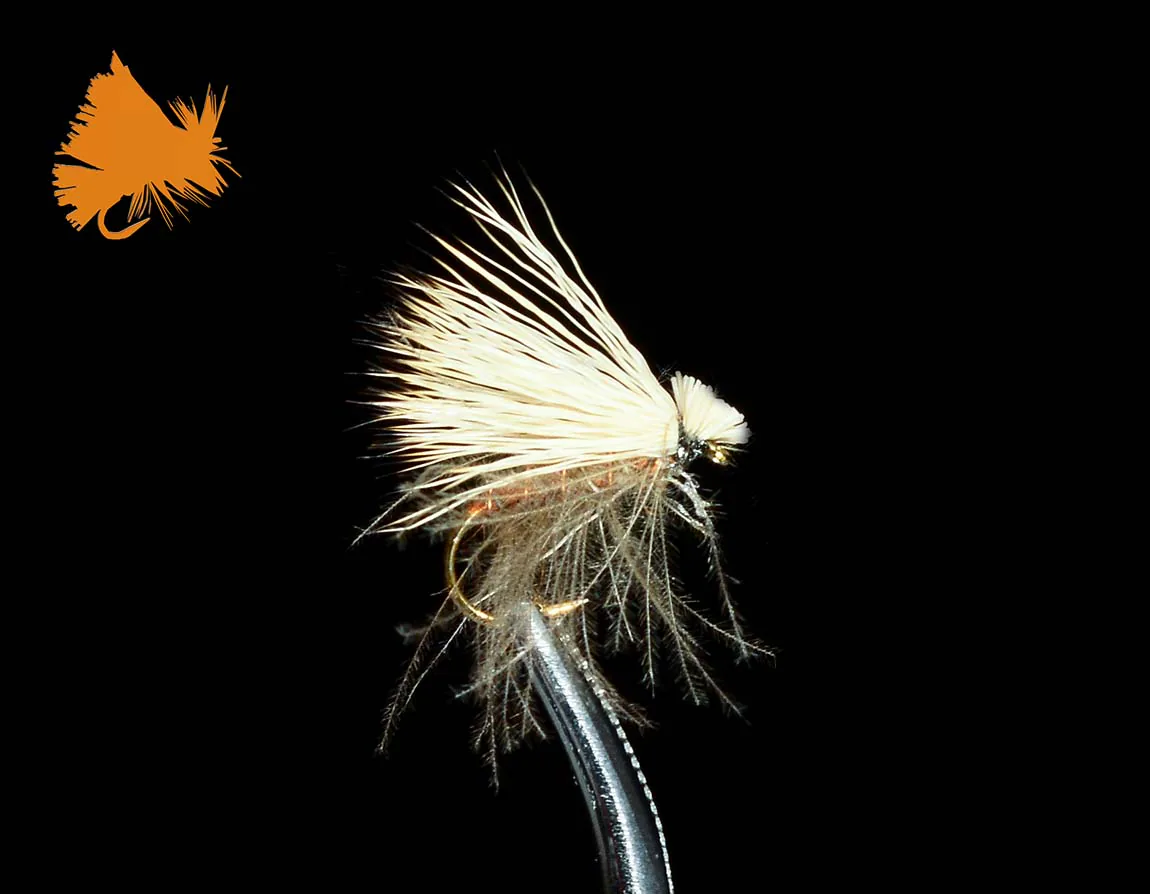
CDC Elk Hair Caddis

CDC Elk Hair Caddis

  • Imitates: Caddis
  • Role: adult
  • Buy option: Brown · #10 (4), #12 (4), #14 (4)
  • Best fishing colors: tan, olive, brown, black
  • Best fishing sizes: #10, #12, #14, #16, #18, #20
  • Quantity: 12 flies

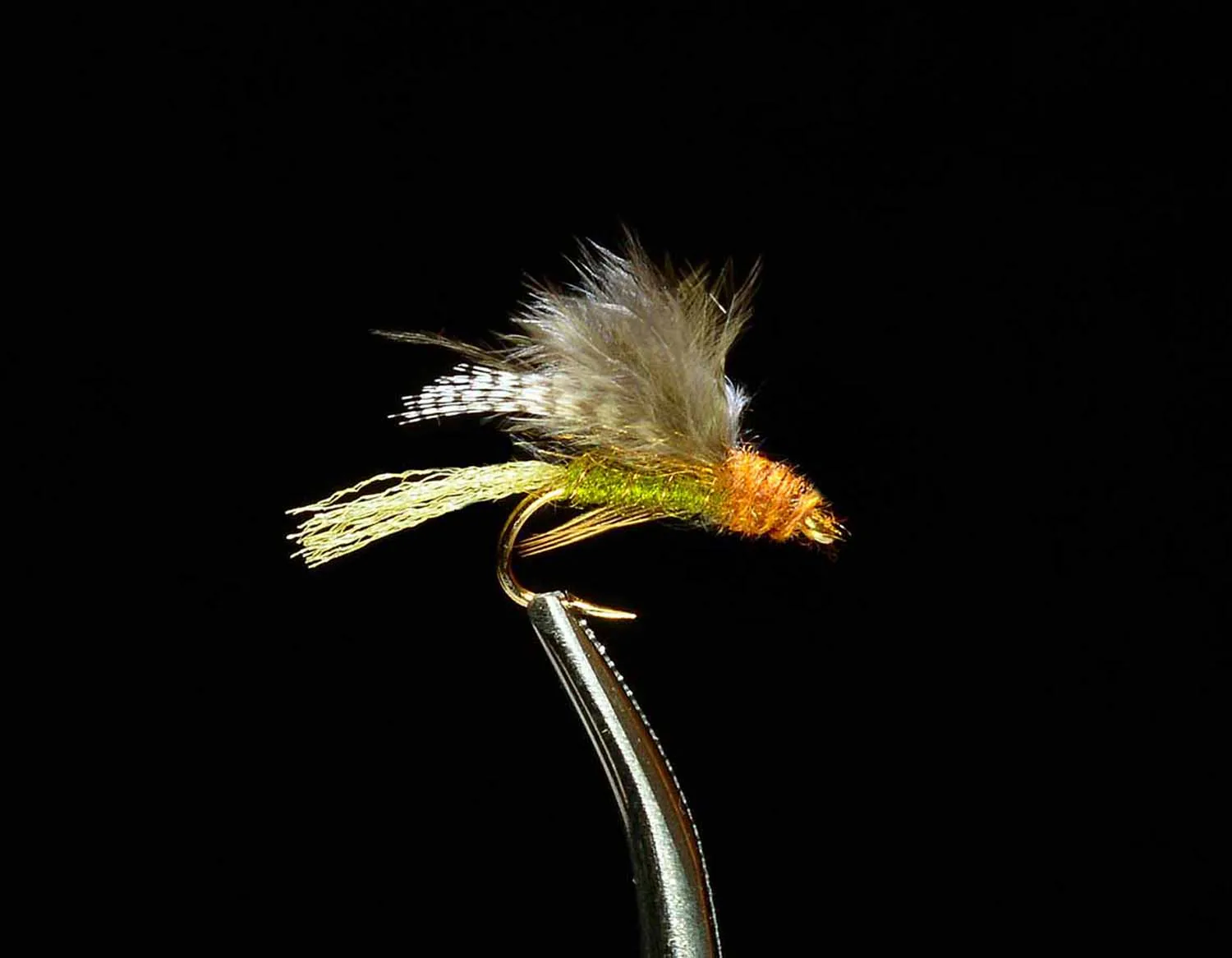
This is the adult caddis pattern to build around on the Arkansas, and given how central caddis are to this river, it earns a lot of space in the box. The CDC wing gives it a more realistic silhouette and a softer landing than a standard elk hair, which matters when fish have seen a few weeks of hatch and start getting picky about what they eat off the top. Fish it during the spring grannom emergence in the canyon and lower river, follow that hatch upstream toward Buena Vista, and then keep it in rotation through summer whenever caddis are around.

For actual fishing, carry it in tan, olive, brown, and black, in sizes #10 down to #20. That range covers everything from the big spring caddis in the canyon to the smaller summer species in the Upper Section. The linked option here is brown in a #10, #12, #14 mix, which is a solid spring and early-summer selection for the middle and lower river, though you will want smaller sizes and lighter colors as summer progresses. Present it with a drag-free drift through riffles and seams first, but do not be shy about giving it a small twitch or skate when fish are refusing a dead drift. Caddis adults move on the water, and imitating that movement is often what triggers the eat.

Buy This Fly
CDC BWO Tailwater Dun

CDC BWO Tailwater Dun

  • Imitates: BWO
  • Role: emerger
  • Buy option: Olive · #16 (4), #18 (4), #20 (4)
  • Best fishing colors: olive, gray olive, dark olive
  • Best fishing sizes: #16, #18, #20, #22, #24
  • Quantity: 12 flies

Blue-winged olives are the hatch that shows up most often across this river’s calendar, and this is the pattern for the adult stage when fish are being particular. The CDC wing and low-riding profile give it a realistic footprint on the water, which is what you need on flat water and during heavy hatches when trout have time to inspect.

Fish it in olive, gray olive, and dark olive, sizes #16 down to #24. The linked option covers olive in #16, #18, #20, which handles most spring and fall BWO fishing on the middle and lower river. The smaller sizes matter on the tailwater, where winter BWOs run small and the fish see a lot of flies. Present it with the longest drag-free drift you can manage, on the lightest tippet you are comfortable with, and target individual rising fish rather than casting into a general area. If you get a refusal, do not immediately change patterns. Drop a size first, then try presenting from a different angle so the fish sees the fly before it sees your leader.

Buy This Fly
CDC PMD Tailwater Dun

CDC PMD Tailwater Dun

  • Imitates: PMD
  • Role: emerger
  • Buy option: Yellow · #14 (4), #16 (4), #18 (4)
  • Best fishing colors: pale yellow, cream, light olive
  • Best fishing sizes: #14, #16, #18, #20
  • Quantity: 12 flies

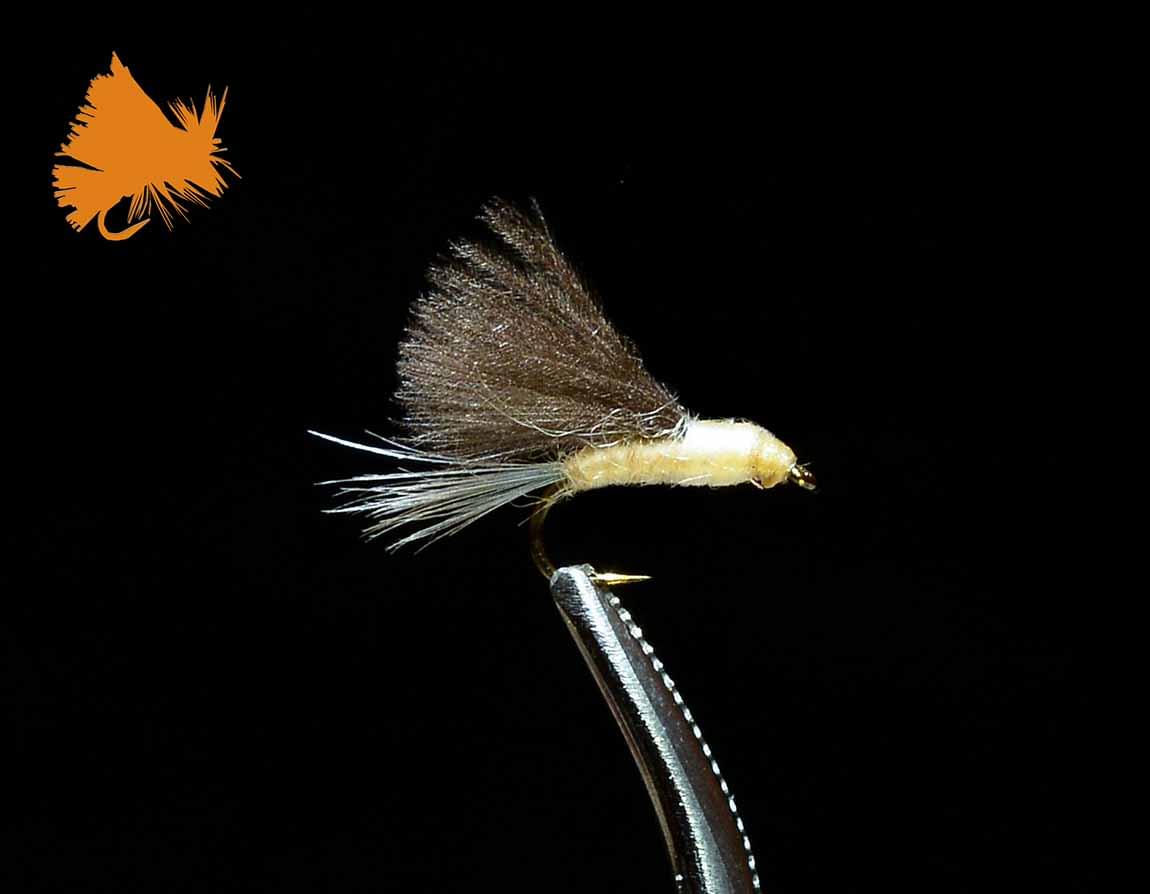
Pale morning duns fill the late spring and summer mayfly window on the Arkansas, and they tend to hatch during comfortable mid-day hours, which makes them a pleasant hatch to fish. This pattern handles the adult stage with the same low-profile approach that works for BWOs.

Colors that produce are pale yellow, cream, and light olive, sizes #14 through #20. The linked variant is yellow in #14, #16, #18, right in the heart of the useful range. Fish it in the softer water along seams and behind structure where duns collect and fish set up to eat them. PMD hatches often build slowly, so if you see a few duns coming off, get in position and be patient rather than moving constantly. Watch the rise forms: a slow, deliberate head-and-tail rise usually means fish are eating duns confidently, while a subtle bulge or dimple often means they are taking emergers just below and you should trail something in the film.

Buy This Fly
Chubby Chernobyl

Chubby Chernobyl

  • Imitates: Salmonfly
  • Role: adult
  • Buy option: Olive/Tan · #6 (4), #8 (4), #10 (4)
  • Best fishing colors: golden, tan, orange, black, purple
  • Best fishing sizes: #4, #6, #8, #10, #12
  • Quantity: 12 flies

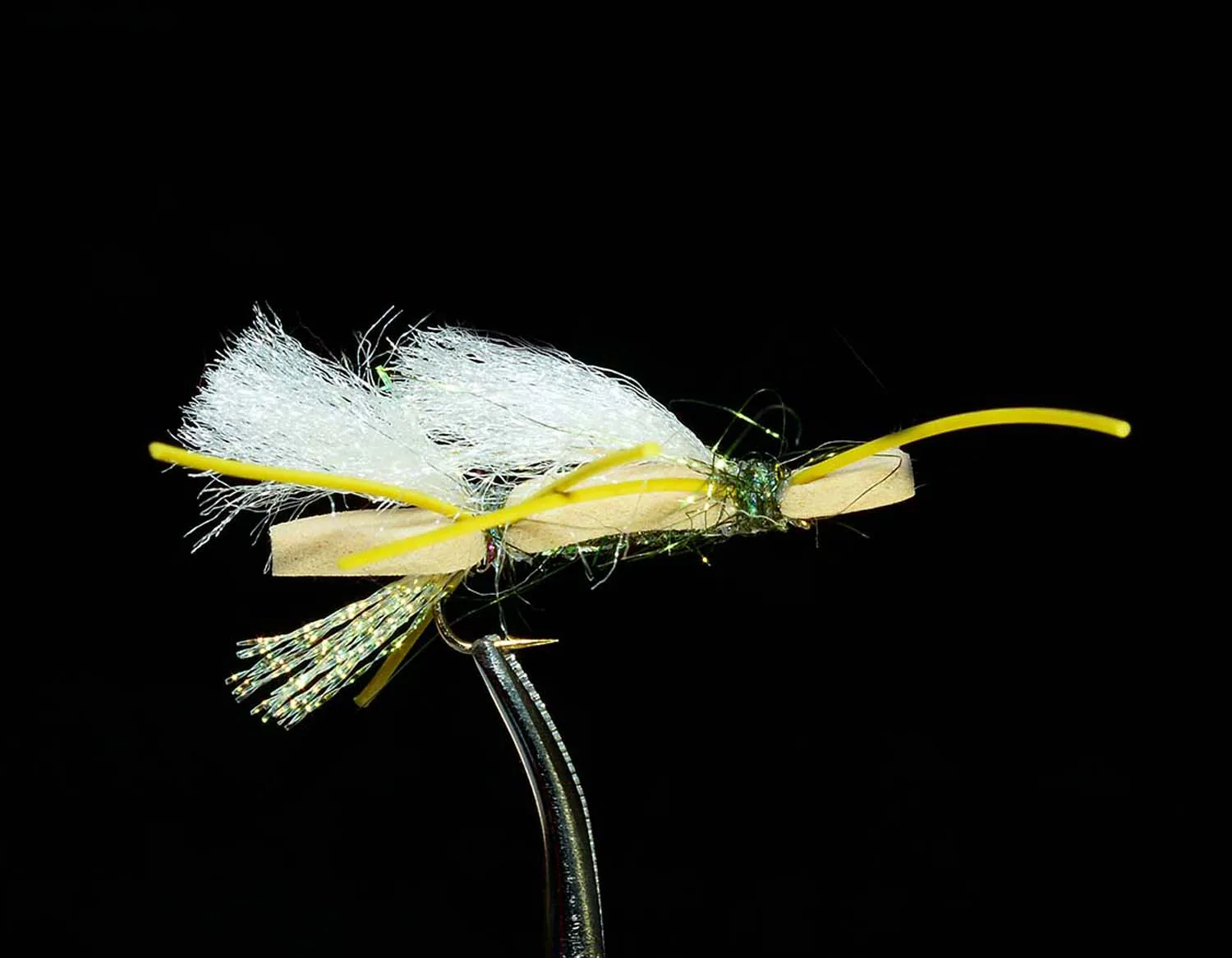
The Chubby is the most useful foam dry on this river, and it does two jobs. It imitates the big adult stoneflies and larger terrestrials that matter here from late spring through fall, and it floats well enough to suspend a heavy nymph in a dry-dropper rig. On the Upper Section, where dry-dropper fishing is the best all-around approach, this is often the fly on top.

Practical colors include golden, tan, orange, black, and purple, sized #4 through #12. The linked option is olive and tan in a #6, #8, #10 mix, which covers the golden stonefly and general attractor role well. Fish it tight to banks, under willow lines, and along any structure where a big insect might tumble in. Do not worry about a delicate presentation. A visible landing can bring fish up to look. In pocket water, cast it into the small soft spots behind boulders and expect the eat to happen fast. When you fish it dry-dropper, use enough tippet to get the nymph to depth but not so much that the dry sinks; two to four feet covers most water on this river.

Buy This Fly
Adult Salmonfly

Adult Salmonfly

  • Imitates: Salmonfly, Stoneflies
  • Role: dry
  • Buy option: Tan/Orange · #8 (4), #10 (4), #12 (4)
  • Best fishing colors: Tan/Orange
  • Best fishing sizes: #8, #10, #12
  • Quantity: 12 flies

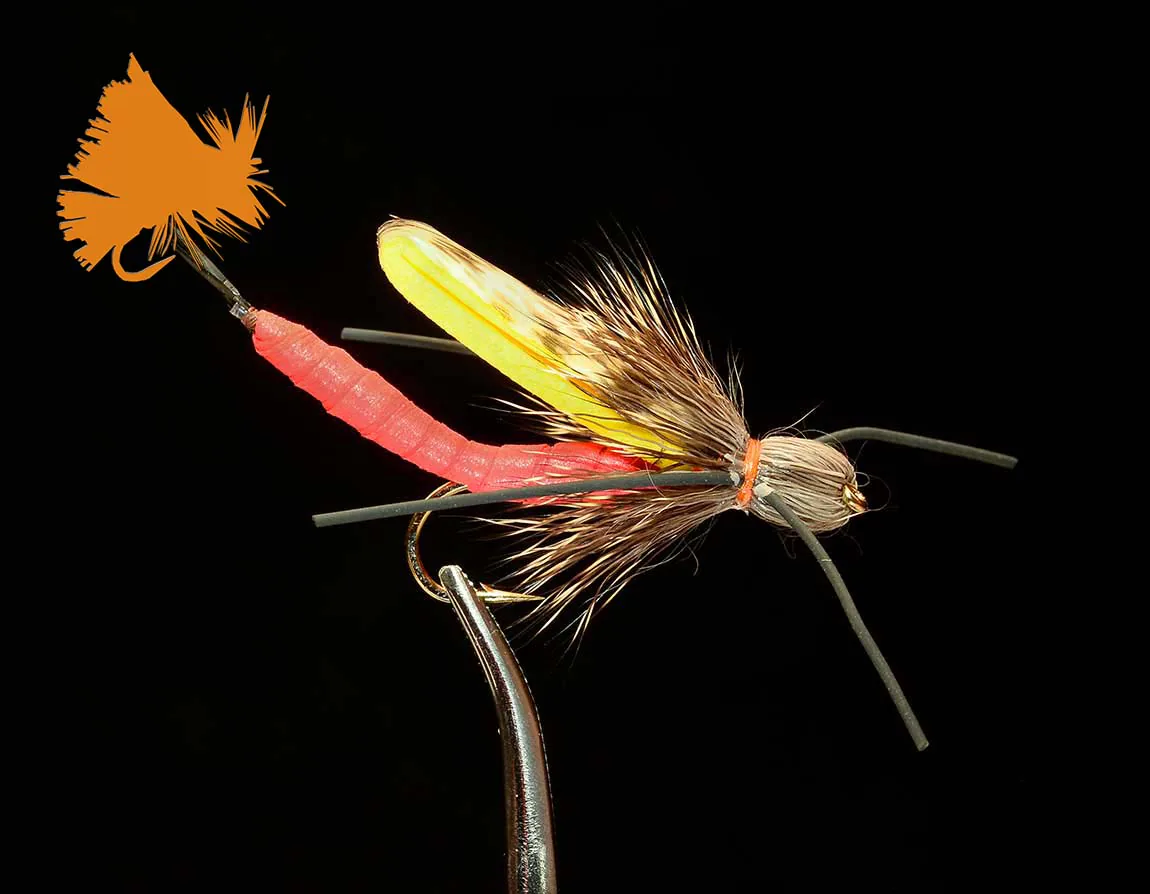
When the salmonfly activity is on, this is the pattern that gets the biggest eats of the year on the Arkansas. It is a substantial dry fly, and the trout that respond to it are usually the better fish in the run, because a meal that size is worth moving for.

Fish it in tan and orange, sizes #8 through #12, which matches the linked variant exactly. Timing is the hard part, since the window is short and moves with conditions. Watch for adults in the streamside willows and grass, and pay attention to the banks. The nymphs crawl out to emerge, so the action happens close to the edges. Cast tight to structure, let the fly sit, and be ready for a rise that looks nothing like a mayfly take. If a fish comes up and misses, resist the urge to pull the fly away. Let it sit and often they will come back. During the salmonfly period, keeping a big stonefly nymph in the water on a separate rig is a good backup for the hours when adults are not on the water.

Buy This Fly

Best Emergers for the Arkansas River

CDC Caddis Emerger

CDC Caddis Emerger

  • Imitates: Caddis
  • Role: emerger
  • Buy option: Olive · #12 (4), #14 (4), #16 (4)
  • Best fishing colors: tan, olive, brown
  • Best fishing sizes: #12, #14, #16, #18, #20
  • Quantity: 12 flies

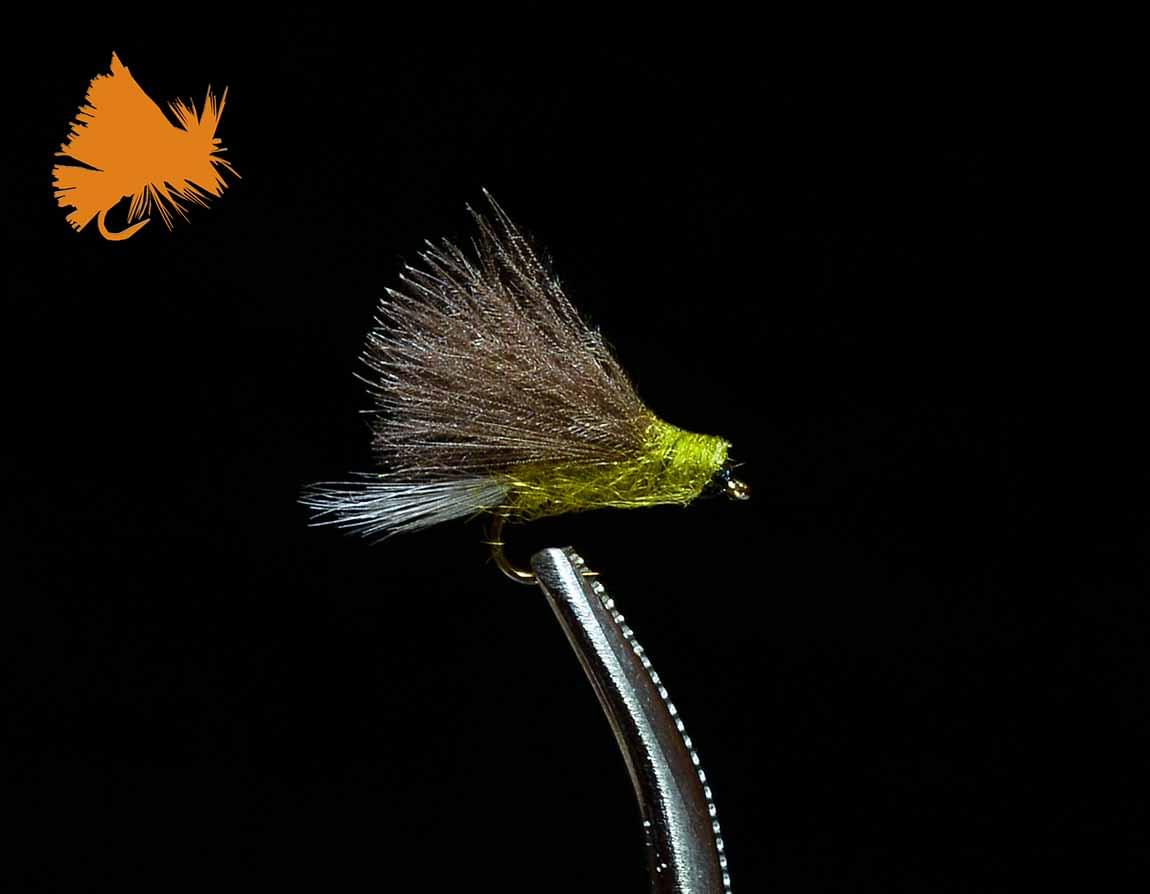
If you can only add one caddis fly beyond the adult, make it an emerger. During the Arkansas caddis hatches, a large share of the feeding happens on insects that are stuck in the surface film or rising through the last few inches of water, and a lot of anglers watch fish rise all around their high-floating dry without understanding why they are getting refused. This pattern sits in the film where those trout are actually looking.

Effective range here is tan, olive, and brown in #12 through #20. The linked variant is olive in a #12, #14, #16 mix, which lines up well with the spring grannom emergence on the lower and middle river. Fish it as a single fly in the film, or trail it eighteen inches behind an adult caddis so you cover both stages at once. That two-fly approach is one of the more productive ways to fish a caddis emergence, because the adult gives you a visual reference and the emerger does the catching. When the hatch is peaking, let the emerger swing slightly at the end of the drift and hold on.

Buy This Fly
Beadhead Caddis Pupa

Beadhead Caddis Pupa

  • Imitates: Caddis
  • Role: pupa
  • Buy option: Olive · #12 (4), #14 (4), #16 (4)
  • Best fishing colors: olive, tan, green, amber
  • Best fishing sizes: #12, #14, #16, #18, #20
  • Quantity: 12 flies

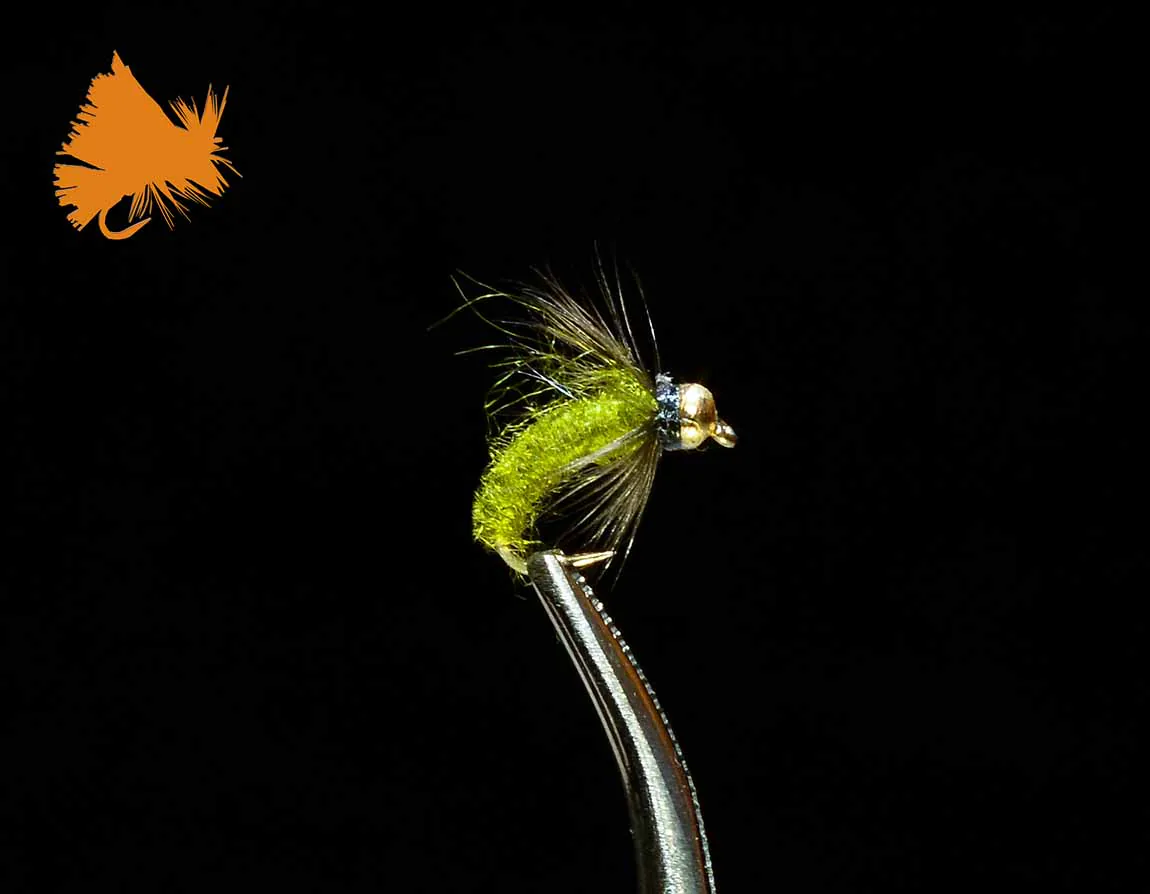
The pupa is what caddis look like when they leave the bottom, and this is the fly that produces before the surface activity starts. On the Arkansas, where caddis are abundant, a beadhead pupa is worth having in the rig on almost any spring or summer day, hatch visible or not. Fish are conditioned to eat these.

Practical colors are olive, tan, green, and amber, sized #12 through #20. The linked option is olive in #12, #14, #16, a good general spring selection. Fish it as your point or trailing nymph under an indicator through riffles, runs, and the seams along the canyon’s main current tongue. Get it down near the bottom for the dead-drift portion, then let it lift and swing at the end of the drift. That lift imitates a pupa rising to emerge and generates a lot of hard strikes, particularly in the hour before the adults start showing up. In dry-dropper rigs on the Middle and Upper Sections, this is a strong choice for the dropper.

Buy This Fly
UV Sparkle Midge Emerger

UV Sparkle Midge Emerger

  • Imitates: Midges
  • Role: emerger
  • Buy option: Red · #18 (4), #20 (4), #22 (4)
  • Best fishing colors: Red
  • Best fishing sizes: #18, #20, #22
  • Quantity: 12 flies

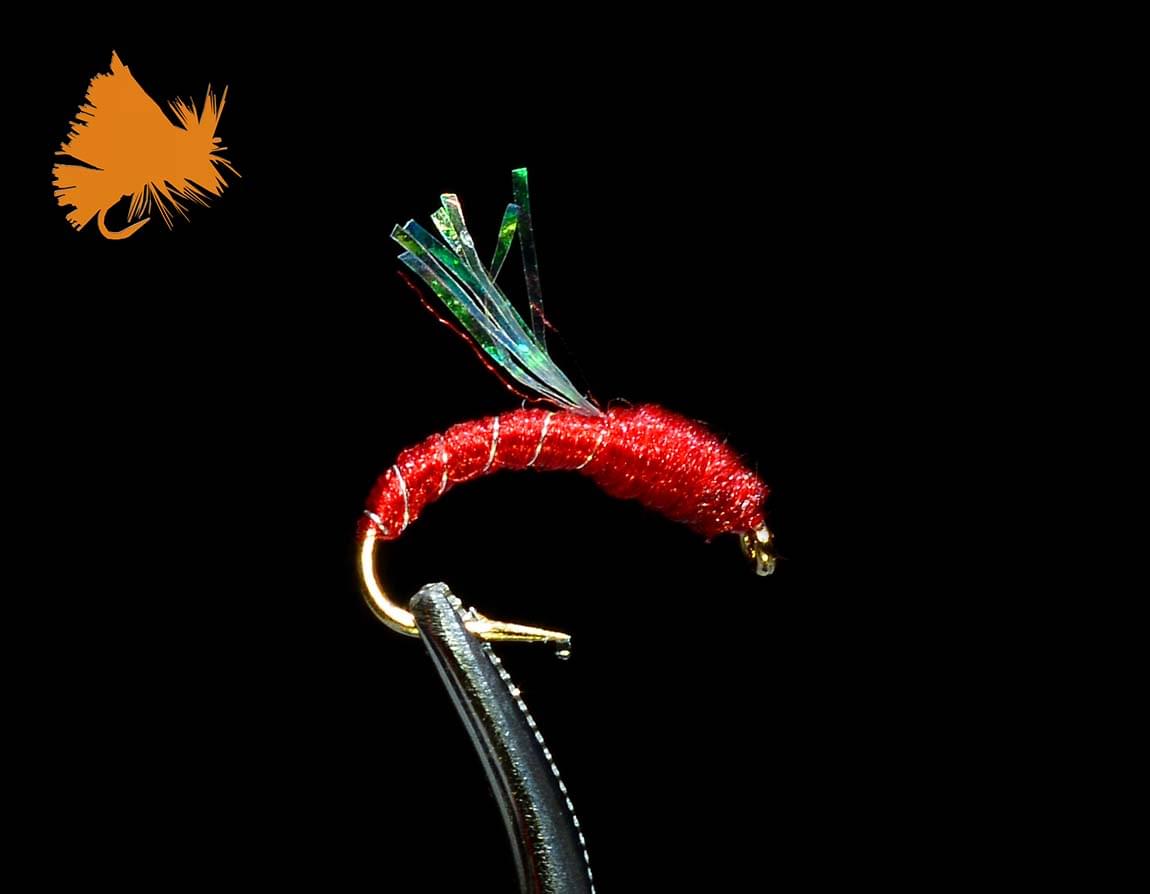
This is the winter fly, and specifically the tailwater fly. Midges carry the fishery below Pueblo Reservoir through the coldest months, and the emerger stage is where the majority of feeding happens. The UV element gives fish something to key on in low winter light and slower water, without adding bulk to a fly that has to stay small.

It is a red pattern in #18, #20, and #22, which is the useful winter range on this water and matches the linked option. Fish it under a small yarn indicator or as the trailer behind a slightly larger nymph, and get the depth right, because winter fish do not move far for a meal. In flat, slow water, drop to a subtle yarn indicator instead of a bobber, extend your leader, and reduce the splash. Winter fish in a heavily used tailwater notice disturbance. This pattern also has a place on the freestone river during cold-weather trips and any time you see midges clustering on the surface.

Buy This Fly
Electric Caddis Pupa

Electric Caddis Pupa

  • Imitates: Caddis
  • Role: emerger
  • Buy option: Olive · #14 (4), #16 (4), #18 (4)
  • Best fishing colors: Olive
  • Best fishing sizes: #14, #16, #18
  • Quantity: 12 flies

This is the flashier take on the caddis pupa, and it fills a different job than the standard beadhead version. The added brightness gives fish something to find in pushy, broken, or slightly off-color water, and it works well as an attention-getter that draws trout in to look at your rig. On big freestone water like the middle and lower Arkansas, where you are often fishing faster seams and heavy pocket water, that extra visibility earns its keep.

Fish it in olive, sizes #14 through #18, which is the range the linked variant covers directly. Use it as your lead nymph when water is high or cloudy after a storm, when light is flat, or in the deeper canyon slots where a plain pupa can get overlooked. It pairs well with a more subtle pheasant tail or standard pupa on the trailer, giving fish a choice between a flashy target and a natural one. When trout come to it and refuse, that is useful information: switch the flashy fly to the trailing position and put something drab up front.

Buy This Fly

Top Nymphs for the Arkansas River

Beadhead Pheasant Tail Nymph

Beadhead Pheasant Tail Nymph

  • Imitates: PMD
  • Role: nymph
  • Buy option: Natural · #14 (4), #16 (4), #18 (4)
  • Best fishing colors: natural brown, olive, flashback
  • Best fishing sizes: #14, #16, #18, #20, #22
  • Quantity: 12 flies

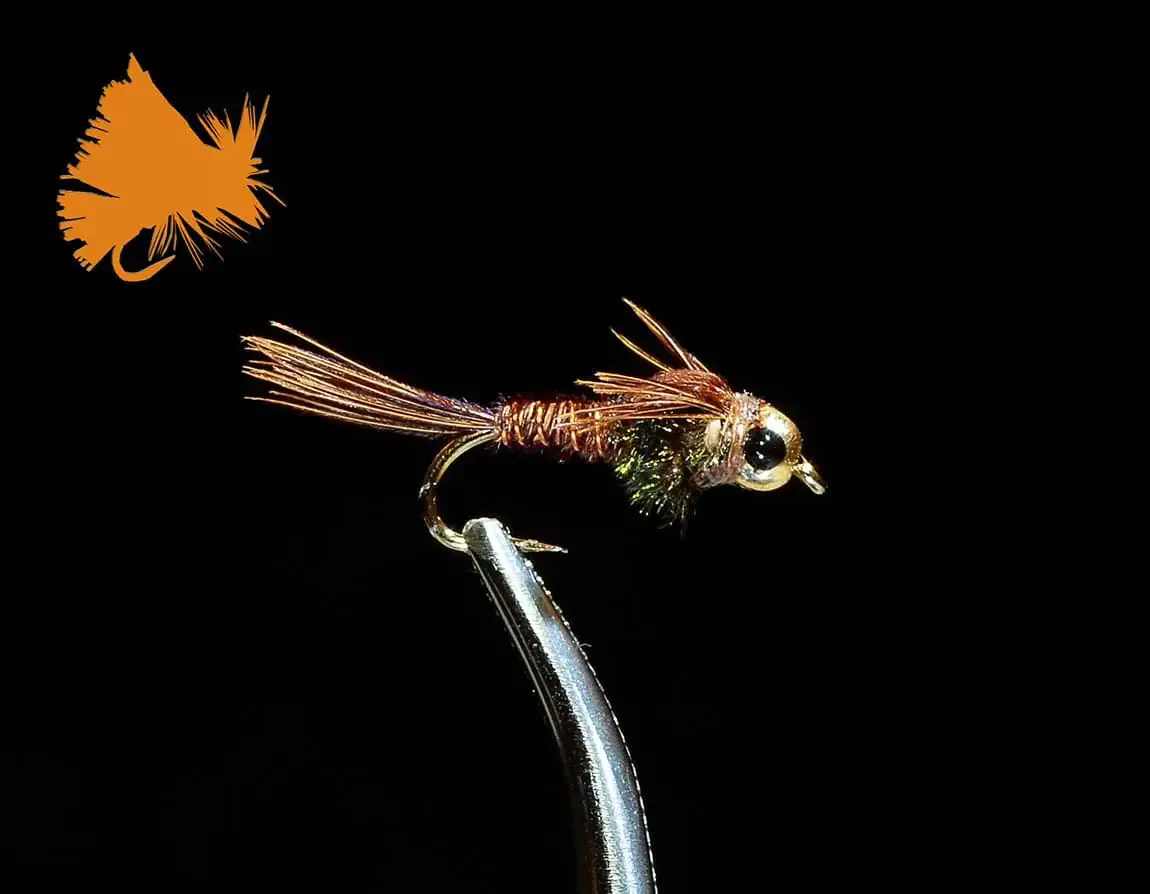
The pheasant tail is about as versatile a mayfly nymph as exists, and on the Arkansas it covers both the blue-winged olive and pale morning dun nymph stages plus a general slim-profile mayfly silhouette that fish eat all year. If your nymph box only had two flies, this would be one of them.

Carry it in natural brown, olive, and flashback, sizes #14 down to #22. The linked option is natural in #14, #16, #18, which covers most everyday nymphing on the middle and lower river. Go smaller, down into the #20 and #22 range, for the tailwater in winter and for selective fish during heavy BWO activity. Fish it under an indicator as your trailing nymph, on a tight-line rig through pocket water, or as the dropper below a dry. Before and during a mayfly emergence, this is often the most productive fly in the water, and it is worth fishing higher in the column than you might expect once you see the first duns appear. The flashback version is a good compromise when you want a bit of attraction without abandoning the natural profile.

Buy This Fly
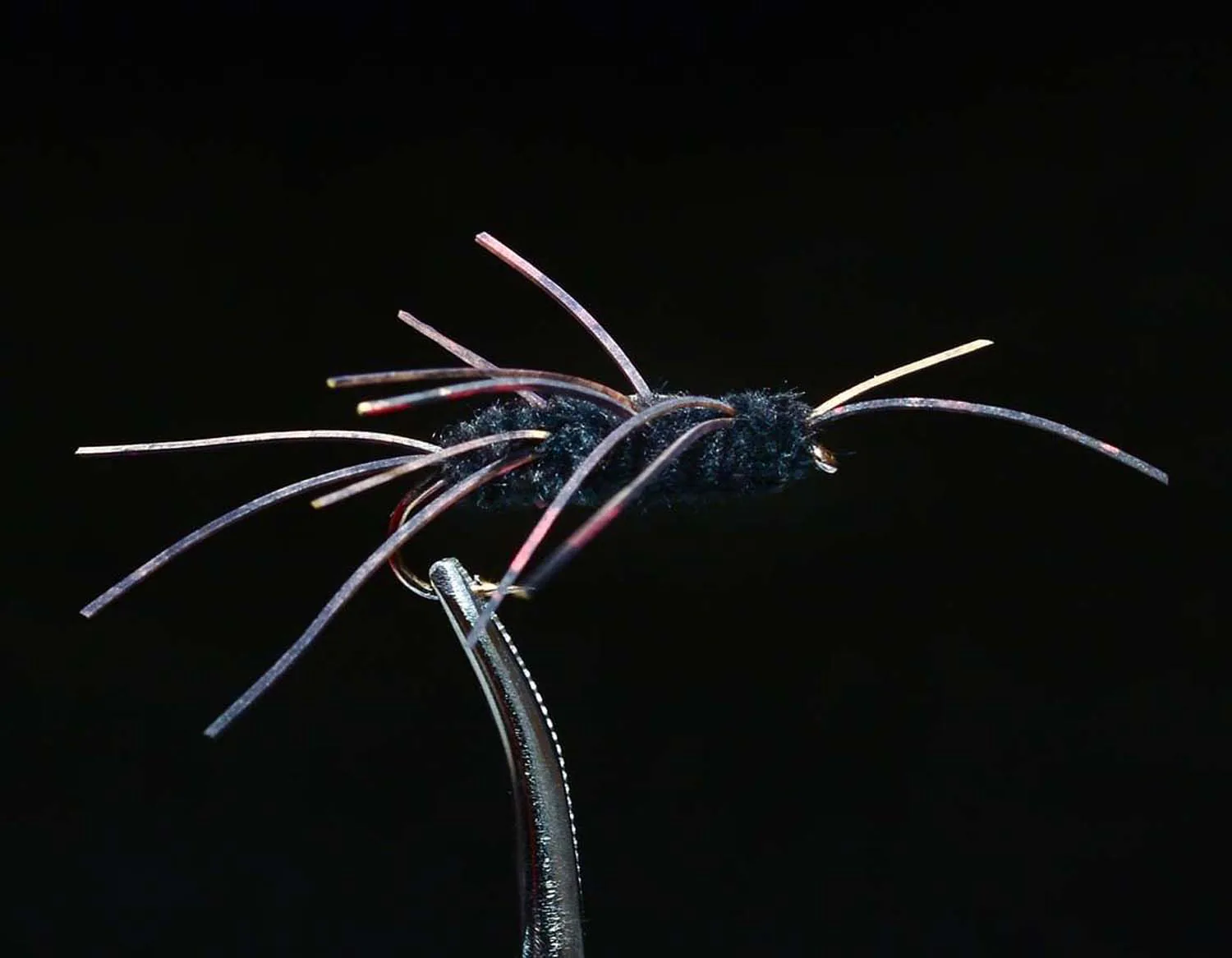
Pats Rubberleg Stonefly

Pats Rubberleg Stonefly

  • Imitates: Salmonfly
  • Role: nymph
  • Buy option: Black · #6 (4), #8 (4), #10 (4)
  • Best fishing colors: black, brown, coffee, tan, olive
  • Best fishing sizes: #4, #6, #8, #10, #12
  • Quantity: 12 flies

Stonefly nymphs live in the Arkansas year round, and this is the pattern for imitating them. The rubber legs move in current in a way that fish respond to, and the heavy profile gets down through pushy water without needing a pile of extra weight. In the boulder-filled pocket water of the canyon and the rocky runs of the Middle Section, this is one of the most consistently productive nymphs on the river.

Effective colors run black, brown, coffee, tan, and olive, in sizes #4 through #12. The linked variant is black in a #6, #8, #10 mix, which is a strong general selection for spring and early summer. Size down toward #10 and #12 as summer moves along and the largest nymphs have already emerged. Fish it deep and slow, bounced along the bottom, on a short indicator rig or a tight-line setup. It is also an excellent lead fly in a two-nymph rig, where its weight gets a smaller trailing nymph down and its bulk brings fish over for a look. During runoff and high water, work it along the edges and behind boulders where fish take shelter from the main push.

Buy This Fly
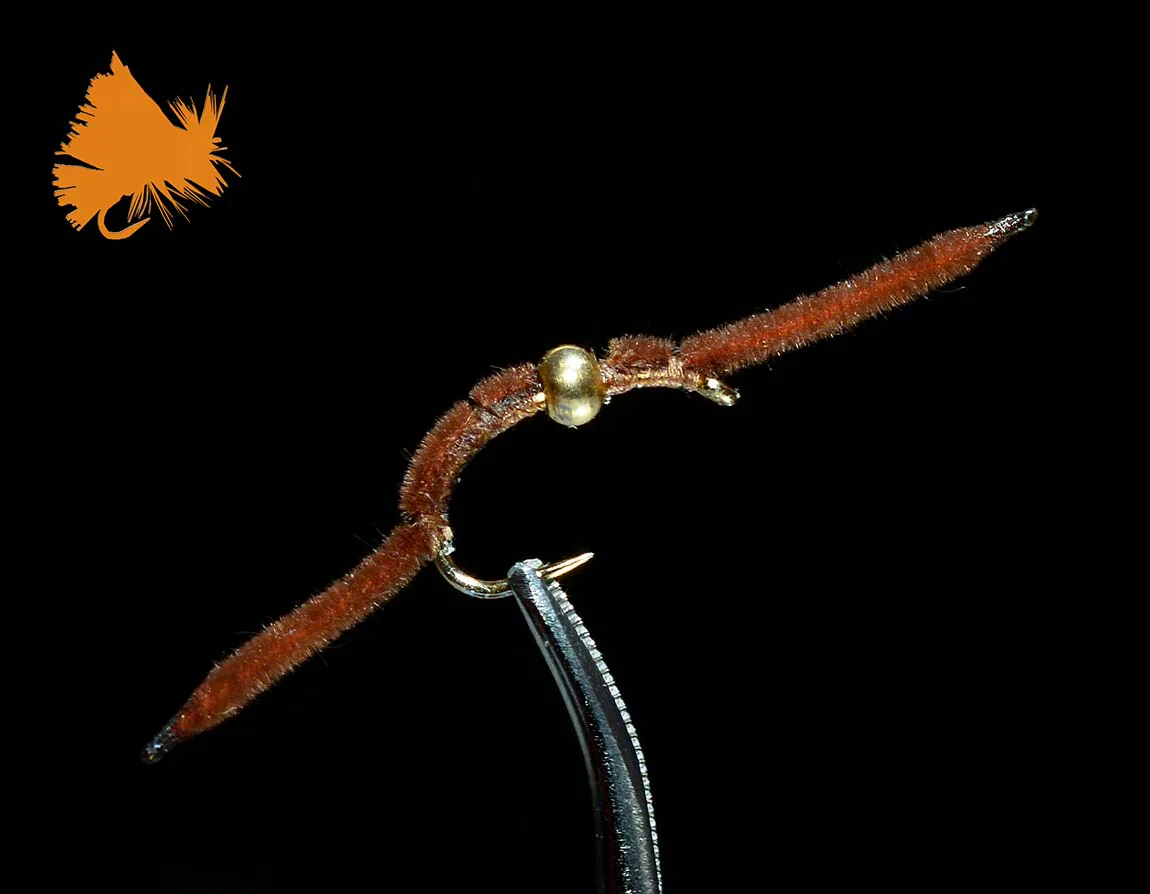
Beadhead San Juan Worm

Beadhead San Juan Worm

  • Imitates: Aquatic Worms (Annelids)
  • Role: nymph
  • Buy option: Brown · #10 (4), #12 (4), #14 (4)
  • Best fishing colors: Brown
  • Best fishing sizes: #10, #12, #14
  • Quantity: 12 flies

Aquatic worms are always in the river, and they become genuinely important when flows change. Rising water, irrigation adjustments, and post-storm bumps all dislodge worms and put them in the drift, and trout eat them without much hesitation. That makes this one of the more dependable flies for the awkward conditions that would otherwise send you home.

It is a brown pattern in #10, #12, and #14, matching the linked variant. Fish it as your lead or trailing nymph in a standard indicator rig, and pay attention to depth, since worms drift near the bottom. It is effective during runoff on the freestone reaches, in the days after a summer thunderstorm when the water has color, and through winter on both the tailwater and the lower river. Pair it with a small midge or pheasant tail to give fish a choice between a large obvious target and a small subtle one. If the water is off-color and nothing else is producing, this is the fly to try before you conclude the day is a write-off.

Buy This Fly

Streamers for the Arkansas River

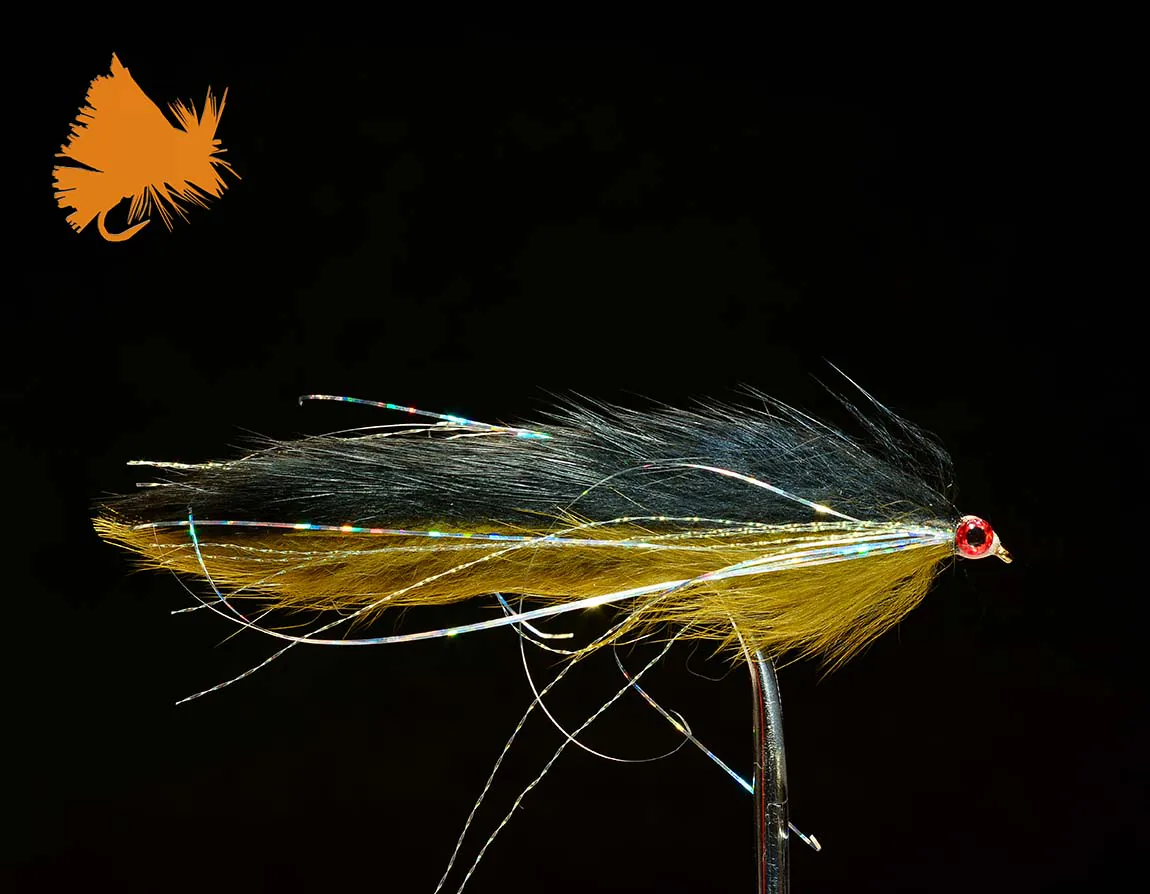
Double Bunny

Double Bunny

  • Imitates: Baitfish, Sculpins, and Leeches
  • Role: streamer
  • Buy option: Black/Olive · #2, #4, #6
  • Best fishing colors: Black/Olive
  • Best fishing sizes: #2, #4, #6
  • Quantity: 12 flies

The Arkansas holds baitfish, sculpins, and leeches, and the larger brown trout in this river eat them. This streamer imitates all three with a lot of movement, and it is the fly to reach for when you want to find a bigger fish rather than catch numbers.

It comes in black and olive, sizes #2, #4, and #6, matching the linked option. Fish it on a heavier rod than you use for nymphing, cast toward banks and structure, and strip it back with a varied retrieve. Vary the speed until something responds, and let it drop on the pause, because a lot of eats come as the fly sinks. Best conditions are high or off-color water during runoff, cold overcast days, and fall when brown trout get territorial. On the canyon water of the lower river and the deeper runs of the Middle Section, work it along the edges of the main current where a big fish can sit out of the push and ambush what drifts by. Do not expect a lot of takes on a streamer day, but the fish that do eat tend to be worth the effort.

If you would rather start with a curated box than build one fly at a time, the Top Trout Assortment gives you broad coverage across the mayfly, caddis, midge, and attractor patterns that carry most days on this river, and the Stonefly Assortment fills in the stonefly nymph and adult coverage that the Arkansas specifically rewards. If you are buying individual patterns, the code FLYSPECIAL applies at checkout.

Buy This Fly

Presentation and Gear for Arkansas River

You have picked a section and you have a fly box. Now comes the part you adjust on every cast.

Indicator Nymphing

Classic indicator nymphing is the highest-percentage approach on the Arkansas across the most days, and it is what I would fish if I only had one method. It covers water, it works when nothing is hatching, and it handles the deep runs and slots that hold most of the fish through the middle and lower river.

Start with depth. The most common mistake I see on this river is fishing too shallow. In big freestone water, your flies should be down in the bottom third of the water column for most of the drift. Set your indicator roughly one and a half to two times the water depth from your point fly and adjust from there. If you are not occasionally ticking bottom, you are not deep enough. If you are hanging up constantly, come up a few inches.

Weight is how you control depth quickly. Split shot on the leader above your flies, tungsten beads on the flies themselves, or both. On this river I like enough weight to get down fast in the first third of the drift, because the productive water in canyon pocket water is often short and you do not have time to sink slowly.

Then work on drift. The fly needs to move at the speed of the current at the depth the fish are holding, which is slower than the surface current. That means mending upstream to take tension off the line and let the flies lead the indicator slightly. When your indicator is dragging faster than the bubbles around it, your flies are being pulled unnaturally.

Angle matters too. Casting upstream and slightly across gives you the longest natural drift and the most control. Fishing straight downstream is the hardest way to get a good drift. Position yourself so you can reach the target water with the shortest amount of line on the water, and be willing to wade into position rather than making a longer cast.

A two-nymph rig covers more possibilities than a single. Put your heavier or more visible fly on point and a smaller, more natural fly on the trailer. On the Arkansas, a Pats Rubberleg with a pheasant tail behind it, or an Electric Caddis Pupa with a standard pupa behind it, are both sensible combinations.

At the end of your drift, when the line comes tight and the flies start to swing, do not immediately pick up. That swing imitates emerging insects, and it draws strikes, especially during caddis activity. You can also extend a drift by feeding line through the rod tip as the indicator moves downstream, which lets you cover a spot farther down without recasting. It takes practice to get the feel, but it adds real productive drift length.

Slower, slack water calls for a different setup. Trade a hard plastic indicator for a small yarn indicator, extend your leader and tippet, and reduce the splash. Be quiet and stealthy in slow water. And do not fish slackwater without a reason. It is often unproductive, but when you see fish working in it, do not skip it. For every fish you see rising, there are often three or four below eating nymphs and emergers.

Dry-Fly Fishing

The Arkansas gives you more legitimate dry-fly opportunity than most Colorado rivers, and it is worth learning to take advantage of it.

The core requirement is a drag-free drift. That means your fly moves at exactly the speed of the water it is sitting in, with no pull from the line. Reach casts, slack-line casts, and downstream presentations all help. On flat water with selective fish during a BWO hatch, presentation matters more than pattern. Get the fly there first, before the leader, and give it a foot or two of dead drift over the fish.

During caddis activity, the rules loosen. Caddis move on the water, and a small twitch or skate can trigger a fish that just refused a dead drift. Try both. Start dead-drift, and if you get looks without eats, add movement.

Rise forms tell you what to fish. A slow, deliberate rise where you see the head and then the tail usually means a fish eating duns with confidence. A quick splash means caddis or an insect that might escape. A subtle bulge or dimple with nothing visible taken means the fish is eating just under the surface, and you should be fishing an emerger rather than a dun.

On the Upper Section, fish dry flies even without a visible hatch. Those trout are opportunistic, and an attractor dry gets eaten regularly. This is the single easiest way to add fishing days to your season on that stretch.

Tippet for dry-fly work runs 4X for larger flies and 5X or 6X for small mayflies and midges. Longer leaders help on flat water. Nine feet works in riffles; twelve feet or more is better on slow, clear water with wary fish.

Dry-Dropper Fishing

Dry-dropper is the most efficient way to fish the Upper Section and the pocket water throughout the river, because it covers two feeding levels at once and requires less rigging fuss than a full indicator setup.

Use a dry fly with enough float to support the nymph. A Chubby Chernobyl is the reliable choice on this river. Tie your dropper tippet to the hook bend of the dry and run two to four feet of tippet to the nymph, adjusting to water depth. In shallow braided channels, eighteen inches to two feet is plenty. In deeper pockets, extend it.

The dry serves as both a fly and an indicator, so watch it carefully. Any hesitation, dip, or unnatural movement is worth setting on. And when a fish eats the dry, which happens more than people expect, you have gotten the best of both.

This is the approach for the braided water through Hayden Meadows, for boulder pockets in the canyon, and for the many short seams in the headwaters where a full indicator rig would be more trouble than it is worth.

Euro Nymphing Strategy

Tight-line and Euro nymphing fit the Arkansas well, and they are particularly effective in the headwaters and in the pocket water of the canyon and Middle Section. The advantage is direct contact with your flies, which means better depth control and much faster strike detection in broken water.

The method works best at close to medium range. You are leading the flies through the drift with the rod tip, keeping the sighter under gentle tension, and feeling or seeing the take rather than waiting for an indicator to move. In pocket water, this lets you fish a two-foot-long soft spot behind a boulder properly, which is nearly impossible with a standard indicator rig.

Use enough weight to get to the bottom quickly, since the productive water is short and you need the flies down in the first few feet of the drift. A tuck cast, where you stop the rod high and let the flies dive under the leader, is what gets you there. Fish the closest water first and work outward, because you will spook less.

Leave no spot unfished on this kind of water. The tiniest seams, cover, or changes in the bank can hold a trout. You do not need to spend long on each spot; two to five casts is usually enough. But from any given position you can often reach many spots. Work outward progressively, then move. It is not uncommon to catch several fish without changing position.

Streamer Fishing

Streamers are your high-water, off-color, and big-brown option on the Arkansas. Runoff, post-storm color, cold overcast days, and fall are the conditions where they earn their place.

Cast toward the bank, toward structure, and toward the edges of the main current. Strip back with a varied retrieve and pay attention to which cadence gets a response. Let the fly drop on the pause, because a lot of eats come on the sink. In high water, work the softer edges where fish move to escape the push, and get the fly close to the bank. Fish are often much closer to the edge than anglers expect during runoff.

In the canyon and in the deeper runs of the Middle Section, look for spots where a big fish can hold out of the current with fast water nearby. That is ambush water, and it is worth several casts from different angles.

A streamer day is a low-numbers, higher-average-size proposition. If you need to catch fish, nymph. If you want a shot at the better browns in this river, throw the streamer and accept the trade.

Rods, Lines, Leaders, and Tippet

A nine-foot 5-weight handles the majority of what you will do on the Arkansas. It nymphs, it throws dries, and it casts a moderate streamer.

If you are focused on the Upper Section or the tailwater with small flies, a 4-weight gives you a softer presentation and more enjoyment with smaller fish. If you plan to throw big stonefly dries, heavy nymph rigs, or streamers into canyon wind, a 6-weight makes the day easier. A ten-foot rod helps with both indicator nymphing and Euro nymphing if you want a dedicated nymphing stick.

Leaders: nine feet as a default, twelve feet or longer for flat water and selective fish, and a purpose-built tight-line leader with a sighter if you are Euro nymphing. Tippet from 3X for stonefly nymphs and streamers, 4X for general nymphing and larger dries, 5X for most mayfly and caddis dries, and 6X for small BWOs, midges, and the tailwater in winter.

Bring split shot in a couple of sizes and indicators in both a floating bobber style and a small yarn style. That second option matters more than people think on the tailwater and in slow water anywhere on the river.

Playing Fish

Once you hook a good fish on this river, a couple of things will save you.

Keep the line tight and angled upward. If the line goes slack or the angle drops, the hook can come free. Beyond upward pressure, apply pressure toward the fish’s tail so you are not pulling the fly out of the front of its mouth. And apply pressure in the opposite direction from where the fish wants to go. If a fish is running for a logjam, angle your rod to pull against that direction. The smaller the angle between your line and the fish’s mouth, the stronger the pull in that direction, so use rod position deliberately rather than just holding on.

Your position in the river matters too. You cannot keep pressure toward the tail if the fish is downstream of you. Whenever possible, stay downstream of a hooked fish and let the current work for you. You will not always manage it, since trout move faster than you can wade, but awareness of position plus good directional pressure will land you far more fish than raw rod pressure alone.

Learn To Nymph
The Right Way

Access step-by-step expert instruction, immersive visuals, and lifetime access.

  • 8 Units & 36 Lessons (66 Chapters)
  • 30+ HD Videos
  • Learn the most reliable way to catch fish
  • Learn strategy, rigging, casting, drift, landing and more
  • Lifetime access & coupons for over $225 in savings
  • Take at your own pace – easy to read and remember

Put the Three Pillars Together

Here is how the three decisions actually chain together in real situations on this river.

Late April, cloudy and cool, and you have two days. Location comes first. Runoff has not really started, blue-winged olives and early caddis are getting going, and the lower river and canyon are where those hatches begin. That is where you go. On the water, you look for the seams and riffle edges where feeding fish sit in that reach. Fly selection follows from what the river is offering: a Beadhead Caddis Pupa and a Beadhead Pheasant Tail Nymph in the water early, with a CDC BWO Tailwater Dun and a CDC Elk Hair Caddis ready for when the hatch comes on. Presentation flows from that: indicator nymphing deep through the morning, then switching to a drag-free dry-fly drift over individual risers once the BWOs appear, with a CDC Caddis Emerger trailed behind the dry if fish refuse the dun. The cloudy weather is what makes this whole plan good, because it means the hatch will run long.

Mid-July, hot, flows dropping, and you have a long weekend. The lower river is warming and busy with rafts. Location shifts you up. The Upper Section through Hayden Meadows is coming into its best window, with cooler water and willing fish. Once there, the braided channels and cut banks are your target water. Fly selection points to a Chubby Chernobyl on top with a Beadhead Pheasant Tail Nymph or Beadhead Caddis Pupa dropped below. Presentation is dry-dropper, short casts, and constant movement, hitting every seam and pocket with a handful of casts before stepping upstream. You do not need a hatch. Those fish will eat the dry on plenty of casts, and the dropper covers the ones that will not.

Late May, the river is up and brown. Location narrows fast. The freestone reaches are pushing hard. You either go to the tailwater, which is not affected the same way, or you fish the edges of the freestone where the current slows. If you stay on the freestone, presentation drives the fly choice rather than the reverse: you need something that fish can find in dirty water, close to the bank, so you fish a Double Bunny stripped along the edges, or a Beadhead San Juan Worm with a Pats Rubberleg Stonefly under an indicator through the soft water inside the main push. High water is one of the few situations where I would let presentation lead, because the fish are pinned into specific water and getting a fly there matters more than which fly it is.

Mid-January, everything upstream is frozen. Location is settled: the tailwater below Pueblo Reservoir. Once there, you look for the consistent flows and the slower runs where winter fish stack up. Fly selection goes small, with a UV Sparkle Midge Emerger and a small Beadhead Pheasant Tail Nymph subsurface, and a CDC BWO Tailwater Dun in a #20 or smaller ready for the midday hatch window. Presentation gets quiet: yarn indicator, long leader, 6X tippet, and precise depth, because winter fish will not chase.

Notice that in every case the section choice came from the calendar and the conditions, the water-reading came from being there, the fly came from the food, and the presentation came from the water type. Run those in order and you will make better decisions faster.

Practical Trip Planning Checklist

Gear Checklist

  • Nine-foot 5-weight rod with floating line; add a 4-weight for small water and the tailwater, or a 6-weight for big dries, streamers, and wind
  • Ten-foot nymphing rod if you plan to Euro nymph
  • Leaders: 9-foot for general work, 12-foot for flat water and selective fish, tight-line leader with sighter if Euro nymphing
  • Tippet in 3X, 4X, 5X, and 6X
  • Split shot in two or three sizes, plus tungsten-beaded flies for depth
  • Both a floating indicator and small yarn indicators
  • Floatant and desiccant for CDC dries
  • Nippers, forceps, and a net
  • Waders and boots with good traction; the freestone reaches have slick, uneven rock
  • Wading staff for the canyon and higher flows
  • Polarized sunglasses and a brimmed hat
  • Rain shell and a warm layer, since weather changes fast at elevation
  • Sun protection and more water than you think you need
  • Fly boxes covering caddis adults, emergers, and pupae; mayfly duns and nymphs; midges; stonefly nymphs and adults; terrestrials; worms; and a couple of streamers

DIY Trip Checklist

Start with flows and water temperature. Check current discharge and clarity for the specific reach you are considering before you commit to a drive, because a section that fished well last week may be blown out or too warm this week. If the freestone river is high, shift your plan to the tailwater or the upper reaches rather than forcing the trip.

Verify public access and property boundaries for every stretch you plan to walk. The Arkansas corridor is a mix of public and private ground, and access changes. Confirm current regulations, any special restrictions, and any seasonal closures for your target water.

Pick two or three access areas rather than five. The middle and lower river have more water than you can cover, and driving between spots eats your day. Learn a couple of stretches well.

Plan around traffic. On the lower river during summer, commercial rafting is active, so fish early and late. During the spring caddis hatch and over holidays, expect company and be willing to walk to less obvious water.

Rig two rods if you can. A nymph rig and a dry rig ready to go saves you real fishing time when a hatch comes on and then shuts off.

Have a backup plan. If the section you drove to is not working, know what the next option is. On this river, that often means moving upstream or down to find different water temperature and clarity, or switching from freestone to tailwater.

Wade carefully. The canyon water is pushy and the rock is uneven. Fish with a partner when flows are up, and do not cross something you are not confident about.

Guided Trip Checklist

Book based on what you want to learn, and say so up front. If your goal is to get better at reading water or at Euro nymphing, tell the guide that on the phone so they pick water that supports it. If you want to fish a hatch, be flexible about dates, because hatches move.

Ask which section they plan to fish and why. A good answer will reference current flows, temperature, and what has been hatching. That conversation alone teaches you something about how to plan your own trips.

Ask whether the day is wade or float. Both happen on this river, and the answer affects what you bring and how much casting from a moving boat you should expect.

Bring your own gear if you have it and you like it, but confirm what is provided. Many guides supply flies, and their local selection is worth paying attention to.

Take notes, or at least pay attention to the flies and the water types the guide chooses. The point of a guided day on a river this big is to compress months of learning into a few hours. Ask why more than what.

Confirm the practical details ahead of time: meeting place and time, lunch, license requirements, and cancellation policy for weather or flows.

Frequently Asked Questions

When is the best time to fly fish the Arkansas River in Colorado?

It depends on which section. For the famous hatches and the most consistent dry-fly fishing, spring through early summer on the lower and middle river is hard to beat, with blue-winged olives, caddis, and stoneflies all in play. For dependable fishing with willing trout, the Upper Section through Hayden Meadows after runoff drops out is often the most productive water on the river. For winter, the tailwater below Pueblo Reservoir is your best option, with real midge and blue-winged olive dry-fly opportunity and warmer water than most of the state. Fall on the middle and lower river is excellent and less crowded.

Should I wade or float the Arkansas River?

Both work, and the answer depends on your section and your flows. The lower river is easily accessible and well suited to wading, and there is usually water you can reach without a crowd. The Upper Section is small and braided and is wade water. The middle river offers plenty of wade access along its length, and the amount of fishable water there far exceeds what you could cover in a month on foot. A float makes sense when you want to cover a lot of distance, reach water that walking anglers do not, or fish comfortably at higher flows. If you are considering a float during the summer rafting season on the lower river, plan around commercial traffic.

What flies should I bring to the Arkansas River?

Build around caddis first, since that is the river’s signature hatch. Carry adult caddis, caddis emergers, and beadhead caddis pupae in tan, olive, brown, and black across a range from #10 to #20. Add blue-winged olive duns down into the small sizes, pale morning duns in pale yellow and cream, pheasant tail nymphs in #14 to #22, stonefly nymphs in #4 to #12, a big foam dry for stoneflies and terrestrials, midge emergers for winter and cold water, a worm pattern for high or off-color water, and a streamer or two. If you would rather start with curated coverage, the Top Trout Assortment and Stonefly Assortment cover most of that ground.

How big are the trout in the Arkansas River?

Honest sizes rather than trophy sizes. In the middle and lower river, browns and rainbows make up nearly all of what you catch, and while some are small, most run in the 12 to 18 inch range. There are a lot of fish in those reaches, which is why this stretch carries Gold Medal designation for size and quantity. The Upper Section holds a lot of fish that run smaller. The tailwater is heavily stocked with rainbows and gives you numbers of 8 to 14 inch fish plus scattered opportunities at something larger.

Is the Arkansas River good for a beginner?

Yes, and the lower section in particular. It is easily accessible water, it is often easy to find success there, and there is usually somewhere to fish without crowds. The one thing that catches newer anglers off guard is the richness of the insect life. Because so many bugs are active, identifying what fish are actually eating takes some effort, and a beginner who cannot match the feeding pattern can get frustrated on a river that should be easy. Spend time observing before you cast, and consider a guided day early to shortcut that learning.

Do I need to fish a hatch to catch fish here?

No, and on the Upper Section you would be leaving fish on the table if you only fished during visible hatches. A lot of anglers only tie on a dry fly when they see insects on the water, and they spend most of the season waiting instead of fishing. The trout in the braided upper water are opportunistic and will eat a well-presented attractor dry regularly. Elsewhere on the river, nymphing produces all day whether anything is hatching or not, and stonefly nymphs in particular are available to fish year round.

Conclusion

The Arkansas rewards planning more than most Colorado rivers, because it gives you real options. Four distinct reaches, hatches that hold together for weeks instead of minutes, and a season that runs from January on the tailwater to late fall on the freestone. That is a lot to work with, and it is also a lot to sort through.

Keep it simple. Pick your section from the calendar and the conditions, not from habit. Once you are there, read the water and find where fish should be sitting before you worry about patterns. Build your box around caddis, blue-winged olives, stoneflies, and midges, carry a range of sizes and colors in each, and add a worm and a streamer for the days when the water is not cooperating. Then spend your attention on depth, drift, and angle, because that is where most of the difference gets made.

Before you go, check current flows, water temperature, and clarity for the specific reach you have chosen, and verify public access, property boundaries, regulations, and any closures. Conditions on this river move, and the ten minutes you spend confirming them is the cheapest fishing advantage available.

Then go fish it. This is one of the better rivers in the state, and it is generous to anglers who show up prepared.

Outline