
Fly Fishing for Trout in Costa Rica
The hidden gems of the Cloud Forest of Costa Rica
A few years ago, during my trip to Montana, I had the opportunity to meet a group of anglers who shared my passion for chasing trout in the small mountain streams using dry flies. During our conversation, I suggested to them, “You should try the experience of fishing for trout in the jungles of Costa Rica.” I assured them it was an incredible reality that very few knew about. The trout inhabit a jungle valley of breathtaking beauty, just an hour and a half from the San José airport. They were introduced in the 1950s by American military personnel stationed at a nearby base.
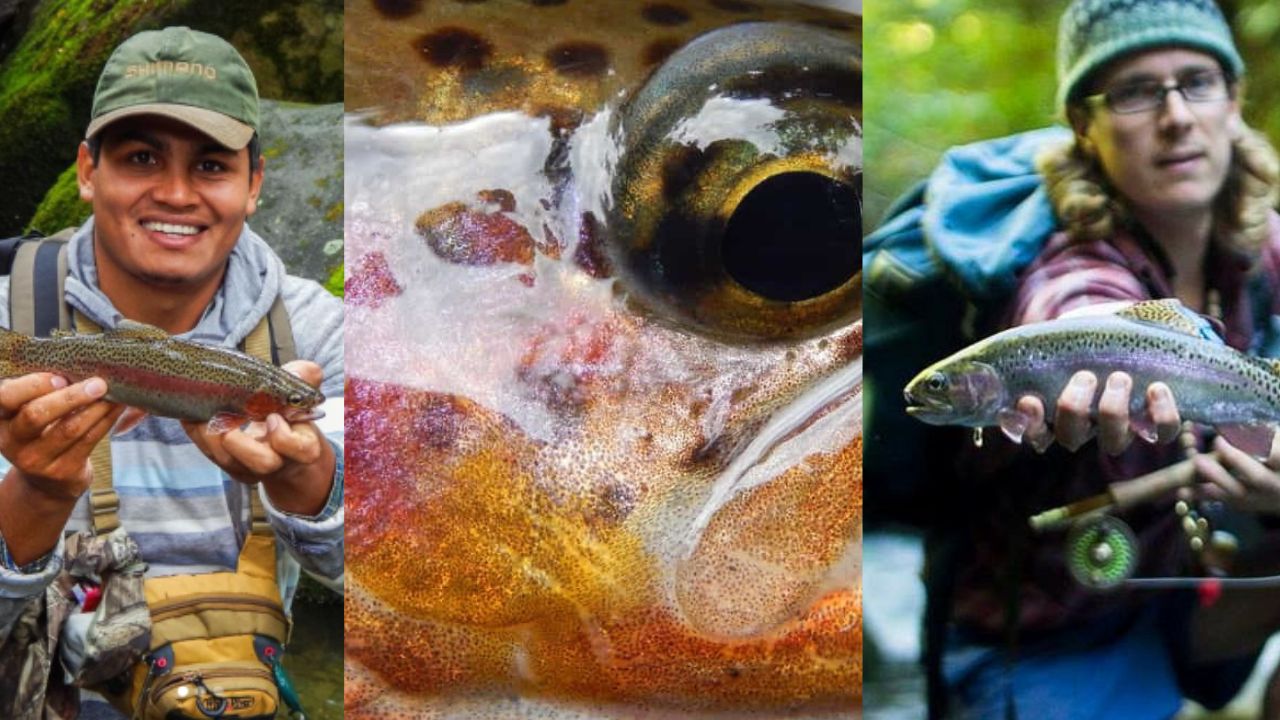
Six months after our encounter, this small group of anglers decided to visit me. I welcomed them and took them fishing on a hidden river in the cloud forest jungle of Costa Rica. I took care of picking them up at the airport or their hotel in San José and transported them to the Trogón Lodge, from where I guided them for three days. This was the starting point of my current Fishing guide business in Costa Rica.
The clients were impressed; they told me that fishing for trout in Costa Rica exceeded all their expectations. They never imagined they could catch such colorful rainbow trout in the middle of a jungle, while watching rainbow-billed toucans, quetzals, thrushes, hummingbirds, orchids, and monkeys. For the rest of their stay, we explored machaca fishing in Guanacaste and tarpon fishing in the Jungle Tarpon Reserve.
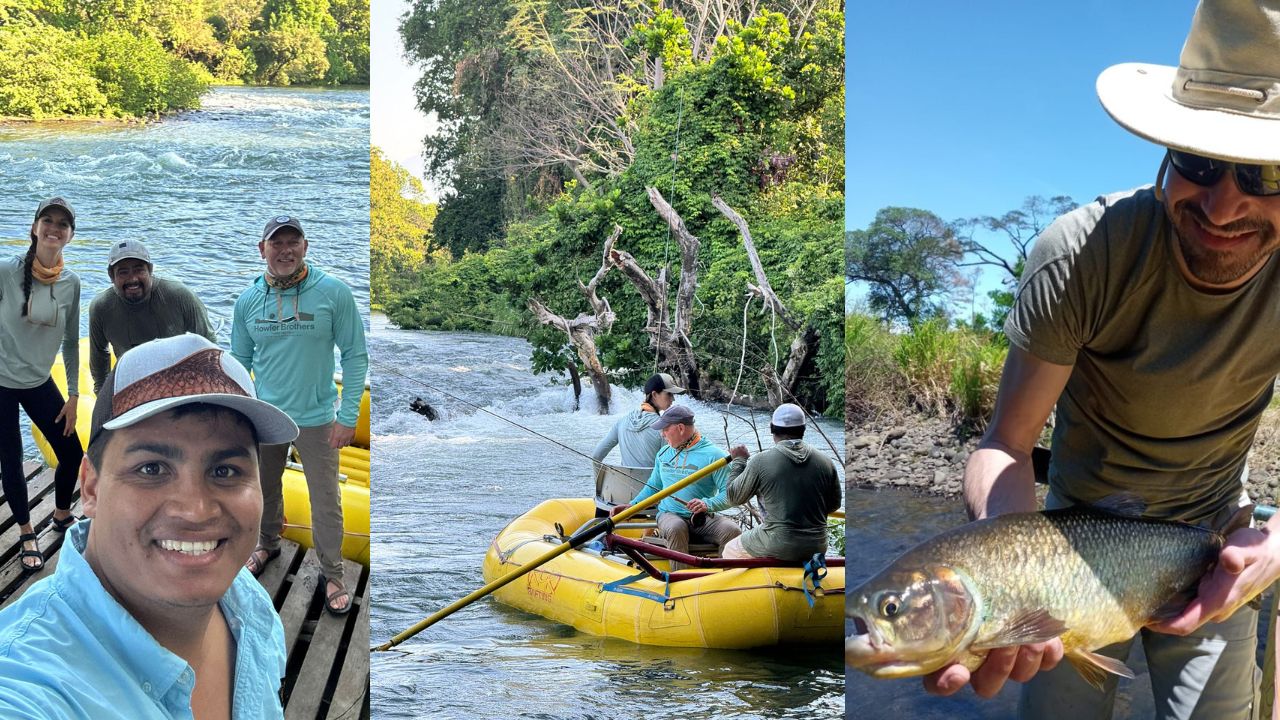
After that first experience, other anglers have come, and all have been amazed by the adventure. That’s why I considered it valuable to share with The Catch and The Hatch community some of the necessary information for those interested in embarking on a fly fishing trip for trout in Costa Rica.
ADDITIONAL INFORMATION ON TROUT FISHING IN COSTA RICA
Where are the rivers in Costa Rica where trout can be fished?
 In Costa Rica, there are several small jungle rivers located in the Quetzales National Park and the La Amistad International Park, the latter being in the Talamanca Mountain Range and along the Panama border. In all these places, there are populations of wild trout that have acclimated and reproduce normally.
Currently, the most famous rivers for trout fishing in Costa Rica are: the Savegre River, the Chirripó River, the Toro River, and the Copey River.
What is the origin of the trout populations in Costa Rica?
 In Costa Rica, trout is an exotic species that has naturalized in some rivers where it was released in the last century. The first trout reintroduced came from a release of eggs from a fish farm in Washington, carried out by American military personnel stationed at a military base in Costa Rica.
Repopulation efforts by the Department of Agriculture of Costa Rica:
Following the initial reintroductions by American military personnel and observing that the trout were acclimating to the small rivers of Costa Rica, the Department of Agriculture of Costa Rica decided to continue with the repopulation efforts, especially in the Talamanca Mountain Range. In this case, the strains used originated from the United States, Canada, and Mexico, and they also met with great success.
What size are the trout caught in the rivers of Costa Rica?
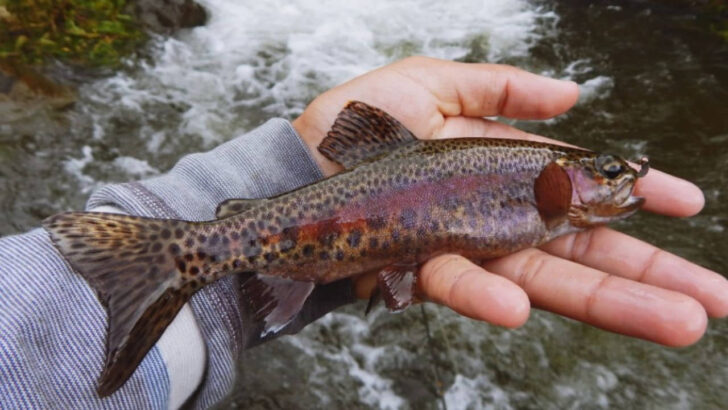
The average size of trout typically caught during a guided fishing day in Costa Rica is around 10 inches, occasionally reaching up to 17 inches. These specimens are usually found in slow-moving stretches of river with abundant food sources.
Gear Recommendations for fly fishing for trout in Costa Rica:
- Waders are optional! In the Costa Rican jungle, the tropical climate can make wearing waders optional. For most of the year, temperatures are warm and pleasant, allowing for comfortable fishing without the need for waders. However, during certain times of the year or in areas with cooler currents, waders can provide additional comfort and protection. We generally recommend fishing with quick-drying pants and slip-resistant shoes or boots.
- Rod and reel: For rainbow trout fishing in the rivers and streams of the Costa Rican jungle, it is recommended to use a medium or medium-fast action rod ranging in lengths from 8.5 to 9 feet in 3wt, 4wt or 5wt rods. These rods offer the necessary precision, sensitivity, and length to accurately cast flies. As for the reel, look for one that is balanced with the rod. Sometimes we like to use automatic reels for quickly retrieving the line, and the reels we use most are Vivarelli-type reels from Italy. The drag system is not very important since the trout are small to medium-sized, and it is not necessary to control their runs.
- Fly lines: For an optimal fishing experience, we suggest using DT lines due to their reusability when changing the opposite end. WF lines, in the first meters, are similar to DT, and the difference in casting between them is not noticeable until distances exceed 30 feet. For trout fishing in Costa Rica, where long casts are not required, a floating #3 or #4 DT or WF line would be suitable. Regarding the color of the line, we always recommend using non-flashy colors; we prefer white, green, or cream colors.
- Tippet and leader: For rainbow trout fishing in the rivers and streams of the Costa Rican jungle, a 9-foot leader in sizes 4x, 5x, or 6x is suggested. We recommend using monofilament for dry flies and flourocarbon for nymphing.
- Effective flies: Dry flies are an excellent choice for fishing rainbow trout in the Costa Rican jungle. Patterns that mimic local insects, both terrestrial and aquatic, are often very effective. Some popular flies include the Adams, Elk Hair Caddis, Royal Wulff, and Parachute Hopper. It is essential to adjust the size and color of the flies according to water conditions and fish activity. Several of our fly fishing assortments would be great to bring along on your trip including our Top Trout Assortment and our Dry Fly Assortment.
In Costa Rica, insects that fly over rivers abound, such as caddisflies, mayflies, leaf-cutting ants, beetles, and numerous grasshoppers. It is worth noting the beauty of caddisflies, whose colors differ greatly from those we are accustomed to seeing in the United States. Here, it is possible to observe yellow, green, and red caddis.
- Fly-Nymph Tandem: the most commonly used technique for fishing in these rivers is the use of a dry fly and nymph tandem. The most effective combination consists of a size 14 parachute Adams fly accompanied by a perdigon nymph or a San Juan worm imitation. Achieving precise drifts of the flies in mountain rivers, where trout often allow fishermen to approach reasonable distances due to their relative lack of shyness, is crucial.
- Trout fishing season: Trout fishing in Costa Rica is available year-round, but the optimal season usually coincides with the dry season, which runs from late December to late April. During these months, the weather is more stable, with less rainfall and lower water levels in the rivers. Specifically, January and February are usually excellent months for this activity.
Mountain rivers in Costa Rica, located mainly in cool and elevated regions such as the Talamanca Range and the Tilarán Range, offer a more enjoyable fishing experience during the dry season. However, it is important to note that during the rainy months, the water tends to be less transparent, making it easier to approach trout and sometimes allowing for the capture of larger specimens. Although rivers may become muddy after rain, they usually regain their normal clarity within one or two hours.
Can You DIY Fly Fish Costa Rica for Trout
- We know the accesses and have special permissions from the owners. There are confusing private properties, and locals can sometimes be uncomfortable with unfamiliar tourists inside.
- Costa Rica’s nature, in general, isn’t dangerous, but being accompanied by a local who knows about animals, plants, and river risks is immensely helpful. Especially in an environment so different from what most anglers are accustomed to.
- In addition to safety, our guidance greatly improves fishing results. From technical advice to knowledge about the river sections with the best fishing opportunities, our assistance is invaluable.
Fly Fishing Trip Reservation in Costa Rica:
To get in touch with us and reserve a fly fishing trip in Costa Rica, you can do so by contacting us below and we’ll forward this onto Charlie!
Costa Rica Fly Fishing Contact Form
If you need more information or have any additional questions, feel free to contact us at Costa Rica Fly Fishing Guides. We’re here to help you have the best fishing experience in Costa Rica. We look forward to fishing with you soon!
About the Author
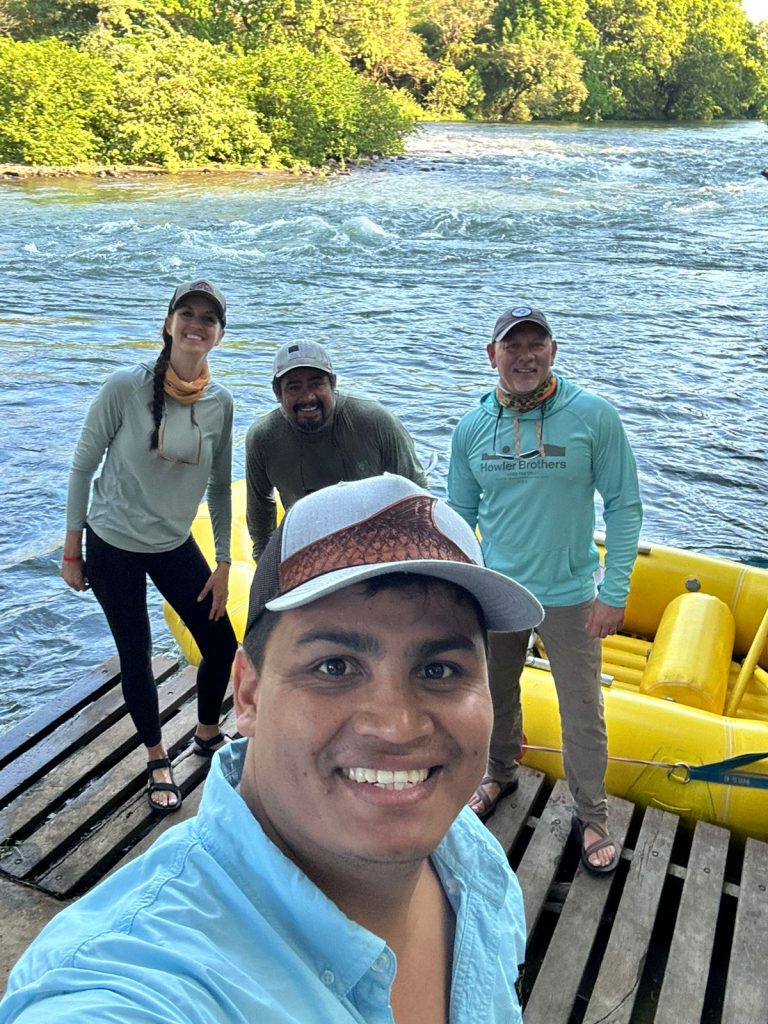
Charlie Chavarría, better known as “Charlie,” was born near the San Juan River, the renowned body of water that separates Costa Rica from Nicaragua, famous for its tarpon. From an early age, he dedicated himself to line fishing, eschewing the rod, a passion that consumed him entirely. Under the tutelage of Peter Gorinsky, a prominent fishing guide in Costa Rica and founder of the Costa Rican Fly Fishing Association, Charlie flourished, becoming one of the country’s most experienced and knowledgeable guides in this modality, accumulating over 16 years of experience in this discipline, now as a second-generation guide. In addition to his fishing prowess, Charlie is bilingual in English and an enthusiast of fishing-related photography.
