
How Do I Read a New River in the First 10 Minutes?
The 10-Minute Framework: Sit, Scan, Seine, Start
Most anglers pull up to a new river, rig up in a rush, and start casting into the first water that looks “fishy.” Thirty minutes later, they’ve spooked half the fish in the run, they’re fishing the wrong depth, and they have no idea what’s hatching.
Here’s the thing: the first 10 minutes on a new river are the most valuable minutes of your entire trip. What you do before your first cast determines whether you spend the rest of the day dialing in – or flailing around.
This is a learnable skill. There’s a system for it. And once you internalize it, you’ll walk up to any piece of water – anywhere in the country – and know exactly where to start, what to look for, and how to make your first cast count.
Let’s break it down.
Before we get into the details, here’s the framework you’re going to use every single time you arrive at new water:
- Sit — Do nothing for 5 minutes. Observe.
- Scan — Read the water structure and identify likely holding water.
- Seine — Figure out what’s on the menu.
- Start — Make your first cast with a plan, not a prayer.
That’s it. Four steps. Ten minutes. And every one of them makes the next step easier.
The mistake most anglers make is skipping straight to Step 4. They start casting without information. That’s like ordering food at a restaurant without reading the menu – in a language you don’t speak. You might get lucky. But probably not.
Step 1: Sit Down and Be Quiet for 5 Minutes
I know. You drove two hours. You’re excited. The water looks incredible. Your rod is practically assembling itself.
Sit down anyway.
The first five minutes on a new river should be spent doing absolutely nothing but watching. Find a spot on the bank with a good vantage point – ideally elevated – and just look.
Here’s what you’re scanning for:
- Water speed and character. Is it fast and choppy? Slow and glassy? A mix? This tells you what kind of presentation you’ll need and what techniques will work.
- Water clarity. Can you see the bottom? Is it stained? Murky? Clarity changes everything – your tippet size, your fly size, and how close you can get to fish without spooking them.
- Fish activity. Are there rises? Swirls? Shadows moving near the bottom? Even one rise tells you fish are feeding and roughly where in the water column they’re eating.
- Insect activity. Check the air above the water, the surface film, and the streamside vegetation. Bugs on the water? Bugs in the bushes? Swallows diving? All of these are clues.
- Weather conditions. Note the cloud cover, wind direction, and temperature. These aren’t just comfort factors – they directly influence insect behavior and fish activity.
Here’s the real reason this step matters: trout get eaten by birds. Any overhead movement – your shadow, your rod waving, your body walking the bank – puts fish on high alert. If you barge in and start casting, you’ve already reduced your odds before your fly hits the water.
Five minutes of quiet observation will tell you more about a river than an hour of blind casting ever will.
Introducting the Trout University
The Best Way to Master Fly Fishing for Trout
Everything you need to learn how to fly fish for trout.
From fly selection to presentation and location, all in one place.
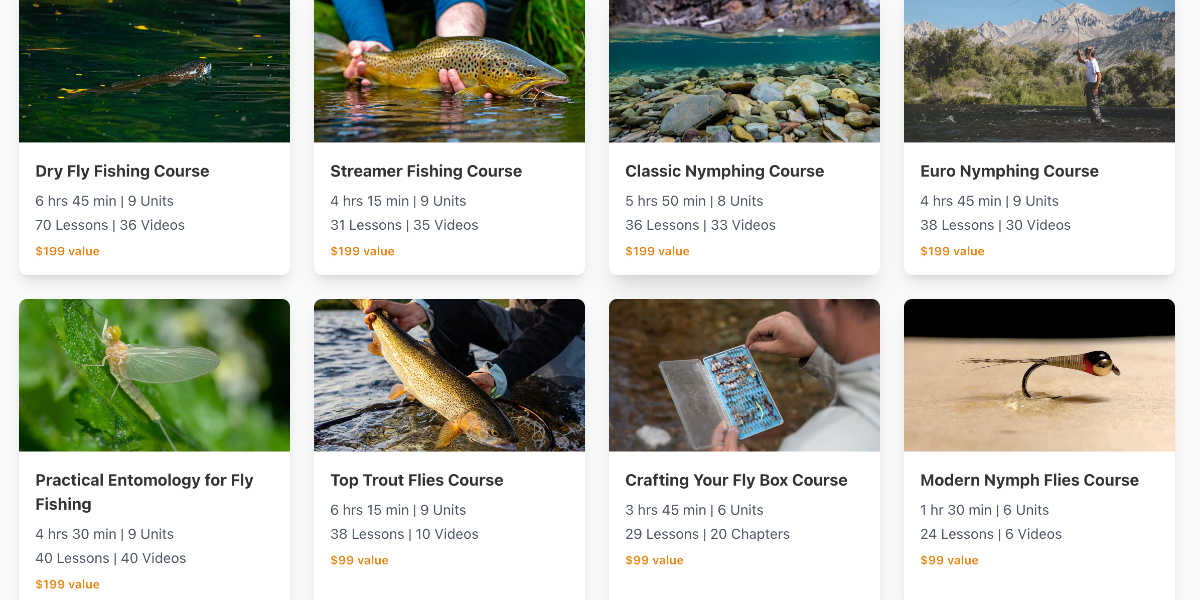
8 Premium Courses
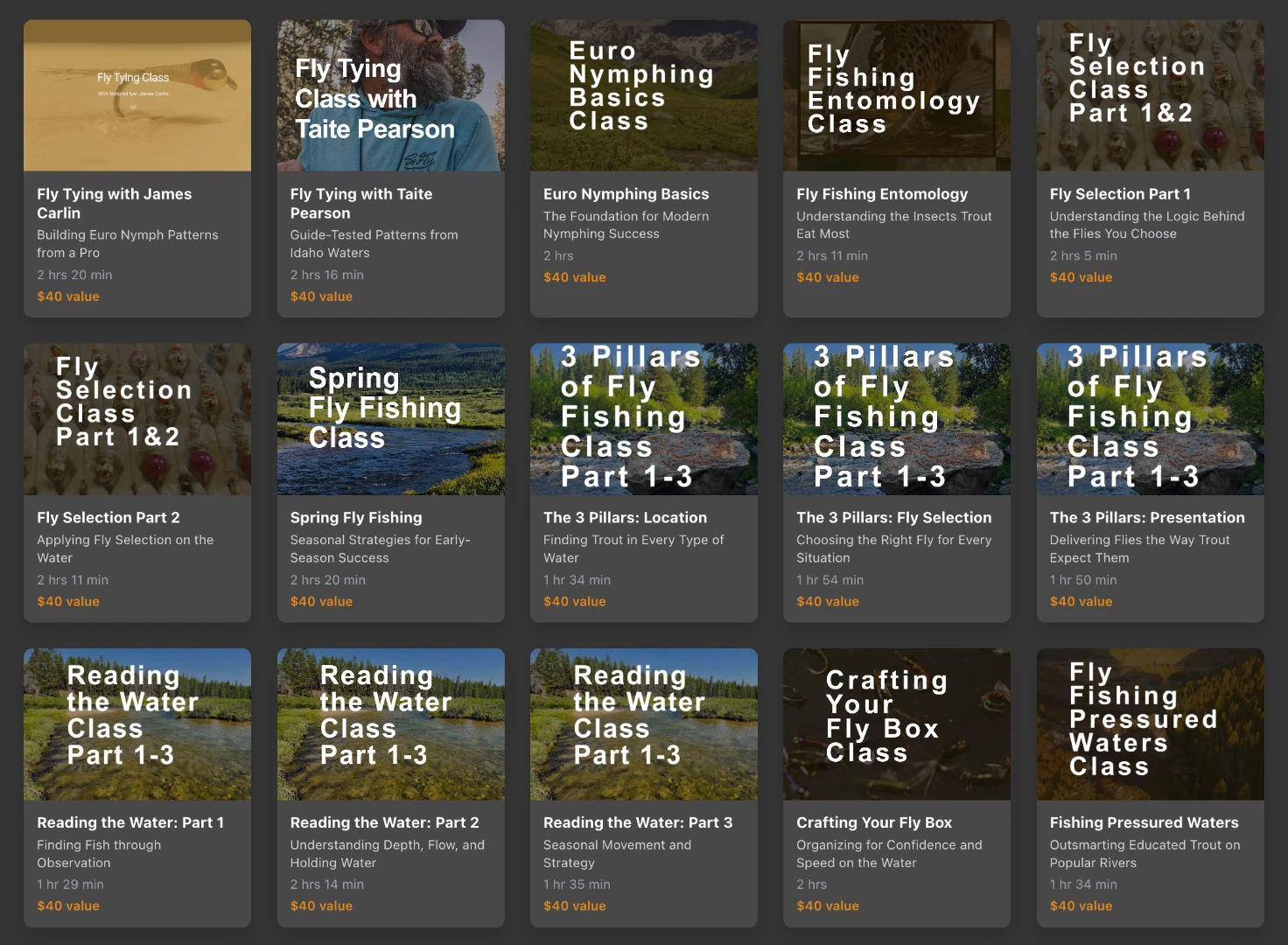
15 Video Classes
1-2hr Power Classes on Key Subjects and solidify your leaernings
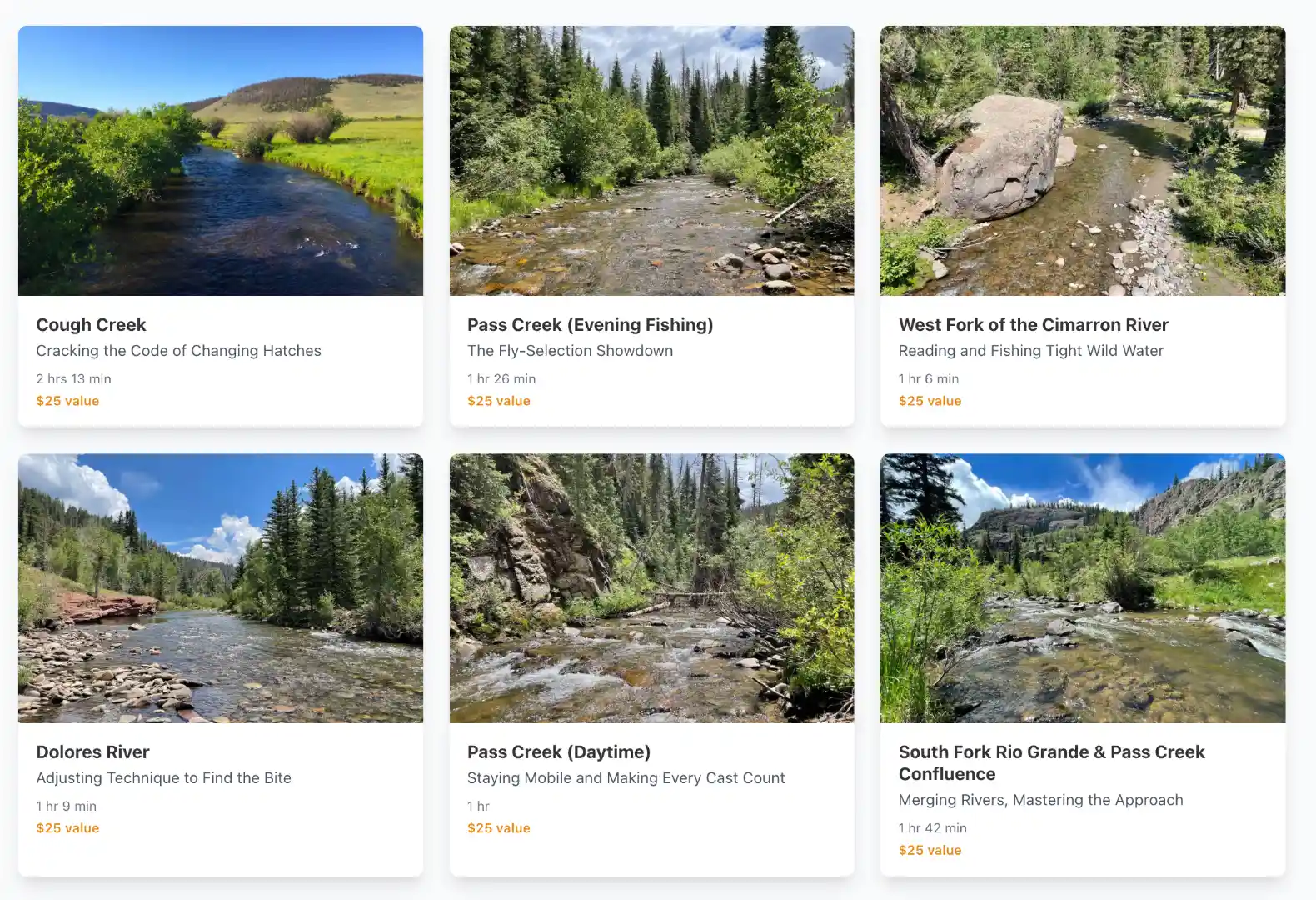
6 Streamside Courses
10+ Hours of Fishing to See Our Methods in Action
No Credit Card Required or Auto Renewal
Step 2: Read the Water Structure
Now that you’ve gotten a feel for the general mood of the river, it’s time to identify where the fish are most likely holding. Every river – no matter how unfamiliar — follows the same repeating structural pattern:
Riffle → Hole (Pool) → Run → Riffle
Learn to see this pattern and you can read 95% of rivers on earth. Here’s what each section means for you:
- Riffles — Shallow, fast, broken water over rocks. This is where food gets produced and funneled downstream. Fish feed here, especially in warmer months, but most anglers walk right past riffles. That’s an advantage for you.
- Holes/Pools — The deepest, slowest water. Fish hold here for safety. Big fish love pools. But they can be harder to fish effectively, especially with nymphs, because depth management gets tricky.
- Runs — Where the streambed rises and water compresses and speeds up. This is prime feeding water. Consistent current, predictable depth, and a steady conveyor belt of food. If you’re going to start somewhere, runs are often your best bet.
- Pocket water — Small calm spots behind or beside rocks in faster current. These often hold fish and get skipped by other anglers. Accurate casting is key.
What to Look For Specifically
Within these structures, you’re looking for transitions and seams – places where something changes:
- Foam lines. Where foam collects, food collects. Foam is home.
- Current seams. Where fast water meets slow water. Fish sit on the slow side and pick off food drifting past on the fast side.
- Dark-to-light transitions. Where deep water meets shallow water – these drop-offs are trout magnets.
- Structure. Behind rocks, beside logs, under cut banks. Anywhere current is broken and a fish can sit without fighting the flow.
The key principle: trout always face into the current, whatever direction it flows. Even in back eddies where water spins upstream, fish will face into that reverse current. Knowing this tells you exactly which direction to approach from and where to place your fly.
Don’t try to fish the whole river. Pick the two or three most promising-looking spots based on what you see, and commit to working them well.
Step 3: Seine the Water and Check the Menu
You’ve watched the river. You’ve identified where fish are likely holding. Now you need to figure out what they’re eating – because that determines what you tie on.
There are two fast, reliable ways to do this:
The Menu Method (Passive)
Set a small seine net or even a piece of mesh in the current and let it sit for 60–90 seconds. Whatever drifts into it is what’s available to the fish right now. This shows you what’s actually floating through the water column – the “menu” the fish are reading.
The Dinner Plate Method (Active)
Wade upstream of your seine, kick the rocks and disturb the streambed, and let the dislodged insects wash into the net. This tells you what’s living in the substrate – the full inventory of potential food, not just what’s currently drifting.
What You’re Looking For
- Size and color first. Before you try to identify the exact species, note the size and color of what you’re finding. A size 18 olive nymph is a size 18 olive nymph whether it’s a BWO or a PMD – and matching size and color gets you 80% of the way there.
- Abundance. Lots of one type of bug? That’s probably what the fish are keyed on. Sparse and varied? Fish are likely being more opportunistic.
- Life stage. Are you seeing nymphs clinging to rocks? Emergers in the film? Adults flying around? This tells you where in the water column to present your fly.
The Rock Flip Test
Flip 9–10 rocks across different water types – riffles, the tail end of runs, and slower water. If you find abundant, diverse insect life, you’re on productive water with well-fed, active fish. If you flip 20 rocks and find almost nothing? The river may not support a healthy trout population, and you might want to consider moving.
Quick rule of thumb for matching insects to water temperature:
- 30s°F = Midges
- 40s°F = BWOs, small stoneflies
- 50s°F = Caddis, stoneflies, summer mayflies
- 60°F+ = Fishing quality often declines; fish mornings and evenings
If you don’t have a thermometer, estimate water temperature by averaging the daily high and low air temperatures over the past 7 days. Water temperature approximates that average and changes slowly compared to air.
Step 4: Make Your First Cast With a Plan
Now – and only now – you rig up and start fishing. But you’re not guessing anymore. You have a plan based on real information:
- You know where fish are likely holding (water structure and transitions).
- You know what they’re probably eating (seine results and seasonal knowledge).
- You know the general conditions (water speed, clarity, temperature).
Your First Rig Decision
If you saw rises during your observation: start with dries or a dry-dropper rig matching what you found in your seine.
If you saw no surface activity: start with a nymph rig. Match the size, color, and weight to the depth and speed of the water you identified as most promising.
If you have zero information and nothing revealed itself: use a dry-dropper rig with a buoyant attractor dry and a generic nymph underneath (a hare’s ear is hard to beat as a search pattern). This covers both the surface and subsurface simultaneously and helps you figure out where fish are feeding.
Work the Water Systematically
Start at the back (downstream end) of your chosen spot and work forward. This way you’re not wading through fish to reach the “good” water. Cast, drift, adjust. If you’re nymphing, get your depth right before you change flies. Most nymphing failures are depth problems, not fly problems.
Here’s your adjustment protocol:
- Fish 5–10 casts in a spot. No takes? Adjust depth first.
- Still nothing after depth adjustments? Change flies 2–4 times.
- Still nothing after fly changes? The problem is likely your location or presentation — move to your next identified spot.
- Two fish on the same method = a pattern. Exploit it. Repeat what’s working and refine from there.
This systematic approach – location first, then fly, then presentation – keeps you from wasting time on the wrong variable. When you change the right variable, results often come within one or two casts.
The Bigger Picture: Why This System Works Consistently
What you’re really doing in those first 10 minutes is running through the three pillars of fly fishing – Location, Fly Selection, and Presentation – in the right order.
Most anglers obsess over fly selection. They think the secret is having the right pattern. But the right fly in the wrong spot with a bad drift catches nothing. And the “wrong” fly in the right spot with a great drift catches fish all day long.
The 10-minute framework forces you to solve the biggest variables first. Location narrows the search. Observation and seining narrow the fly choice. And by the time you cast, your presentation has the best possible chance of working because everything upstream of it (figuratively and literally) is already dialed.
If you want to go deeper into this framework – how to break down rivers systematically, match flies to conditions with confidence, and build a repeatable process that works on any water – Trout University VIP walks you through the entire system step by step. You can try it free for 30 days and you won’t be auto-charged.
Recap: Your 10-Minute Checklist for Any New River
- Sit for 5 minutes. Watch the water, the banks, the air. Note speed, clarity, rises, bugs, and weather.
- Read the structure. Find the riffle-hole-run pattern. Identify seams, foam lines, drop-offs, and transitions.
- Seine the water. Use the menu or dinner plate method. Note size, color, abundance, and life stage of insects. Flip rocks.
- Rig up with a plan. Match your first rig to what you observed. Start at the back of your best spot and work forward.
- Adjust systematically. Depth first, then fly, then location. Two fish on the same method means you’ve found the pattern.
The river is always talking. The only question is whether you’re listening before you start casting – or after you’ve already blown your best opportunity.
Next time you pull up to new water, give yourself 10 minutes. You’ll be amazed at how much the river tells you when you actually ask.
Introducting the Trout University
The Best Way to Master Fly Fishing for Trout
Everything you need to learn how to fly fish for trout.
From fly selection to presentation and location, all in one place.
8 Premium Courses
15 Video Classes
1-2hr Power Classes on Key Subjects and solidify your leaernings
6 Streamside Courses
10+ Hours of Fishing to See Our Methods in Action
No Credit Card Required or Auto Renewal
