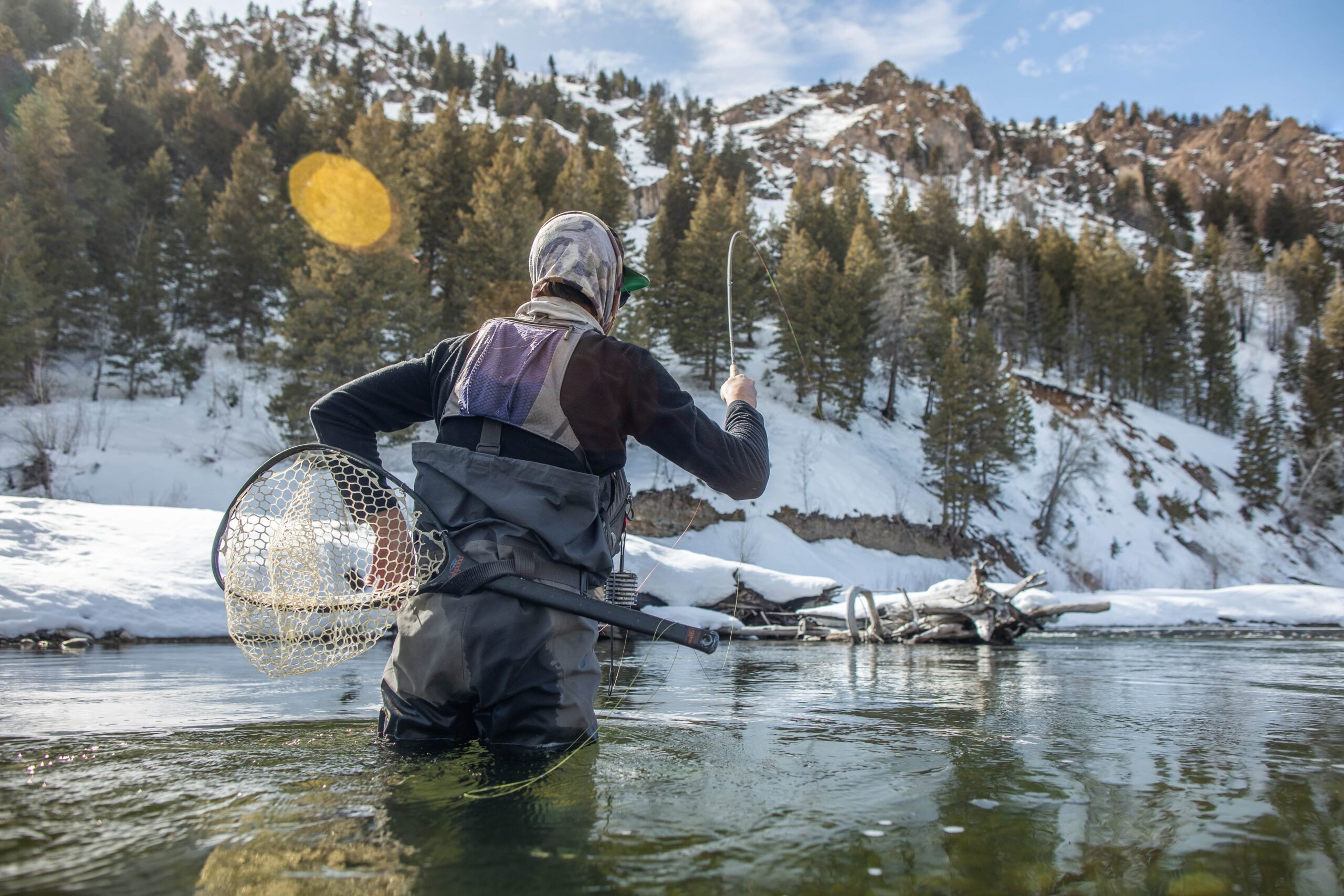
Three Ways to Reduce Drag
When You’re Nymphing
Drag less, catch more
As I always say…you cast for show and you drift for dough.
Yes, I ripped off an old golf saying with that one. But, what I mean by that is: no matter how beautiful your cast is, what really matters is whether or not you catch a fish – which takes a decent drift, without the dreaded drag!
When it comes to successfully nymphing with a strike indicator, most anglers face major issues with drag. It could be, quite possibly, the number one problem fishermen encounter with proper presentation. And it’s most certainly one to solve and fix, ‘cause ultimately, if drag can be reduced, fish can be produced.
Here are three ways you can reduce your drag when you’re nymphing, so you can become a better angler and catch more fish:
Use Less Line + Make Shorter Casts
So You can Optimize your drift
What Usually Goes Wrong
Believe it or not, you probably aren’t being more efficient casting 30 feet out in front of you in preparation for a big 50 foot drift. The problem with that is – whether your indicator is dragging or not – your flies typically end up way in front of, or behind your indicator. And in that case, you’re not getting your most optimal drift. Fifteen seconds in most rivers is really only as long as you’re ever going to need, want, or have any sort of success with. After that, the river takes control.
How to Fix the Problem and Catch More Fish
Use less line and make shorter casts. That way, you’ll be fishing more accurately, and you’ll get better drifts in the time you do have. In this game, time is trout, and it doesn’t make any sense to send your fly through a fifty foot drift, when only ten of those feet were any good. So strip some of that line in, forget about how gorgeous your cast is, and fish a little bit closer to your body. Trust me, you’re likely going to see some serious results when it comes to reducing your drag.
Only Mend When it’s Necessary
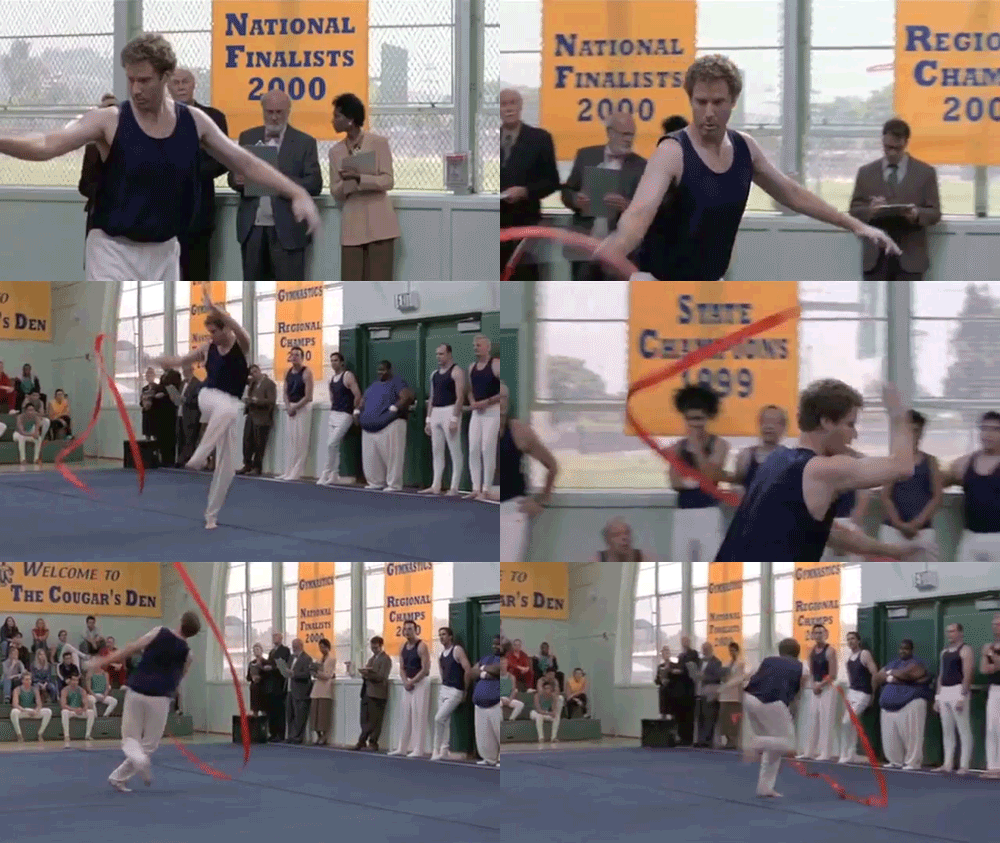
You’re an angler, Not a Ribbon Dancer
 What Usually Goes Wrong
I can’t tell you how many times I’ve gone out to a river to fish, only to see a bunch of anglers mending over and over again, flicking fancy loops and whatnot. It’s a little ridiculous.
To summarize, anglers obsess over their indicator being in the perfect position, just out in front of them, and fail to realize that they might actually be reducing the likelihood that they’ll catch a fish in the process. So, let’s fix that.
How to Fix the Problem and Catch More Fish
Only mend when it’s absolutely necessary. Which is usually only at the very beginning of your cast.
Of course, this can depend on where you’re standing in the water. But, if you’re standing where most anglers nymph — about twenty to thirty feet back from the top of a run with a riffle – you’re going to want to mend right away.
That way, as you’re drifting down into the hole, your fly can actually drop down into the water as naturally as possible. After that initial mend, you really only need to mend again if your line is getting too far out of whack. Otherwise, mending as little as possible is actually a much preferred way to nymph.
Your Body Position Determines Your Drag
It really does matter where you stand in the river
What Usually Goes Wrong
Your position in the river – where you physically stand as you fish — matters when it comes to reducing your drag. More often than not, I see beginner to intermediate anglers making the mistake of standing where the fish are (where they actually should be fishing).
If you catch yourself making this mistake – you’re standing right on top of the fast moving hole you’re attempting to fish, instead of ten to twenty feet back from it – odds are you’re going to start to drag really quickly. The water’s going to immediately tug on your strike indicator, and therefore, your line. Then you’re going to swing. You do not want to swing if you are aiming for a drag-free drift.
How to Fix the Problem and Catch More Fish
Instead, stand about fifteen feet (reminder: we’re using less line) below where you want your drift to start. Typically, when you do this, you’ll be standing in water that’s softer than the water you want to fish. This will reduce your drag, bettering your drift, and helping you catch more fish.
Give these techniques a try, and hopefully, you can start to feel just how important it is to cut down on drag when you’re nymphing. And, if you want to learn to perfect the practice even further, you can always check out our Classic Nymphing Course or the Trout University (See below) which includes all of our courses, classes and videos to help you master all fly fishing techniques and strategies for trout.
Over and tr-out!
Trout University
The Best Way to Master Fly Fishing for Trout
Everything you need to learn how to fly fish for trout.
From fly selection to presentation and location, all in one place.
8 Premium Courses
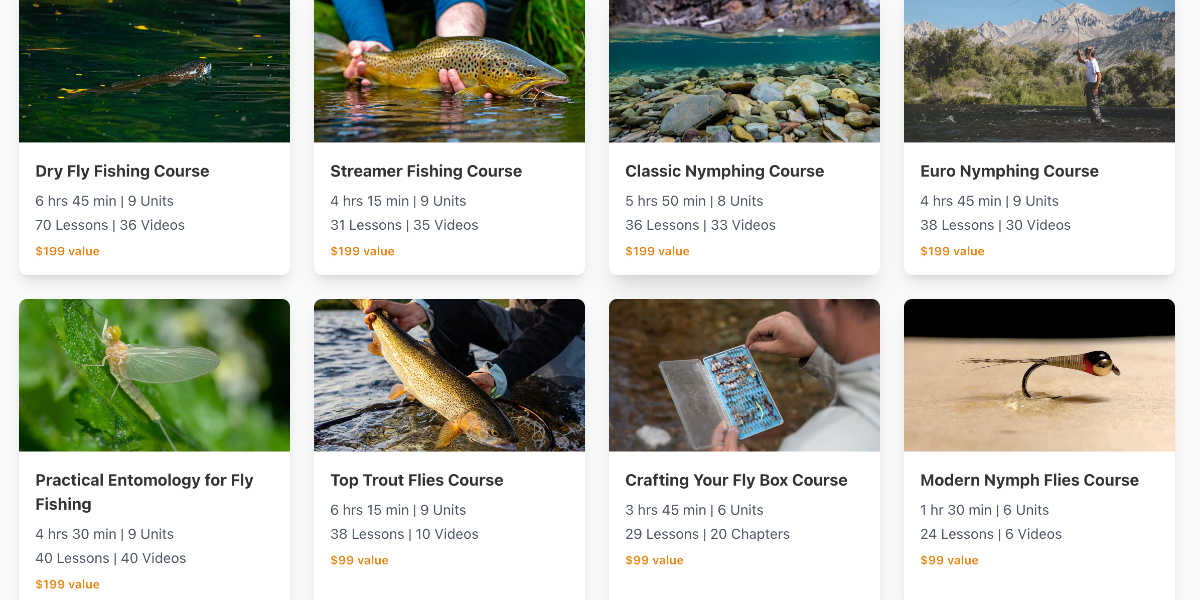
15 Video Classes
1-2hr Power Classes on Key Subjects and solidify your leaernings
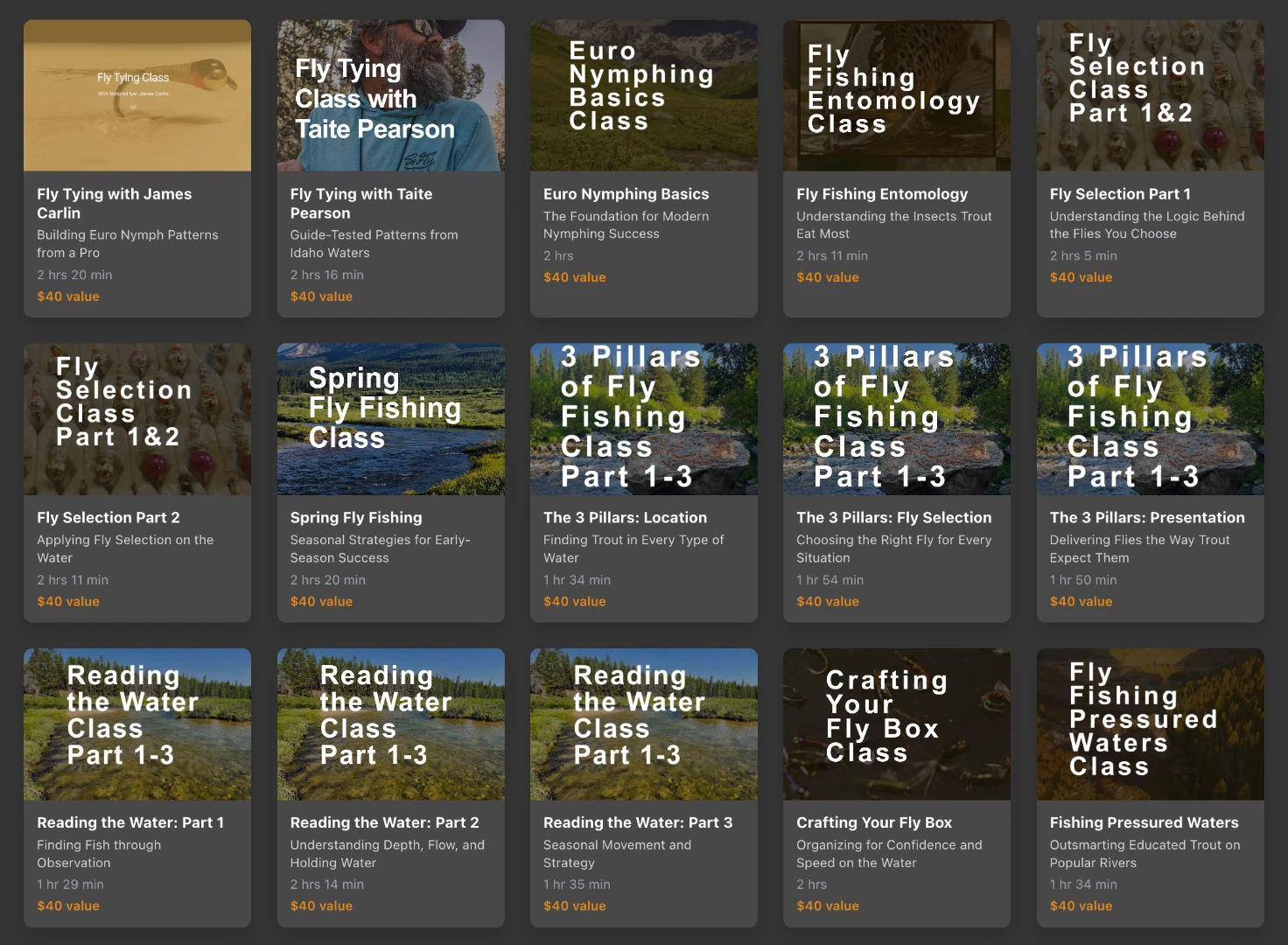
6 Streamside Courses
10+ Hours of Fishing to See Our Methods in Action

Have You Tried One of Our Courses?
Lifetime Access | Special Coupons | Angling Mastery
-

Fly Fishing Entomology Course
$199.00 -

Euro Nymphing Course
$199.00 -
Dry Fly Fishing Course
$199.00 -

Classic Nymphing Course
$199.00 -
Streamer Fishing Course
$199.00 -

Top Trout Flies Course
$99.99 -
Crafting Your Fly Box Course
$99.99 -
Modern Nymph Flies Course
$59.99 -