
Types of Water, an Angler’s Guide
Master reading water AND catch more trout →
Fact: all rivers flow in a run, riffle, hole repetition.
Really — ALL rivers follow this pattern. Get a drone up in the air, look at any river, and you’re going to see a chain of riffles, runs, and holes.
Of course, the lengths of these sections depend on the overall size of the river or creek in question. In a large river — like the Deschutes River — a run could stretch for miles. In a small creek — Tumalo Creek, perhaps — a run could last a mere 50 feet. Regardless, both have runs, followed by riffles, followed by holes because they all contain

continuously flowing water that constantly push their respective stream beds down stream. As a result, little, easy-to-move rocks build up against larger, harder-to-move boulders. Then pressure builds, the stream becomes shallower, and the water starts to move faster (same CFS + decreased depth = faster moving water). Just like that, a run becomes a riffle.
Now, a riffle becomes a hole when enough sand/small rocks get backed up against a big ol’ boulder, creating a sort of “stopping point.” Because of the water’s constant flow, a ramp forms beneath the water. The water will then speed up over the big ol’ boulder and plunge below, creating every trout’s happy place — a nice, calm, deep, slow-moving pool. From there, the water down below that “stopping point” slows because of the increase in depth, and eventually stabilizes. The depth returns to its median height, and thus, we transition from a hole, back to a run.
Alright, say it with me now — run, riffle, hole, run, riffle, hole. Learn them. Love them. Fish them.
Now that you’ve got that down solid, let’s discuss the other types of water you’ll inevitably run into when fly fishing rivers:
Types of Water, Continued
Reading Pocket Water, Slack Water, Back Eddies…Etc.
Let’s dive into the details a little bit.
As you’re probably already well aware, there are many other names, or secondary definitions, of the ways in which water behaves in a river. For example, there’s pocket water, slack water, back eddies, plunge pools, and glides. Let’s discuss a few of these in a bit more depth, starting with everybody’s favorite, pocket waters!
- Pocket Waters — Pocket waters happen anytime there are a few large boulders stopping the movement of smaller rocks/sand at the end of a riffle. In this case, these boulders aren’t large enough to dam up the whole river and create a hole. Instead, they just create little buckets in the water. Those little buckets are the pocket water, and more often than not, they’re probably going double as a trout’s house.
- Slack Water — Not to be confused with a back eddy, slack water occurs anytime there’s enough erosion on the edges of the river to pull the water back a bit. As a result, the water hangs back against the river’s bank once it’s already flown through. Foam usually starts to form, and the water moves incredibly slowly, or hardly at all.
- Back Eddy — Back eddies happen when water flows so quickly through the middle of a river, the water actually turns around and goes backwards on itself. This most commonly happens during transitions between riffles and holes. As a result, the water circulates in a clockwise or counter clockwise motion, spins back on itself, and recirculates. From an angler’s perspective, it’s important to keep in mind that the trout you’re attempting to catch, if they’re in the back eddy, will face the opposite way than you expect (downstream, instead of upstream). So, when you think you’re sneaking up on a fish, you might actually be walking right into its face. That will spook the fish, and of course as a result, you won’t catch the fish. *Que sad music*
- Plunge Pool — Anytime you see a BIG, solid, boulder (we’re talking a Dwayne ‘The Rock’ Johnson type of boulder) there’s probably a plunge pool right after it. Essentially, the boulder creates a sort of waterfall that drops into a very deep, very big pool. Everybody likes to fish in a good ol’ plunge pool — they’re deep, wide, and usually, very fishy.
- Glides — Glides are fast moving sections of river that don’t have a lot of turbulence to them. They’re like riffles, yes, but they’re a bit deeper — they don’t have a bunch of rocks creating ripples or disruptions on top of the water. Rather, glides are very flat and glassy. And they’re extremely tough to fish. If you’re fishing a glide, it can be pretty dang hard to have a good drift and not spook fish at the same time. Not to say that you can’t challenge yourself, and give it a good college try.
Trout University
Master Reading Water
Regular Price: $297/year
Your Price: $149/ first year
Expires Dec 3rd, 2025
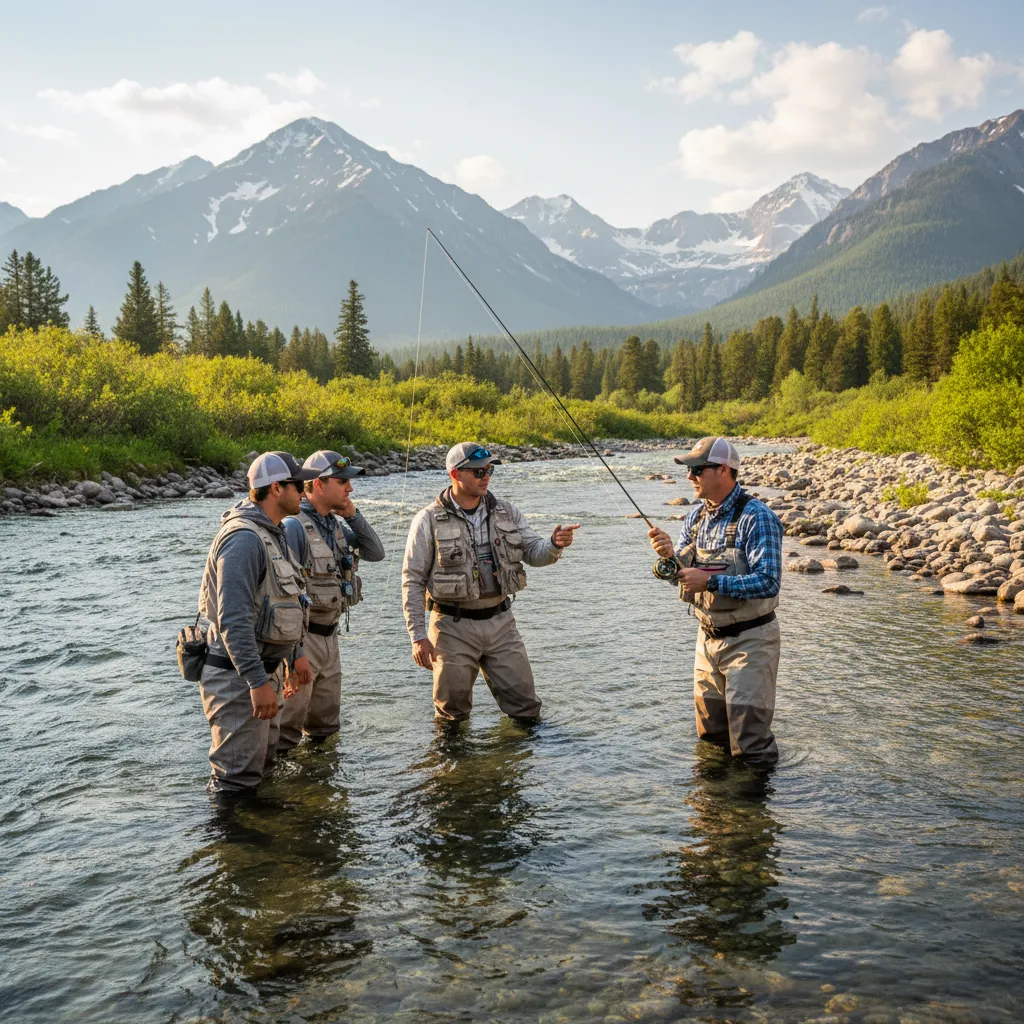
WHAT YOU GET INSIDE TROUT UNIVERSITY:
Access a complete fly fishing education with structured lessons that teach you how to choose flies, read water, understand trout behavior, and make smart decisions on the river.
- Learn the full framework for fly selection, presentation, and location so you can catch fish more consistently
- Get 8 complete courses, 15 expert-led video classes, and 6 on-the-water streamside sessions
- Understand insect lifecycles, seasonality, and how trout respond to changing conditions
- Build confidence by learning exactly why trout eat, how they behave, and how to adjust your strategy on the water
Why Anglers Need to Know Water Types
Find the best fishing. Fish with the correct presentation.
Step one in learning how to read water = reading articles like this one. Memorize and define what types of water are. Understand how each type behaves, and therefore, how fish behave in those types of water.
Once you understand how the fish behave, you can then determine how to properly present your fly. Think about how presentation might shift on a seasonal basis, and learn to communicate these realizations/concerns with your fellow anglers. Together, you can establish in your own minds where the best fishing is, or will be, on any given day based on types of water, and external weather factors.
All in all, learning and understanding water types WILL help you become a better angler. In our Classic Nymphing Course, I talk about the seasonality of certain types of water, and how to fish into them. For instance, holes are better in winter because they provide the trout with warmer water. Knowledge like this + an understanding of basic trout behavior + your past experiences = catching more fish. Thanks again for reading.
 KATIE GILBERT

Over and tr-out!
Match the Hatch Free Guide

Enter your email below, and even if you’re on our list already, you’ll receive our Fly Selection Mastery Series which contains 5 free lessons to help you fully understand the art of fly selection.
[wpam_subscribe plan=”5″]
Trout University
Learn Everything You Need to Catch More Trout
With One Complete Fly Fishing Membership
Regular Price: $297 per year
YOUR PRICE: $149 for first year (Expires Dec 3rd 2025)
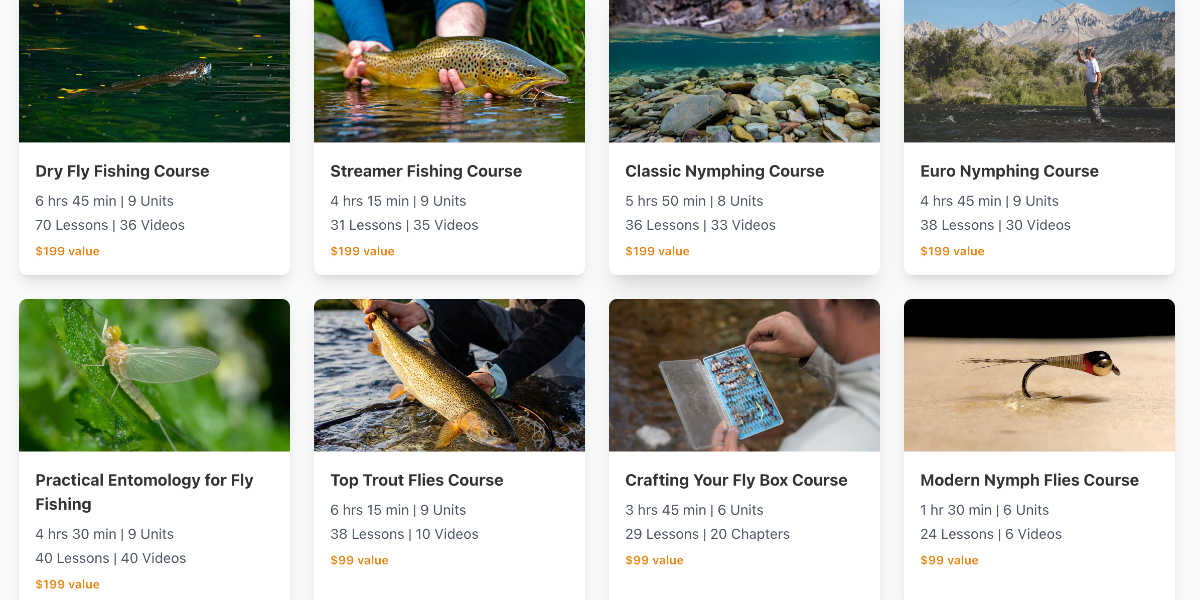
8 Premium Courses
15 Video Classes
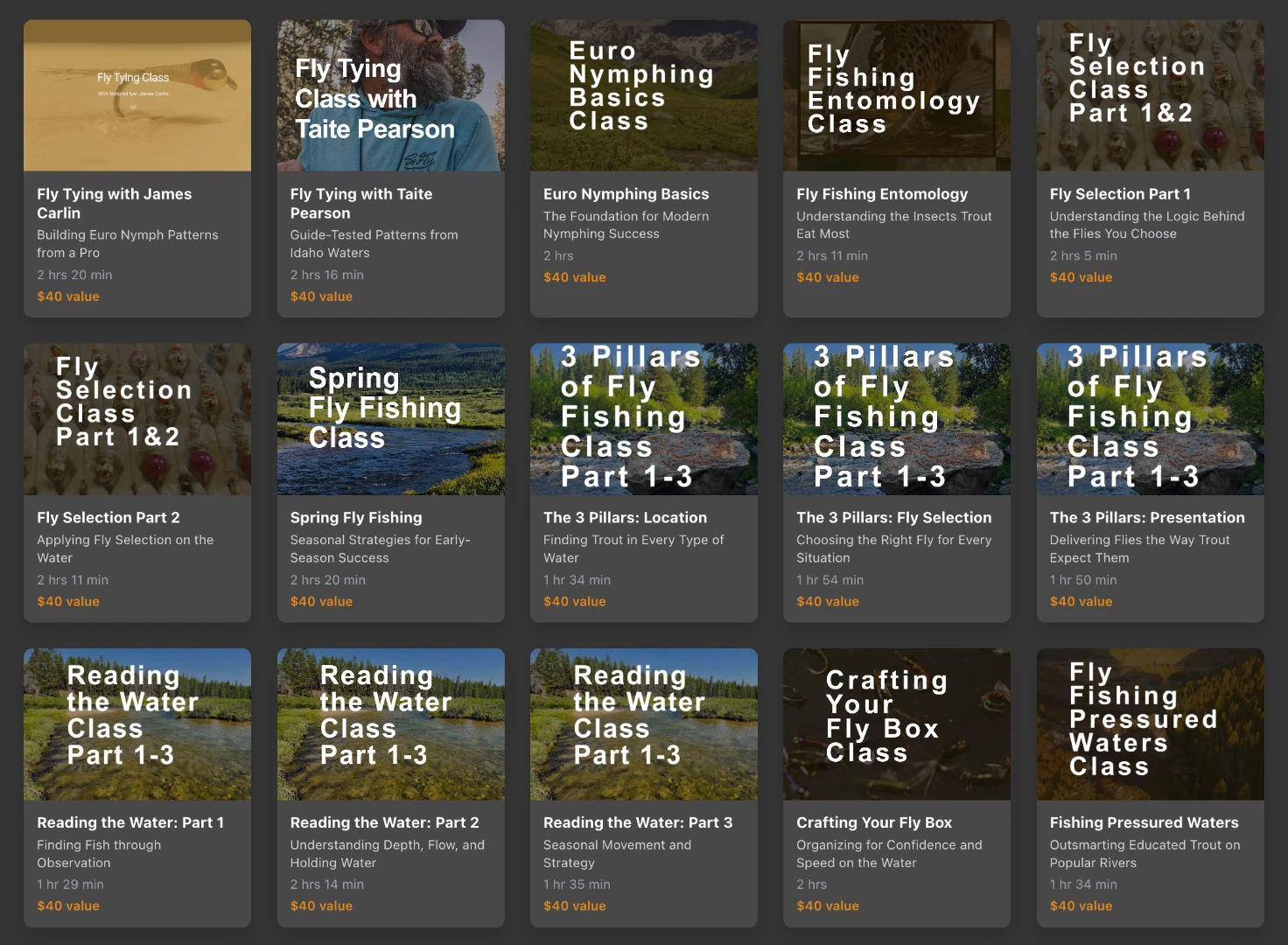
1-2hr Power Classes on Key Subjects and solidify your leaernings
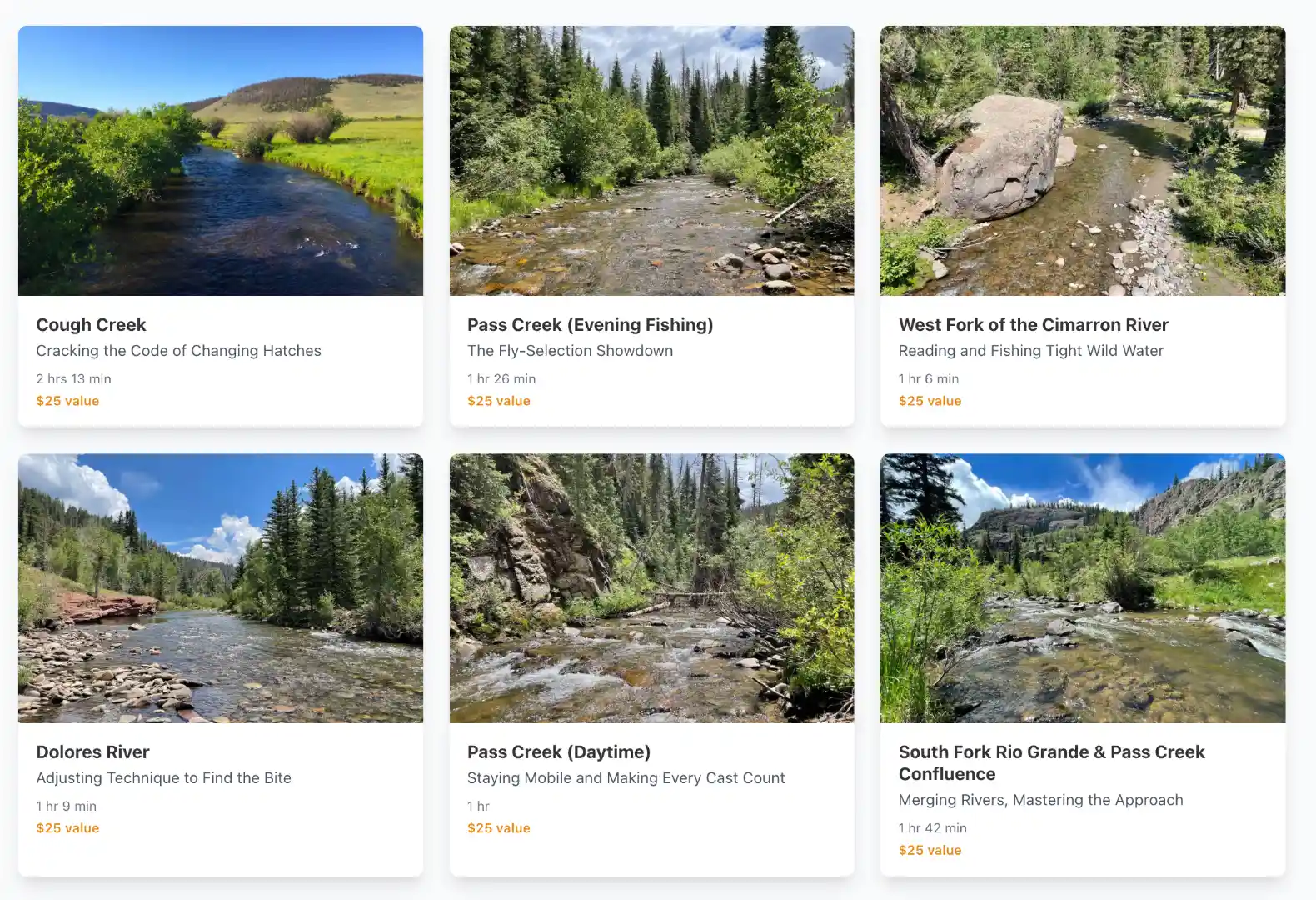
6 Streamside Courses
10+ Hours of Fishing to See Our Methods in Action
Trout University Membership
Trout University gives you every tool you need to become a confident, consistent trout angler.
Learn the full system for fly selection, presentation, and location through complete courses, expert-led classes, and on-the-water instruction.
WHAT YOU WILL LEARN:
Inside Trout University you will follow a proven framework that connects the details of fly fishing into a simple, reliable approach you can use on any river.
- Master the three pillars of trout fishing: fly selection, presentation, and location
- Learn from 8 full-length courses that cover dry flies, streamers, classic nymphing, euro nymphing, entomology, fly box strategy, modern nymph patterns, and more
- Watch 15 expert-led video classes (28+ hours) that break down advanced topics like reading water, pressured fish, seasonal strategy, and fly tying
- Follow 6 streamside adventures filmed on real rivers to see how decisions are made in real time
- Understand insect lifecycles, seasonal changes, and what drives trout behavior throughout the year
- Learn the most important fly patterns, what they imitate, and exactly when to fish each one
- Build real confidence by understanding the “why” behind every choice you make on the water
