
Three Great Tips for Euro Nymphing in the Winter
Your guide to fish-catching success →
If you aren’t addicted to euro nymphing already…I’d say it’s about time you hop aboard the bandwagon. Why?
For starters, even as a beginner, you’ll catch fish like nobody’s business if you’re euro nymphing. Katie, a team member here at The Catch and The Hatch, can attest to this — you can read all about her first time trying this absurdly fun technique here. OR, you can dive right into the Euro Nymphing Course (see the sweet deal to your right), become one of the pros, and catch more trout than you ever thought imaginable — any time of year. Including winter! But more about that later.
As most of you may already know, fishing during the winter can be incredibly difficult, no matter the technique. Flows lower, water slows, temperatures drop, and trout become even lazier than they were before (in an attempt to conserve their energy). Even euro nymphing becomes more difficult. Still, follow these three tips, and I can assure you, you’ll catch fish even during those dastardly cold months.
Here’s a bit of advice, from my own experience euro nymphing during the winter:
Get 75% OFF The Euro Nymphing Course
catch more fish than you ever thought imaginable
Lifetime Access: $199.00
Your Price: $49.75
Fully Online | Self Paced | Lifetime Access
7 Lessons | 90+ Pages | 20 Videos | Pics | Diagrams & More
Slow Water + Low Flow = Lighter Flies
Use lighter flies to avoid spooking trout
Not sure how to start filling your EURO NYMPH box?

Check out our Euro Nymph Assortment for $60 OFF!
48 Nymphs I always keep in my Trout box
When we’re euro nymphing we usually use bigger nymphs. They sink fast and stay in the strike zone longer. And as we all know, the longer your flies are in the strike zone, the more likely you are to rip a trout lip or two.
However, there won’t be any fish IN the strike zone if you accidentally spook them. Fish are weary during the winter. They spend their days sitting soundly and conserving energy in slow, quiet water. So, they’ll definitely hear you if you smack a heavy fly into the water. Once the winter rolls around, it’s time to initiate stealth mode.
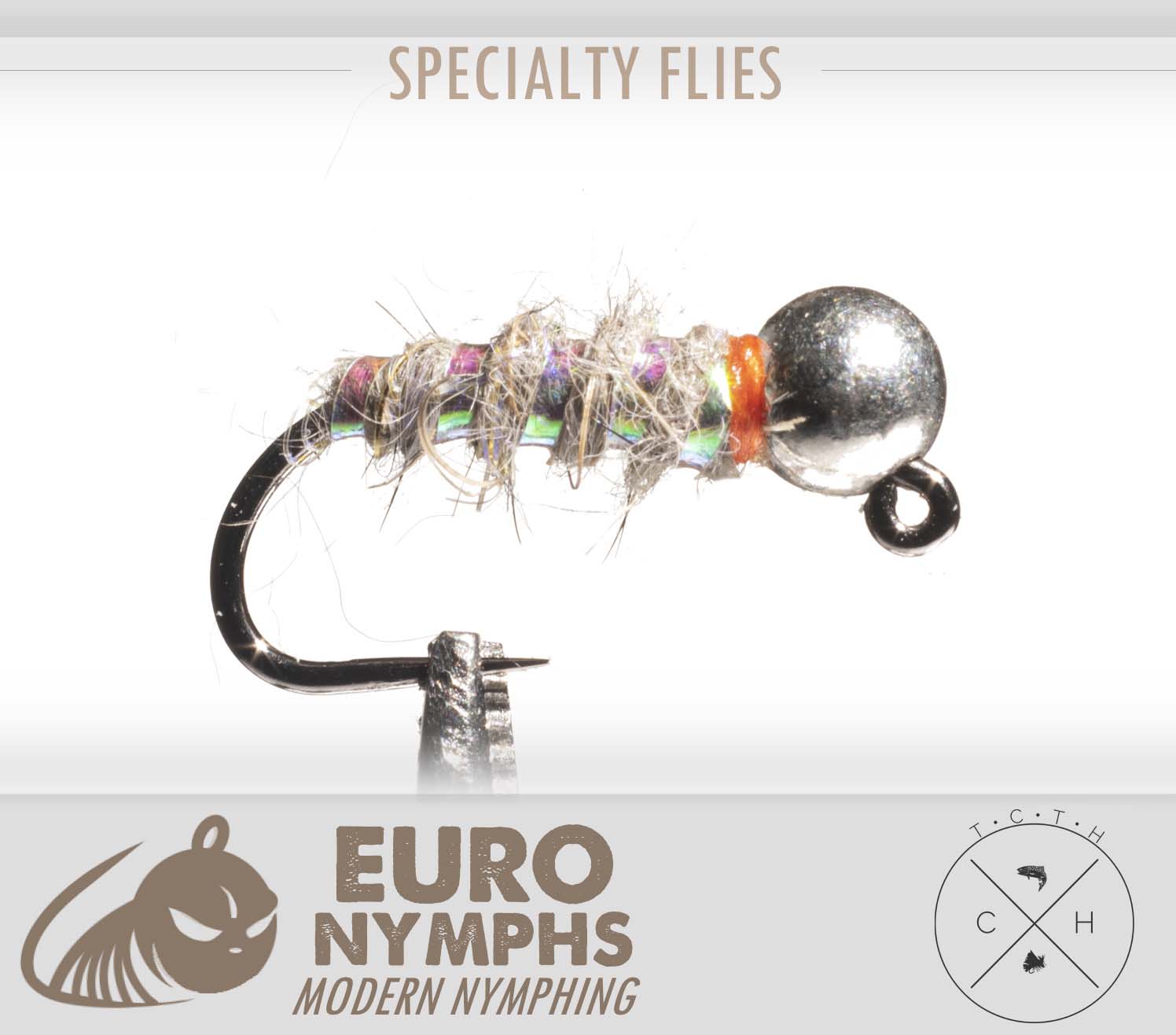
That’s why, during this time of year, it’s important that you start tying lighter flies onto your rig. You’re not going to need a 3.8 millimeter beadhead on your fly to get it to sink, and the flows aren’t going to affect the natural quality of your drift so much. If big flies aren’t going to benefit your drift whatsoever, there’s no reason you should be smacking the water with a huge, heavy fly. Unless you get a kick out of spooking fish, like my seven year-old.
I’m just kidding! But, my point is that lighter flies will help you with a softer, more elegant presentation. Something that won’t disturb the fish, but will instead intrigue them. And hopefully as a result, the fish will eat your fly.

Lengthen Your Tippet
Create a more natural-looking, deeper drift
When you’re euro nymphing during the winter, it’s important that you lengthen the tippet portion of your euro leader to achieve a more natural looking, deep drift.
Now, if you’re new to euro nymphing, and you’re not entirely sure how to set up a euro rod to begin with, feel free to watch my step by step video here. This video will help you with the entirety of the set-up process — attaching your fly line to your standard monofilament line (tapered or not) + tying on a tippet ring + tying on your sighting indicator line… you name it.
Yes, setting up your euro line is going to be generally the same any time of year. The tippet is really the only thing that I recommend you change — a.k.a, everything after your sighter line. During the winter, if I’m going for a three-fly set up, I usually opt for 12-18 inches between each fly (roughly three feet of tippet total, including my flies). If you’re fishing with two flies (because that’s just what you prefer, or your state doesn’t allow three fly setups), add an extra few inches of tippet between the end of your sighter line and your first fly. It’s going to help you get that deeper drift, without ever getting your sighter line in the water.
Sure, getting your sighter line in the water isn’t detrimental. BUT, if you can avoid it, you should. In my experience there have been times when my line spooks a fish, and let me tell you… it’s a bummer. Add that extra tippet, and spare yourself the sadness that comes with the spook. You won’t regret it!
Use Natural-Looking Nymphs
and better fool the fish
Fish are smart creatures. They’re hard to fool, especially during the winter.
Anytime you fish low, slow, clear water (like you typically do in winter) you’re going to have to be pretty particular about your presentation/fly selection in order to catch fish. During the summer, trout don’t have much of a chance to check out flies simply because the river’s carrying them down river so fast. However, as flies move slowly through winter’s waters, fish are going to have plenty of time to inspect what you’re presenting them with. They’re going to know when you’re pulling a fast one on them. That’s why you’ll find more success fishing flies that match the natural look of the insects you’re imitating.
If you show them something flashy, or gaudy, they’re going to know that something fishy is going on. And in turn, they won’t eat your fly.
Overall, the better you imitate what the fish are actually seeing in the winter, the more likely you’re going to fool them. As a result, you’ll hopefully catch them. Use natural flies, add a little extra leader to your rig, use a couple lighter flies, and your winter euro nymphing experience will be a whole lot more fun. Now go out there, and give it a try for yourself!
Thanks again for reading. If you have any questions about euro nymphing in winter, or about setting up your euro nymph rig, or really anything else remotely related to fly fishing, feel free to reach out here!
 KATIE GILBERT
 KATIE GILBERT
Over and tr-out!
Match the Hatch Free Guide

Enter your email below, and even if you’re on our list already, you’ll receive our Fly Selection Mastery Series which contains 5 free lessons to help you fully understand the art of fly selection.
Euro Nymphing Course
Catch More Fish Than You Thought Possible
Lifetime Access: $199
Your Price: $49.75
Fully Online | Self Paced | Lifetime Access
7 Lessons | 90+ Pages | 20 Videos | Pics | Diagrams & More
What You’ll Get In This Course
- 7 Lessons that teach the entire euro nymph technique
- Perfect for beginner to intermediate skill levels
- Catch more fish than ever thought possible
- Get unlimited access, take as many times as you want
- Get three, 50% off coupons for our euro nymph assortments or other courses
- Guaranteed to make you a better angler or your money back
- Access through our app for offline reading
