Stand upstream and slightly across from your target seam, close enough that your leader travels nearly straight downstream to the fly. That single decision – where you plant your feet before the first cast – determines whether you can achieve controlled contact, a useful drift, and any real shot at detecting a strike. No leader design or fly change fixes a position problem. Get the angle right first, and everything else becomes much easier to manage.

Where Should You Stand When Euro Nymphing?
How position creates a better 90-degree drift
Why Position Controls the Drift
Euro nymphing is built on contact. The whole system – the thin leader, the sighter, the lack of an indicator – only works if you can feel what the fly is doing and respond to subtle changes in its behavior as it drifts through the column. That contact depends entirely on the relationship between where you're standing and where your fly is going.
When you fish with an indicator, the bobber absorbs a lot of your positional mistakes. It floats, it moves, and it tells you roughly where the fly is even when your angle is poor. Euro nymphing strips that buffer away. The sighter reads the leader directly, which means any slack or tension from a bad angle shows up immediately as false information or lost contact. Fish from the wrong spot and your sighter tells you a story that has nothing to do with what the fly is actually doing.
This is the gap that trips up a lot of anglers who are learning the technique. They spend serious time thinking about leader recipes, fly selection, and tippet diameter. Those things matter, but they matter second. A well-constructed leader fished from a bad position will underperform a simple leader fished from a good one. The fly is underwater. The trout are underwater. Your job is to get the leader and fly to behave naturally in that underwater world, and your wading position is the first variable that makes that possible or impossible.
Position is a pre-cast decision. Before you lift your rod, you should already know where you're going to stand, why that position gives you the angle you need, and roughly how long your drift window will be from that spot.
What the 90-Degree Relationship Means
The concept of a 90-degree drift is worth understanding clearly because it comes up constantly in euro nymphing instruction and it's easy to misread.
The goal is to have your leader traveling directly downstream, or nearly so, with the fly at roughly a right angle to your rod tip path as the drift progresses. Think of it this way: if you're tracking the rod tip in a smooth arc downstream and the leader is hanging directly below that arc toward the fly, you have a clean, direct connection. The contact you feel is real, the depth reading is accurate, and the sighter is reacting to what the fly is actually doing.
When that angle collapses – when you're standing too far across-stream and the fly is drifting downstream while the leader is pulling sideways at a shallower angle – a few things go wrong at once. First, you lose depth control. The sideways tension lifts the fly in the column rather than letting it sink and drift freely. Second, the sighter starts pulling across the current instead of hanging naturally, which makes it almost impossible to distinguish a strike from the tension of the angle itself. Third, the fly begins to swing rather than drift, moving unnaturally through the water and reducing your chances of a take considerably.
You don't need a perfect 90-degree angle on every cast. Real rivers don't allow for perfect geometry. But the closer you can stay to that relationship throughout the drift window, the better your contact and depth control will be. When the angle gets too shallow, the system stops working the way it's designed to.
A simple way to think about it: the leader should be a plumb line between you and the fly, not a diagonal cable pulling the fly off course.
Choose a Position Before You Cast
Reading a piece of water for euro nymphing position is a little different than reading it for other techniques. You're not just asking where the fish are. You're asking where you need to stand to present to those fish with the angle you need.
Here's a basic sequence that works on most water.
First, identify the seam or holding lie you want to fish. Find the transition between fast and slower water, the inside edge of a run, the cushion in front of a boulder, or the trough along a bank. Pick a specific target rather than fishing the whole river.
Second, estimate where the fly needs to travel during the drift and how long that drift window should be. If you're targeting a two-foot seam that runs about four feet downstream, you need a position that keeps your leader in a reasonable downstream relationship to the fly for that entire distance.
Third, choose your wading position upstream and slightly across from the top of that drift. How far upstream depends on the water type and your leader length, but the key is that you want to start the drift with the fly ahead of you and downstream, not directly across.
Different water types shift this slightly.
In pocket water, where the current is broken and irregular, you can often get very close to the target because shorter drifts are the norm. A spot directly upstream or even slightly downstream of the pocket can work well, as long as you can keep the leader from getting caught in the conflicting currents between you and the target. Pile casts and slack in the leader become more important here to let the fly settle before drag sets in.
In a run with a clear seam, a position upstream and maybe 20 to 30 degrees across from the target seam gives you a longer drift window without sacrificing angle. You follow the drift with the rod tip and stay engaged through the whole window.
In a tailout where the water is slowing and trout are holding in shallow, flat sections, you need to be further away and more directly upstream. Trout in tailouts are often more easily spooked, so the extra distance is worth the slightly more difficult angle management.
The most common failure mode is standing too far across-stream, almost directly opposite the seam. From that position, the drift starts with a good angle but deteriorates quickly as the fly moves downstream and the leader angle flattens. By the middle of the drift, you've lost meaningful contact. Many anglers blame the fly or the weight when this happens, but the problem is geometry.
The second common failure is wading too deep. Deeper water often feels more stable, but it can push you into a cross-stream position by default and make it difficult to follow the drift without dropping the rod tip into the water. Shallower and slightly further upstream is usually better.
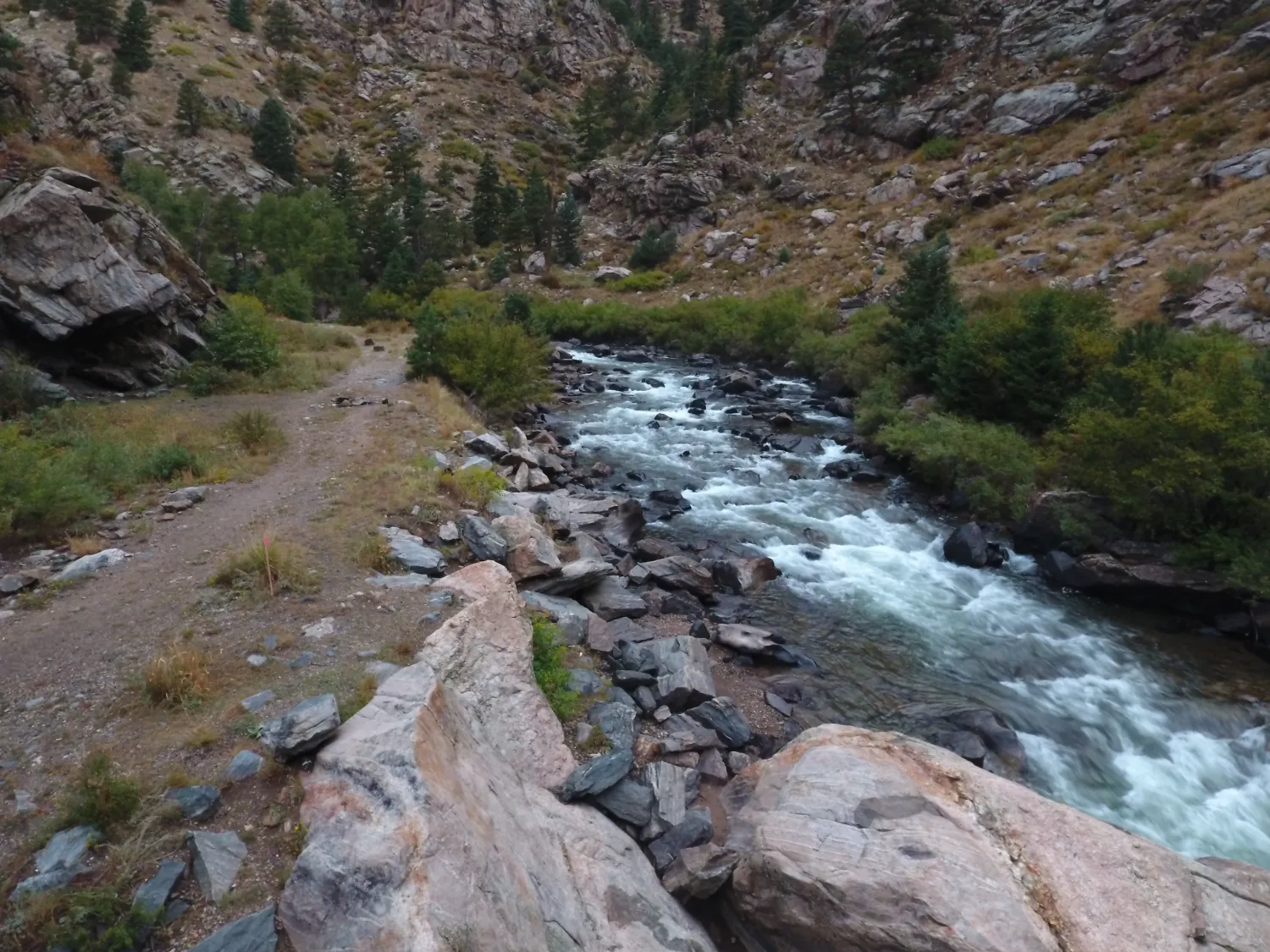
A Worked Example Through a Broken Run
Picture a run about 30 feet wide. On the far bank, a seam forms where the faster water in the middle transitions to a slower, deeper lane along the bank. That deeper lane is about three feet wide and runs roughly ten feet downstream before the run loses definition and flattens into a tailout.
You look at it and think: the holding fish are in that slower lane, probably right along the edge of the faster current where food is coming to them.
Before you step into the water, you think about position. If you wade directly across and stand opposite the middle of the seam, your leader will have to travel at an angle to reach the fly during the drift. The angle will get worse as the fly moves downstream. You'll lose contact by the time the fly is in the bottom half of the drift window.
Instead, you enter the water carefully upstream of where the seam starts and take a position that puts you upstream and about 20 degrees off a direct downstream line to the top of the lane. You're not directly across from the seam. You're closer to being upstream of it, with just enough offset to let you reach it comfortably.
You make a tuck cast toward the top of the seam, letting the fly enter the water with some downward momentum so it sinks quickly. As the fly settles, you raise the rod tip just enough to keep most of the leader off the water, with only the last section of tippet entering the surface. The sighter hangs clearly in the air between the rod tip and the water.
You follow the drift by tracking the rod tip smoothly downstream, keeping pace with the current. The sighter stays relatively still relative to the current, which tells you the contact is clean. About halfway through the drift, you see the sighter make a small, quick upstream bump. You lift the rod and feel weight. Fish.
Now imagine you had stood directly across from the seam. As the fly drifts downstream, the leader would pull sideways across the current, creating a constant tension on the sighter that looks like contact but is actually just drag. When the fish takes, the sighter might barely move because the tension of the angle absorbs the signal. You'd miss it, or worse, you'd never know it happened.
After releasing the fish, you move a few feet downstream to cover the lower half of the seam from a fresh angle. You don't stand in the same spot and try to extend the cast. You move your feet to preserve the relationship.
That's the decision loop: identify the drift window, choose a position that gives you the angle you need for that window, fish it, and then move rather than compensate.
When to Move Instead of Changing the Rig
Here's a rule worth keeping handy: if two consecutive drifts from the same spot produce the same bad result, your first fix is to move, not to change the fly.
The bad results worth knowing are: the sighter pulling sideways under steady pressure rather than hanging naturally, the fly arriving at the end of the drift without ever feeling like it was in the zone, contact that feels inconsistent even with the right amount of weight, and a sighter that never telegraphs anything useful.
All of those symptoms can come from a bad position. A heavier fly might help with depth, but if the angle is wrong, adding weight just makes the fly sink faster into a drift that still won't produce contact. Switching patterns doesn't help either. The fly can't outwork the geometry.
The most persistent trap is blaming the technique instead of the position. Euro nymphing is a contact-dependent method, and if the contact is gone, nothing else in the system functions the way it should. Some anglers conclude that euro nymphing doesn't work for them in certain water types when the real issue is that they're standing in the wrong place.
Indicator nymphing can mask this problem because the indicator gives you visual feedback even with a poor angle. The fly might be swinging or dragging, but the indicator keeps drifting and it looks like something is happening. Euro nymphing removes that mask. When the position is wrong, you notice it quickly, which is actually useful information if you know what you're looking for.
The fix is almost always to move upstream. A step or two toward the top of the seam, or a slight adjustment toward a more directly-upstream position, often restores the angle and with it the contact. You'll feel the difference immediately. The leader goes from pulling sideways to hanging naturally, and the sighter starts giving you real information again.
As you gain experience reading water, the position decision becomes faster and more automatic. You develop an eye for where to stand before you even think about casting. That spatial awareness, more than any leader formula or fly pattern, is what separates anglers who euro nymph well from those who struggle with it.
If you want to build that system thoroughly – position, contact, leader design, casting mechanics, and strike detection all working together – the Euro Nymphing Course covers each element in sequence with on-the-water instruction. And if you want a complete learning path that goes beyond euro nymphing into the broader pillars of fly fishing, Trout University gives you that full curriculum in one place.
Position is where the drift starts. Get that right and the rest of the system has a real chance to work.
Trout University
The Best Way to Master Fly Fishing for Trout
Everything you need to learn how to fly fish for trout.
From fly selection to presentation and location, all in one place.
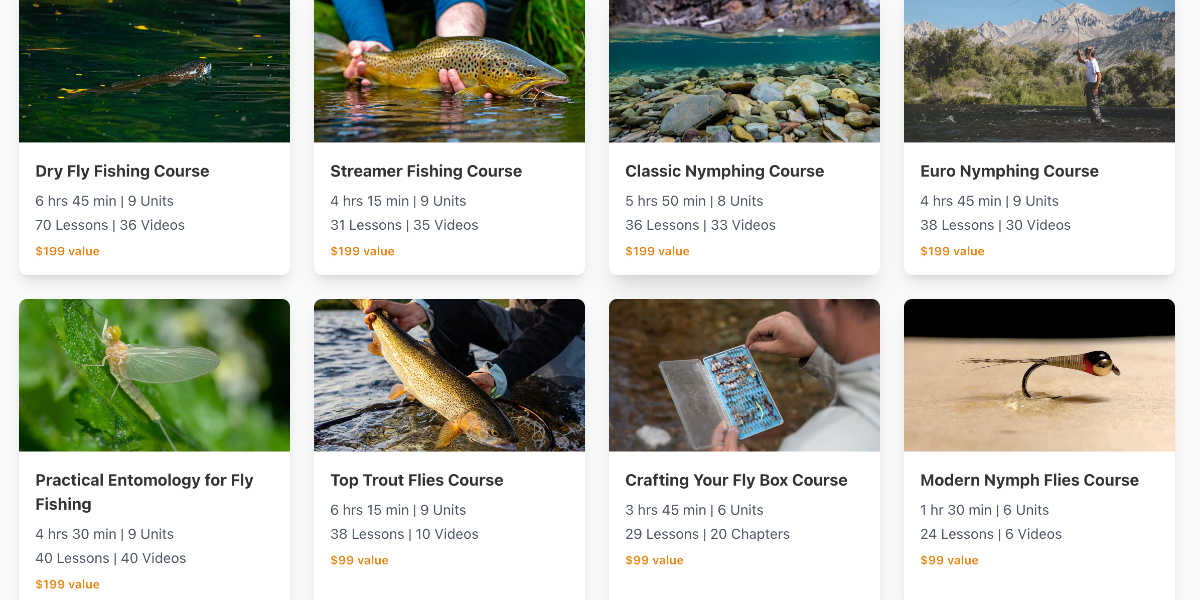
8 Premium Courses
~1,600 Pages & 30+ hrs of Video covering the most important topics
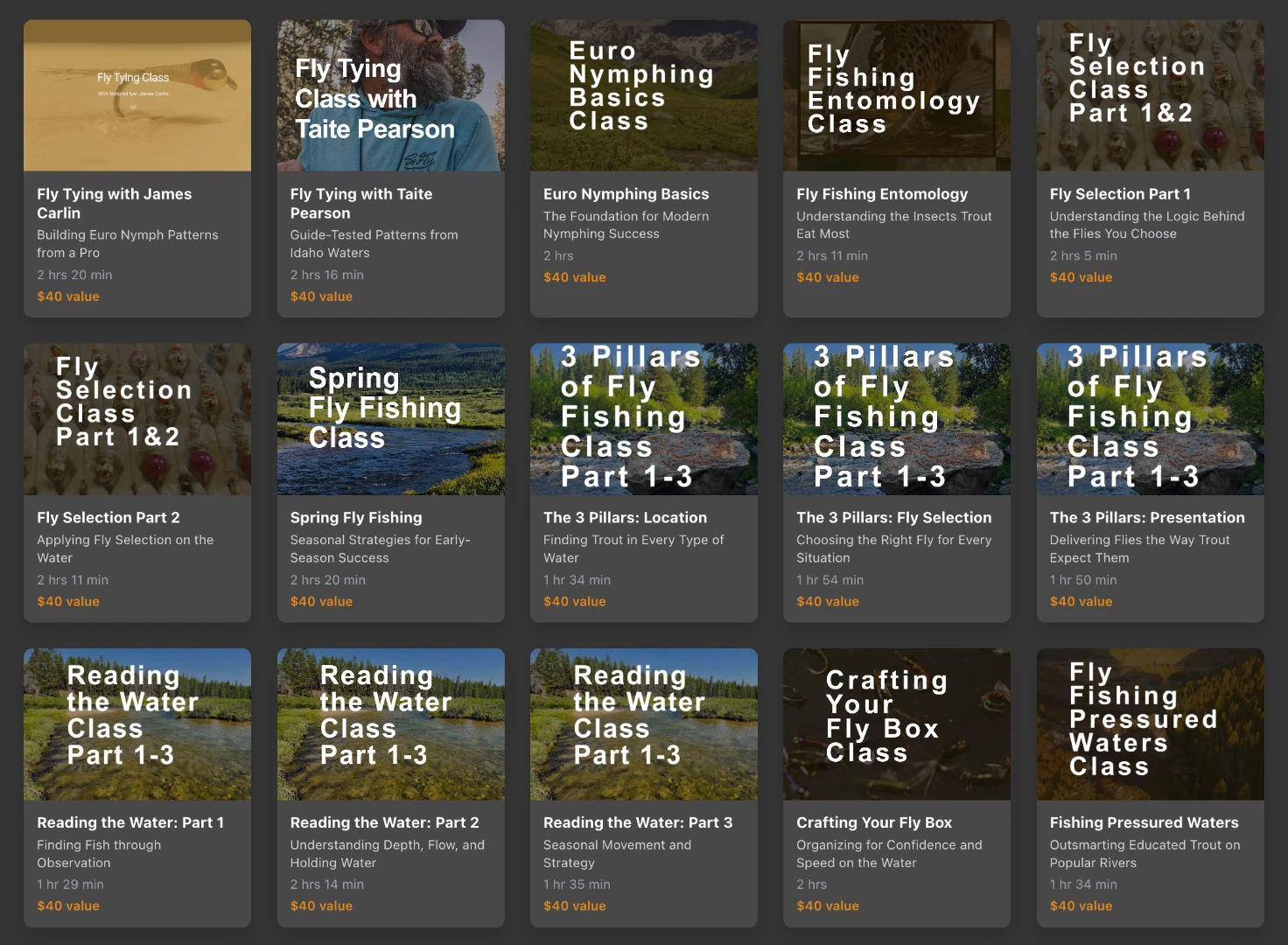
15 Video Classes
1-2hr Power Classes on Key Subjects and solidify your learnings
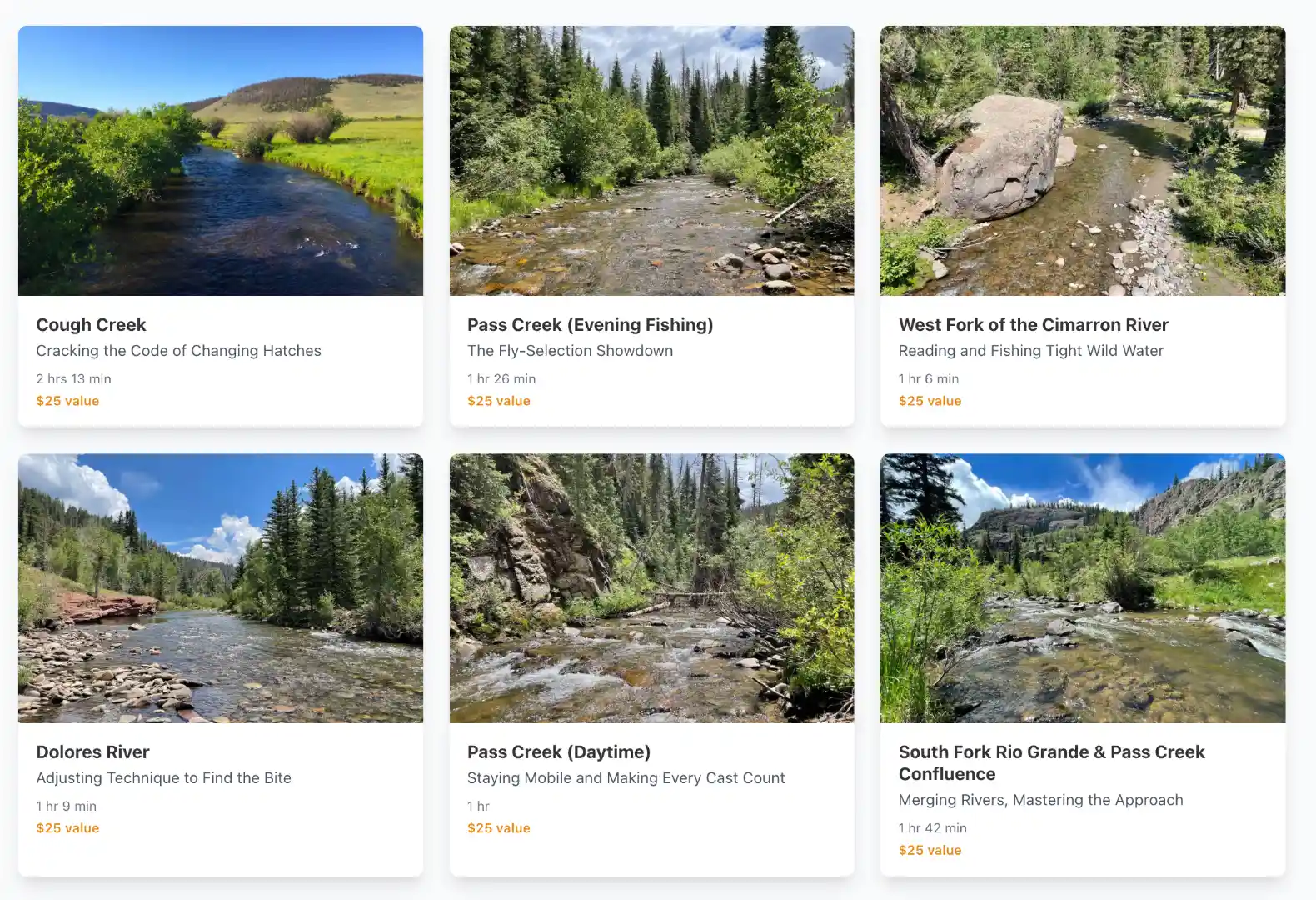
6 Streamside Courses
10+ Hours of Fishing to See Our Methods in Action
Recommended Reading
Two articles worth reading alongside this one if you want to sharpen your euro nymphing:
Your Sighter Can Lie to You – once you have position dialed in, understanding what the sighter is actually telling you (and when it's misleading you) is the next essential skill.
Should You Use a Heavy Leader or a Micro Leader? – leader design works in partnership with position. This article breaks down how to choose the right system for the water you're fishing.