
How to Become a Better Fly Fisherman
The Mistakes Holding You Back and How to Fix Them
Mistake 1: Treating Every Bad Day as “Just How Fishing Goes”
Most anglers believe that time on the water is the only thing standing between them and consistent catches. Fish more, catch more. It sounds logical, and it is not entirely wrong. But here is the problem: if you keep fishing the same way, making the same decisions, and relying on the same incomplete understanding of what trout actually want, more time on the water just means more time repeating the same mistakes.
How to become a better fly fisherman is not about logging hours. It is about filling the specific gaps in your knowledge that cause you to guess instead of know, react instead of plan, and hope instead of execute. The anglers who catch fish reliably are not luckier than you. They have a framework for making decisions on the water, and they built that framework through deliberate education, community, and mentorship.
If you have ever stood on a river surrounded by rising trout and felt completely lost about what to tie on, or spent an entire afternoon casting without a single take and had no idea what to change, or watched another angler fifty yards upstream hook fish after fish while you went empty, the issue is almost certainly not effort. It is a knowledge gap. And knowledge gaps have a solution.
This article walks through the most common mistakes anglers make when trying to improve, explains why each one stalls your progress, and shows you what actually works. By the end, you will have a clear picture of how to build real, lasting skill as a fly angler, whether you have been fishing for six months or sixteen years.
If you want a structured path to fill those gaps and start catching more fish, our Trout University VIP membership gives you access to 8 full courses, 15 expert-led video classes, and 6 streamside adventures, all in one place. You can try it free for 30 days with no credit card required.
We have all had those days. You drive two hours, gear up, wade in with high expectations, and proceed to catch nothing. Or one fish. Maybe two small ones that barely count. And on the drive home, you tell yourself some version of “the fish just were not on today.”
Sometimes that is true. Conditions can be genuinely tough. But here is what separates anglers who improve from anglers who plateau: the ones who improve treat a slow day as a solvable problem, not an act of nature.
Why anglers make this mistake: It is easier on the ego. If the fish simply were not cooperating, there is nothing you could have done differently. No need to question your fly choice, your depth, your location, or your drift. The problem was external, so you are off the hook (pun intended).
The reality: Most slow days are at least partly caused by something the angler is missing. Maybe you were fishing the right fly at the wrong depth. Maybe you were in a beautiful-looking run that held no fish because the water temperature pushed them into faster, more oxygenated water. Maybe your drift had subtle drag you could not see. These are all solvable problems, but only if you know what to look for.
Trout University
The Best Way to Master Fly Fishing for Trout
Everything you need to learn how to fly fish for trout.
From fly selection to presentation and location, all in one place.
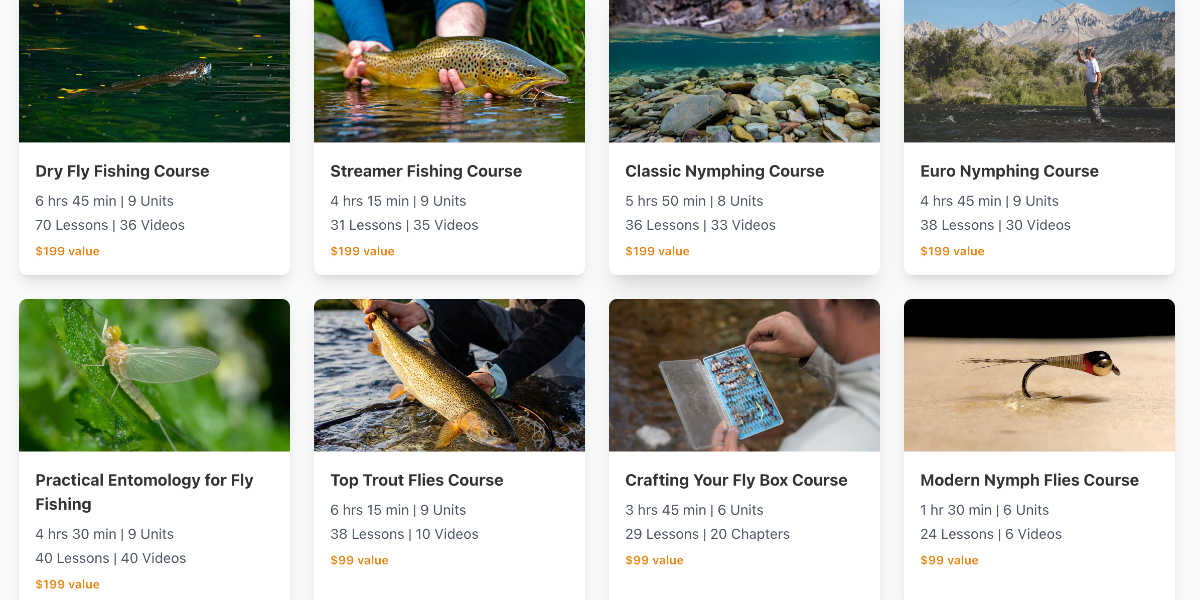
8 Premium Courses
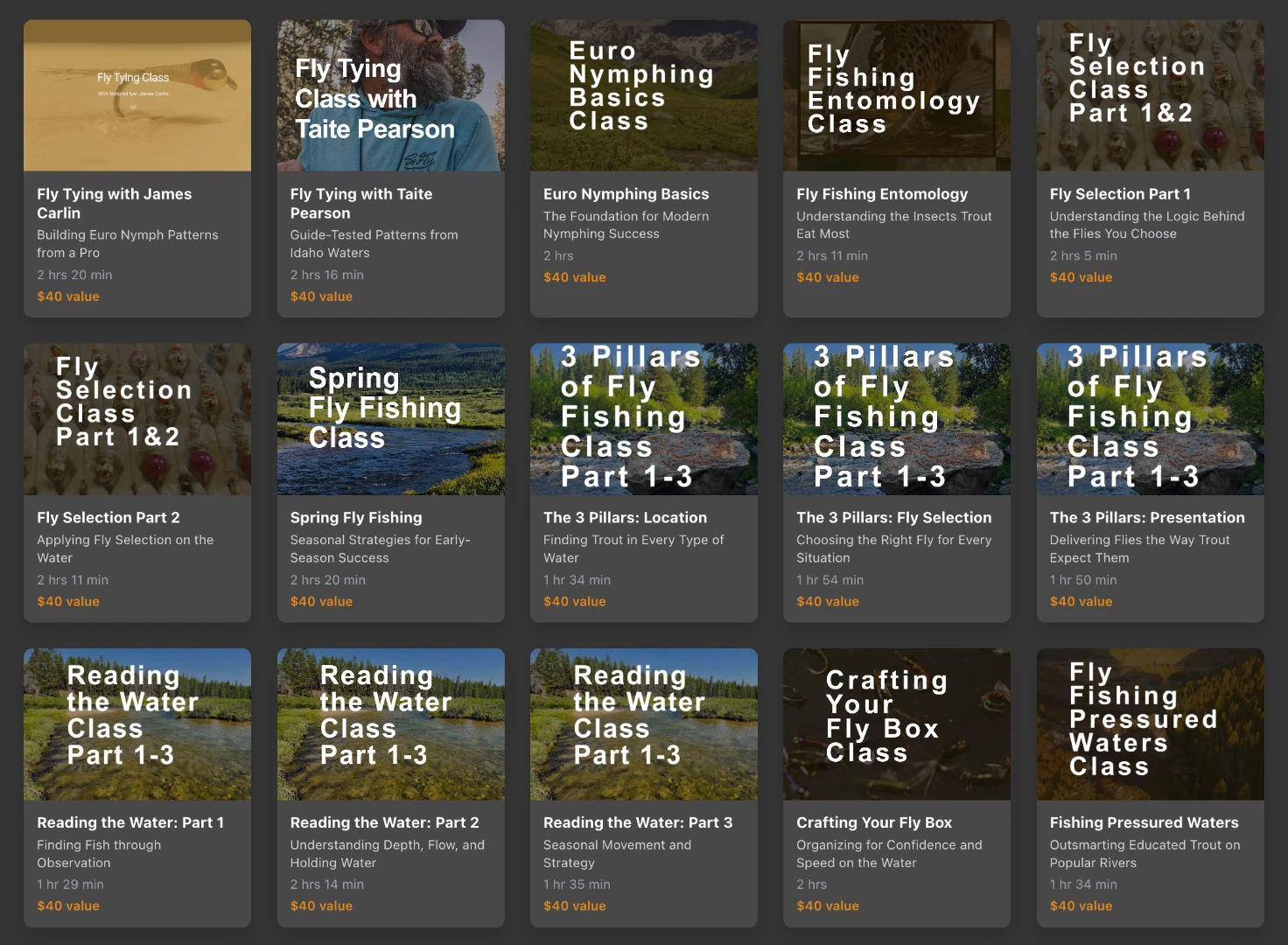
15 Video Classes
1-2hr Power Classes on Key Subjects and solidify your learnings
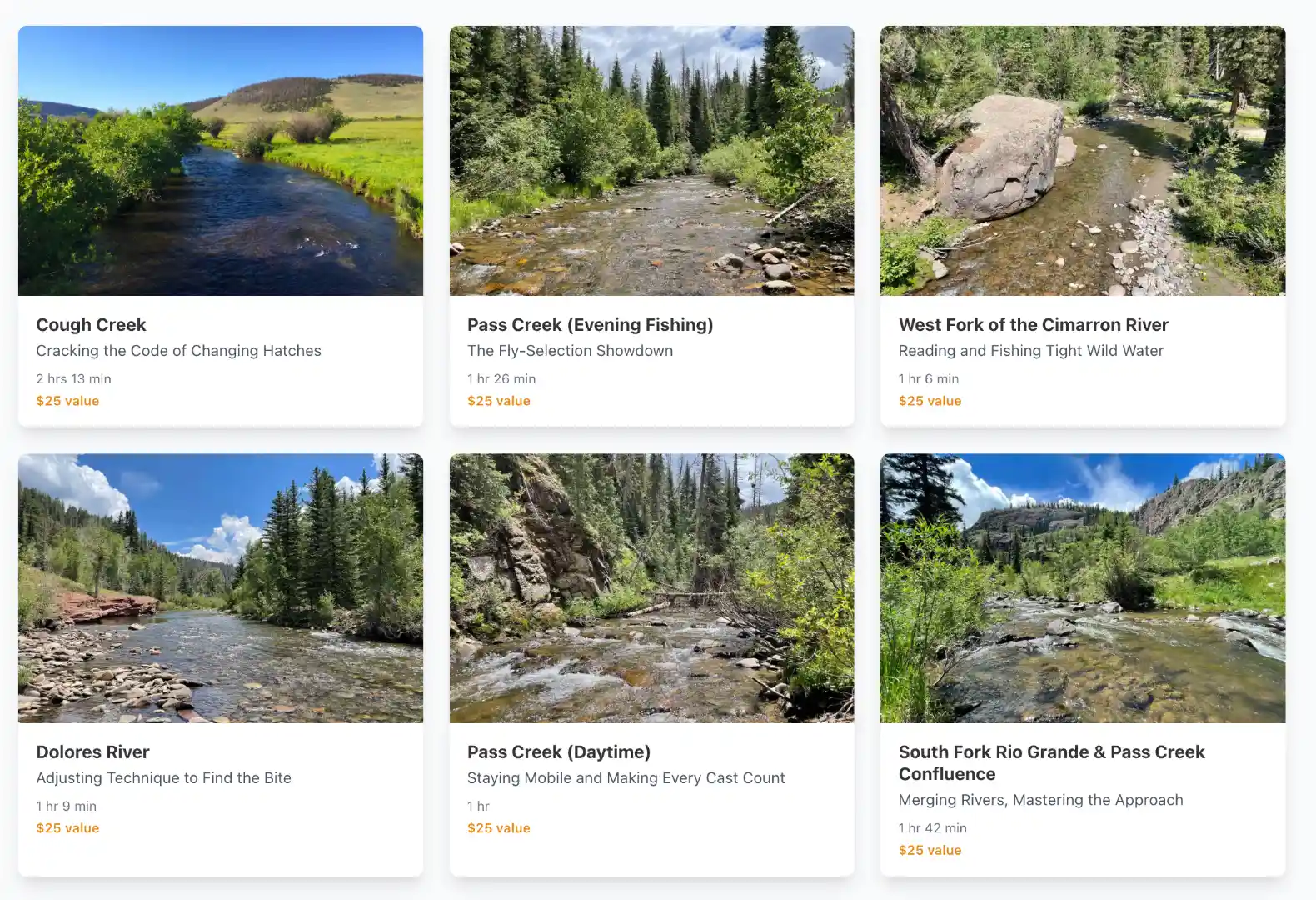
6 Streamside Courses
10+ Hours of Fishing to See Our Methods in Action
No Credit Card Required or Auto Renewal
The Fix
Start treating every outing as a diagnostic exercise. At its core, fly fishing success comes down to three pillars:
- Location: Are you fishing where the fish actually are?
- Fly Selection: Are you presenting what the fish are actually eating?
- Presentation: Are you delivering the fly in a way that looks natural?
When things are not working, the answer almost always lives in one of those three categories. The skill is knowing which one to adjust first, and in what order.
Here is a practical rule: if you have made 3 to 5 good drifts through promising water with no takes, something needs to change. Do not keep hammering the same spot with the same setup hoping for a different result. Instead, ask yourself:
- Do I genuinely believe feeding fish are here right now?
- If yes, is my fly the right stage, size, and profile for what they are eating?
- If yes, is my presentation clean, at the right depth, with a natural drift?
Work through those questions in order. Most anglers skip straight to changing flies, when the real problem is often location or presentation. In our experience at The Catch and The Hatch, anglers who learn this diagnostic sequence start catching more fish almost immediately, not because they suddenly became better casters, but because they stopped wasting time on the wrong variables.
Key point: A good fly in the wrong water is still the wrong answer. Always validate your location before blaming your fly selection.
Mistake 2: Learning in Fragments Instead of Building a Framework
This is the silent killer of angler development. You watch a YouTube video about euro nymphing. You read a blog post about matching the hatch. A buddy shows you a new knot. You pick up a tip from a forum about reading water. Each piece of information is fine on its own, but none of it connects to anything else.
The result is a mental fly box full of random tips with no system for deciding when to use what.
Why anglers make this mistake: Because fragmented learning is easy and free. It requires no commitment. You absorb whatever crosses your feed, feel like you learned something, and move on. Over months and years, you accumulate a lot of isolated facts but very little decision-making ability.
The reality: The anglers who catch fish consistently are not the ones who know the most random facts. They are the ones who have a repeatable framework for making decisions on the water. They can walk up to any river, in any season, assess the conditions, and work through a logical process to start catching fish. That framework does not come from scattered tips. It comes from structured education that teaches the “why” behind each decision, not just the “what.”

The Fix
Commit to learning fly fishing the way you would learn any other complex skill: systematically. That means finding a structured educational path that covers the three pillars (location, fly selection, and presentation) in a connected way, where each concept builds on the last.
Here is what structured learning looks like in practice:
- You learn entomology so you understand what trout eat, when they eat it, and what stage of the insect lifecycle matters most at any given moment.
- You learn fly selection so you can translate that entomology knowledge into the right fly from your box, not a random guess.
- You learn presentation so you can deliver that fly at the right depth, with the right drift, using the right technique for the water you are fishing.
- You learn to read water so you know where to apply all of the above.
Each piece reinforces the others. When you understand why a Baetis nymph is the right choice in early spring, and you know that trout are holding in slower, deeper water during cold conditions, and you know how to rig and drift a nymph at the right depth, suddenly the whole picture clicks. That is the difference between guessing and knowing.
This is exactly why we built Trout University. It is not a collection of random lessons. It is a connected system of 8 full courses, 15 video classes, and 6 on-the-water streamside adventures that walk you through every pillar of fly fishing in a logical sequence. You can work through it at your own pace, spending as little as 30 minutes a week, and build real skill over the course of a season.
The difference between fragmented tips and structured education is the difference between having a pile of puzzle pieces and having the picture on the box. Both contain the same information. Only one helps you put it together.
Mistake 3: Trying to Improve Without a Mentor or Community
Fly fishing can feel like a solo sport. You drive to the river alone, wade in alone, and fish alone. And while solitude is one of the great gifts of the sport, trying to learn alone is one of the slowest paths to improvement.
Why anglers make this mistake: Some anglers do not know where to find a mentor. Others feel embarrassed about their skill level and do not want to fish with someone better. Many simply do not realize how much faster they would improve with guidance.
The reality: Exposure to better anglers is one of the most powerful accelerators in fly fishing. In one documented example, experienced local anglers catching 20 fish on a stretch of water were outperformed 3 to 1 by visiting youth team members who caught 60 fish on the same unfamiliar water. The difference was not luck or secret flies. It was refined technique, better decision-making speed, and a framework built through structured mentorship and practice.
You do not need to fish with a national team member to benefit from this principle. You just need access to people who know more than you about specific aspects of the sport and are willing to share.
The Fix: Build Your Learning Network
There are three levels to this, and ideally you engage with all of them.
Level 1: Join a local fly fishing community. Find a local fly fishing club, a Facebook group for your region, or a regular meetup of anglers who fish your home water. The value here is not just tips. It is shared information about current conditions, what is hatching, what is working, and where fish are active. Three experienced anglers talking hatch-matching tactics over coffee at a fly shop will drop more actionable information than most podcasts. The best fishing friendships form when people share information openly without competition. Be the kind of person you want to fish with.
Level 2: Find a mentor. This does not have to be formal. It can be a more experienced angler who is willing to fish with you occasionally and answer questions. It can be a guide you hire for a day with the explicit goal of learning, not just catching. When you hire a guide, make them teach you everything. Ask why they chose that fly, why they positioned you there, why they changed the rig. A single guided day focused on learning can compress months of solo trial and error into hours.
Level 3: Access expert instruction online. Not everyone lives near a fly shop with knowledgeable staff. Not everyone has experienced fishing friends. And guides cost $400 or more per day. This is where online fly fishing education fills a critical gap. A well-structured online course gives you access to expert-level instruction on your schedule, at your pace, for a fraction of the cost of a single guided trip.
Key point: The phrase “we are always learning from each other” reflects a mindset where no one is the sole expert. Building a network of fishing partners who share information freely, without competition, is both rare and valuable. Finding good fishing friends requires patience, time on the water, and a non-competitive attitude.
Mistake 4: Neglecting Fly Selection Knowledge
Here is a scenario that plays out on trout streams every single day: an angler sees caddis flying around, ties on a caddis dry fly, and fishes it for two hours with no takes. Meanwhile, the trout are sipping emergers just below the surface in a slow tailout. The angler matched what was visible in the air but completely missed what the trout were actually eating.
Why anglers make this mistake: Fly selection feels like it should be simple. See a bug, tie on a fly that looks like it. But trout do not eat what is flying around. They eat what is available to them in the water, at the depth where they are feeding, in the stage of the insect lifecycle that is most vulnerable.
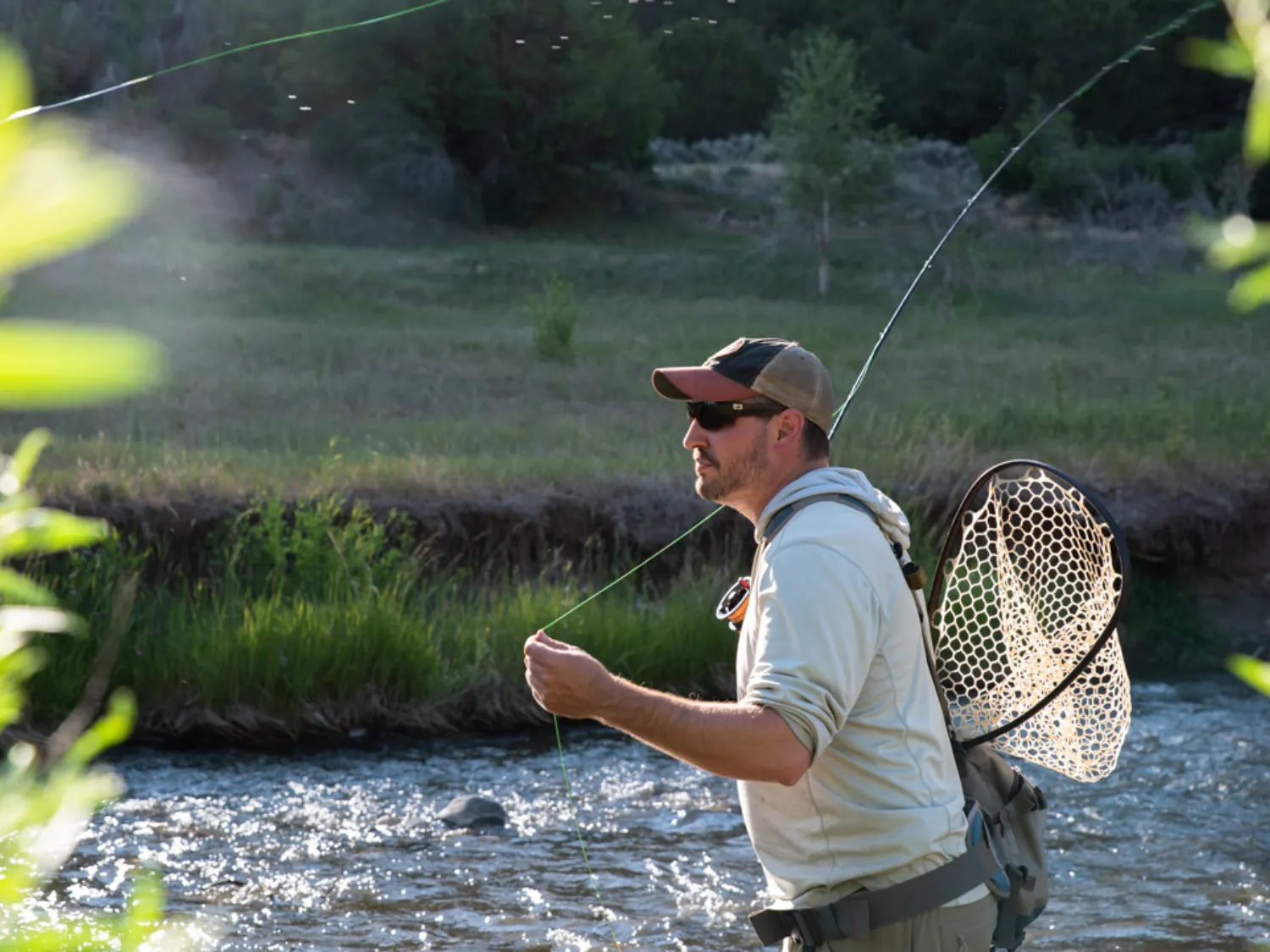
The reality: Good fly selection requires understanding insect behavior, not just insect identification. You need to know that mayflies go through distinct stages (nymph, emerger, dun, spinner) and that trout often focus on one stage while ignoring others. You need to know that a size 18 olive Parachute Adams in spring is a completely different proposition than a size 10 yellow one. You need to know that sometimes the right answer is not an imitative pattern at all, but an impressionistic nymph fished at the right depth.
The Fix
Invest time in learning entomology at a practical level. You do not need a biology degree. You need to understand the major insect orders (mayflies, caddis, stoneflies, midges), their life stages, their seasonal timing, and how trout respond to each stage.
Here is a practical approach:
- Carry a seine net and use it at the start of every outing. Kick up some rocks. See what is actually living in the water, not just what is flying above it.
- Learn to read trout behavior. Methodical, rhythmic rises in a slow tailout suggest emergers or spinners. Aggressive, splashy rises suggest caddis or stoneflies. Subtle sips in flat water suggest midges or spent mayflies.
- Build your fly box with intention. Do not just buy random flies. Stock your box by season, matching the insects you expect to encounter with the right sizes, colors, and stages.
Our Fly Fishing Entomology Course was built specifically to bridge the gap between seeing insects on the river and confidently tying on the right fly. It simplifies entomology into a usable, repeatable system that works anywhere trout swim. And if you want to take that knowledge and turn it into a well-organized, purpose-built fly box, the Crafting Your Fly Box Course walks you through exactly that process.
Mistake 5: Blaming the Fly When the Problem Is Presentation
This might be the most common mistake in all of fly fishing. You are in good water. You have a reasonable fly tied on. But you are not catching fish. So you change flies. And change again. And again. Thirty minutes later, you have cycled through six patterns and caught nothing, and you have no idea what went wrong because you never isolated the real variable.
Why anglers make this mistake: Changing flies feels productive. It feels like you are doing something. And sometimes it works, which reinforces the habit. But when it works, it is often because the new fly happened to be fished slightly differently (different weight, different depth, different drift angle), not because the pattern itself was the magic answer.
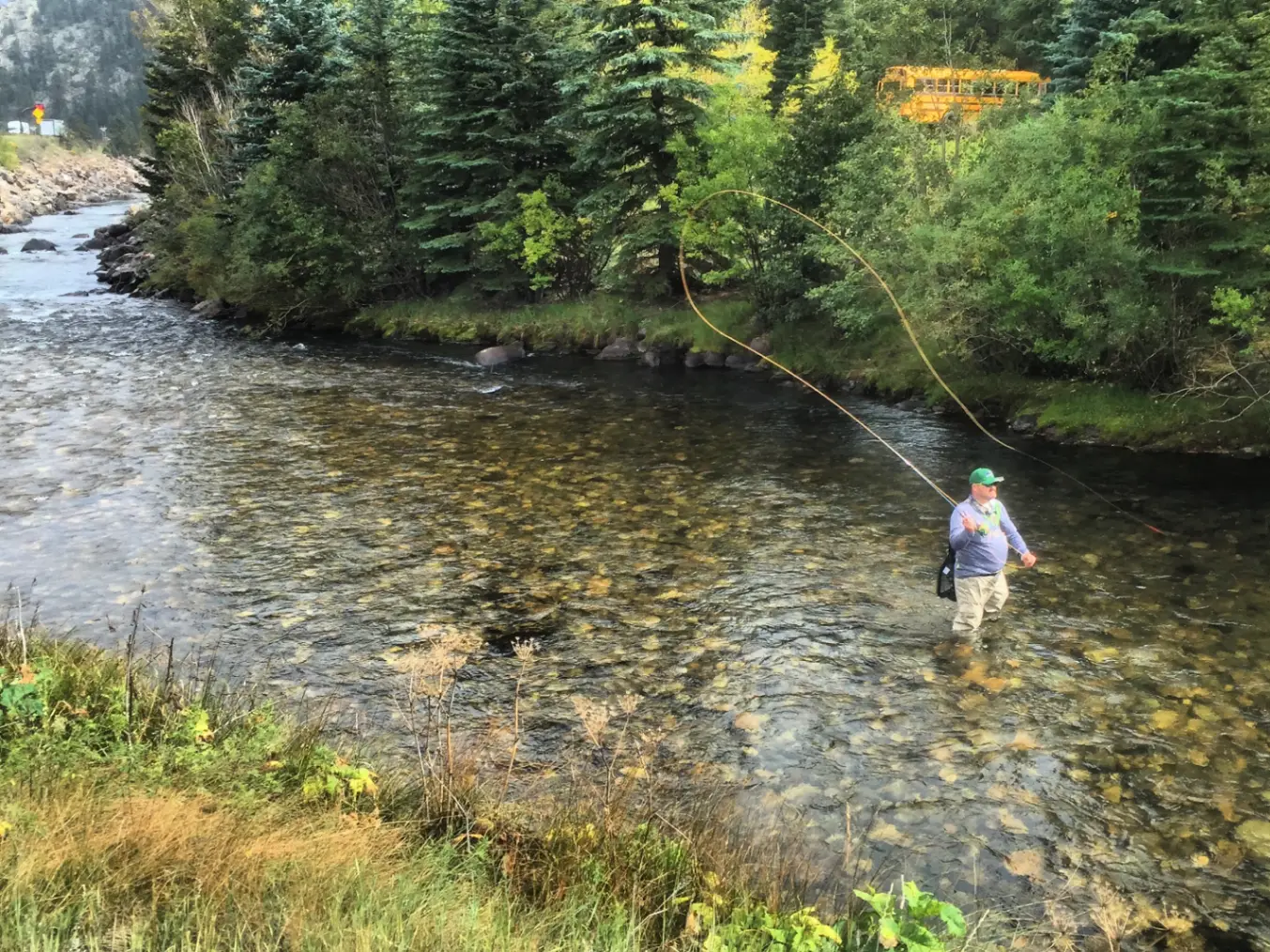
The reality: Presentation problems masquerade as fly selection problems constantly. A fly that is dragging subtly through the current, or drifting two inches above the feeding zone, or swinging unnaturally at the end of the drift will be refused by trout regardless of how perfectly it matches the hatch. You can have the exact right fly and still catch nothing if your presentation is off.
The Fix
Before changing your fly, run through this checklist:
- Am I in the strike zone? For nymphing, this means your flies should occasionally tick the bottom. If you are never touching bottom, you are probably too shallow. If you are snagging every cast, you are too deep.
- Is my drift clean? Watch your indicator, sighter, or fly line for any unnatural movement. Even subtle drag can turn a perfect fly into a refusal machine.
- Is my angle right? Sometimes the fix is not a new fly but a new casting position. Moving two steps upstream or crossing to the other bank can completely change your drift quality.
- Am I detecting takes? Especially when nymphing, many missed fish are not refusals. They are takes you never felt because of slack in your system.
Only after you have confirmed that your presentation is solid should you start changing flies. And when you do change, do it systematically:
- Change the stage or pattern type first (nymph to emerger, for example)
- Then adjust size
- Then adjust profile
- Then adjust color
This sequence matters because each step narrows the problem. Random fly changes teach you nothing. Systematic changes build a feedback loop that makes you smarter with every outing.
If you want to go deeper on presentation fundamentals, our Classic Nymphing Course and Dry Fly Fishing Course both dedicate significant time to drift management, rigging, and the specific presentation skills that turn good fly selection into actual fish. For anglers interested in tight-line techniques, the Euro Nymphing Course covers how removing the indicator and maintaining direct contact with your flies can cut drag by half or more, resulting in dramatically better drifts.
Mistake 6: Staying in One Spot Too Long
You found a beautiful pool. It looks fishy. It has the right depth, the right structure, and a nice seam running through it. So you plant yourself there and fish it for an hour. Then another hour. The fish will start eventually, right?
Why anglers make this mistake: It feels logical. Good-looking water should hold fish. And sometimes it does, but the fish are not feeding, or they have already been pressured by other anglers, or the conditions have shifted since you arrived. Staying put feels like patience. Often, it is just stubbornness.
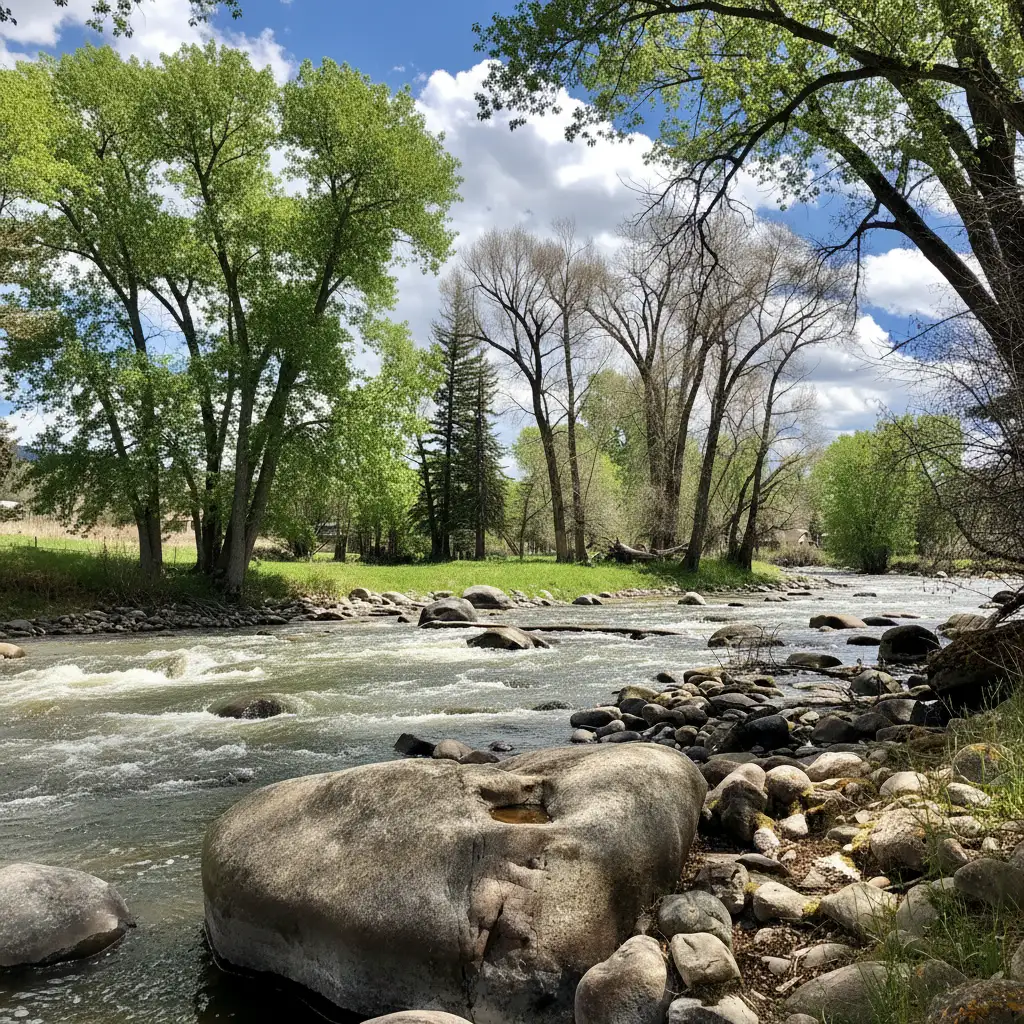
The reality: One of the most reliable strategies for increasing catches on slow days is simply covering more water. Trout are not evenly distributed across a river. They concentrate in specific feeding zones based on conditions, and those zones change throughout the day as temperature, light, and insect activity shift.
The Fix
Use a time-based decision rule. If you know your average time between fish caught (say, roughly 10 to 15 minutes on a decent day), use that as a threshold. If you have been fishing a spot for significantly longer than that without a take, and you have adjusted your depth, drift, and fly, it is time to move.
Here is a practical approach to covering water:
- Break the river into sections. Mentally divide each stretch into small grids and fish each one methodically before moving on.
- Use the three-drift rule. If a fly has not produced a response in three good drifts through a specific lane, change something (weight, depth, angle) before considering a full pattern switch.
- Do not overlook marginal water. Small pockets, tight seams next to banks, and shallow riffles often hold fish that most anglers walk past. These spots frequently produce a high number of fish precisely because they receive less pressure.
- Read the water before you commit. Spend a minute observing before you start casting. Look for rises, subtle surface disturbances, or insect activity. If the water looks dead and you see no evidence of fish, trust your eyes and move on.
Key point: If you have fished four similar spots without a single fish, stop fishing that type of water and try something different. Maximizing your catch comes down to time management: focus effort on the water types producing results.
Mistake 7: Not Having a Learning Routine
This is the mistake that ties all the others together. Most anglers do not have a deliberate plan for improving their skills. They fish when they can, pick up tips when they stumble across them, and hope that experience alone will make them better. It will, eventually. But the timeline stretches from months into years, and the progress is painfully slow.
Why anglers make this mistake: Life is busy. Between work, family, and everything else, finding time to “study” fly fishing feels like a luxury. And when you do have free time, you would rather be on the water than watching a video or reading a lesson.
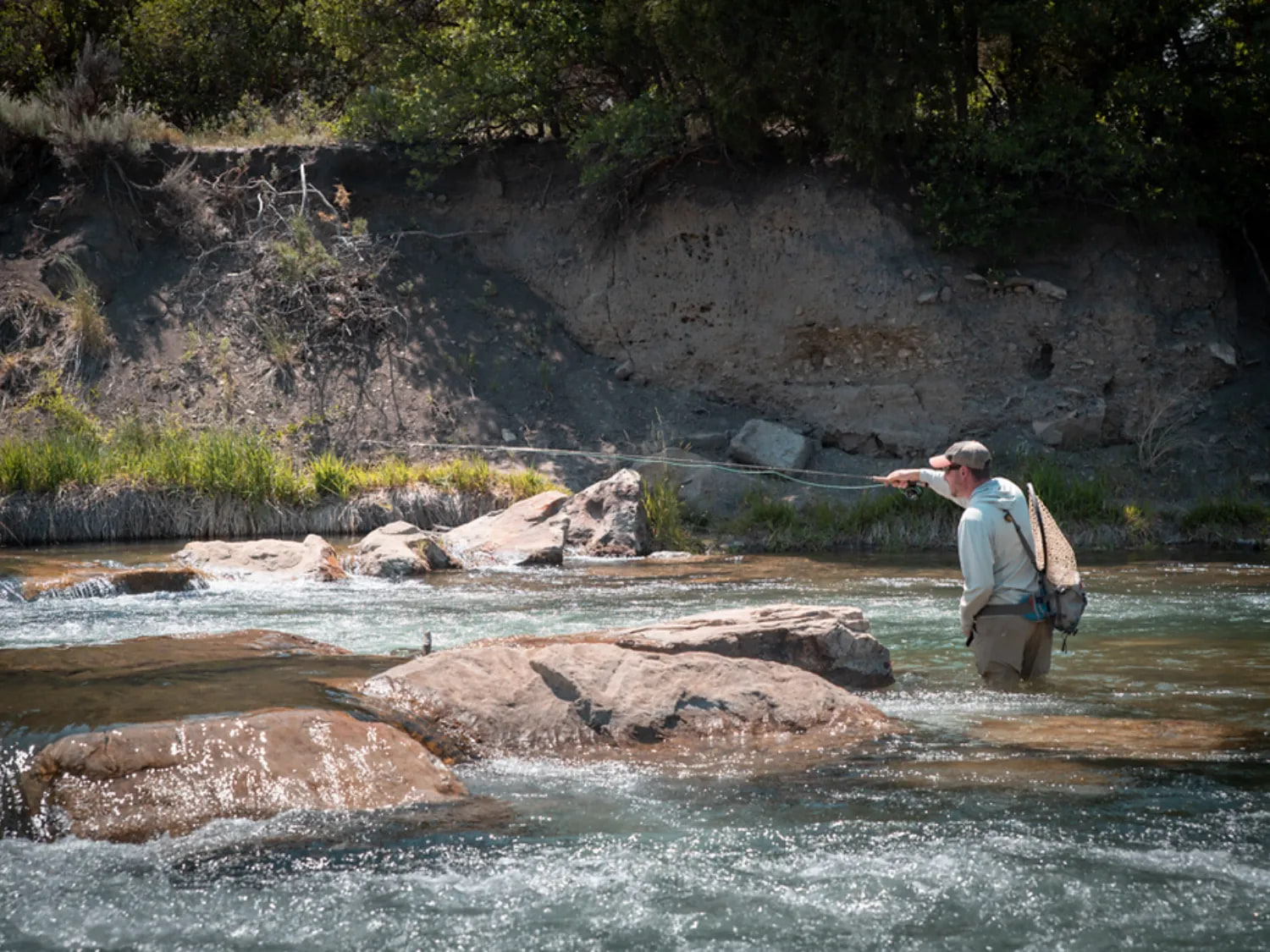
The reality: You do not need hours. You need 30 minutes a week of focused, structured learning. That is it. Over the course of a season, 30 minutes a week adds up to more than 25 hours of dedicated education. That is more structured learning than most anglers accumulate in a decade of casual tip-gathering.
The Fix: The 30-Minute Weekly Learning Routine
Here is a simple routine that produces measurable results:
Week 1-4: Focus on one pillar. Pick whichever pillar you feel weakest in (location, fly selection, or presentation) and spend your 30 minutes each week studying that topic. Watch a lesson, read a chapter, study a diagram. Then, on your next trip to the river, practice what you learned with intention.
Week 5-8: Move to the next pillar. Rotate through the three pillars over the course of a few months. By the time you cycle back to the first one, you will have a foundation in all three and can start seeing how they connect.
Ongoing: Apply and refine. After each outing, spend 5 minutes reflecting on what worked and what did not. Write down the top three things you learned. Over time, this creates a personal knowledge base that compounds.
This is exactly the kind of learning that Trout University was designed to support. Most members spend approximately 30 to 60 minutes per week working through lessons and then applying what they learn on their next trip. The program is fully self-paced, so you can slow down, revisit lessons, or skip ahead based on what you need most. With 8 full courses, 15 video classes, and 6 streamside adventures covering over 60 hours of instruction and 1,600 pages of content, there is always something relevant to work on, regardless of season or skill level.
And unlike a guided trip or a weekend clinic, the learning does not end when you leave. Every course comes with lifetime access (for individual purchases) or continuous access through your membership. You can revisit any lesson, any time, as many times as you need. Questions that come up during your learning are addressed throughout the process, so you are never stuck wondering “but what about…” without a path to the answer.
Traditional Learning vs. Structured Online Education
It is worth addressing a question many anglers have: is online education really as good as learning in person?
The honest answer is that both have strengths, and the best approach combines them. Here is how they compare:
Guided trips are excellent for accelerated, hands-on learning in a specific context. A good guide on your home water can teach you things in a day that might take months to figure out alone. The limitation is cost ($300 to $500 per day), availability, and the fact that what you learn is specific to that day, that river, and those conditions.
Local fly shops and clubs provide community, current conditions, and accumulated local knowledge. The limitation is geographic. Not everyone lives near a great fly shop, and not every club has experienced members willing to teach.
Online education provides structured, comprehensive instruction that you can access anywhere, anytime, at your own pace. The limitation is that it requires self-discipline to actually work through the material, and it cannot replace the feel of a rod in your hand on the water.
Here is the key insight: online education is not a replacement for time on the water. It is what makes your time on the water dramatically more productive. When you show up to the river with a framework for reading water, a system for selecting flies, and an understanding of how to diagnose and fix presentation problems, every hour you spend fishing teaches you more than it would otherwise.
Think of it this way. Two anglers fish the same river 50 days a year. One has no framework and learns by trial and error. The other spends 30 minutes a week studying structured material and applies it deliberately on each outing. After one season, the second angler has not just fished 50 days. They have fished 50 days with intention, building on a foundation that gets stronger with every trip. The gap between them will be enormous, and it will only widen over time.
Why Confidence Matters More Than You Think
There is a psychological dimension to fly fishing that does not get discussed enough. When you are unsure of your fly choice, unsure of your depth, unsure of whether you are even in the right water, your fishing suffers in ways that go beyond the technical.
Uncertain anglers cast tentatively. They second-guess their setup every few minutes. They change flies too often, never giving any single approach enough time to work. They fish defensively, sticking to comfortable spots and familiar patterns instead of adapting to what the river is telling them.
Confident anglers fish with intention. Every cast has a purpose. Every fly change answers a specific question. They commit to a plan, give it time to work, and make deliberate adjustments based on evidence rather than anxiety.
Confidence does not come from catching a lot of fish (though that helps). It comes from understanding why you are doing what you are doing. When you know that your fly choice is grounded in seasonal entomology, that your rigging is appropriate for the water depth and speed, and that your drift is clean, you can fish patiently because you trust the process. And patience, more than any single technique, is what separates consistent anglers from frustrated ones.
Education builds confidence. Confidence improves execution. Better execution catches more fish. It is a virtuous cycle, and it starts with investing in your knowledge.
Frequently Asked Questions About Improving as a Fly Angler
“I have been fly fishing for years. Will structured education still help me?”
Almost certainly, yes. Most experienced anglers are strong in one or two areas and have blind spots in others. You might be an excellent caster with poor entomology knowledge, or a great nymph angler who struggles with dry fly presentation. Structured education helps you identify and fill those specific gaps. Even anglers with 15 or more years of experience consistently discover new concepts and refinements through structured courses.
“How long before I see results?”
Many anglers report noticeable improvement within their first few outings after starting structured learning. The biggest early gains usually come from location and fly selection adjustments, which require knowledge rather than physical skill. Presentation improvements take longer because they involve muscle memory and practice, but even basic adjustments to depth, rigging, and drift management can produce immediate results.
“Is online learning really effective for something as hands-on as fly fishing?”
Yes, for the knowledge-based aspects of the sport. Location strategy, entomology, fly selection logic, reading water, rigging decisions, and tactical frameworks are all knowledge problems that online education solves extremely well. Casting and drift management require on-water practice, but understanding what to practice and why makes that practice dramatically more efficient.
“I do not have much time. Can I really improve with just 30 minutes a week?”
Absolutely. Thirty minutes of focused, structured learning per week adds up to over 25 hours per season. That is more deliberate study than most anglers do in years. The key is consistency and application. Learn something, then practice it on your next trip. The combination of structured study and deliberate practice is the fastest path to improvement.
“What if I am a complete beginner?”
Structured education is arguably most valuable for beginners because it prevents you from developing bad habits and fills knowledge gaps before they become ingrained. Starting with a framework means every hour you spend on the water from day one is more productive than it would be otherwise.
If you want to explore whether structured online education is right for you, Trout University VIP offers a free 30-day trial with no credit card required. It is a zero-risk way to see how a connected learning system compares to the fragmented approach most anglers default to.
Your Next Trip Plan: 3 Things to Do This Weekend
You do not need to overhaul your entire approach overnight. Here are three specific, actionable things you can focus on the next time you hit the water.
1. Fish the diagnostic sequence on your first spot. Before you change a single fly, work through the three-pillar checklist. Ask yourself: Am I in the right water for the current conditions? Is my fly appropriate for what should be hatching right now? Is my presentation clean, at the right depth, with a natural drift? Give your initial setup at least 10 to 15 good drifts before making any changes. If you do change something, change one variable at a time and note what happens.
2. Cover more water than you normally would. Set a goal to fish at least three distinct types of water during your outing: a riffle, a run, and a pool (or whatever variety your river offers). Pay attention to which water type produces fish and which does not. If one type is clearly outperforming the others, spend more time on that type and less on the unproductive ones. This single habit, fishing where the fish are instead of where you want them to be, can double your catch rate.
3. Spend 30 minutes before your trip studying one topic. Pick whatever feels most relevant to your upcoming outing. If you are fishing a river you know well, spend 30 minutes reviewing the insects that should be active for the current season and make sure your fly box is stocked accordingly. If you are fishing new water, spend 30 minutes studying how to read water and identify prime lies. If your last trip was full of refusals, spend 30 minutes on presentation fundamentals. One focused study session before each trip creates a compound effect that builds real skill over time.
Fly fishing is a sport where the learning never ends, and that is part of what makes it so rewarding. The anglers who catch the most fish are not the ones with the most expensive gear or the most time on the water. They are the ones who approach the sport with curiosity, humility, and a willingness to invest in their own education. Whether that investment comes through a local mentor, a fly fishing community, a structured online course, or all three, the path to catching more fish starts with the decision to stop guessing and start learning.
If you are ready to take that step, Trout University VIP is built for exactly this purpose. Try it free for 30 days, no credit card required, and see what structured education feels like compared to piecing it together on your own. You might be surprised how quickly the river starts making sense.
Trout University
The Best Way to Master Fly Fishing for Trout
Everything you need to learn how to fly fish for trout.
From fly selection to presentation and location, all in one place.
8 Premium Courses
15 Video Classes
1-2hr Power Classes on Key Subjects and solidify your learnings
6 Streamside Courses
10+ Hours of Fishing to See Our Methods in Action
No Credit Card Required or Auto Renewal
