
The 6 Water Types Every Angler Needs to Know
The One Rule That Helps Explain Everything
Learning to read a trout river is the single skill that makes everything else in fly fishing actually work.
You’re standing at the edge of a river, rod rigged, fly tied on, ready to fish. The water looks good. But where exactly do you cast? You pick a spot that looks promising, work it for twenty minutes, and move on without a touch. Then you watch another angler walk up, make three casts to a spot you walked right past, and land a fish.
That gap is almost never about the fly. It’s almost never about the cast. It’s about knowing where the fish are before the first cast ever happens.
Most fly fishing instruction skips this part. It teaches you how to mend, how to set the hook, how to match a hatch. All of that matters. But none of it matters if you’re fishing empty water. The perfect drift through a spot with no fish is just practice casting.
This article breaks down the six most important water types on a trout river, what each one looks like, why fish use it, and which techniques give you the best shot at connecting. By the end, you’ll have a framework for reading any river you step into, not just a list of terms to memorize.
Before we get into the six water types, you need one governing idea. Everything else flows from it.
Trout want the most food for the least energy, with protection from predators.
That’s it. That’s the whole game.
Fast water delivers food. Insects get dislodged from the bottom and carried downstream in the current. But fast water also costs energy. A trout fighting heavy current all day burns more calories than it takes in. That’s a losing trade.
Slow water is easy to hold in. But if the current isn’t moving food past the fish, it has to go looking for it. That costs energy too, and it exposes the fish to predators.
The best trout lies solve both problems at once. They put the fish in a position to intercept food carried by faster current while holding in slower water nearby. Add some overhead cover or depth to hide from birds, and you have a prime lie.
Scientists have found that most feeding trout prefer water moving at roughly one foot per second, with faster water nearby. Most feeding fish are found in water two to six feet deep. Those numbers give you a useful starting point, but the principle matters more than the exact figures.
Once you understand the energy equation, you stop looking at a river as a random stretch of water and start seeing it as a system of tradeoffs. Every water type is just a different version of that same equation playing out.
If you want to go deeper on this framework across all seasons and techniques, Trout University VIP covers the full decision-making process with on-the-water instruction. The first 30 days are free.
Trout University
The Best Way to Master Fly Fishing for Trout
Everything you need to learn how to fly fish for trout.
From fly selection to presentation and location, all in one place.
8 Premium Courses
15 Video Classes
1-2hr Power Classes on Key Subjects and solidify your learnings
6 Streamside Courses
10+ Hours of Fishing to See Our Methods in Action
No Credit Card Required or Auto Renewal
Water Type 1: Riffles
What it looks like: Riffles are the fast, shallow, broken sections of river where the surface is choppy and white. Depth typically runs from six inches to about three feet. The bottom is usually visible, often made up of gravel or small rocks. The current is quick and relatively uniform across the width.
Why fish use it: Riffles are the river’s food factory. The turbulence dislodges insects from the substrate and sends them drifting downstream. The broken surface also provides oxygen, which is why riffles become especially important in summer when warmer water holds less dissolved oxygen. Fish move into riffles when the food supply is strong enough to justify the energy cost of holding in faster current. During a hatch, riffles can be packed with actively feeding trout.
One thing many anglers miss: even in heavy surface turbulence, the water near the bottom moves significantly slower than what you see on top. Fish can hold comfortably in the strike zone while the surface looks chaotic.
Best techniques:
- Euro nymphing is often the strongest fit in riffles. The tight-line connection gets flies down fast and keeps them in the strike zone through short, precise drifts. Contact is maintained even in broken current.
- Classic nymphing works well in deeper, more uniform riffles where you have enough depth to set an indicator rig effectively.
- Dry fly and dry-dropper are productive during hatches. When insects are emerging in the riffle, fish will move up to feed and a well-placed dry or dry-dropper rig can be very effective.
- Streamers are a legitimate option, especially when swung through the tail of a riffle or worked through larger riffles with enough depth. Don’t overlook this approach.
When it fishes best: Riffles are strongest in summer and early fall when oxygen demand is high and food is abundant. In winter, the energy cost of holding in fast, cold current often pushes fish into slower, deeper water.
Water Type 2: Runs
What it looks like: Runs are the moderate-depth sections connecting riffles and pools. The surface is smoother than a riffle but still has visible current. Depth typically ranges from two to five feet. The current is steady and even, without the chaos of a riffle or the stillness of a pool.
Why fish use it: Runs solve the trout energy equation almost perfectly. The current is fast enough to deliver food consistently but slow enough for fish to hold without burning excessive energy. Depth provides some protection from overhead predators. Runs often have seams along the edges and subtle bottom structure that concentrate fish in specific lanes. This is why runs are the most reliable all-around water type on most rivers.
Best techniques:
- Classic nymphing and euro nymphing are both excellent in runs. The even current makes indicator management straightforward, and tight-line methods shine in the moderate depth and speed.
- Dry fly is productive during hatches. Runs often have consistent surface currents that make drag management easier than in more complex water.
- Streamers work especially well in deeper runs and in the lower sections of runs where they transition toward pools. A streamer swung or stripped through a deep run can draw aggressive strikes.
Runs are the safest starting point on unfamiliar water. If you’re not sure where to begin, find a run.
When it fishes best: Year-round. Runs are one of the most consistently productive water types in every season. In winter, fish may drop into the slower, deeper portions. In summer, they spread across the full run.
Water Type 3: Pools (Holes)
What it looks like: Pools are the deepest sections of the river, often found at the end of a run or below a riffle. The surface is slow and smooth. Depth can range from a few feet on small streams to ten, twenty, or even fifty feet on large rivers. The current slows dramatically compared to the water feeding into the pool.
Why fish use it: Depth is the ultimate predator protection. A fish holding in five feet of water is essentially invisible to an osprey. Pools also offer energy conservation, especially in cold water when trout metabolism slows and fish need to minimize effort. In winter and early spring, pools are often where the largest concentrations of fish will be found.
Important nuance: not all pool water is equal. The head of the pool, where faster current pours in, is often the most productive zone. That’s where food is being delivered. The dead, featureless center of a deep pool may hold fish, but they’re often inactive. Look for current lanes, bubble lines, and seams within the pool rather than treating it as one uniform body of water.
Best techniques:
- Streamers are often the strongest option in pools, especially for larger fish. A streamer worked through the head of a pool, along the edges, or swung through the current lanes can draw fish that won’t move for a nymph.
- Classic nymphing is strong on the seams, bubble lines, and current lanes within the pool. Fish the head and the edges before the dead center.
- Euro nymphing is less ideal in very deep, slow pools where maintaining contact is difficult, but it works well in the faster head of the pool or anywhere current is concentrated.
- Dry fly is situational here. Spinner falls and midge hatches can bring fish to the surface in pools, and a well-placed dry during those windows can be very effective.
When it fishes best: Pools are most important in winter and early spring when cold water pushes fish toward energy-efficient holding positions. Summer pools can lose value when they become too slow, warm, and low in oxygen.
Water Type 4: Tailouts
What it looks like: A tailout is the downstream end of a pool where the water shallows and speeds up before dropping into the next riffle. The surface is smooth and glassy. Depth is moderate, typically two to four feet, and the current is gentle but steady.
Why fish use it: Tailouts are feeding stations. The smooth, even current concentrates drifting insects into predictable lanes, making it easy for fish to intercept food without burning much energy. The surface is calm enough that fish can see insects clearly. During hatches, tailouts often hold the most actively rising fish on the river. The transition from pool to riffle also creates a natural food funnel.
Best techniques:
- Dry fly is the star of the tailout. The smooth, even surface makes drag management easier, and rising fish in tailouts are often visible and targetable. This is some of the best dry fly water on the river.
- Streamers are a classic swing zone, especially in the upper portion of the tailout where current speed and depth are still favorable. A swung wet fly or streamer through a tailout is a time-tested approach.
- Nymphing works well in the deeper upper portion of the tailout. As the water shallows toward the lower end, subsurface rigs become trickier to manage, but the upper tailout is fair game.
When it fishes best: Tailouts shine during spring and summer hatches when insects are drifting consistently. They’re also useful in fall when fish stage in transitional water. Winter tailouts are typically shallow and exposed, which makes them less reliable in cold conditions.

Water Type 5: Pocket Water
What it looks like: Pocket water forms wherever boulders or large rocks break up the current, creating a series of small holding spots scattered across the river. The surface is chaotic, with fast water rushing around rocks and calmer pockets tucked in behind and beside them. Depth varies dramatically within a short distance.
Why fish use it: Each boulder creates a hydraulic break that allows fish to hold with minimal effort while fast current delivers food from multiple directions. Pocket water is especially valuable in summer because the turbulence keeps oxygen levels high. One stretch of pocket water might hold dozens of fish, each in its own small lie.
Understanding the three zones around each boulder helps you target the right spots:
- The upstream cushion: Water piles up against the front of the rock, creating a small calm zone. Fish hold here and intercept food before it splits around the boulder.
- The downstream eddy: The main pocket behind the rock, where water reverses and recirculates. This is the classic holding zone.
- The turbulent boil: The chaotic transition zone where water from both sides of the rock collides. Fish rarely hold here because they can’t orient themselves in one direction.
Fish the cushion and the eddy. Skip the boil.
Best techniques:
- Euro nymphing is often the strongest fit in pocket water. Short, precise drifts into many small lies, with direct contact throughout, is exactly what tight-line methods do best.
- Dry fly and dry-dropper are strong with buoyant attractor patterns and caddis-style presentations. The broken surface hides the leader and forgives imperfect presentations.
- Classic nymphing is workable in larger, more uniform pockets where you have enough depth and drift length to manage an indicator rig.
- Streamers are productive and underrated in pocket water. Jigging a streamer through individual pockets or working it through the eddy behind a boulder can draw aggressive strikes. Don’t overlook this approach.
When it fishes best: Pocket water is strongest in summer. High oxygen and fast food delivery make it premium warm-season water. It’s generally less important in winter when fish prefer slower, more energy-efficient holding positions.
Water Type 6: Back Eddies
What it looks like: Back eddies form where the main current deflects off a bank, boulder, or other obstruction and creates a circular, reverse-flowing zone. The water spins in a counterclockwise or clockwise rotation depending on the bank. Foam, debris, and insects collect in the center or along the seam where the eddy meets the main current.
Why fish use it: Back eddies are food traps. Anything drifting downstream eventually gets pulled into the rotation and concentrated in the eddy. During terrestrial season, ants, beetles, and hoppers collect there. During hatches, spent insects pile up. A fish holding in a back eddy can feed with almost no effort, picking off whatever the current delivers.
Critical detail: fish in back eddies often face downstream, because they orient into the reverse current flowing back toward them. This changes your approach angle significantly. If you approach from downstream, you may walk directly into the fish’s line of sight. Approach from the side or from upstream when possible.
Best techniques:
- Dry fly is the most natural fit. Back eddies trap surface food, and fish in them are often looking up. A dry fly drifted into the rotation can be very effective.
- Streamers work well in larger, deeper eddies where fish have room to hold and chase.
- Nymphing is viable if you understand the current rotation and use it rather than fight it. The circular drift can carry your fly into the productive seam where food accumulates. The main challenge is complexity, not ineffectiveness.
When it fishes best: Back eddies are best in summer and fall, especially during terrestrial season when ants, beetles, and hoppers are on the water.
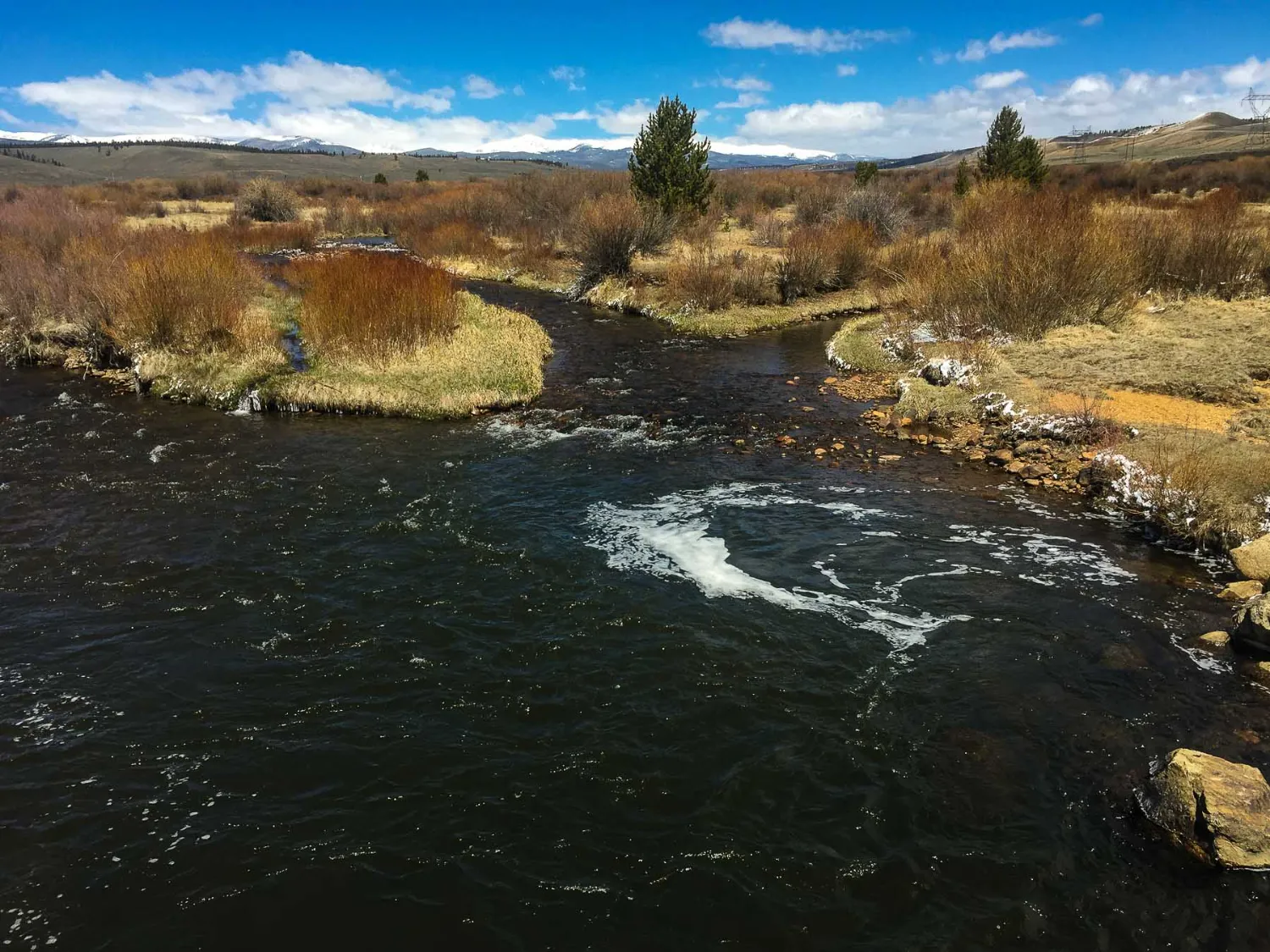
Seams: The Thread Running Through All of It
Seams are not a separate water type. They exist inside every water type on this list.
A seam is the boundary line where faster and slower current meet. Food concentrates along that line because the faster current carries it and the slower current holds it. Fish position themselves on the slower side of the seam and dart into the faster lane to grab food, then return to their holding position.
You can often spot seams by watching the surface. Foam collects along seams because the same physics that concentrate food also concentrate bubbles. There’s a reason experienced anglers say “foam is home.” Follow the foam line and you’ve usually found the seam.
Whatever water type you’re looking at, finding the seam within it is often the most important next step. A run has seams along its edges. A pool has seams at its head. Pocket water has seams on both sides of every boulder. Back eddies have a seam where the reverse current meets the main flow.
Read the water type first. Then find the seam within it. That’s where the fish are most likely to be.
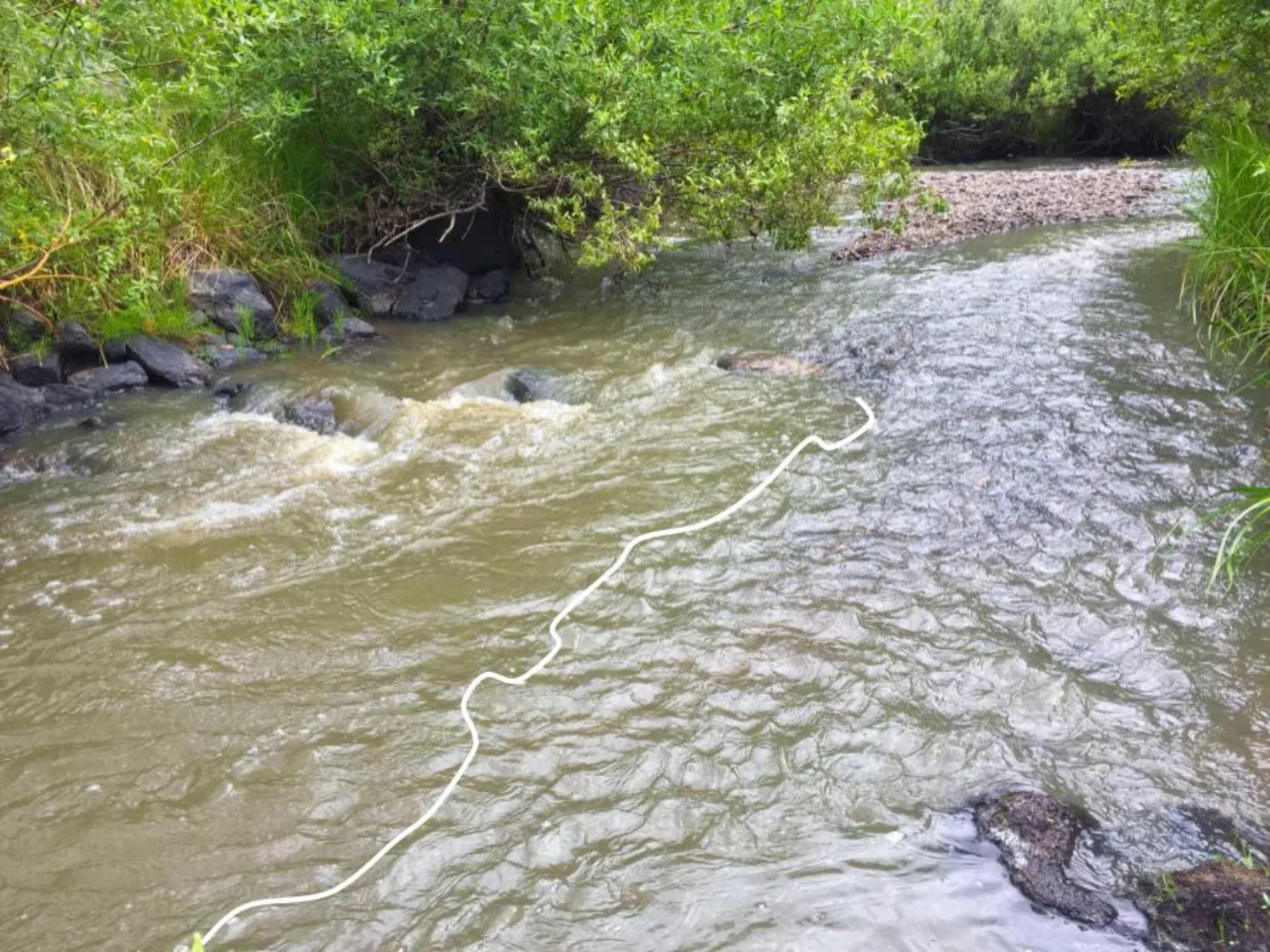
Quick Reference: 6 Water Types at a Glance
| Water Type | Strongest Technique | Why It Stands Out |
|---|---|---|
| Riffles | Euro Nymphing | Best contact and depth control in fast, broken current |
| Runs | Nymphing (both styles) | Most versatile and reliable all-around water type |
| Pools | Streamers | Strongest fit for big fish and deep holding water; nymphing strong on seams |
| Tailouts | Dry Fly | Classic smooth feeding lanes with consistent food delivery |
| Pocket Water | Euro Nymphing | Precise control across many small holding lies; streamers also productive |
| Back Eddies | Dry Fly | Natural fit for trapped surface food; nymphing and streamers both viable |
Where to Go From Here
Knowing the names of these water types is a solid start. But the real jump in your fishing comes from learning how to approach each one systematically, with the right angle, the right depth, the right rig, and an understanding of how the season changes everything.
A run that holds fish in every lane during summer might concentrate them in one deep slot in February. A pool that’s dead in August might be the most productive water on the river in January. The water types stay the same. The fish move within them.
That’s the next layer of reading water, and it’s where most anglers have the most room to grow.
If you want to go deeper on this, Trout University VIP covers water reading, seasonal fish location, technique selection, and full decision-making frameworks with on-the-water instruction. The first 30 days are free, and it’s built for exactly the kind of angler who wants to understand the why behind every decision, not just follow a checklist.
Your Next Trip Plan
Before you close this article, pick three things to focus on the next time you’re on the water:
Before your first cast, identify the water type in front of you. Name it out loud if you have to. Riffle, run, pool, tailout, pocket water, or back eddy. This one habit will change how you approach every stretch of river.
Find the seam within that water type. Look for the foam line. Look for the boundary between faster and slower current. Position your fly on the slower side and let the faster current deliver food to it.
Match your technique to the water, not your habit. If you always nymph, try a dry in the tailout. If you always fish the pool, work the head of it with a streamer. Let the water type guide the decision, not comfort.
That’s how you read a trout river. One water type, one seam, one deliberate choice at a time.
Trout University
The Best Way to Master Fly Fishing for Trout
Everything you need to learn how to fly fish for trout.
From fly selection to presentation and location, all in one place.
8 Premium Courses
15 Video Classes
1-2hr Power Classes on Key Subjects and solidify your learnings
6 Streamside Courses
10+ Hours of Fishing to See Our Methods in Action
No Credit Card Required or Auto Renewal
