
How to Start Euro Nymphing: A Complete Beginner’s Guide
The Quick-Reference Checklist: Euro Nymphing at a Glance
You’re standing knee-deep in a run that should be holding fish. Your indicator is drifting nicely, your flies are weighted, and you’ve been through half your nymph box. Two fish in two hours. Not terrible, but not what you came for.
Then you notice the angler fifty yards upstream. No indicator. No split shot. Rod tip high, arm tracking smoothly downstream, a thin colored line barely visible between the rod and the water. You watch for five minutes. In that time, the rod dips twice, and two trout come to the net. You watch for another ten minutes. Three more fish.
No bobber. No pile of line on the water. Just a direct, almost surgical connection between the angler and whatever is happening below the surface.
That’s euro nymphing. And if you’ve ever watched someone do it well and wondered what they know that you don’t, this guide is going to answer that question.
Euro nymphing is not a trick or a gimmick. It’s a system built on a simple idea: the fewer things between you and your fly, the more fish you detect, hook, and land. Once you understand how it works, you’ll never look at a run, a riffle, or a pocket the same way again.
This guide gives you everything you need to start euro nymphing and start catching more fish. The gear, the technique, the fly selection logic, and the mistakes to avoid.
If you want to build a complete system for catching trout, including the full euro nymphing method, our Trout University VIP membership gives you access to the full Euro Nymphing Course and seven other courses. You can try it free for 30 days.
Before we go deep on each topic, here’s the complete picture in scannable form. If you’re short on time, this gives you the essentials. If you want the full story, the sections below expand on every item.
Gear Essentials:
- A longer rod (10-11 ft ideal, but a 9 ft 4-weight works to start)
- A euro leader with a colored sighter section (or a pre-made euro leader)
- Tippet rings for quick changes
- Heavily weighted nymphs with tungsten beads (3-4 patterns in multiple weights)
The Core Technique:
- Get closer to the water than you think you need to be (15-30 feet)
- Lob (not cast) your flies upstream and slightly across
- Let flies sink to the bottom, then raise slightly
- Lead the drift with your rod tip, maintaining constant tension
- Watch the sighter for any hesitation, pause, or twitch
- Set the hook with a smooth upward lift at the first sign of anything unusual
Fly Selection Logic:
- Weight first, pattern second
- Heavy anchor fly on the bottom, lighter dropper fly above
- Start with Perdigons, Frenchies, and Walt’s Worms in sizes 14-18
- Carry each pattern in at least two bead weights
The Five Mistakes That Kill Beginners:
- Fishing too far away
- Not getting deep enough
- Watching the water instead of the sighter
- Setting the hook too slowly
- Changing flies before fixing the drift
Now let’s break each of these down so you understand not just what to do, but why it works.
Trout University
The Best Way to Master Fly Fishing for Trout
Everything you need to learn how to fly fish for trout.
From fly selection to presentation and location, all in one place.
8 Premium Courses
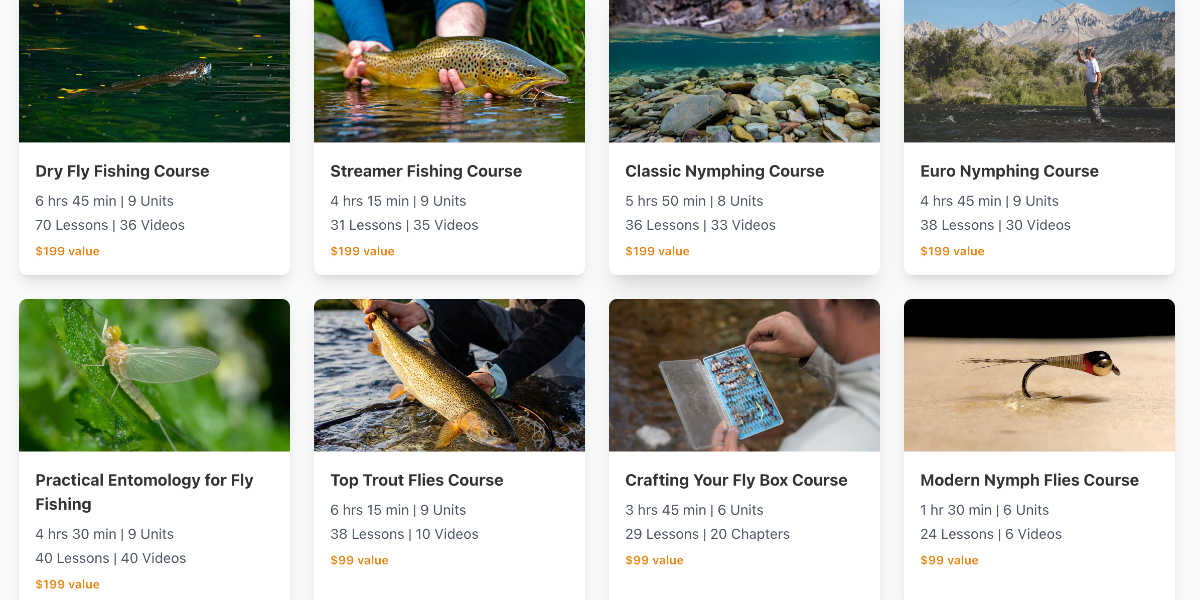
15 Video Classes
1-2hr Power Classes on Key Subjects and solidify your learnings
6 Streamside Courses
10+ Hours of Fishing to See Our Methods in Action
No Credit Card Required or Auto Renewal
What Makes Euro Nymphing Different
Euro nymphing, also called tight line nymphing or contact nymphing, was born from competitive fly fishing in Europe. In competition, anglers have a fixed stretch of water and a fixed amount of time. Every second matters. Every missed take costs points. The technique evolved because competitors needed to maximize efficiency: get flies deep fast, detect every take, and cover water systematically.
The core difference from indicator nymphing is this: instead of suspending your flies under a bobber and watching for it to dip, you maintain a direct line of contact from your rod tip to your flies. The only thing between you and the nymph is a thin leader and a colored section of monofilament called a sighter. No fly line on the water. No indicator creating drag. Just you, the leader, and the fly.
This changes three things dramatically:
Your flies get into the strike zone faster. Water moves faster at the surface than at the bottom. An indicator sitting on the surface catches that fast current and drags your flies through the slower bottom water at an unnatural speed. Remove the indicator, and you cut that drag by half or more. Your flies sink faster and drift at the actual speed of the current where trout are feeding.
You detect takes that indicators miss entirely. Many trout takes are subtle. The fish opens its mouth, inhales the nymph, and spits it in under a second. An indicator has to transmit that take through the water, up the leader, and move enough for you to see it. A tight line transmits that take directly to your rod tip and sighter. You feel it. You see it. And you have time to react.
You control depth and speed in real time. With an indicator, changing your depth means stopping, sliding the indicator up or down, and casting again. With euro nymphing, you raise or lower your rod tip and your flies respond instantly. You can fish a two-foot riffle and a four-foot run on consecutive drifts without changing anything on your rig.
The mindset shift is real: you stop waiting for something to happen and start feeling the river tell you what’s going on.
Why Trout Eat Euro Nymphs So Readily
Trout spend the vast majority of their feeding time subsurface. Estimates vary, but the commonly cited figure is that 80% or more of a trout’s diet is consumed below the surface. Nymphs, larvae, and other subsurface food items are the bread and butter.
Euro nymphs are designed to get into that feeding zone quickly and stay there. Tungsten beads sink fast. Slim profiles reduce water resistance. Jig-style hooks ride point-up, reducing snags on the bottom. When a well-weighted euro nymph drifts through a trout’s feeding lane at the natural speed of the current, the fish doesn’t have time to inspect it the way it might examine a dry fly floating overhead. It looks like food. It’s moving like food. It’s at the right depth. The trout eats.
This is the Presentation pillar at its most precise. Euro nymphing doesn’t just put a fly in the water. It puts the right fly at the right depth, moving at the right speed, with enough sensitivity to know the instant a fish touches it.
Euro Nymphing Gear: What You Need (And What You Don’t)
One of the biggest barriers to starting euro nymphing is the assumption that you need a completely new setup. You don’t. Not to start. Here’s what actually matters and what can wait.
The Rod
The ideal euro nymphing rod is longer and lighter than a standard fly rod. Most dedicated euro rods are 10 to 11 feet long in a 2-weight to 4-weight. The extra length gives you more reach and better line control. The lighter weight makes it easier to hold the rod high for extended periods and provides the sensitivity to feel subtle takes.
But here’s the honest truth: you can start with what you have. A 9-foot 4-weight will work for learning the technique. You won’t have the reach or sensitivity of a dedicated euro rod, but you’ll be able to practice the cast, the drift, and the strike detection. That’s what matters first.
When you’re ready to upgrade, prioritize rod length over everything else. A 10-foot rod in a 3-weight is a significant step up from a 9-foot rod. The extra foot of reach translates directly into better drift control and more water coverage.
The Leader and Sighter Setup
This is where euro nymphing is genuinely different from any other fly fishing setup, and it’s the one piece of gear you do need to get right from the start.
A euro nymphing leader replaces the standard tapered leader and fly line on the water. The leader runs from your fly line (or a section of heavy monofilament) through a colored section called the sighter, then down to your tippet and flies. The sighter is typically a bi-color or tri-color section of monofilament, usually in bright colors like pink, chartreuse, orange, or yellow. It serves as your visual strike indicator.
The goal is simple: no fly line touches the water. Only leader, sighter, tippet, and flies. This eliminates the drag that fly line creates on the surface and gives you direct contact with your nymphs.
If building a leader from scratch sounds intimidating, pre-made euro leaders are available and work fine for getting started. You can also build a basic setup with about $25-50 worth of sighter material and tippet rings. The tippet ring sits between your sighter and your tippet section, making it fast and easy to swap flies and adjust your rig without cutting into your leader.
Flies
Euro nymphing flies are built for one primary purpose: getting to the bottom fast and staying there. Tungsten beads are standard because tungsten is roughly twice the weight of brass. Slim profiles reduce water resistance so the fly sinks quickly. Jig hooks keep the hook point riding up, which dramatically reduces snags on the riverbed.
You don’t need dozens of patterns to start. You need 3-4 proven patterns in multiple weights. Here’s a starter system:
- Perdigon (sizes 14-18, multiple bead weights): The quintessential euro nymph. Slim, heavy, fast-sinking. Gets to the bottom and stays there.
- Frenchie (sizes 14-18, multiple bead weights): A euro-style Pheasant Tail with a bright dubbing collar. Versatile searching pattern that imitates a range of mayfly nymphs.
- Walt’s Worm (sizes 14-18): Soft dubbing body with excellent movement in the water. Works as both an anchor fly and a lighter dropper.
- Soft Hackle Hare’s Ear (sizes 12-16): More movement and suggestion than the slim patterns above. Excellent as a trailing fly.
The key insight: carry each pattern in at least two or three bead weights. A size 16 Perdigon with a 2.3mm bead fishes very differently from the same fly with a 3.3mm bead. Weight is the most important variable in euro nymph fly selection, and we’ll cover why in detail below.
If you want a ready-made selection that covers the bases, our Euro Nymph Assortment is built around this exact logic: proven patterns in multiple weights so you can adapt to different water without carrying a dozen boxes.
What You Don’t Need to Start
- An expensive euro-specific rod. Learn the technique first. Upgrade when you know you love it.
- Dozens of fly patterns. Four patterns in multiple weights will outfish twenty patterns in one weight.
- A competition mindset. You’re learning a method, not training for a tournament. Fish at your own pace.
How to Euro Nymph: The Step-by-Step Method
This is the heart of it. Everything above is setup. Everything below is refinement. This section is where you learn to actually fish the technique. Each step is achievable on your first outing, but be honest with yourself: mastering the drift takes practice. That’s true of every fly fishing technique, and euro nymphing is no different.
Step 1: Find the Right Water
Euro nymphing excels in water where you can maintain a tight line connection at relatively close range. That means riffles, runs, pocket water, drop-offs, and moderate-depth pools. These are the bread-and-butter water types for this technique.
Water to avoid when you’re starting out: very slow flats where the current barely moves (your flies won’t maintain tension), and very wide rivers where you’d need to cast 40+ feet to reach fish (you’ll lose contact). Euro nymphing is most effective at 15-30 feet. That’s closer than most anglers are used to fishing.
Here’s the Location pillar in action: where you stand matters as much as how you cast. Position yourself upstream and slightly to the side of the water you want to fish. Get close. Closer than feels comfortable. Trout in riffles and runs are less spooky than you think, especially if you approach carefully, stay low, and avoid casting your shadow over the water.
Pro tip: Look for drop-offs where fast, shallow water transitions into deeper, slower water. These are trout magnets. The fish sit right at the depth change where food gets funneled to them. As a beginner, these spots give you the best combination of concentrated fish and manageable water to practice your drift.
Step 2: The Cast (It’s Not Really a Cast)
Forget everything you know about fly casting for a moment. The euro nymphing “cast” is more of a lob. You’re not building loops or shooting line. You’re using the weight of the flies and the flex of the rod to place your nymphs upstream and slightly across from your position.
Here’s the basic motion: with your flies dangling below the rod tip, make a smooth, single-stroke forward motion that sends the flies upstream. The rod tip drives the delivery. The flies should enter the water upstream of your position, giving them time to sink before they reach the strike zone directly in front of you.
The most common beginner mistake is casting too far. When you cast 40 feet of line, you immediately lose the tight line connection that makes this technique work. Start short. If your flies are landing 15-20 feet away, that’s perfect. You can always add distance as your skills develop.
Step 3: Find the Bottom
This is the single most important habit in euro nymphing, and it’s the one that separates anglers who catch fish from those who don’t.
After your flies enter the water, let them sink. You should feel or see occasional contact with the bottom. The flies tick along the rocks, and you feel that feedback through the rod. If you’re not feeling anything, your flies are too light for the current, or you haven’t let them sink long enough.
Once you feel bottom, raise your rod tip slightly. You want your flies riding just above the riverbed, in the zone where trout are actively feeding. This is your strike zone. Too high and you’re above the fish. Too deep and you’re snagging constantly.
Here’s the depth control insight that changes everything: when you’re not catching fish, adjust your depth before you change your fly. Most nymphing failures are presentation problems (depth), not fly selection problems. If you’re not ticking bottom occasionally, go heavier. If you’re snagging every other drift, go lighter or raise your rod tip. The fly pattern is almost never the first thing to change.
Step 4: Lead the Drift
Once your flies are in the water and sinking, your rod tip follows them downstream. This is called “leading the drift.” You’re not dragging the flies. You’re not letting slack develop. You’re maintaining just enough tension that the sighter stays slightly taut with a gentle downstream bow.
Your rod tip should track at roughly the speed of the current. If you move too fast, you’ll pull the flies unnaturally. If you move too slow, slack develops and you lose contact. The sweet spot is a smooth, controlled tracking motion where you can feel the flies working through the current.
Watch the sighter. This is your window into what’s happening below the surface. Any hesitation, twitch, pause, or upstream movement in the sighter means something touched your fly. In euro nymphing, the default response to anything unusual is: set the hook.
Most euro nymph takes don’t feel like a dramatic pull. They feel like the fly just stopped. Like it bumped a rock, except the timing is slightly off. That’s a fish. Set immediately.
Step 5: The Hookset
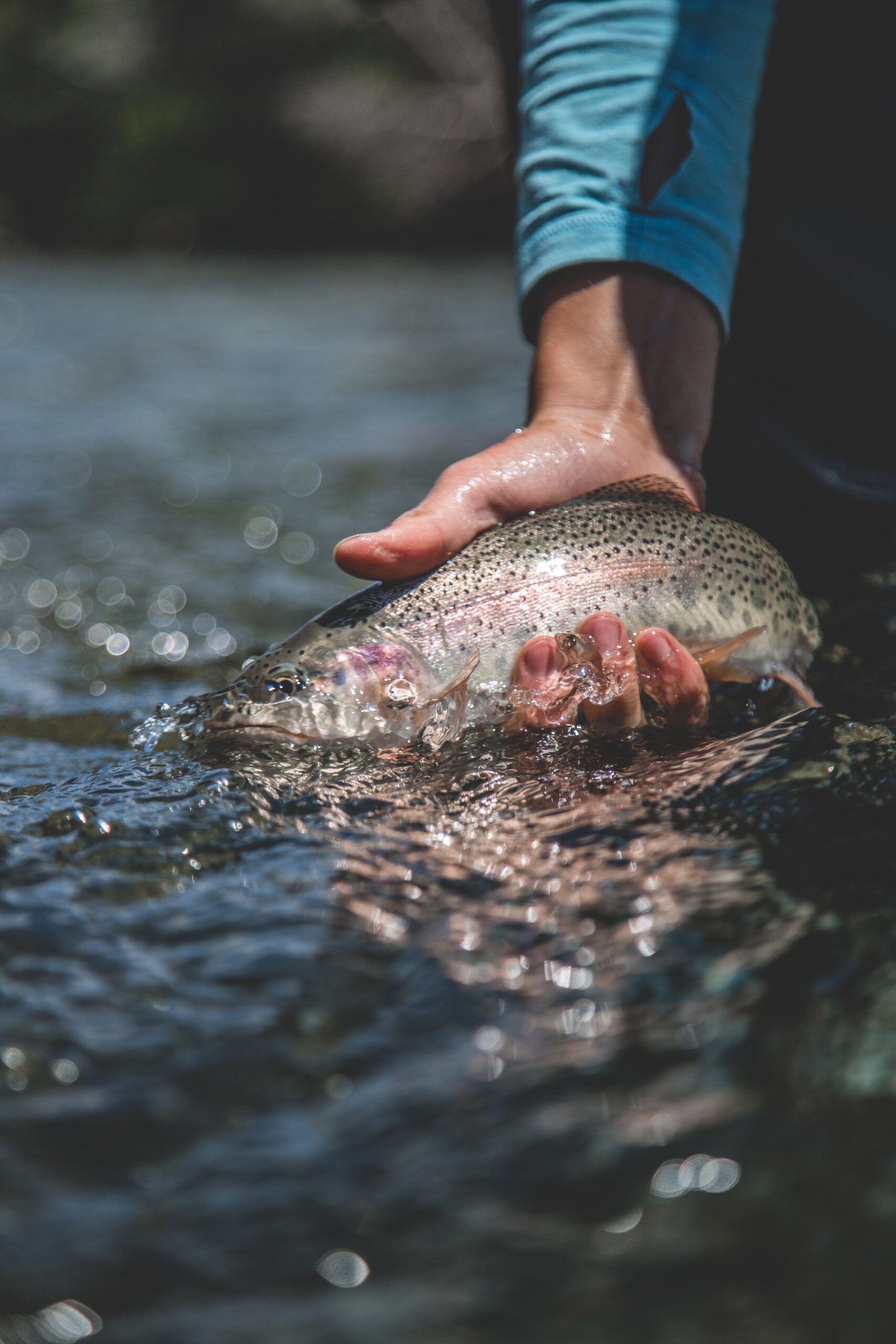
When you see or feel something, lift the rod with a smooth, controlled upward motion. Don’t yank. Don’t jerk. A steady lift maintains tension and drives the hook into the fish’s mouth without ripping the fly away.
Direction matters. Set toward the bank you’re standing on, angled slightly upward. This drives the hook into the upper jaw or roof of the mouth, which is the most secure hookup point. Setting straight up can pull the fly out. Setting downstream can create slack.
You will miss fish early on. That’s normal. Strike detection in euro nymphing is a learned skill. Every hour on the water calibrates your eyes and hands a little more. After a few sessions, you’ll start setting on takes you wouldn’t have noticed before. That’s when the fish count starts climbing.
The Honest Truth About the Drift
Here’s something worth saying plainly: the drift is where euro nymphing either works or doesn’t. Everything else, the gear, the cast, the fly selection, is setup for the drift. If your drift is poor, nothing else saves you.
A good drift means your flies are at the right depth, moving at the natural speed of the current, with enough tension that you can detect a take instantly. A bad drift means drag, slack, or flies floating above the fish. The best flies in the world, dragged unnaturally through the water after a perfect cast, will catch zero fish.
This is why experienced euro nymphers obsess over the drift. It’s not complicated in concept. It’s demanding in execution. And it rewards practice more than any other variable in fly fishing.
Choosing Euro Nymph Flies: Keep It Simple to Start
Now that you understand the technique, let’s talk about what goes on the end of your tippet. Euro nymphing fly selection follows a different logic than what most anglers are used to, and understanding that logic will save you a lot of frustration.
Weight First, Pattern Second
This is the single most important concept in euro nymph fly selection, and it’s counterintuitive for anglers who grew up matching the hatch.
The most important variable is not color. It’s not size. It’s not whether the fly has a hotspot or CDC legs. It’s weight. Specifically, it’s whether the fly is heavy enough to reach the depth where trout are feeding in the water you’re fishing right now.
A perfectly imitative size 16 Baetis nymph that’s floating two feet above the fish will catch nothing. A generic Perdigon with a 3.3mm tungsten bead that’s ticking along the bottom in the feeding lane will catch fish all day.
This doesn’t mean pattern never matters. It means pattern matters after you’ve solved the weight problem. Get to the right depth first. Then refine your pattern choice.
In our experience at The Catch and The Hatch, the anglers who improve fastest are the ones who carry fewer patterns in more weights, rather than more patterns in fewer weights.
The Starter Pattern System
A standard euro nymphing rig uses two flies: a heavier anchor fly on the bottom and a lighter dropper fly above it. This is the opposite of traditional indicator nymphing, where the heavy fly is usually on top.
Anchor fly (bottom, heavier): Perdigon or heavy Frenchie with a large tungsten bead. This fly’s job is to get the rig to the bottom fast and keep it there. It catches fish too, but its primary role is depth control.
Dropper fly (top, lighter): Walt’s Worm, Soft Hackle Hare’s Ear, or a lighter Pheasant Tail variation. This fly rides higher in the water column, covering a different depth zone. Its softer materials provide more movement and a more natural profile.
Space the two flies 14-24 inches apart depending on water depth. In shallow, fast runs, keep them closer (14-16 inches). In deeper pools, spread them out (20-24 inches) to cover more of the water column.
When Pattern Actually Starts to Matter
Once you can consistently get your flies to the bottom, maintain a tight line, and detect takes, you’ll start noticing that some days the fish prefer one pattern over another. This is where fly selection knowledge begins to compound.
Selective fish in pressured water require you to match what’s actually drifting in the current. That means understanding which insects are active, what stage they’re in, and what size and color profile the trout are keying on. This is where entomology knowledge transforms your fly selection from guesswork into a system.
If you want to understand why trout choose one nymph over another, and how to read the river to figure out what they’re eating, that’s where understanding insect life cycles changes everything. It’s a deeper topic than one article can cover, but it’s the skill that separates good nymph anglers from great ones.
Seasonal Adjustments (Brief)
- Winter and early spring: Midges and BWO (Blue-Winged Olive) nymphs dominate. Go small (sizes 18-24) and dark. Fish slow, deep water.
- Late spring and summer: Stonefly nymphs, caddis larvae, and larger mayfly nymphs enter the mix. Sizes 12-16 in a wider range of colors.
- Fall: Back to smaller patterns as Baetis nymphs become prominent again. Attractor patterns like the Blowtorch can trigger aggressive pre-winter feeding.
Why Most Beginners Struggle with Euro Nymphing (And How to Fix It)
Every beginner makes these mistakes. Knowing them in advance won’t prevent all of them, but it will help you diagnose what’s going wrong faster.
Mistake 1: Fishing too far away. This is the most common mistake, and it kills the technique. At 40 feet, you cannot maintain the tight line connection that makes euro nymphing work. Your sighter sags, your flies drag, and you miss every subtle take. Solution: get closer. Fish at 15-25 feet until your drift control is solid.
Mistake 2: Not getting deep enough. If you’re not occasionally ticking the bottom, you’re fishing above the fish. Trout feed near the riverbed because the current is slower there, food concentrates there, and they’re protected from predators. If you go an entire session without feeling bottom contact, your flies are too light for the water. Add weight by switching to a heavier bead size or adding a second heavy fly.
Mistake 3: Watching the water instead of the sighter. Your eyes should be locked on the sighter during the drift. The sighter is your strike indicator. If you’re watching the water, looking at the scenery, or checking your phone, you’re missing fish. Every twitch, pause, or hesitation in the sighter is information. Train yourself to watch it like a hawk.
Mistake 4: Setting the hook too slowly. Euro nymph takes are fast and light. A trout can inhale and spit a nymph in under a second. If you wait for confirmation that it’s “really a fish,” you’ve already missed it. The rule is simple: if anything looks or feels unusual during the drift, set the hook. Hook sets are free. Missed fish are not.
Mistake 5: Changing flies before fixing the drift. This is the mistake that wastes the most time. When you’re not catching fish, the instinct is to open the fly box and try something new. But nine times out of ten, the problem is depth, speed, or contact, not the fly pattern. Fix your drift first. Adjust your weight. Check your tension. Only after you’re confident your presentation is solid should you start experimenting with different patterns.
Most of these mistakes come down to one thing: not yet having a system for diagnosing what’s going wrong. That’s what separates anglers who improve quickly from those who stay stuck. The anglers who catch fish consistently aren’t guessing. They’re working through a checklist: Is my depth right? Is my tension right? Is my fly appropriate? And they address those questions in that order.
Indicator Nymphing vs. Euro Nymphing: When to Use Each
One question beginners always ask: should I ditch my indicator rig entirely? The honest answer is no. Both methods have strengths, and the best anglers carry both tools.
| Factor | Indicator Nymphing | Euro Nymphing |
|---|---|---|
| Best water type | Wider rivers, slower pools, long drifts | Riffles, runs, pocket water, moderate depth |
| Effective range | 20-50+ feet | 10-30 feet |
| Depth control | Requires adjusting indicator position | Instant, controlled by rod tip height |
| Strike detection | Visual (indicator movement) | Visual (sighter) + feel (rod feedback) |
| Drag | More (indicator catches surface current) | Less (minimal material on water) |
| Learning curve | Lower initial barrier | Steeper, but rewards come fast |
| Best conditions | Slow to moderate current, deeper water | Moderate to fast current, varied depth |
Euro nymphing is not a replacement for indicator nymphing. It’s an additional tool that excels in specific conditions. When you’re fishing a wide, slow flat where you need to cast 40 feet and let your flies drift for 30 seconds, an indicator rig is the better choice. When you’re working through a run with varied depth and speed changes every few feet, euro nymphing gives you precision that an indicator can’t match.
The anglers who catch the most fish are the ones who can switch between methods based on what the water demands. Many experienced anglers carry two rods: one rigged for euro nymphing and one for indicator or dry-dropper fishing. If that sounds like too much gear, you can also carry a spare reel with a tapered fly line and switch between setups as conditions change.
How the Three Pillars Apply to Euro Nymphing
Everything in this guide connects back to a framework we use at The Catch and The Hatch for every aspect of fly fishing. We call it the Three Pillars: Location, Fly Selection, and Presentation.
Location determines whether fish are even in front of you. In euro nymphing, this means choosing the right water type (riffles, runs, drop-offs), positioning yourself close enough to maintain contact, and reading the river to identify where trout are holding. You can have perfect technique, but if you’re fishing empty water, you’ll catch nothing.
Fly Selection means having the right weight, size, and pattern to match what’s drifting at the depth trout are feeding. In euro nymphing, weight comes first. Then size. Then color and profile. This hierarchy is different from dry fly fishing, where matching the hatch visually is paramount. Below the surface, getting to the right depth trumps having the perfect imitation.
Presentation is the drift. It’s contact, depth, speed, and hookset. It’s the tight line, the sighter tension, the smooth tracking of the rod tip downstream. In euro nymphing, presentation is everything. A mediocre fly presented perfectly will outfish a perfect fly presented poorly, every single time.
When a day isn’t working, the answer is always in one of these three places. Euro nymphing makes that diagnostic process faster and more precise than almost any other technique because you have direct feedback from the river through your rod and sighter. You know immediately if you’re too shallow, too deep, too fast, or too slow.
The anglers who catch fish consistently aren’t lucky. They have a system. They check location first, then fly selection, then presentation. And they adjust in that order until the fish start eating.
Frequently Asked Questions About Euro Nymphing for Beginners
Can I euro nymph with my existing fly rod? Yes. A 9-foot 4-weight or 5-weight will work for learning. You’ll sacrifice some reach and sensitivity compared to a dedicated 10-foot euro rod, but the technique fundamentals are the same. Don’t invest in a new rod until you’ve confirmed you enjoy the method.
How do I know if my flies are heavy enough? You should feel occasional bottom contact during your drift. If your sighter forms a U-shape (sagging between rod tip and water entry point), your flies are too light for the current. Switch to a heavier bead size or add a second weighted fly.
What tippet should I use? Fluorocarbon in 4X to 6X is standard for euro nymphing. Fluorocarbon sinks faster than monofilament and is less visible in the water. If you’re a beginner, start with 4X or 5X for durability. As your skills develop, dropping to 5X or 6X improves your drift in pressured or clear water.
Do I need to learn new knots? Not really. The improved clinch knot handles fly-to-tippet connections. A triple surgeon’s knot or blood knot connects tippet sections. If you use tippet rings (recommended), you’ll mostly just tie clinch knots, which speeds up fly changes significantly.
How close should I get to the fish? Closer than you think. Effective euro nymphing happens at 15-30 feet. In broken water (riffles, pocket water), you can often get within a rod length of feeding trout without spooking them. Move slowly, stay low, and avoid casting your shadow over the water.
Ready to Go Deeper? Here’s the Fastest Way to Build a Complete System
You now have a real foundation for euro nymphing. The gear logic, the step-by-step technique, the fly selection hierarchy, and the mistakes to avoid. That’s enough to get on the water and start catching fish with this method.
But here’s what a single article can’t give you: the visual demonstrations of each cast and drift angle, the complete leader formulas for different skill levels, the advanced fly selection strategies that connect entomology to weight and pattern choices, and the on-water reps that turn knowledge into instinct.
That’s exactly what Trout University was built for.
Inside the membership, you get access to the full Euro Nymphing Course, which covers everything from leader construction and casting mechanics to advanced drift angles, fly weighting strategy, and real-world troubleshooting. You also get the Classic Nymphing Course (so you have both methods dialed), the Fly Fishing Entomology Course (so fly selection stops being guesswork), and streamside adventures that show all of this on real water with real fish.
You can start with a free 30-day trial. No commitment. Just access to everything and the chance to see if it changes the way you fish.
Try Trout University Free for 30 Days
The full Euro Nymphing Course is also available as a standalone purchase if you want to focus specifically on tight line technique.
If You Only Remember Three Things from This Article…
1. Weight is the most important variable in euro nymph fly selection. Get your flies to the right depth before worrying about pattern, color, or size. If you’re not occasionally ticking the bottom, nothing else matters.
2. The drift is everything. A tight line, proper tension, and smooth tracking of the rod tip downstream are what make euro nymphing work. Fix your drift before you change your fly.
3. Get closer than you think. Euro nymphing is a close-range technique. Effective fishing happens at 15-30 feet. The closer you are, the better your contact, the more takes you detect, and the more fish you land.
Now get on the water and try it. The first fish you catch on a tight line, feeling the take pulse through the rod into your hand, will change the way you think about nymph fishing. And it only gets better from there.
Euro Nymphing Course
Catch Fish Consistently
Learn the art of Euro Nymphing
and Catch More Fish Than You Ever Thought Possible
- 9 Units & 38 Lessons
- 30+ HD Videos
- Learn from James Carlin with 11 yrs+ experience
- Master Tight-Line Techniques
- Lifetime access & coupons for over $225 in savings
- Perfect Your Gear Setup and Drift
