
Classic Nymphing Guide – Spring Fly Fishing
A 3-Phase Guide to Catching More Trout
You’re standing on the bank of your favorite river in early April. The water is clear and low, the air still has a bite to it, and the only visible insect activity is a handful of tiny midges hovering near the surface. You rig up the same nymph setup that crushed it last October, lob it into the run you always fish, and proceed to stare at a motionless indicator for the next hour.
Sound familiar? The problem is not your skill. The problem is that spring is not one season. It is three distinct phases, each with different water conditions, different insect activity, different fish behavior, and different demands on your nymphing approach. Fishing early April the same way you fish late May is like wearing the same jacket in a snowstorm and a thunderstorm. Both are “weather,” but they require completely different preparation.
This guide will teach you how to nymph effectively across all three phases of spring by adjusting the three pillars of fly fishing: Location, Fly Selection, and Presentation. These are the three variables you can control on any given day, and getting enough of each one right is what separates a two-fish morning from a double-digit afternoon. We will walk through how each pillar shifts as spring progresses, give you concrete “if X, then do Y” decision rules, and show you how to put it all together on the water.
Whether you are newer to nymphing or an experienced angler looking for a cleaner framework, this guide will give you a system for spring rather than a guess.
Most anglers think in four calendar seasons. In our experience at The Catch and The Hatch, we find it far more useful to break each season into three phases: early, mid, and late. This gives you 12 distinct “seasons” across the year, each with its own conditions and fishing character. For spring nymphing, the three phases look like this:
| Phase | Water Conditions | Fish Behavior | Primary Insects | Key Location |
|---|---|---|---|---|
| Early Spring | Clear, low, cold (resembles late winter) | Conservation mode, becoming more active; concentrated in specific lies | Midges (#18-#24), BWOs | Deep pools, slow runs, soft seams |
| Mid Spring | Warming, slight color change, moderate flows | Transitioning to active feeding; spreading into new water | Midges (sizing up), BWOs, caddis emerging | Runs, pocket water, heads/tails of pools |
| Late Spring | Off-color, higher flows, approaching or in runoff | Aggressive, opportunistic; pushed to edges | Stoneflies, caddis, annelids, larger midges | Bank lies, soft edges, side channels, tributary mouths |
The exact calendar dates for each phase depend entirely on your region, elevation, and local weather patterns. A river in the southern Appalachians might hit mid-spring conditions in March, while a high-elevation Rocky Mountain stream might not get there until late May. The key is to identify which phase you are in based on conditions, not the calendar.
Here is the critical point: knowing which phase you are in drives every decision that follows. Your location strategy, your fly selection, and your presentation all shift as you move from one phase to the next. Let’s break down each pillar.
Pillar 1: Location. Where to Nymph Across Spring
Location is the foundation. You can have the perfect fly and a flawless drift, but if you are casting into water where trout are not holding or feeding, you will catch nothing. Spring location strategy is all about understanding how trout redistribute themselves as conditions change.
Trout University
The Best Way to Master Fly Fishing for Trout
Everything you need to learn how to fly fish for trout.
From fly selection to presentation and location, all in one place.
8 Premium Courses
15 Video Classes
1-2hr Power Classes on Key Subjects and solidify your learnings
6 Streamside Courses
10+ Hours of Fishing to See Our Methods in Action
No Credit Card Required or Auto Renewal
Early Spring: Concentrated and Conservative
In early spring, trout are still carrying over winter behavior. They have spent months in conservation mode, holding in deeper, slower water where they can maintain position with minimal energy expenditure. Water temperatures are still cold, metabolism is low, and insect activity is sparse.
This means fish are concentrated. They are not spread across the river. They are isolated in specific lies: the deepest part of a pool, the softest seam along a slow run, the inside bend where current slows and depth increases. Think of early spring as a treasure hunt with a small search area. The fish are there, but they are packed into a limited number of spots.
What to look for:
- Deep pools with slow to moderate current
- Soft seams where fast water meets slow water
- Inside bends and eddies
- The warmest available water (south-facing banks, areas that get early sun)
- Tailouts of pools where depth is still adequate
What to avoid:
- Shallow riffles (too cold, too little food, too much energy cost for trout)
- Fast pocket water (fish have not yet moved into these areas)
- Wide, exposed runs with no depth
Decision rule: If the water looks like it would hold fish in January, it probably holds fish in early spring too. Start there.
Mid Spring: The River Opens Up
As water temperatures rise and insect activity increases, trout begin shifting from survival mode to active feeding mode. This is the transition period, and it is one of the most exciting times to be on the water because fish are hungry and increasingly willing to move for food.
The key change is that trout begin occupying water types they would not have used in winter or early spring. Runs, pocket water, the heads and tails of pools, and side channels all become productive. The justification for a trout to hold in faster or shallower water is simple: the abundance of drifting insects provides enough calories to offset the energy cost of holding in that current.
What to look for:
- Runs with moderate depth and consistent current (the classic nymphing water)
- Pocket water behind and in front of boulders
- Heads of pools where food funnels in from the riffle above
- Side channels that are warming faster than the main river
- Seams between fast and slow water
What changes from early spring:
- Fish are no longer packed into a handful of deep lies. They are spreading out.
- You can cover more water types productively.
- The river starts to feel “alive” with feeding activity in places that were dead a few weeks ago.
Decision rule: If you were catching fish in deep, slow water during early spring and the bite slows down, the fish may have moved. Start testing runs, pocket water, and the heads of pools before assuming your fly is wrong.
Late Spring and Pre-Runoff: Edges, Banks, and Soft Water
Late spring brings the most dramatic location shift. As snowmelt accelerates and flows increase, the main current becomes faster, deeper, and often off-color. Trout respond by moving to the margins. Bank lies, soft edges, side channels, tributary mouths, and any pocket of slower water become the prime real estate.
During runoff conditions, the center of the river is often unfishable. Fish stack along the edges where they can hold position without exhausting themselves and still intercept food being washed downstream. Understanding bank lies becomes critical during this phase.
What to look for:
- Water within a few feet of the bank, especially where depth drops off
- Eddies and back-eddies behind large boulders or structure
- Side channels and braids that carry less volume than the main channel
- Tributary mouths where clearer, cooler water enters
- Any soft pocket or seam along the edges of heavy current
What to avoid:
- The main current in the center of the river (fish are not there)
- Wading into fast, deep water (safety concern and you will push fish off the edges)
Decision rule: During high water, fish the edges first. If you can reach the bank with your cast, you are probably fishing in the right zone. Work your way out only if the edges are not producing.
The Observation Protocol
Regardless of which phase you are in, spend 10 to 15 minutes reading the water before you rig up. This is not wasted time. It is the highest-value activity you can do at the start of a session.
- Scan for visible fish or feeding activity
- Look at the water structure: where are the depth changes, seams, and current breaks?
- Check for insect activity on the surface and in the air
- Assess water clarity and flow speed
- Confirm or reject your initial seasonal prediction based on what you actually see
This observation step prevents you from fishing on autopilot. The river will tell you where the fish are if you take a few minutes to listen.
Pillar 2: Fly Selection. What to Nymph With Across Spring
Spring is the season most dependent on correct fly selection. Four insect categories dominate spring activity: midges, mayflies (primarily Blue-Winged Olives, or BWOs), caddis, and stoneflies. These four categories account for roughly three-quarters of all insect life occurring in spring. Add in annelids (aquatic worms) and egg patterns as supplementary food sources, and you have the full spring menu.
The challenge is not just knowing what is on the menu. It is knowing what trout are actually eating right now, in this phase, on this river, at this time of day. Here is how to narrow it down.
Early Spring Fly Selection: Small and Sparse
In early spring, insect activity is limited. Midges are the dominant food source, and they will remain important for the first one to two months of spring. BWO nymphs are a strong secondary option, especially on overcast or breezy days. Small stonefly nymphs (like black stoneflies) can also be present and serve as excellent anchor flies.
The classic early spring three-fly rig:
- Stonefly nymph (rubber-leg pattern, size #10-#14) as the anchor/lead fly for weight and to imitate early-season stones
- BWO nymph (Mercury Baetis or similar, size #18-#22) as the mid-rig fly
- Small midge (Zebra Midge or similar, size #18-#24) as the trailing fly
This combination covers the three most likely food sources in early spring. Treat it as a starting point, not a permanent setup. Be prepared to adapt based on what fish are actually eating.
Key sizes: Midge nymphs in #18 to #24. BWO nymphs in #18 to #22. Stonefly nymphs in #10 to #16.
Key colors: Black, olive, and gray for midges. Olive for BWOs. Black or brown for stoneflies.
If you want a curated selection of proven midge patterns that covers nymph, emerger, and dry stages, our Midge Assortment is built specifically for this kind of fishing. It is designed to produce year-round but is especially effective in early spring when midges dominate the menu.
Mid Spring Fly Selection: The Menu Expands
As water warms and clarity begins to shift, the insect menu broadens. Caddis nymphs and pupae enter the picture. Midge sizes can increase to #16-#18 as the “midge-zilla” hatch begins (larger midges appearing as water warms). BWOs remain consistent and productive. Stonefly nymphs become more productive in larger sizes as the nymphs grow toward their eventual emergence.
Annelid patterns (worm flies like Squirmy Worms in red or pink, sizes #10-#16) start producing, especially after rain events or in slightly off-color water. Rising flows dislodge worms from the substrate, and trout key on them as easy, high-calorie meals.
Mid spring adjustments:
- Add caddis nymph patterns (size #12-#16, green or tan) to your rotation
- Size up your midges if fish are refusing the tiny stuff
- Keep BWO nymphs in the mix; they remain reliable
- Carry a few worm patterns for off-color days
- A two-nymph rig with a large stonefly as the lead and a small midge or BWO as the trailer remains highly effective
For anglers who want solid BWO and general mayfly coverage, our BWO & Adams Fly Assortment covers both nymph and dry stages of these reliable spring hatches.
Trout University
The Best Way to Master Fly Fishing for Trout
Everything you need to learn how to fly fish for trout.
From fly selection to presentation and location, all in one place.
8 Premium Courses
15 Video Classes
1-2hr Power Classes on Key Subjects and solidify your learnings
6 Streamside Courses
10+ Hours of Fishing to See Our Methods in Action
No Credit Card Required or Auto Renewal
Late Spring Fly Selection: Size Up and Get Bold
Late spring, especially during pre-runoff and runoff conditions, is when fly selection shifts most dramatically. Water clarity drops, flows increase, and trout become highly opportunistic. They are burning more energy holding in faster water and need bigger meals to compensate.
Stonefly nymphs dominate as the anchor pattern. Larger rubber-leg patterns (Pat’s Rubber Legs, size #6-#10) are workhorses during this phase. Caddis nymphs and pupae are in full swing. Worm patterns and egg patterns become highly effective in murky water.
Late spring adjustments:
- Do not be afraid to size up. A #8 stonefly nymph that would look absurd in early spring is perfectly appropriate now.
- Worm patterns (Squirmy Worms, San Juan Worms) in red, pink, and chartreuse produce well in high, off-color water.
- Egg patterns follow the same logic: if they are producing, they produce well. If not, move on quickly.
- Larger, flashier attractor nymphs can trigger reaction strikes from opportunistic fish.
- Impressionistic patterns with hot spots (a flash of pink, orange, or chartreuse) can stand out in murky water where exact imitation matters less.
Decision rule: If the water is off-color and you are fishing small, delicate nymphs, you are probably underfishing the conditions. Size up, add flash or color, and get your flies where fish can see them.
Using a Bug Seine to Confirm Your Choices
A bug seine is one of the most underused tools in fly fishing. Hold it in the current for 30 seconds to a minute, then examine what collects. This tells you what is actually drifting in the water column, which is what trout are eating.
- Match the size and color of what you find in the seine
- Pay attention to life stage: are you seeing nymphs, emergers, or adults?
- Re-seine every hour or two, because conditions change throughout the day
The seine turns fly selection from a guess into an informed decision. Use it.
The Four Fly Categories Applied to Spring Nymphing
Not all nymphs serve the same purpose. Understanding the four categories helps you choose the right tool for the situation:
- Imitative flies closely replicate a specific insect. Use these when you know exactly what fish are eating (seine confirms it) and fish are being selective. More common in early spring’s clear, low water.
- Impressionistic flies suggest a few insects without exactly copying any one. These are your bread-and-butter spring nymphs (Pheasant Tails, Hare’s Ears, Mercury Baetis). They work across a range of conditions.
- Search patterns imitate a wide variety of food. Use these when you arrive at the water with no information and need to prospect. Beadhead Hare’s Ears and Prince Nymphs fall here.
- Attractor patterns imitate nothing specific but trigger strikes through flash, color, or movement. Use these in off-color water, during high flows, or when fish are aggressive and opportunistic (common in late spring).
As spring progresses from early to late, you generally shift from imitative and impressionistic patterns toward search and attractor patterns. Clear, low water rewards precision. Murky, high water rewards visibility and profile.
If you want a versatile nymph selection that covers the full range of spring scenarios, our Top Nymph Assortment includes the confidence patterns that produce across all three phases.
Pillar 3: Presentation. How to Nymph Across Spring
You can be in the right spot with the right fly and still catch nothing if your presentation is off. Presentation is where the rubber meets the road, and spring conditions demand different approaches as the season progresses.
Rig Setup Fundamentals for Spring Nymphing
Before we get into phase-specific adjustments, here are the baseline setup principles for spring nymphing:
- Indicator selection: A yarn-style indicator (like a New Zealand Strike Indicator) is versatile and lands softly. Thingamabobbers work well in heavier water but can spook fish in clear, calm conditions. Match your indicator to the water you are fishing.
- Leader length: 7.5 to 9 feet is sufficient for most spring nymphing. Spring’s higher, faster, off-color water (especially mid and late spring) reduces the need for ultra-long leaders.
- Tippet sizing: Heavier tippet works in spring. 3X to 4X is your bread-and-butter range. In spring’s turbulent, discolored water, fish are more forgiving of line visibility, so you can fish heavier and land fish faster. Drop to 5X only if water is very clear and fish are refusing.
- Tippet material: Fluorocarbon for the tippet section. It sinks faster, is less visible underwater, and is more abrasion-resistant. Use a monofilament leader with a fluorocarbon tippet extension to save money while getting the benefits where they matter most.
- Split shot strategy: Pinch-on split shot or tungsten putty, placed about 12 inches above the first fly. This allows easy adjustment as you move between water types.
- Two- vs. three-fly rigs: Where legal, a three-fly rig covers more of the water column and lets you test multiple patterns simultaneously. A two-fly rig is simpler to cast and manage, with fewer tangles. Start with two flies if you are newer to nymphing, and add a third as your casting improves.
Early Spring Presentation: Slow, Deep, and Precise
In early spring, fish are holding deep in slow water. Your presentation goal is to maximize time in the strike zone with a clean, natural dead drift.
Key adjustments:
- Set your indicator deeper. Fish are on or near the bottom. A general starting rule is to set your indicator at 1.5 times the water depth, then adjust from there. You want your flies occasionally ticking the bottom. If you never touch bottom, you are probably too shallow.
- Use lighter split shot. Water is lower and slower, so you do not need as much weight to get down. One or two small split shot is often enough.
- Prioritize drift quality. In slow, clear water, trout have time to inspect your fly. A drag-free dead drift is essential. Mend upstream to prevent your indicator from pulling ahead of your flies.
- Fish longer drifts. Slow water allows extended drifts. Let your rig work through the entire productive zone before picking up and recasting.
- Cast upstream of your target. Give your flies time to sink to the correct depth before they reach the fish. In slow water, this might mean casting 10 to 15 feet upstream of where you expect fish to be holding.
Decision rule: If you are not occasionally bumping bottom in early spring, add a small split shot or extend your indicator depth. You need to be in the zone, and the zone is near the bottom.
Mid Spring Presentation: Adjusting as Fish Move Up
As fish transition into active feeding mode and spread into runs and pocket water, your presentation needs to adapt.
Key adjustments:
- Begin adjusting depth. Fish are no longer glued to the bottom. As insect activity increases, trout move higher in the water column to intercept emerging nymphs. If you were fishing deep and the bite slows, try shortening the distance from indicator to flies by 6 to 12 inches.
- Moderate your split shot. You may need slightly more weight than early spring to punch through faster runs, but do not overweight. The goal is to get your flies into the feeding lane, not anchor them to the bottom.
- Fish are more forgiving. As trout become more opportunistic, minor imperfections in your drift matter less. This is good news. Focus on getting your flies in front of fish rather than obsessing over a perfect dead drift.
- Start testing dry-dropper rigs. When you see the first surface activity (rising fish, visible emergers), a dry-dropper rig lets you cover both the surface and subsurface simultaneously. Use a buoyant dry fly (like a Parachute Adams or Chubby Chernobyl) as the indicator and trail a nymph 18 to 24 inches below.
- When fish start rising mid-session: If you were catching fish on nymphs and fish begin rising, they have likely moved higher in the water column. Lighten your rig, shorten your indicator-to-fly distance, or switch to a dry-dropper or emerger pattern. Seine the water to identify what is emerging.
Late Spring and High Water Presentation: Get Deep, Get Bold
Late spring and runoff conditions demand the most aggressive presentation adjustments. The water is faster, deeper, and dirtier. Subtlety takes a back seat to getting your flies where fish can find them.
Key adjustments:
- Heavier weight. Add split shot or switch to heavier tungsten-beaded flies. You need to punch through fast current and get to the bottom quickly. Even a large fly may not match the weight of three or four pieces of split shot.
- Drop shot nymphing. This technique places split shot at the bottom of the tippet rather than above the flies. It allows smaller flies to get deep and sink faster without needing oversized weighted flies. This is ideal for reaching fish holding deep under hydraulic cushions created by boulders or in fast, deep water.
- Shorter leaders are viable. In turbid, fast water, fish cannot see your line. A shorter leader (even down to 7 feet) gives you more control and better casting accuracy.
- Lead your flies. Rather than a pure dead drift, lead your flies through the water at approximately a 45-degree angle. This creates slight drag, but fish in high water do not care about minor drag. Leading causes flies to tick along the bottom and stay in the productive zone longer.
- Fish tight to structure. Cast to within inches of banks, boulders, and any current break. In high water, fish are holding in very specific soft spots, and your fly needs to pass through those spots, not two feet away from them.
- Heavier tippet. 3X is perfectly appropriate in runoff conditions. You will hook bigger fish in aggressive feeding mode, and you need the strength to land them quickly.
Decision rule: If you are fishing late spring high water and your flies are not reaching the bottom within the first few seconds of the drift, you need more weight. Do not be shy about adding split shot.
Top Nymph Assortment
The Best Nymphs, Curated Over 20 yrs of Testing
A curated collection of the most reliable, confidence-building nymph patterns for trout fishing anywhere.
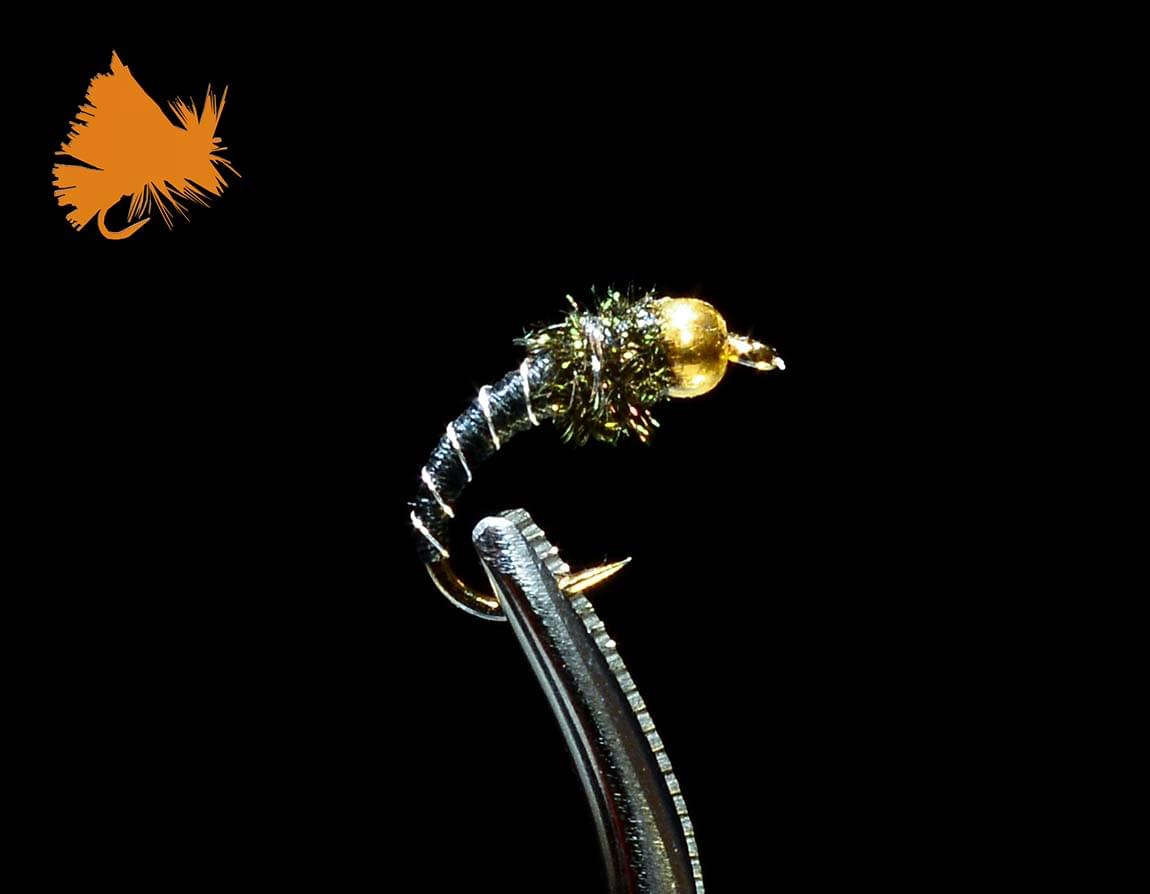

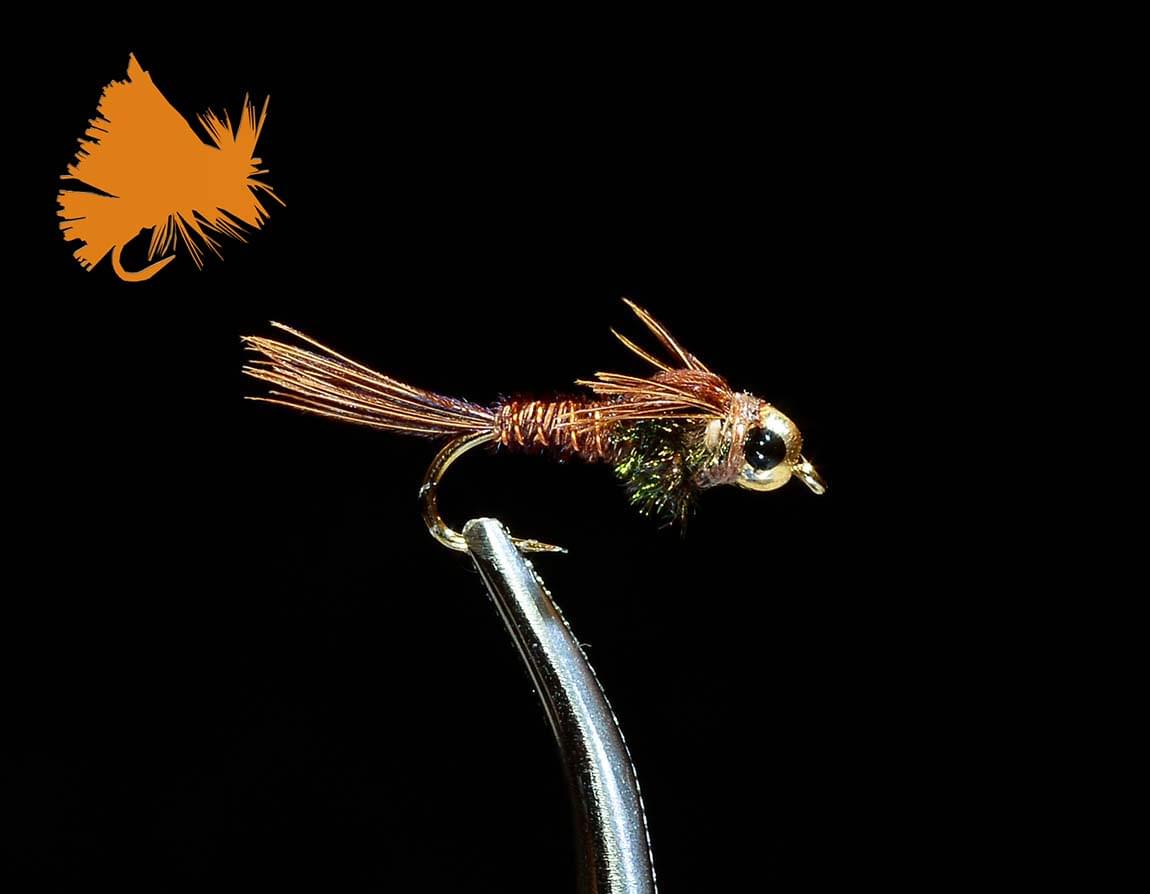


- A curated collection of the most reliable, confidence-building nymph patterns for trout fishing anywhere.
- 72 flies | 6 patterns | 3 sizes of each pattern
- FREE shipping, 5-7 day delivery





The Rule of Depth
Across all three phases, depth is the single most important presentation variable in nymphing. Here is a simple calibration method:
- Start with your indicator set at 1.5 times the estimated water depth.
- Make several drifts. If you never touch bottom, increase depth or add weight.
- If you snag bottom on every drift, reduce depth or remove weight.
- The sweet spot is occasional bottom contact. You should feel or see your indicator hesitate from a bottom tick every few drifts. This confirms you are in the zone.
If your flies are not in the zone, nothing else matters. Get depth right first, then worry about fly pattern and drift quality.
Putting It All Together: A Day on the Water
The three pillars are taught separately but fished simultaneously. Here is how they come together in practice.
Pre-Trip Planning
The night before your trip, gather your inputs:
- Check stream flows. Pull up the USGS gauge for your target river. Are flows within the normal fishable range for this time of year? Have they been rising or falling over the last 7 days?
- Check weather. Cloud cover, wind, temperature forecast, and incoming fronts. Low-pressure systems (incoming fronts) typically produce better insect activity. Fish before a front, not during or after.
- Identify the seasonal phase. Based on recent temperatures, flows, and any reports you can find, determine whether you are in early, mid, or late spring conditions.
- Prepare your flies. Stock your box with patterns appropriate for the phase. Do not show up with only midges if you are in late spring runoff conditions.
Arriving at the Water: The Observation Checklist
When you get to the river, resist the urge to immediately start casting. Instead:
- Scan for rises, feeding activity, or visible fish
- Check water clarity and color
- Assess current speed and depth
- Look for insect activity on the surface, in the air, and on bankside vegetation
- Seine the water to see what is drifting
- Confirm or reject your pre-trip assumptions based on what you actually see
This takes 10 to 15 minutes. It is the most productive 10 minutes of your day.
The Diagnostic Sequence
Once you start fishing, use this systematic approach:
Step 1: Start with your best seasonal guess. Based on the phase, your pre-trip research, and your on-water observations, rig up with your best educated guess for location, fly selection, and presentation.
Step 2: Validate location before changing flies. If you are not catching fish, the first question is not “what fly should I try?” The first question is “are there feeding fish here?” If you do not believe feeding fish are present in the water you are fishing, move. Test a different water type. Do not burn 45 minutes changing flies in empty water.
Step 3: Solve presentation before blaming the fly. If you believe fish are present, check your presentation. Are you deep enough? Is your drift clean? Are you getting occasional bottom contact? Fix presentation before changing the fly.
Step 4: Isolate fly selection systematically. Only after you are confident in your location and presentation should you start changing flies. When you do, follow this sequence: change the stage or pattern first (nymph vs. emerger), then size, then profile, then color.
Step 5: Recognize and build on patterns. One fish is luck. Two fish on the same method is a pattern. Three fish confirms it. Once you identify what is working, keep doing it. Then experiment with small refinements to improve further. If a refinement causes fishing to drop off, immediately revert to what was working.
Practical Phase Scenarios
Early spring scenario: You arrive at a familiar stretch in mid-March. Water is clear and low, air temperature is in the high 30s. No visible insect activity. You target the deepest pool on the stretch, rig a stonefly nymph as your anchor with a Zebra Midge trailer, set your indicator deep, and fish slow dead drifts through the pool. After 15 minutes with no takes, you move to the next deep pool rather than changing flies. Third pool, you connect. Two more fish confirm the pattern: deep, slow water, small flies, precise drifts.
Mid spring scenario: Late April, water is warming, slight green tinge to the color. You notice a few fish rising sporadically in a moderate run. You seine the water and find BWO nymphs and a couple of small caddis pupae. You rig a BWO nymph with a caddis pupa trailer and fish the run at moderate depth. Fish are eating. You refine by shortening your indicator depth as fish seem to be taking higher in the column. When the rises intensify, you switch to a dry-dropper rig and pick up several more fish on the emerger.
Late spring scenario: Mid-May, flows have doubled in the last week. Water is off-color and fast. You skip the main current entirely and focus on the soft water within three feet of the bank. You rig heavy: Pat’s Rubber Legs as the anchor with a Squirmy Worm trailer, plenty of split shot, short leader. You lead your flies along the bank edge at a 45-degree angle. Fish are stacked in the soft water and eating aggressively. You catch more fish in two hours than you did all of early spring.
Gear Checklist for Spring Nymphing
Here is what to pack for a spring nymphing day, organized by category:
Rod and Reel:
- 9-foot, 5- or 6-weight rod (a 6-weight gives you versatility if you want to throw streamers too)
- Reel with a smooth drag, loaded with weight-forward floating line
Terminal Tackle:
- Tapered leaders: 7.5-foot and 9-foot in 4X (carry both lengths)
- Fluorocarbon tippet: 4X, 5X, and 6X spools
- Split shot assortment: sizes BB, #4, and #6 (or tungsten putty)
- Strike indicators: yarn-style (New Zealand) for versatility, plus a few Thingamabobbers for heavy water
Flies (Summary by Phase):
- Early spring: Midge nymphs #18-#24 (Zebra Midge, Mercury Midge, Rainbow Warrior), BWO nymphs #18-#22 (Mercury Baetis, Pheasant Tail), small stonefly nymphs #12-#16
- Mid spring: Add caddis nymphs/pupae #12-#16, larger midges #16-#18, annelid patterns #10-#16
- Late spring: Large stonefly nymphs #6-#12 (Pat’s Rubber Legs), worm patterns (Squirmy Worm, San Juan Worm), egg patterns, attractor nymphs with hot spots
Tools:
- Bug seine (this is not optional)
- Forceps/hemostats
- Nippers
- Waterproof digital thermometer
Apparel:
- Layering system: base layer, insulating mid-layer, and a packable rain jacket
- Spring mountain temperatures can swing 20 to 30 degrees in a single day
- Carry rain gear and an insulating jacket in a backpack even if the morning feels warm
- Inspect and clean waders before the season starts
Pre-Season Prep:
- Clean fly lines
- Restock fly boxes
- Renew fishing licenses before heading out
If you want to go deeper on building a complete spring nymphing strategy, including rigging, casting, drift management, and situational adjustments for different water types, our Classic Nymphing Course walks through the entire process step by step.
And if you want access to all of our courses, fly pattern libraries, and seasonal guides in one place, you can try Trout University VIP free for 30 days to see if it fits your learning style.
Trout University
The Best Way to Master Fly Fishing for Trout
Everything you need to learn how to fly fish for trout.
From fly selection to presentation and location, all in one place.
8 Premium Courses
15 Video Classes
1-2hr Power Classes on Key Subjects and solidify your learnings
6 Streamside Courses
10+ Hours of Fishing to See Our Methods in Action
No Credit Card Required or Auto Renewal
Conclusion
Spring nymphing rewards the angler who shows up prepared with a system rather than a guess. Here are the key mistakes to avoid and their fixes:
Fishing the same water type all spring leads to diminishing returns as fish redistribute. Fix: identify your phase (early, mid, late) and target the water types where trout are actually holding during that phase.
Using the same small flies in late spring high water means fish cannot see your offering. Fix: size up your flies, add flash or color, and match the aggressiveness of the conditions.
Changing flies before checking depth and drift wastes time solving the wrong problem. Fix: confirm you are in the strike zone (occasional bottom contact) and your drift is clean before swapping patterns.
Spring is three seasons compressed into a few months. The water changes, the bugs change, and the fish change where they live and how they eat. The three-pillar framework of Location, Fly Selection, and Presentation gives you a repeatable system for adapting to each phase. Observe the conditions, make your best educated guess, fish it with intent, diagnose what is not working, and adjust the right variable. That process, repeated throughout the day and across the season, is what turns spring from a frustrating guessing game into the most productive fishing of the year.
This guide is one of four in our spring fly fishing series. If you’re looking for the complete picture, check out all of our guides below.
Learn To Nymph
The Right Way
Access step-by-step expert instruction, immersive visuals, and lifetime access.
- 8 Units & 36 Lessons (66 Chapters)
- 30+ HD Videos
- Learn the most reliable way to catch fish
- Learn strategy, rigging, casting, drift, landing and more
- Lifetime access & coupons for over $225 in savings
- Take at your own pace – easy to read and remember
