When a trout refuses your dry fly, the instinct is to reach for the fly box. Most of the time, that is the wrong move. Before you change the pattern, check the drift. A drag-free presentation with a fly that is close enough to the hatch will catch fish far more consistently than a perfect pattern dragging across the current. The short answer: fix the cast, drift, position, or angle first. Only change the fly when you have genuinely ruled out presentation as the problem. That sequence, kept in order, is where most refusal problems get solved.

Should You Change the Fly or Change the Cast?
How to solve dry fly refusals
A Refusal Is Useful Information
Here is the thing about refusals that most anglers miss: a trout moving toward your fly and turning away is not a failure. It is a data point. The fish saw the fly, evaluated it, and said no. That tells you something specific, and your job is to figure out what.
Not all refusals look the same, and they should not be treated the same way.
A hard, last-second turn-away, where the fish rises and peels off at the last moment, usually points to presentation. The fly looked right from a distance, but something about how it was sitting or moving on the surface triggered a refusal up close. Drag is the most common culprit, including subtle micro-drag that you cannot see from your position on the bank.
A slow inspection, where the fish tracks the fly for several inches and then slowly sinks back down without eating, often points to a size or stage problem. The trout had plenty of time to look at the fly, got close enough to study it, and decided it was not what it was eating. That is a different diagnosis than a last-second turn-away.
A rise-and-miss, where the fish clearly tried to eat and came up short, usually means the fly was moving or in the wrong position when the trout committed. That is an angle and drift problem.
You also need to think about what the trout is keying on. During a hatch, fish can lock onto a very specific stage, and they will ignore everything else. A trout eating emergers just under the surface will often refuse a high-riding adult fly even when the color, size, and silhouette are a close match. The fly is technically correct, but it is the wrong stage for what that fish is doing at that moment. Reading the refusal type before making any change is the most important habit you can build.
Check Presentation Before Pattern
There is an old saying in fly fishing: you cast for show, and you drift for dough. The beauty of your cast matters far less than what your fly does once it lands on the water. The accuracy of your drift is what puts fish in the net.
Before you open your fly box, run through this checklist.
Drag. This is the first thing to check. Drag happens when the fly line or leader gets caught in a different current speed than the fly, which pulls the fly across the surface in a way that no natural insect moves. Micro-drag is trickier, it is subtle enough that you might not notice it, but the trout does. Watch the fly carefully and look for any slight wake or pull. On technical water, a fly that looks right from a distance can be dragging enough to spook fish.
Cast angle. Where you are standing in relation to the trout affects your drift more than almost anything. Casting directly upstream from a fish can work on some water, but on slower or more complex currents, an upstream and across angle often gives you a cleaner drift because the leader settles more naturally. Repositioning yourself by ten or fifteen feet can turn a refused fly into an eaten fly with no other changes made.
Approach distance and disturbance. If you waded in without being careful about it, you may have already sent vibrations through the water that put the fish down. Rising trout that suddenly stop rising after you approach are often trout that felt your footsteps, not trout that rejected your fly. When in doubt, back off, wait, and let things settle.
Position relative to the feeding lane. Trout hold in a specific position and track a specific feeding lane. If your fly is landing two feet outside that lane, the trout will not move far to eat it, especially during a heavy hatch when natural insects are plentiful. You need the fly to land upstream and on the same line as the fish's nose, not just in the general vicinity.
Tippet. A heavy tippet on clear, slow water can absolutely cause refusals. If your fly is presenting well otherwise, dropping from 5X to 6X is worth trying before you change patterns.
The principle here is simple: any one of these presentation problems can cause consistent refusals from a willing fish. Changing the fly solves none of them.
The Dry Fly Refusal Decision Tree
Here is a practical sequence you can run through at streamside every time a trout refuses. Work through it in order, because each variable is more likely to be the problem than the next one on the list.
1. Was there drag or micro-drag? Watch every drift carefully before concluding the fly is the problem. Most refusals on moving water come down to this. If you see any hint of movement, tension, or wake in the fly's drift, fix the cast angle or add more slack before anything else.
2. Was your approach angle and distance correct? Did you wade too close? Did your shadow fall across the fish's window? Are you casting from an angle that creates immediate drag as soon as the fly lands? Reposition before re-casting. Moving upstream and to the side of a rising fish almost always improves your drift.
3. Was your fly landing in the feeding lane? A fish rising repeatedly in the same spot is tracking a specific seam. Confirm your fly is landing exactly on that line, not just close to it. Use a target point upstream of the fish's rise as your aim point, then let the drift do the work.
4. Is the fly the right size? If the naturals on the water are noticeably smaller or larger than your fly, a size change is warranted. Size is usually easier to judge than stage. Hold your fly next to an insect you caught off the surface and compare. A two-size difference is often enough to matter.
5. Is the fly the right stage? This is where most anglers jump too quickly. Before you switch patterns entirely, ask whether the trout might be eating emergers instead of adults, or spinners instead of duns. The rise form will help you here. A subtle, sipping rise often means the fish is eating something at or just below the surface, like an emerger. A more decisive rise usually indicates a fully-hatched adult that cannot escape quickly. If you are fishing an adult and the fish is eating emergers, a pattern change is justified, but it is a specific, informed change rather than a random switch.
6. Only then: is the pattern wrong? If you have genuinely addressed all of the above and the fish is still refusing, now you start thinking about pattern. What exactly is the fish eating? Does your fly match the color, silhouette, and wing profile closely enough? Clear water and close inspection by the fish make pattern more important than choppy or faster water where trout have less time to evaluate.
Running through this sequence takes thirty seconds. It will save you ten minutes of fruitless fly changes.
Dry Fly Fishing Course
Master the most iconic and exciting technique
to catch trout with expert instruction from Dave Karczynski
- 9 Units & 70 Lessons (38 Chapters)
- 36 HD Videos
- Learn from Dave Karczynski (21 Years Experience)
- Master the Art of Dry Fly Fishing
- Lifetime Access and Coupons to Save $225+
- Get Expert Answers on Fly Fishing as Course Member
A Worked Example With a Rising Trout
You spot a brown trout rising steadily in a tailout, tight against the far bank. The water is slow, clear, and about two feet deep. Small pale-colored insects are drifting on the surface, and the fish is rising every thirty seconds with a quiet, deliberate sip.
You tie on a Parachute Adams in a size 16, which looks like a reasonable match for what is on the water. You cast upstream and the fly drifts down toward the fish. The trout moves, tracks the fly, and turns away at the last second.
You cast again. Same result.
At this point, most anglers clip the Adams and tie on something else. But step back and run the checklist first.
Watch the drift carefully on your next cast. There it is, a subtle drag starting about halfway through the drift. The fly is ticking slightly to the right because the near current is slightly faster than the far current. The trout is tracking it until the drag becomes visible from below the surface, and then it peels off.
You reposition five feet upstream and cast at a shallower angle. You build more slack into the cast by adding a small wiggle in the rod tip at the end of the presentation. This time, the fly drifts without any tension. The trout rises and eats it.
The Parachute Adams was never the problem. The drift was the problem.
Now suppose the drift is clean and the fish still refuses. You watch closely and notice the rise form is a slow, sipping roll, not a crisp take. The fish is barely breaking the surface, which suggests it is eating something at the film rather than floating on top of it. Small Pale Morning Duns are emerging, and the fish is likely eating the emerging nymphs or cripples, not the fully-hatched adults.
This is the point where a fly change is actually justified. A pattern that sits lower in the film, like an emerger or a soft-hackle just beneath the surface, is a logical next step based on what the trout is telling you.
That is how the decision tree plays out in a real situation. Presentation comes first, every time. Insect stage comes second. Pattern specifics come last.
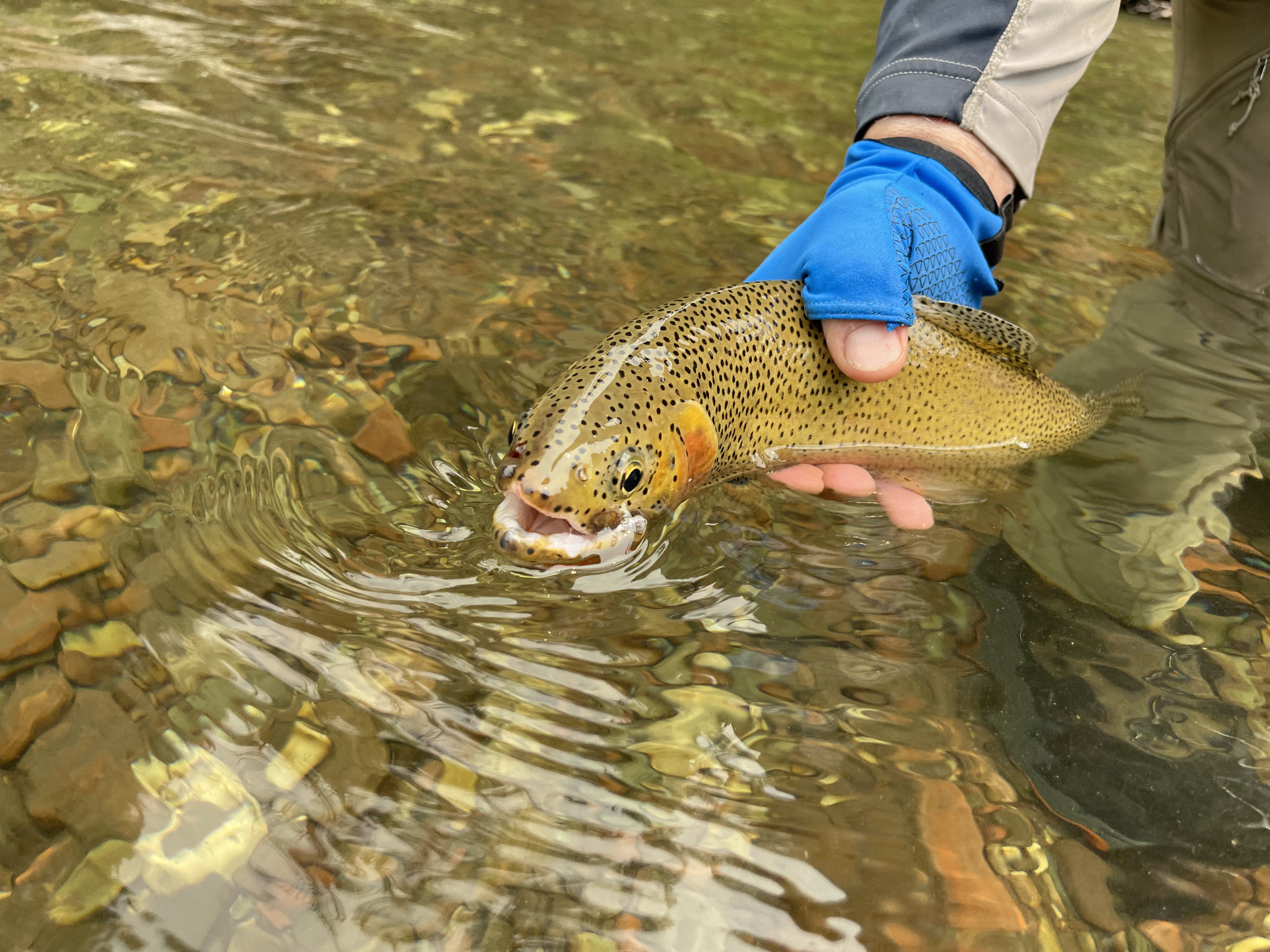
When a Fly Change Is Actually Justified
There are three situations where changing the fly is genuinely the right call, not just the convenient one.
The trout is keying on a different stage. During a PMD or caddis hatch, trout can lock onto emergers, cripples, or adults, and they are often very specific about which one. A fish eating emergers just below the surface will refuse a high-riding adult even if everything else is correct. When you see a slow, subtle sipping rise, try a fly that sits lower in the film. A CDC Emerger Adams Loopwing is built for exactly this situation, sitting flush or just in the surface film in a way that imitates a fly struggling to fully emerge. If the fish has moved on to spent spinners after the hatch, a standard parachute pattern will often get refused because the wing profile is all wrong. A spent-wing pattern like a CDC Biot Spinner Callibaetis, with its flat outspread wings imitating a dead or dying insect flat on the water, can be the difference between a refusal and a confident take.
The fly is noticeably the wrong size. If the naturals on the water are size 20 and you are fishing a size 14, no amount of perfect presentation will make up for the size difference on clear, slow water. Trout on technical water in good light can be very size-specific. Catch a natural, hold it next to your fly, and if the difference is obvious, drop down in size.
Clear water, multiple good drifts, repeated rejection. If the water is gin clear, the fish has had a close look at your fly on several clean drifts, and it keeps turning away, then pattern specifics start to matter. High water clarity puts more scrutiny on wing profiles, body color, and how the fly sits in the surface. On pressured water where fish see a lot of artificial flies, a more realistic or more specific pattern can make a difference. This is the scenario where having both an adult PMD like the Hi-Vis Parachute PMD and an emerger version in your box pays off. The Hi-Vis sits up high and is easy to track in fast or choppy water, but on slow, clear tailouts, the trout might want something more flush in the film.
A good box for rising trout covers multiple stages of the same hatches, not just multiple different patterns. Carrying adults, emergers, and spinners for your primary hatches gives you the ability to make an informed, targeted change when the situation actually calls for one.
If you want to build the skill of reading rises and knowing what the fish is actually eating before you make that change, the Dry Fly Fishing Course covers exactly this, from reading rise forms and diagnosing refusals to presentation technique and matching stage to hatch.
For anglers who want a complete learning path across all the pillars of fly fishing, not just dry fly work, Trout University brings that full progression together with guided instruction, practical lessons, and a structured learning path you can work through at your own pace.
Recommended Reading
If this article raised questions about identifying what a rising trout is actually eating before you even make your first cast, the next logical step is What Is That Rising Trout Actually Eating? It walks through how to read rise forms, identify the insects on the water, and narrow down what stage the fish are eating, which is the foundation that makes your refusal diagnosis faster and more accurate.
If drag is the part of this that feels hardest to solve, Why Good Dry Flies Still Drag goes deep on why drag happens even when you think your cast was clean, and what specific casting and positioning adjustments actually fix it. That one is worth reading slowly and taking to the water.