A rising trout is not automatically eating an adult insect resting on top of the water. That is the single most important thing to understand about dry fly fishing. When you see a disturbance at the surface, the fish might be eating a nymph rising through the last few inches of water column, an emerger stuck in the film, a fully hatched dun drying its wings, or a spent spinner lying flat with wings outstretched. The shape of the rise tells you where in the water column the fish is feeding. Get that right, and fly selection becomes much simpler.

What Is That Rising Trout Actually Eating?
How rise forms reveal the insect stage
A Rise Is a Clue Not an Answer
Most anglers watch a fish rise and immediately start digging through their fly box. That is backwards. The rise itself is the first piece of information, and it is worth a few extra seconds of observation before you tie anything on.
During a mayfly hatch, a Pale Morning Dun goes through four distinct stages before it leaves the water entirely: nymph, emerger, dun, and spinner. The Blue-Winged Olive follows the same progression. So does the Green Drake and the Hendrickson. Each of those stages presents differently to a trout, and each requires a different imitation. A trout that is eating PMD emergers stuck in the surface film will often refuse a high-riding dun pattern, even though both flies look similar from a distance.
The reason this matters is simple. If you pick the wrong stage, you can present the fly perfectly and still get nothing. The fish is not being difficult. It is being selective about what it is eating right now, at this moment in the hatch.
Think of the rise as a question, not an answer. Your job is to read the clues it gives you and translate them into a stage decision before you ever open your fly box.
Read the Shape and Timing of the Rise
The way a trout breaks the surface – and the rhythm at which it does so – tells you a great deal about what is happening beneath the film and just above it.
The sipping rise is quiet and deliberate. The fish comes up slowly, barely disturbs the surface, and you might only see a small ring or a subtle dimple. This rise almost always means the trout is feeding in or just below the film. It is eating something that cannot escape quickly – an emerger trapped in the surface tension, a crippled dun, or a spinner lying flush on the water. The fish does not need to move fast because the food is not going anywhere.
The bulging rise is the one that fools the most anglers. You see a hump of water pushing up, sometimes without the fish ever breaking through the surface. This is a subsurface take. The trout is intercepting nymphs just below the film, turning and flashing without fully committing to the surface. If you throw a dry fly at a bulging rise, you will get refused every time. The fish is not eating on top at all.
The splashy rise happens when the food is fast-moving and the fish needs to be aggressive to catch it. Caddis adults skittering across the surface, stoneflies buzzing and bouncing, or even a dun trying to lift off on a breezy afternoon can all produce this kind of explosive take. This is when a high-floating dun pattern or a swinging presentation makes sense.
The tilting or subtle rise where the fish's dorsal fin or tail briefly appears above the water often indicates spinner feeding. Spinners lie flat and flush, and the fish can tip almost vertically to sip them with almost no surface disturbance.
Timing matters too. A fish that rises on a steady, metronomic cadence is locked onto something consistent and abundant. A fish that rises sporadically or adjusts its position frequently is either picking off drifting emergers or responding to an inconsistent food source. Steady, rhythmic sipping in calm water during a hatch is almost always film feeding.
Match the Rise to the Insect Stage
Once you have read the rise form, you can match it to the correct stage.
Subsurface bulge: fish eating nymphs. The trout has not committed to the film yet. A soft-hackle or a Pheasant Tail nymph fished high in the water column is the right move. This is not technically a dry fly situation, but recognizing it correctly means you do not waste time throwing dries at a fish that will not eat them.
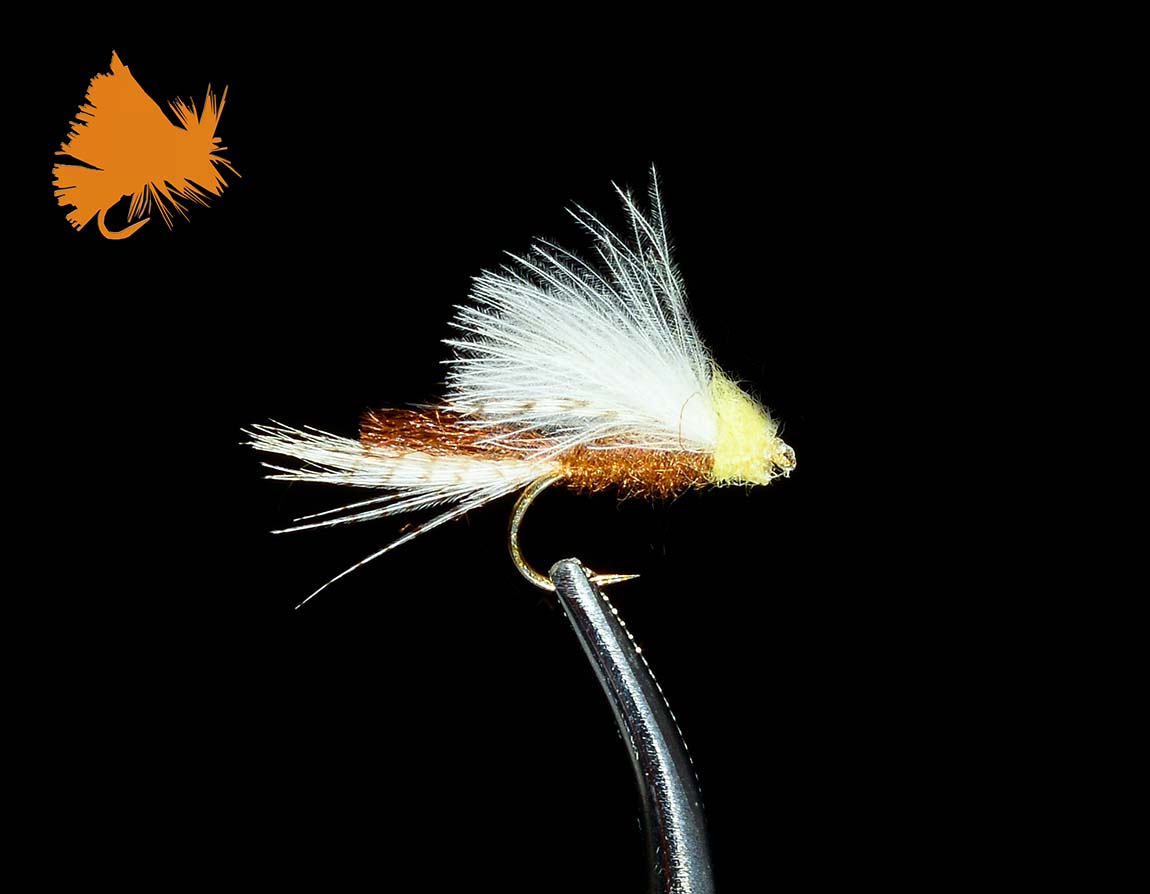
Quiet sipping rise: fish eating emergers or cripples. This is where patterns like the CDC Captive Dun shine. That fly is tied with a sparse body and a "stuck in the film" profile that presents the silhouette of a crippled or partially emerged dun. Picky trout that refuse cleaner imitations will often take it readily. The CDC Emerging Dun serves a similar role – its CDC wing keeps the fly right in the film, where the natural mayfly emerger is suspended during the struggle to escape. For a Blue-Winged Olive hatch, the CDC Blue Wing Olive Cripple Emerger or the CDC Emerger BWO Loopwing are both solid choices for exactly this scenario. When a Green Drake hatch brings fish up in that same deliberate sipping style, the CDC Green Drake Emerger fits the same logic at a larger scale.
Clean surface take: fish eating duns. When the rise shows a fish clearly breaking through the film and taking something from on top – usually a more confident, visible take during active hatching – you want a dun imitation that rides high and clear. The CDC Comparadun is built for this. Its CDC wing creates natural buoyancy and holds the fly in the ideal dun position, sitting on top of the water rather than in it. The Parachute Adams works as a general dun imitation across multiple mayfly species and is a useful crossover when you are not certain exactly which dun is on the water.
Flat sipping, fins and tails visible: fish eating spinners. Switch to a spent-wing imitation that lies flat in the film. The body color should match the spent form of whichever mayfly completed its egg-laying fall.
The CDC Emerger Adams Loopwing covers the gap between emerger and dun nicely when you are unsure whether fish are just emerging or already taking duns. It is a good bridge pattern in that transition zone of a hatch.
Dry Fly Fishing Course
Master the most iconic and exciting technique
to catch trout with expert instruction from Dave Karczynski
- 9 Units & 70 Lessons (38 Chapters)
- 36 HD Videos
- Learn from Dave Karczynski (21 Years Experience)
- Master the Art of Dry Fly Fishing
- Lifetime Access and Coupons to Save $225+
- Get Expert Answers on Fly Fishing as Course Member
A Worked Example During a Mayfly Hatch
Here is how this plays out on the water during a real Colorado PMD hatch on the South Platte River in June.
You are wading in a medium-depth run. It is late morning, around 10 a.m. The Pale Morning Dun hatch is coming on. You can see small yellowish-tan duns on the water, and a few fish are starting to move.
Step one: watch before you cast. You pick out a fish holding in a moderate current seam below a flat pool. It rises three times in about ninety seconds. Each rise is subtle – a small ring, no splash, barely a dimple. The fish is not chasing or lunging. It is sipping.
Step two: interpret the rise. That quiet, steady sipping almost certainly means the fish is in the film. PMDs go through a vulnerable period where the nymph is rising and the emerger is partially hatched but still caught in the surface tension. That is what this fish is eating. There are adult duns on the water, but this trout is not interested in them right now.
Step three: pick the right fly. You tie on a CDC Captive Dun in a PMD color. The sparse body and the crippled profile match what the fish expects to see: something partially emerged, unable to fly away. A CDC Comparadun, which sits up cleaner on top, would be the wrong call here. It looks too much like a healthy dun that should be moving, not a vulnerable bug stuck in the film.
Step four: present it correctly. You angle upstream and to the side, lay the fly two feet above the fish's feeding lane, and let it drift drag-free through the zone. On the second drift, the fish tips up and sips your fly. The hook set works because you waited until you saw the fish actually close its mouth.
That sequence – watch, interpret, match stage, present – works on any river where mayflies are hatching. The species changes, the size changes, but the decision process stays the same.
What to Change When the Fish Refuses
A refusal is information. It is not bad luck. It tells you something specific, and your job is to figure out which part of the equation is wrong.
There are four main failure modes:
Wrong stage assumption. You picked a dun pattern but the fish is eating emergers. Or you have an emerger on but the fish shifted to spinners as the hatch wound down. If you are getting looks but no takes, the stage is probably off. Move down one stage (toward the surface or into the film) and try again.
Wrong fly profile. Even within the emerger stage, profile matters. The CDC Captive Dun has a more crippled, stuck-in-the-film look than a standard emerger pattern. If a cleaner emerger is getting refused, try a fly with more of that trapped, struggling appearance. Picky trout that have been seeing a lot of pressure respond well to that cripple profile because it looks easier to eat.
Drag. A fly that is drifting at a slightly different speed than the naturals around it will get refused even if the stage and profile are perfect. This is especially common in flat, slow water with subtle current variations. If the fish looked at your fly and turned away without taking, drag is often the culprit. Read Why Good Dry Flies Still Drag for a detailed breakdown of how drag develops and what you can do about it.
Size. If you have eliminated stage, profile, and drag, go smaller. PMDs and BWOs in particular can require dropping a size or two on technical tailwaters where trout have seen every common imitation. This is also where using small nymphs can save the day – if fish are refusing dries entirely and you are confident the stage read was correct, they may have dropped back below the film. A small soft hackle or nymph fished in the top foot of the water column can pick up fish that completely ignored your dry.
The decision process when a fish refuses:
- Did the fish see the fly? If no, fix your cast angle or reduce drag.
- Did the fish rise to the fly but turn away? Then it was interested but something was wrong. Check drag first, then stage, then size.
- Did the fish ignore the fly completely? You may have the wrong stage entirely, or the fish may have moved to a different feeding position.
The article Should You Change the Fly or Change the Cast? walks through exactly this kind of refusal diagnosis, and it is worth reading alongside this piece.
One thing worth keeping in mind: sometimes the right move after a refusal is to rest the fish for two or three minutes before trying again, especially in flat water where the fish can see you clearly. A rested fish is more likely to take on the next drift than one that has been put on alert by several consecutive casts landing near its head.
Recommended Reading
If this article raised questions about what is happening with your presentation, the next two pieces in this series go deeper on exactly that.
Why Good Dry Flies Still Drag explains why even a properly chosen fly can drift incorrectly, and what the common drag sources actually look like on the water.
Should You Change the Fly or Change the Cast? gives you a practical framework for diagnosing a refusal and deciding whether the fly or the presentation is the real problem.
If you want to go deeper on the full system – reading rises, controlling the drift, diagnosing refusals, and building a reliable decision process for any hatch you encounter – the Dry Fly Fishing Course covers all of it with detailed instruction and on-the-water examples.
For a complete fly-fishing learning path that builds these skills alongside reading water, nymphing, and presentation, Trout University is the broader membership that ties it all together.