
Which Fly Patterns Catch Fish Year Round?
Your frequently asked question, answered →
Which fly Patterns catch fish year round?
Flies that work year round are the BEST flies to have in your box. They’re consistent, they’re reliable, they’re versatile, and they’ll catch fish (whether it’s dumping snow, or hot as hell outside). Like old friends, you can rely on these flies. No matter the situation.
We’ll start with an example: the Parachute Adams. Yes, this dry fly needs no formal introduction — most all anglers have this tried-and-true pattern in their lineup of favorite flies. We certainly do — that’s why the Parachute Adams is included in our list of 10 flies in the Top Trout Flies Course!
But WHY do we love it? And why does it work, no matter the weather? We’ll start by noting its simple design and undeniable versatility.

-
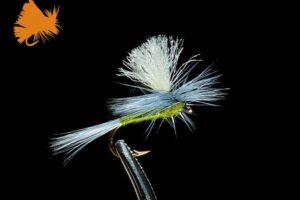
- Olive Parachute Adams

-
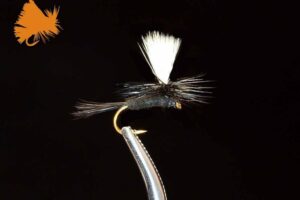
- Black Parachute Adams

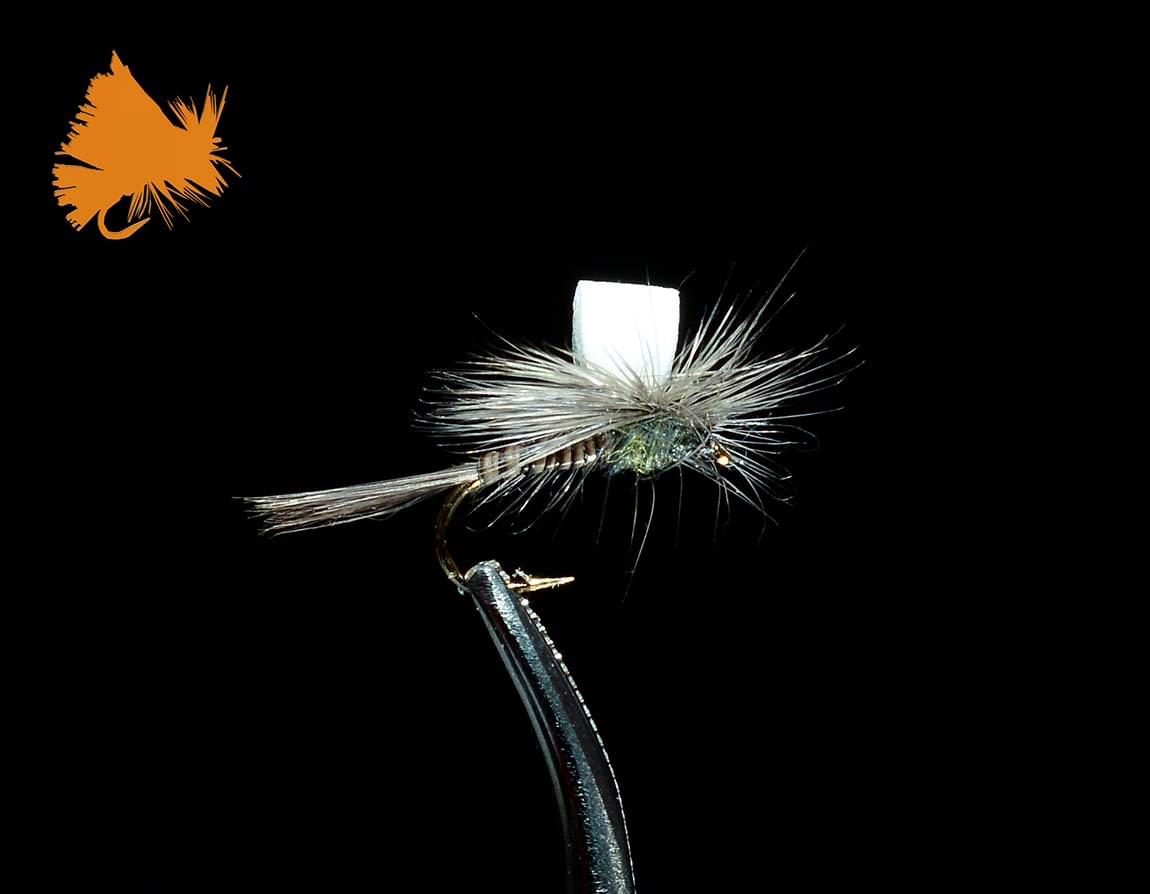
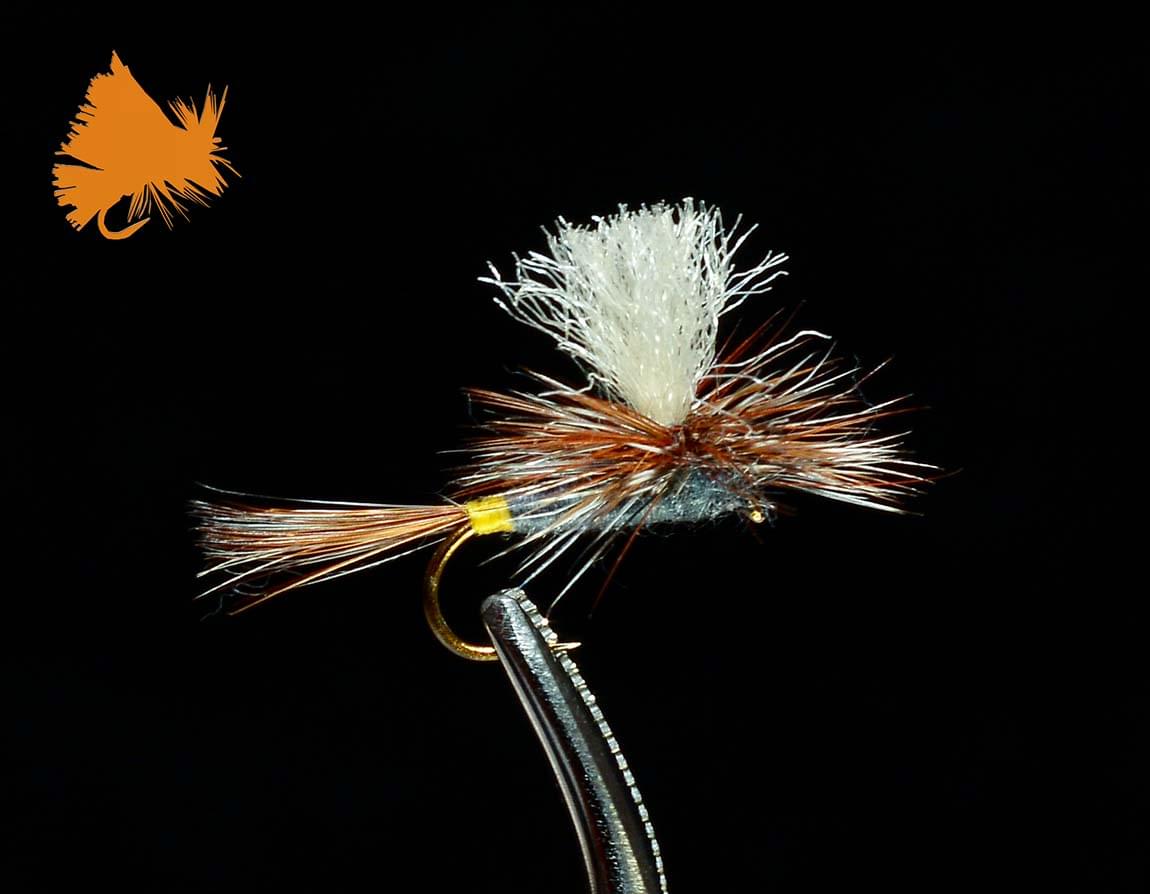
Like the greatest Hollywood actor of all time, the Parachute Adams can imitate nearly 90% of the insects anglers aim to imitate. All it takes to mimic a new insect using this reliable pattern are simple, one-or-two-step changes in color and/or material. We’ll go into a little more detail.
A majority of anglers use the Parachute Adams to imitate a adult dry mayfly. Which is great, that’s exactly what pattern is most commonly known for! In terms of seasonality, though, if you use a variation of the Parachute Adams fly that mimics a mayfly (see the image above on the far left), you’ll probably find the most luck starting in May when mayflies start hatching from their water lava state.
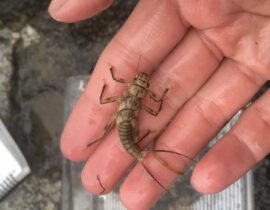
Now, if you add rubber legs to the Parachute Adams, in the correct sizes in colors, it can imitate hoppers or stoneflies well. This variation of a Parachute Adams will help you out in the early summer, when flows rise, and hoppers start falling into the water. Now, because of that small change in profile (adding rubber legs) your Parachute Adams catches fish at a completely different time of year.
To wrap it up, the Parachute Adams is an impressionistic fly pattern (it can imitate multiple insects), and as a result, it can accurately match almost any hatch you choose to fish. We’ll talk a little bit more about matching the hatch/impressionistic patterns later in this article! For now, let’s dive in.
Generally fly patterns that do well year round have these three qualities…
They Match the Hatch
Fly Patterns that accurately imitate what the trout are eating
If your flies match the hatch, you’re going to have an incredible day of fishing no matter the season.
Meaning, if you can accurately imitate what’s on the trout’s menu during any time of year, you’ll fool them into thinking that what you’re throwing is the real deal…and you’re going to get tons of bites. And hopefully, on a few of those takes, you’ll properly set your hook and bring a big ol’ fish into your net.
Still, it’s important to note that you’re only going to be able to match the hatch IF you have some entomology knowledge under your wading belt. Any fish-catching-ninja of an angler knows how to use a bug scene, and of course, how to name which bugs they’re actually finding.
If you don’t know how to match the hatch, and all of this insect mumbo-jumbo doesn’t really make sense to you, give our Entomology Course a read. Or, sign up for our free, five-lesson Match the Hatch, Fly Selection Mastery Series. By the time you’ve finished either or both of these, you’ll recognize the hatch no problem! And of course, as a result, you’ll catch some pretty awesome fish, too.
Match the Hatch Free Guide
Enter your email below, and even if you’re on our list already, you’ll receive our Fly Selection Mastery Series which contains 5 free lessons to help you fully understand the art of fly selection.
[wpam_subscribe plan=”5″]
Now, let’s talk about a fly pattern that consistently imitates its target insect well: the Pheasant Tail nymph.
No matter the variation, the profile of this fly (meaning the tail, legs, and taper of the insect) is so spot on, fish can hardly tell the difference between the fly and the actual bugs — mayflies, or depending on the color/size, stonefly nymphs. I mean, check-out the similarities between this Beadhead Pheasant Tail nymph, and this minnow mayfly nymph below!
-

- Actual Baetis Nymph
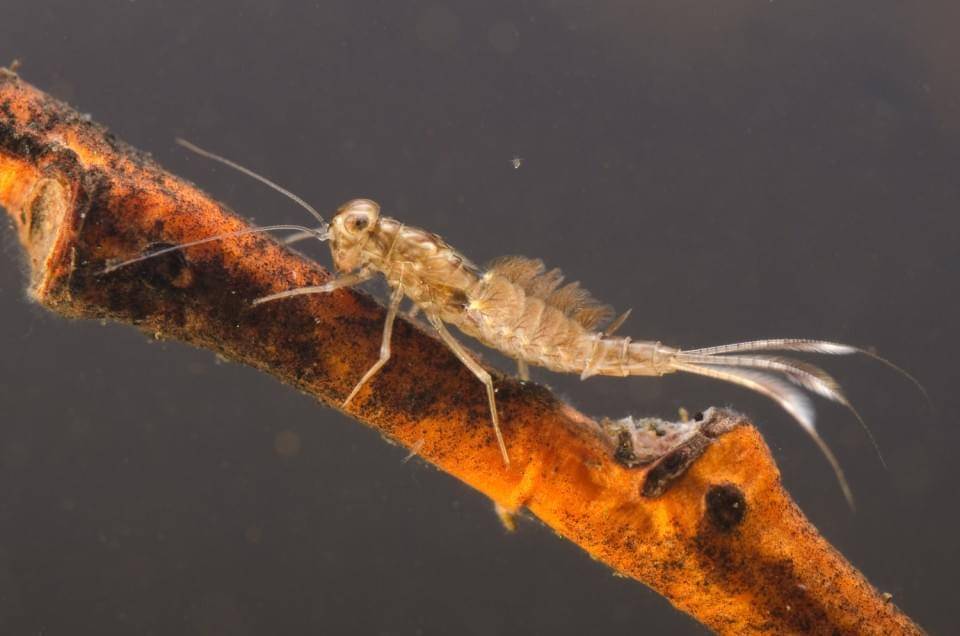

Imagine this scenario: you’re going nymphing, but before you put your flies on, you used your bug scene to see what was actually under the water. You discover these minnow mayfly nymphs, and as a result, you decide to tie on a very similar-looking beadhead Pheasant Tail. The fish start to bite on what they THINK is their dinner, and you have a fantastic day of fishing.
All of that is to say, no matter the season, if you’re attempting to imitate a mayfly nymph like this one, a Pheasant Tail is going to work really well. Simply because they look so wildly similar to the real bug (they “match the hatch”)!
Whether its the middle or the summer or the dead of winter, you’ll have the fishing day of a lifetime if you learn your bugs and learn to match the hatch. While learning about bugs may not light everybody’s fire, catching trout does…you’ll thank me later!
They Handle Various Seasonal Difficulties
Fly Patterns that are Durable
Fly patterns that are durable + have properties that can face various seasonal difficulties always do well.
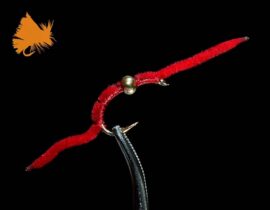
During heavy rains in spring, Crane Fly Larva and San Juan Worms do well because they can hold their own in high, off-colored water. Dark annelids (aquatic worms or night crawlers) also work well in spring, because they get washed out during those fast, increasing flows. Toss a simple San Juan worm on your rig when nymphing during the spring, or anytime flow is abnormally high, and success will come your way.
With that in mind, the truth is, San Juan Worms really can work any time of year (in virtually any color). It’s really up to the preference of the angler, and of course, the fish. Sure, some colors work better than others on any given day, but for the most part, any simple variation will mostly likely be effective. And, because of their simple and durable composition, they’ll last for awhile. No matter how many monster fish you catch with them.
To give another example of patterns that do well during specific seasonal difficulties, red fly patterns tend to do well during the dead of summer. Why is that?
While I don’t know the exact science behind this, it has something to do with the fact that there’s a lack of oxygen when the air gets hot and the flow gets low. These combined factors cause many insect species to turn red. As a result, by throwing a red fly, you’re likely throwing a better imitation of what the fish are frequently seeing.
All in all, whether you’re an all-season angler, or a single-season expert, it’s going to be important that you stock your box with flies that can face the difficulties of the times of year you plan to fish. That way, when you actually head out there, you’re more likely to find success in the form of gorgeous trout. Which, at the end of the day, is really what we’re all looking for.
They Imitate a Variety of Insects
Fly Patterns that are impressionistic
If you read “impressionistic” and “search pattern” and had no idea what they heck we were talking about, it’s important that you discover what we call the four types of fishing flies. You can dive deep into all four types if you follow the link above, but if we’re talking about patterns that fish well during any season, we’ll focus on impressionistic fly patterns.
For the most part, fly patterns that are impressionistic (imitate multiple insect species) are going to outperform fly patterns that are imitative (imitates one insect species closely), no matter the time of year.
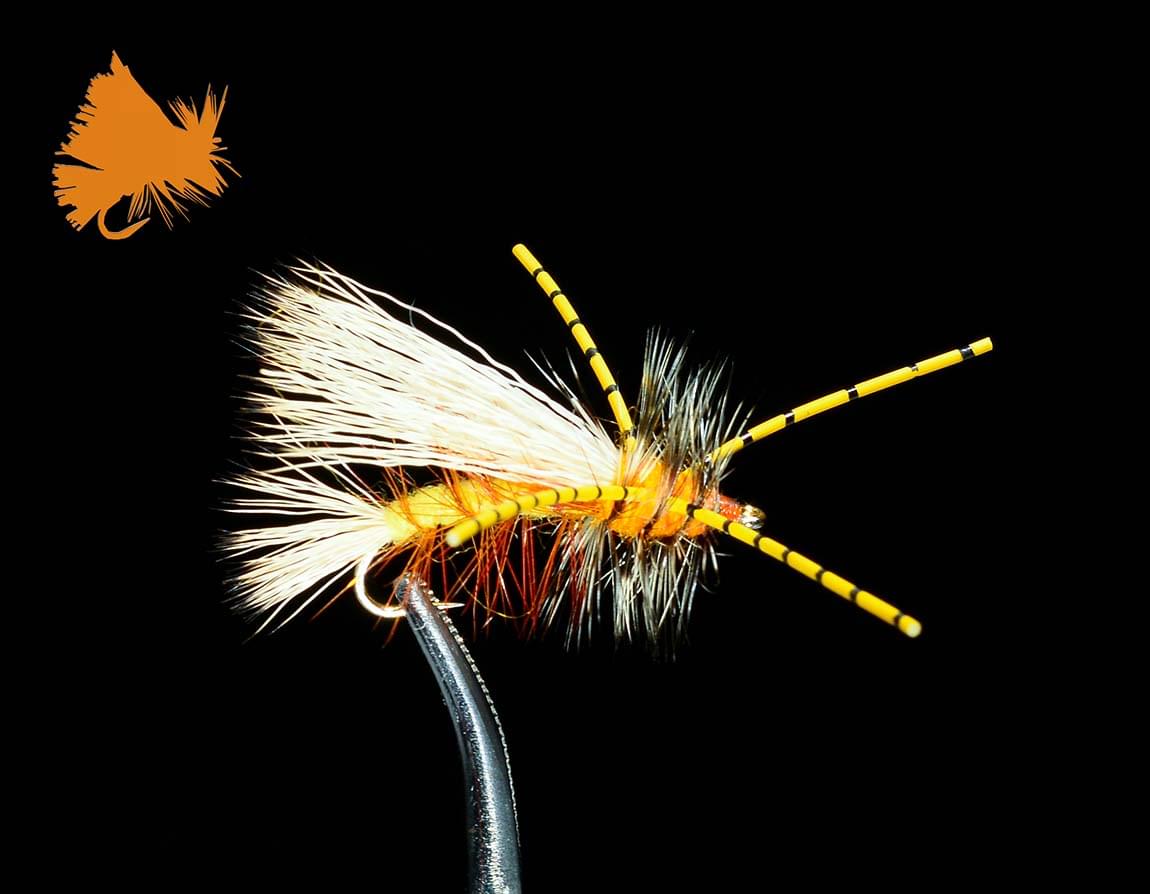
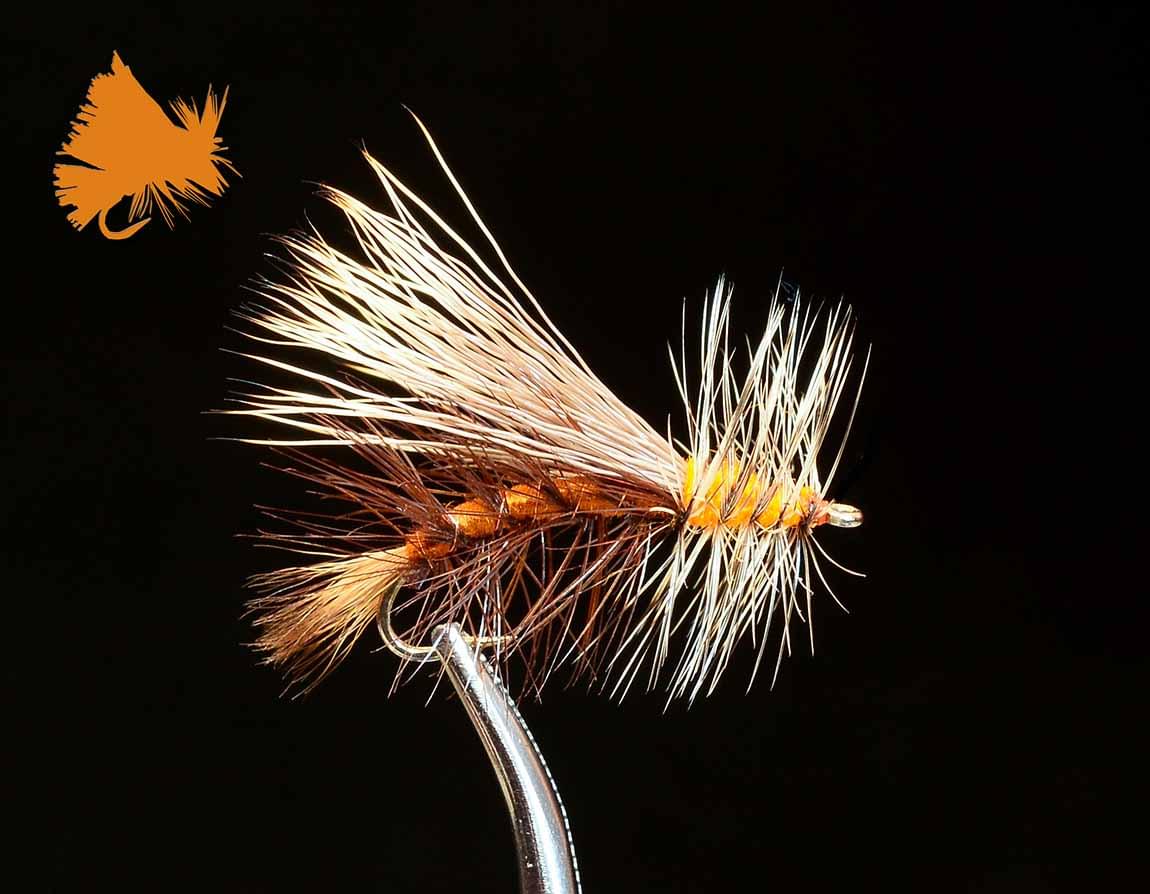
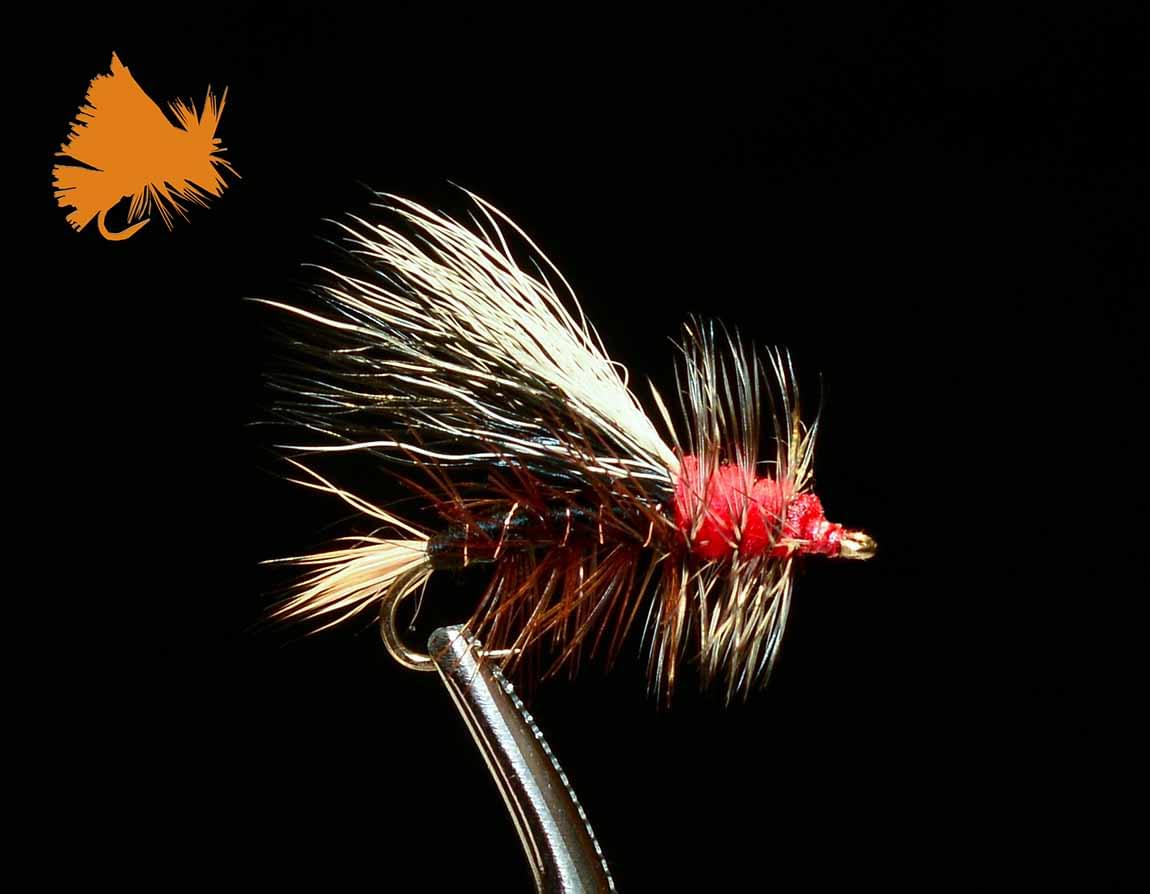
For instance, say you stock your box with multiple types of Stimulators. Depending on their size, color, and variation (rubber legs vs. no rubber legs, for example) this highly impressionistic pattern will work to imitate stoneflies, spruce moths, hoppers, and cicadas. Many of these bugs pop up on the trouts menu in different areas, and at different times of year. In turn, by having stimulators in your fly box, you’re preparing yourself for success no matter the circumstance.
Now that you know what makes certain fly patterns best year round, we suggest you start by diving deep into the seasons you plan to fish. Then, create a fly box catered towards each of those individual seasons. I also recommend that you check out my Entomology Course if you still need to learn your bugs. On the other hand, if you already know your bugs, check out either the a) Top Trout Flies Course or b) the Craft Your Fly Box Course to really dive deep into the details of hatch and the fly patterns that match.
As always, thanks for reading! Best of luck out on the river.
 KATIE GILBERT
 KATIE GILBERT
Over and tr-out!
Want to Learn the Top 10 Flies
That REALLY Work Best?
Lifetime Access: $99.99

Fully Online | Self Paced | Lifetime Access
111 Pages | 100+ Fly Images | Seasonal Fly Charts
Top Trout Flies Course
13 Lessons | 100+ Pages
Seasonal Fly Charts
- Master the top 10 trout flies
- Always have the right fly
- Assemble the perfect fly box
- Catch fish faster
You’ll also get this with the Course
- $10 coupon for free flies
- FREE Fly Fishing Basics Lesson
- A PDF of the course for offline viewing (on request)
- FREE Access to our fly selection mastery series
- 50% Off our Online Entomology Course
