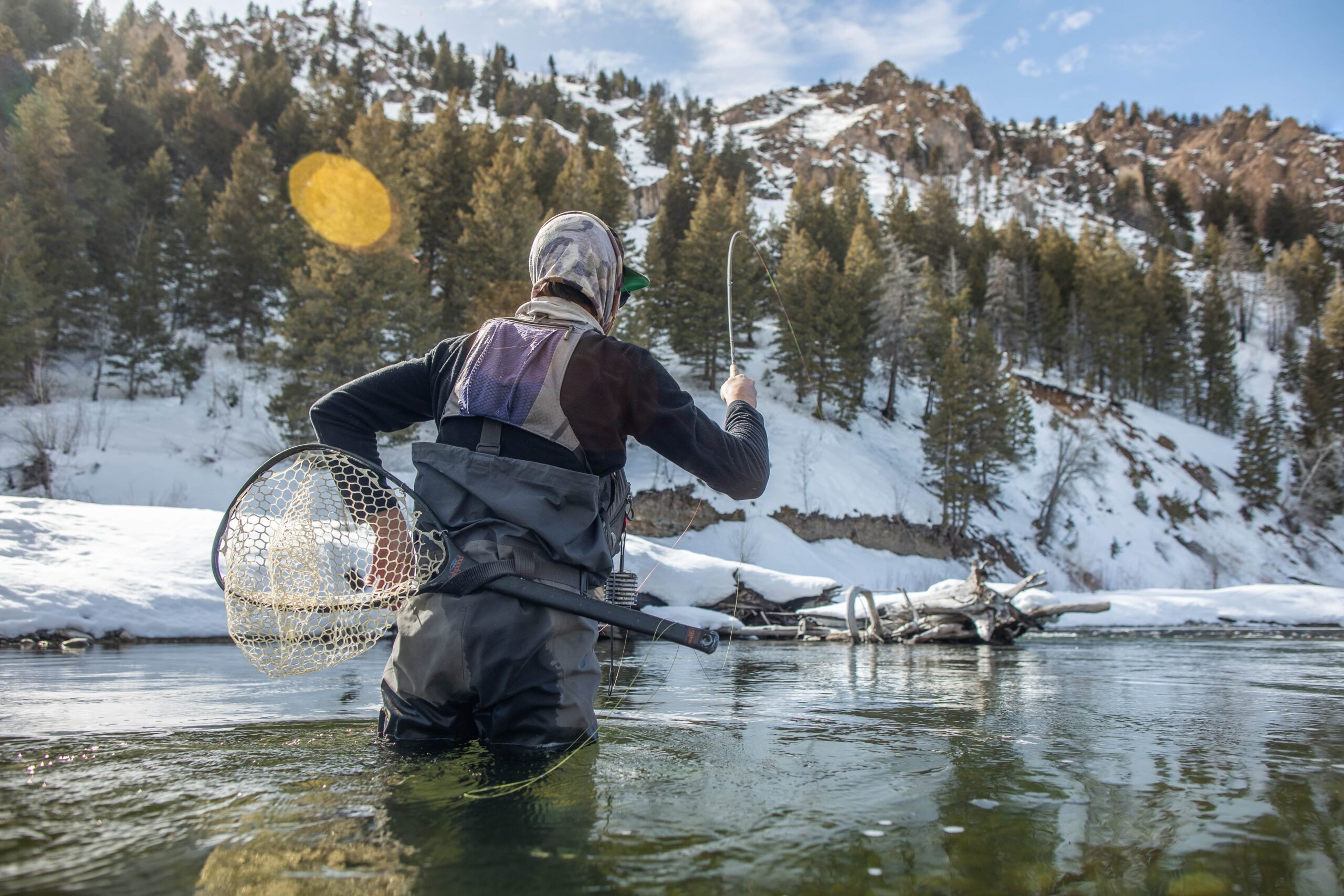
Three Essential Casting Techniques
Learn them, practice them, &catch more fish
Join Our List for More Premium Content
[wpam_subscribe]
Casting, casting, casting. The double-edged sword of fly fishing.
On one hand, as I’ve said time and again, you cast for show, and you drift for dough. Meaning, the accuracy of your drift trumps the beauty of your cast when it comes to actually hooking fish.
With that in mind, though, your cast DOES matter in terms of accuracy. Sure, it doesn’t necessarily need to be gorgeous to witness (or showy, as the saying implies), but it does need to be precise if you’re wanting your flies to effectively drift through the strike zone you’re targeting. It also serves to mention that a good cast will reduce the chance of tangles, giving you more time to apply a good drift and less time untangling your three fly + split shot + indicator monstrosity of a rig.
So, when it comes down to it, casting techniques are super important to learn and practice. That’s why I go into intense detail on eight different casting techniques in my Classic Nymphing Course — including step by step how-to’s and video examples. All of which you can access offline (while you’re actually on the river), using The Catch and The Hatch app.
For now, I’ll take you through three casting techniques that are absolutely essential to your success, especially if you’re wanting to improve your nymphing skills.
Let’s get started:
The Water Load
Casting Technique #1
Ahhh, the water load — easy to learn, hard to screw up and tangle.
In fact, water loading is probably the easiest way to cast a nymphing rig. As the name implies, the water load uses the river’s current to create tension against your fly line so you can shoot it back upstream for another drift in one swift forward motion.
Best of all — if you’re water loading, you’ll never have a false cast. Ever.
If you haven’t had a terrible experience with it already, you should know that it’s a really bad idea to cast a nymphing rig using the traditional false casts. False casts dry out your flies and help you cast further or shorter. There is no need for it with nymphing casts, so don’t do it. Unless you’re a huge fan of atrocious rat’s nest tangles. Which most of us aren’t.
So, if you’re a beginner or intermediate-level angler, I highly recommend you become well acquainted with the water load. Because they spend most of their time in the water, your flies will never get stuck in trees, and you’ll hardly ever find yourself on the bank of the river picking at a knot for an hour. Happy nymper = water loading nympher.
Here’s a casting video from our Classic Nymphing Course on how to do the water load. For more casting videos and a comprehensive course on catching more fish on nymphs, grab lifetime access to the course
The Tuck Cast
Casting Technique #2
I’ll give it to you straight — the tuck cast is a harder cast to learn. But if you can learn it, my oh my, your drift is going to be off the charts.
Essentially the tuck cast will get your flies drifting correctly through your strike zone as quickly as possible. The idea is to stop your cast short, causing the momentum of your line to snap your flies back and land directly below your indicator instead of upstream.
As a result, your flies will sink immediately without drag. This eliminates mending all together, because your flies will already be in the strike zone. On the other hand, if you cast traditionally, your flies will land above your indicator and immediately start dragging which will move the flies unnaturally in the water and make it hard to achieve that “dead-drift” we all aim for. Also keep in mind you can do a water load into a tuck cast. While it’s called a tuck cast, the tuck happens at the end of any casting stroke and can be appended onto the end of any casting stroke.
The downside to the tuck cast? It’s tough to be sneaky. Especially in slow moving water. Why? When you tuck cast, your flies stop short above the water and everything flops into the river at once. The very idea of the cast sacrifices subtlety in presentation and is best suited for medium to fast waters where a louder presentation will be drowned out by the sounds of the moving water. If fishing slower water, consider a traditional water load or roll cast and then when the flies hit the water, immediately over-mend the line to move your strike indicator upstream of your flies. This achieves the same tuck-cast result but allows for a bit more subtlety.
Keep in mind, too, that it also takes time to learn accuracy with the tuck cast. You can be deadly accurate with tuck casting, but it takes practice. Again, you’re stopping the line short, and the amount of speed you cast with, and how high you stop it above the water, will determine where it lands.
Still, never fear the hard stuff in fly fishing. With time you’ll master this, so dedicate a day or two to learning tuck casting. Then you can use the technique with confidence when you really need it.
The Reach Cast
Casting Technique #3
Learning to reach cast = less time spent mending = better drifts = more fish caught.
That’s the most simple way to put it. Now let’s back up a bit.
If you haven’t learned to mend yet, it’s basically moving the line that’s in front of your rod tip up or downstream to keep your line from creating drag. Mending also reduces slack.
A reach cast handles an upstream mend and the cast all at once. How so?
By extending your arm forward when you reach cast, you’re leading your excess line above where your flies land in the water AND “mending” your line as soon as it hits the water. It’s a subtle but powerful change in your cast, especially when you’re about to drift through faster water, and want to avoid drag.
It’s important to note that this cast can be combined with the water load, or any standard cast, and actually applies to dry fly, streamer, and nymph fishing. Still, this technique has a very particular benefit with nymph fishing
I see tons of anglers mend three, four, even five times per drift, and no matter how good they are at mending, there’s a chance they’re moving their flies unnaturally and ruining the drift. That is to say — the less you can mend the better, as long as you can reduce drag. A reach cast takes care of the cast (obviously) and first mend all at once.
Bonus Technique!
The high stick
The less line you have in the water, the less you drag. It’s a known fact.
If you have too much excess line, it’ll get caught in the river’s currents, and make a natural drift much more difficult. Not to mention, when a fish actually eats your fly, it’ll be much harder to set the hook.
When you’re using the high stick technique, you’re positioned in the river very close to the fish you’re attempting to catch. With your arm raised, and your rod high (get it, high stick), you’ll keep as much line as you can out of the water, and allow the breeze to provide the best drift possible.
Yes, this isn’t a cast. But, we’re including it as a bonus technique, because there are scripted steps to getting a good high stick. And there are a lot of benefits (in the form of gorgeous trout) to learning this technique. All of which you can read and study in my Classic Nymphing Course.
At the end of the day, your cast DOES matter. Especially in terms of accuracy. Study these techniques, and see for yourself how it changes your ability to catch fish overall. And, if you find that you want to learn more about each technique above (as well as a few others) in greater detail, check out my Classic Nymphing Course.
Over and tr-out!
Learn Fly Fishing the Right Way
Lifetime Access | Comprehensive Courses | Exclusive Coupons and Deals
-

Streamer Fishing Course
$199.00 -

Classic Nymphing Course
$199.00 -
Dry Fly Fishing Course
$199.00 -

Euro Nymphing Course
$199.00 -

-

-

Modern Nymph Flies Course
$59.99 -
Crafting Your Fly Box Course
$99.99 -
Top Trout Flies Course
$99.99