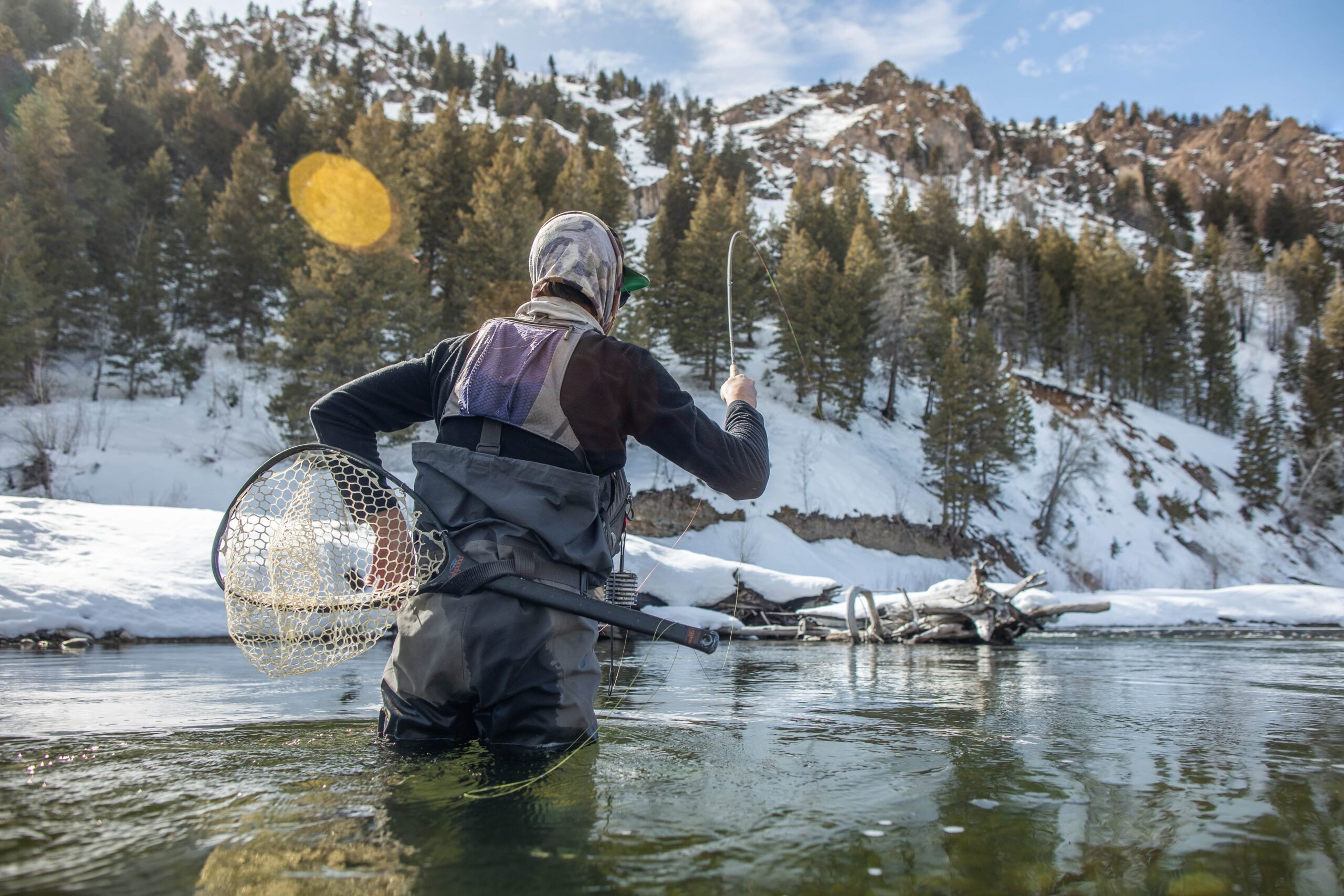
Three Ways You’re Missing Trout in Small Streams
Say goodbye to getting skunked
Join Our List for More Premium Content
Don’t let the name fool you. Fishing a small stream isn’t a small feat.
More often than not, anglers underestimate the difficulty of the small stream, and the strategy that it takes to actually hook into a decent amount of fish there. In fact, a lot of you have written in about your struggles — struggles I’ve faced myself.
Sure, many times it IS easy to catch a fish in small streams. Still, it’s incredibly likely you’re missing out on catching more trout because of a few mistakes anglers often make. That’s why I’m going to talk about those, and provide solutions to them, so you can avoid making common mistakes and improve your skills.
Here are three common reasons you’re probably missing trout when fishing small streams:
You Need to Cover More Water
every rock, every nook, every shadowy tree
This seems obvious, I know. Just hear me out.
When most anglers hear “cover more water” they imagine wading from hole to hole after every couple of casts. In some scenarios, I do encourage that. Exploration is important. But, when it comes to fishing a small stream, it’s also important to cover every small portion of a certain hole, pocket water, or ripple before moving on — every rock, every nook, and every shadowy tree.
Heck, sometimes fish are a mere two feet from the bank, hidden away in shaded water. Or, there might be a bunch of pocket rocks up against the bank, each of which hid one to two fish. Walk past those spots, and you’ll miss five or six potentially hungry trout. Booooooo.
All of that is to say, fish everything that’s fishable before moving on. Send one to three casts behind one rock, then move on to the next rock. Then, eventually, you’ll make it on to the next section of river — at which point you’ll feel confident that you got your fly in front of as many trout as possible.
Fish more water, catch more fish. It’s that straightforward.
You Need to Give the Fish More Credit
Small does NOT equal stupid
Fact is, small fish are smart too. Especially the small fish that live in small streams.
Yes, obviously they are easier to catch than huge trophy trout. Still, if you stumble into a small stream like a drunk sasquatch, slapping flies on the water left and right, you’ll spook any size fish. And of course, as a result, you’ll never catch them. Even the little guys.
All in all, anglers often assume that if a fish is smaller, it’s dumber and easier to catch. But the reality of it is, I’ve had a handful of fishing days on small streams where I have to fight really hard for five or six smart, really spooky, small fish eating tiny dry flies. Days like these can actually be quite challenging.
So, instead of assuming that it’s going to be a walk in the park every time you go out to fish a small stream, have an expectation that things are going to be a challenge. You’re going to face obstacles. And as a result, you’re going to become a better angler.
Approach a small stream with this mindset, and you’ll actually try harder, and ultimately set yourself up for success. And hopefully, get a few more fish in your net.
You’re Fishing Too Many Flies
And it’s harming your accuracy
When you’re fishing a small stream, accuracy really matters. More often than not, fishing with more than one fly will harm your ability to be accurate.
That’s why, in this specific scenario, I often recommend that you fish with one fly. If you’re attempting to get your fly to drift through a tiny pocket that’s only four inches wide, under an overhanging tree, it’s going to be extremely hard to do so with a two fly set up. Odds are you won’t be able to manage it all, because the mechanics of casting won’t allow for accuracy.
So, instead of fish with a dry dropper, per say, toss the dropper for the sake of that precious accuracy. You’ll catch more fish, and have a better day of fishing as a result.
Overall, if you focus on fixing these three small mistakes anglers tend to make, you’re going to start hooking into more trout. And, if you feel as though you’re still stumbling a bit even after making a few of these corrections, be sure to check our Small Stream Course, coming Summer 2023. In that course, I’ll cover every potential small stream scenario — so you’re prepared to catch fish and have fun, no matter the challenges that come your way.
Over and tr-out!
Join Our List for More Premium Content
Have You Tried One of Our Courses?
Lifetime Access | Special Coupons | Angling Mastery
-

Euro Nymphing Course
$199.00 -

Dry Fly Fishing Course
$199.00 -

Classic Nymphing Course
$199.00 -
Streamer Fishing Course
$199.00 -
Fly Fishing Entomology Course
$199.00 -

Crafting Your Fly Box Course
$99.99