
Winter Dry Fly Fishing: How to Find and Fish the Narrowest Window of the Year
Step 1: Understand the Three Phases of Winter (and What Each Means for Dry Flies)
Most winter fly fishing happens below the surface. That’s just the reality. Nymphs, eggs, and worms account for the vast majority of winter trout catches, and any honest guide will tell you the same.
But here’s what most anglers miss: winter dry fly fishing is real, it happens more often than people think, and when the window opens, it can produce some of the most satisfying surface fishing of the entire year. Trout rising to tiny midges on a cold, quiet afternoon. A pod of fish sipping BWO duns while snow falls around you. These moments exist, and the angler who understands when, where, and how to capitalize on them gets to experience something most people never see.
This article gives you a complete, step-by-step approach to winter dry fly fishing. You’ll learn how to identify the three phases of winter and what each one means for surface opportunities. You’ll learn where to position yourself, which flies to carry, and how to present them without blowing your chance. And you’ll learn the honest tradeoffs so you can make smart decisions about when to fish dries and when to stay subsurface.
The framework is simple: the three pillars of fly fishing (Location, Fly Selection, and Presentation) applied through the lens of winter’s three phases (early, mid, and late). Let’s walk through it.
If you want a structured approach to catching more trout across all seasons, Trout University covers the full framework in depth.
Winter is not one long, uniform season. It breaks into three distinct phases, and each one offers different dry fly potential. Recognizing which phase you’re in helps you set realistic expectations and plan your approach.
Early Winter
Early winter often carries over patterns from late fall. BWO (Blue-Winged Olive) hatches that were happening in November don’t just stop on a calendar date. They continue as long as water temperatures stay above roughly 38 degrees Fahrenheit.
During this phase, you’ll find the widest dry fly windows of the winter season. Afternoon warming periods can push water temps into the low 40s on milder days, triggering both midge and BWO hatches that last an hour or more. Cloud cover helps. A mild, overcast afternoon in early winter can produce surprisingly good surface activity, especially on tailwaters.
What to expect: BWO duns and midge adults on the surface during the warmest 2-3 hours of the day. Fish are still somewhat willing to move for a dry, though not as aggressively as in fall.
Trout University
The Best Way to Master Fly Fishing for Trout
Everything you need to learn how to fly fish for trout.
From fly selection to presentation and location, all in one place.
8 Premium Courses
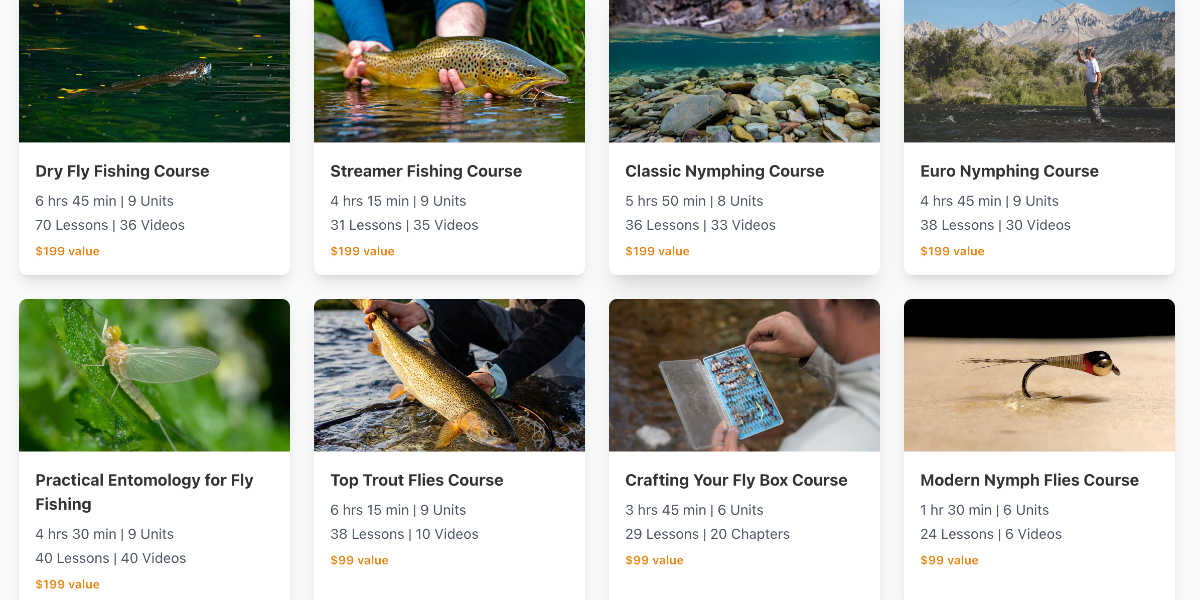
15 Video Classes
1-2hr Power Classes on Key Subjects and solidify your learnings
6 Streamside Courses
10+ Hours of Fishing to See Our Methods in Action
No Credit Card Required or Auto Renewal
Mid Winter
This is the tightest window of the year. Water temperatures bottom out, daylight is shortest, and insect activity drops to its minimum. But it doesn’t disappear.
Midges hatch nearly every day, even in the coldest conditions. The question is whether enough of them hatch at the surface to pull trout up. During mid winter, the answer is usually “yes, but only during a narrow window.” Expect the best surface activity between roughly 11am and 2pm on days when air temperatures climb and cloud cover is present.
BWO hatches become less reliable in mid winter but don’t vanish entirely. They’re triggered more by water temperature and barometric pressure than by weather type. A cloudy day with water temps pushing above 40 degrees can still produce a BWO hatch, even in January.
What to expect: Midge clusters on the surface during the warmest hour or two. Occasional BWO activity on milder days. The dry fly window may only last 30 to 60 minutes. Patience is essential.
Late Winter
Late winter is where things start to open up. Days are getting longer. Water temperatures begin a slow climb. And a few new players enter the dry fly game.
Small black stoneflies (winter stoneflies) may begin appearing along the banks, particularly on freestone rivers. These aren’t the giant salmonflies of summer. They’re small, dark insects in the size 16 to 18 range, and trout will eat them when they’re available.
BWO activity increases as water temperatures rise more consistently above 38 degrees. Midge hatches become slightly more frequent and can last longer into the afternoon. You’re seeing the first hints of spring dry fly fishing, even though the calendar still says winter.
What to expect: The broadest winter dry fly menu. Midges, BWOs, and possibly small black stoneflies. Hatch windows stretch slightly longer. Fish become a bit more willing to commit to surface food.
Seasonal Phase Comparison
| Phase | Primary Dry Fly Insects | Typical Hatch Window | Relative Opportunity |
|---|---|---|---|
| Early Winter | BWOs, Midges | 10am – 3pm | Moderate |
| Mid Winter | Midges, occasional BWOs | 11am – 2pm | Narrow |
| Late Winter | Midges, BWOs, small black stoneflies | 10am – 3pm | Expanding |
Step 2: Find the Right Water (Location, Pillar 1)
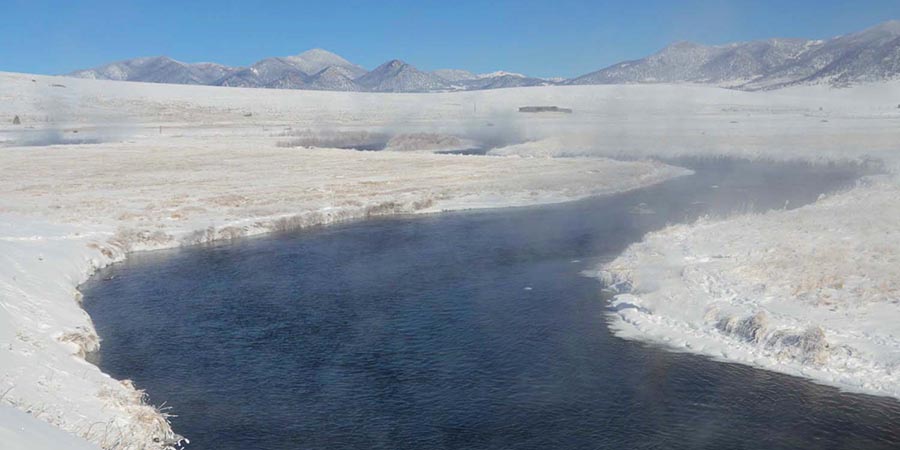
Winter dry fly fishing demands more precision in your location choices than any other season. Trout are conserving energy. Their metabolism is slow. They will not chase a dry fly the way they might in June. The fly has to come to them, and you have to be in the right spot for that to happen.
Target Slow, Sheltered Water Where Insects Collect
In winter, insects that hatch on the surface tend to accumulate in specific zones. Foam lines, eddies, tailouts, and the slow inside seams of bends all concentrate drifting insects into narrow feeding lanes. Trout know this. They position themselves where the current delivers food without requiring much effort.
Your job is to find those collection points and fish them precisely. Here’s what to look for:
- Foam lines: Where current creates a visible line of bubbles and debris on the surface. Insects get trapped here, and trout line up underneath.
- Tailouts: The smooth, slowing water at the downstream end of a pool. Insects that hatched upstream collect here as the current decelerates.
- Eddies: Circular current patterns that trap insects in a small area. Fish can sit in the eddy and eat repeatedly without moving much.
- Protected pools: Deeper, slower pools sheltered from wind and fast current. These hold the most fish in winter and produce the most consistent surface feeding when a hatch occurs.
Fish Won’t Move Far for a Winter Dry
This is the single most important location principle for winter dry fly fishing. In summer, a trout might move two or three feet laterally to eat a dry fly. In winter, that distance shrinks dramatically. The fly must drift directly through the fish’s feeding lane, within inches of its position.
This means you need to identify exactly where a fish is rising and deliver your fly to that precise spot. Covering water with long drifts and hoping for the best doesn’t work in winter. Short, targeted drifts to specific risers are the game.
Tailwaters Produce More Consistent Winter Dry Fly Opportunities
Tailwater rivers, where flows are regulated by dams, maintain more stable water temperatures throughout winter. This stability keeps insect activity higher and more consistent than on freestone rivers, where temperatures can drop well below the thresholds that trigger hatches.
On a tailwater, you might see midge hatches nearly every afternoon during winter. On a freestone, those hatches might only happen on the mildest days. If you have access to a tailwater, it should be your first choice for winter dry fly fishing.
That said, freestone rivers aren’t hopeless. Late winter, in particular, can produce surface activity on freestones as temperatures begin climbing. And small black stoneflies tend to appear on freestones before they show up on tailwaters.
Look for Pods, Not Individuals
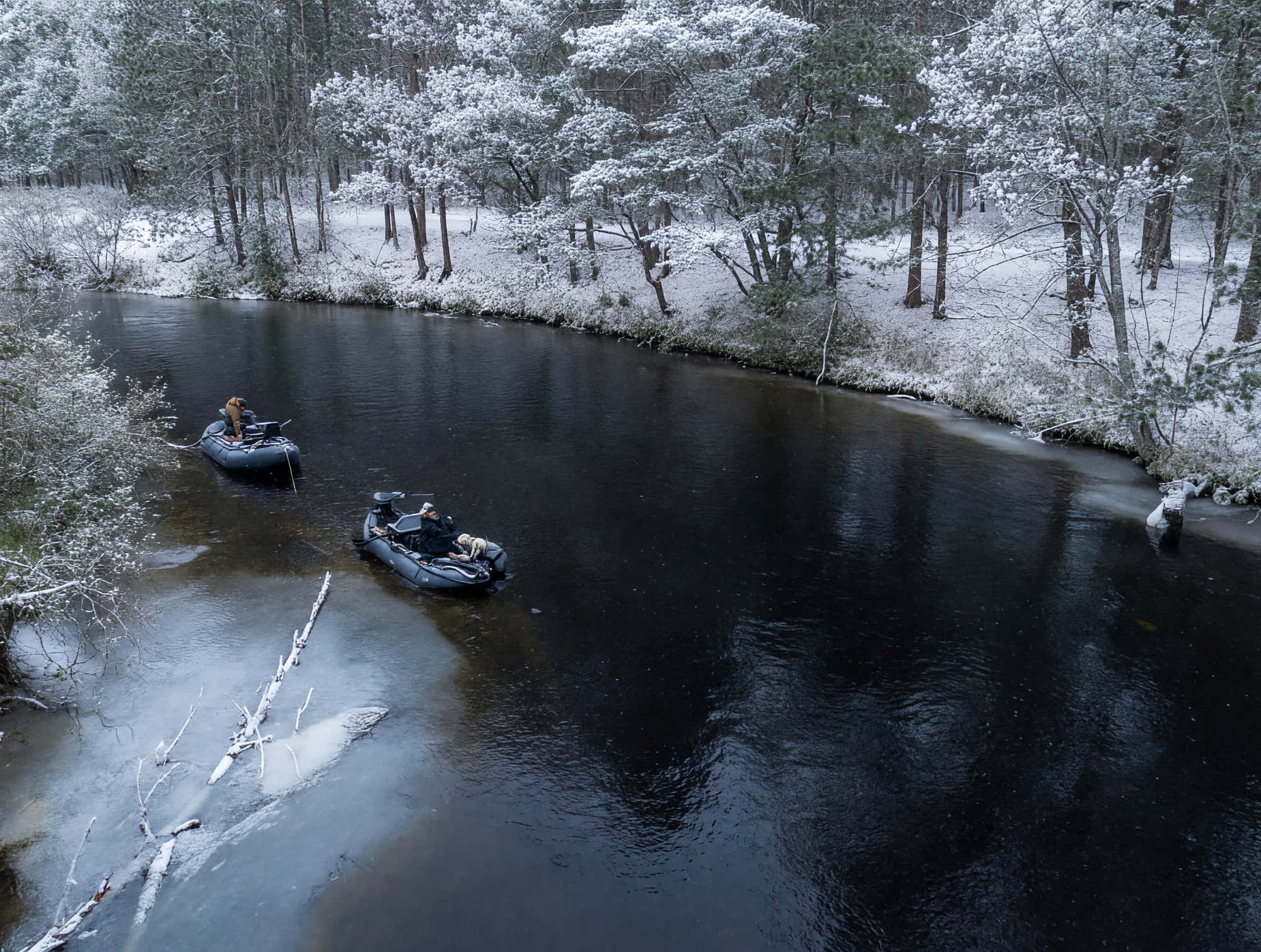
Winter hatches tend to concentrate both insects and fish in specific zones. Rather than finding individual risers scattered across a long stretch, you’re more likely to find a pod of fish rising in a 20-foot section of water where insects are collecting.
When you arrive at the water during the warming window, resist the urge to start casting immediately. Walk the bank. Scan the surface. Look for clusters of rise forms. A pod of rising fish tells you three things at once: the hatch is active, the fish are feeding, and you’ve found the right location.
If you scan for 10-15 minutes and see no risers, the hatch hasn’t started yet or conditions aren’t right. Fish subsurface and stay alert. The window may open later.
Location Scouting Checklist
Use this quick checklist when you arrive at the water:
- Is this a tailwater or freestone? (Sets your expectations for hatch consistency)
- Where are the foam lines, eddies, and tailouts? (Mark these as primary targets)
- Is there a protected pool with slow, even current? (Best winter dry fly water)
- Can you see any rise forms? (Wait and watch before committing)
- Are insects visible on the surface? (Confirms the hatch is active)
- Is the wind manageable? (Heavy wind disperses insects and makes presentation difficult)
Step 3: Choose the Right Flies (Fly Selection, Pillar 2)
The winter dry fly menu is the simplest of the year. That’s actually an advantage. You don’t need five boxes of dry flies. You need a small, focused selection that covers the three insect groups that matter: midges, BWOs, and (in late winter) small black stoneflies.
Trout University
The Best Way to Master Fly Fishing for Trout
Everything you need to learn how to fly fish for trout.
From fly selection to presentation and location, all in one place.
8 Premium Courses
15 Video Classes
1-2hr Power Classes on Key Subjects and solidify your learnings
6 Streamside Courses
10+ Hours of Fishing to See Our Methods in Action
No Credit Card Required or Auto Renewal
The Winter Dry Fly Menu
Midge Dries and Clusters (#18-#26)
Midges are the foundation of winter dry fly fishing. They hatch nearly every day, and during the warmest afternoon hours, they can bring fish to the surface even in the coldest conditions.
Individual midge adults are tiny, often size 22 to 26. But trout frequently feed on midge clusters, where multiple adults group together on the surface. This is why a Griffith’s Gnat (a cluster midge pattern) in sizes 18 to 22 is one of the most effective winter dry flies. It imitates a clump of midges rather than a single insect, making it both more visible to you and more attractive to fish.
- Colors: Black, gray, olive
- Key sizes: #18-#22 for clusters, #22-#26 for individual adults
- Best patterns: Griffith’s Gnat, smokejumper-style midge, parachute midge
BWO Duns and Emergers (#18-#24)
Blue-Winged Olives are the only mayfly species active during winter. They hatch when water temperatures push above 38 degrees Fahrenheit, with optimal activity between 40 and 44 degrees. Barometric pressure combined with water temperature is the most reliable predictor of BWO hatches. Fish weather changes when water temps are in range.
- Colors: Olive, dark olive, purple (for emergers)
- Key sizes: #18-#22 for duns, #20-#24 for emergers
- Best patterns: Parachute BWO, CDC Comparadun BWO, RS2 emerger
Small Black Stonefly Dries (#16-#18, Late Winter Only)
These appear primarily in late winter as days lengthen and temperatures begin climbing. They’re most common on freestone rivers. Carry a few simple dark patterns in sizes 16 to 18 if you’re fishing late winter freestones.
- Colors: Black, dark brown
- Key sizes: #16-#18
- Best patterns: Simple black stonefly dry, elk hair patterns in dark colors
Dry Fly Fishing Course
Master the most iconic and exciting technique
to catch trout with expert instruction from Dave Karczynski
- 9 Units & 70 Lessons (38 Chapters)
- 36 HD Videos
- Learn from Dave Karczynski (21 Years Experience)
- Master the Art of Dry Fly Fishing
- Lifetime Access and Coupons to Save $225+
- Get Expert Answers on Fly Fishing as Course Member
Impressionistic Patterns Earn Extra Value
In winter, you don’t always know whether fish are eating midges or BWOs, especially early in a hatch. Impressionistic patterns that could pass for either insect give you a head start while you figure out what’s happening.
A Griffith’s Gnat in size 20 can look like a midge cluster or a small BWO emerger. A smokejumper-style midge covers similar ground. Starting with one of these “crossover” patterns lets you get a fly on the water quickly while you observe rise forms and refine your selection.
Low-Riding Patterns Outperform Bushy Dries
Winter trout are feeding in slow, calm water with excellent visibility. High-floating, heavily hackled dry flies look unnatural in these conditions. Patterns that sit flush in the surface film, with a low profile and minimal hackle, match the way real winter insects sit on the water.
CDC (cul-de-canard) patterns are particularly effective because they naturally sit in the film rather than on top of it. Parachute-style patterns also work well because the hackle wraps horizontally, keeping the fly body in the surface rather than perched above it.
Carry Emerger Patterns
This is a critical point that many winter anglers overlook. During winter hatches, trout often prefer emergers stuck in the meniscus over fully hatched adults sitting on the surface.
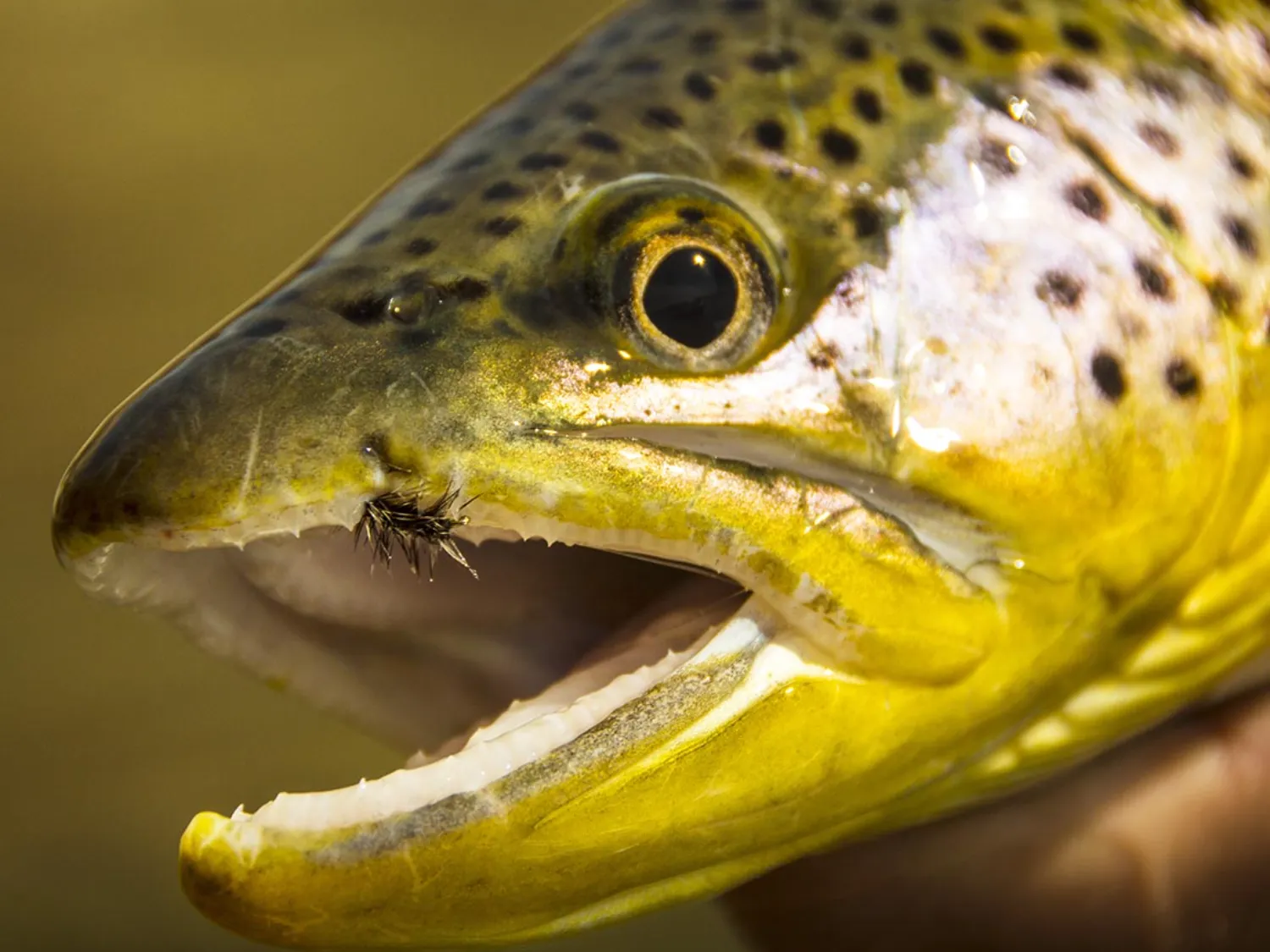
The telltale sign is the porpoising rise form: you see the trout’s back and dorsal fin break the surface, but no open mouth. This means the fish is eating insects trapped just below or in the surface film, not adults on top. When you see porpoising rises, switch to an emerger pattern that hangs in or just under the meniscus.
If you see open-mouth sipping rises, the fish are eating adults on the surface, and a standard dry fly is the right call.
Winter Dry Fly Selection Guide
| Insect | Fly Pattern | Sizes | Colors | When to Use |
|---|---|---|---|---|
| Midge (cluster) | Griffith’s Gnat | #18-#22 | Black, gray, olive | All winter phases |
| Midge (adult) | Parachute Midge | #22-#26 | Black, gray | All winter phases |
| BWO (dun) | Parachute BWO, CDC Comparadun | #18-#22 | Olive, dark olive | Water temps above 38°F |
| BWO (emerger) | RS2, CDC Emerger | #20-#24 | Olive, purple, black | Porpoising rise forms |
| Midge (emerger) | Smokejumper, Renegade | #18-#22 | Black, brown/white | Porpoising rise forms |
| Small Black Stonefly | Elk Hair/Simple Dark Dry | #16-#18 | Black, dark brown | Late winter, freestones |
If you want a curated selection of small-profile flies built for exactly these situations, the Micro Fly Assortment covers midge and BWO patterns in the sizes and styles that matter most for winter dry fly work.
The Dry Fly Fishing Course walks through the full process of reading rise forms, selecting the right pattern, and presenting it effectively.
Step 4: Present the Fly with Maximum Delicacy (Presentation, Pillar 3)
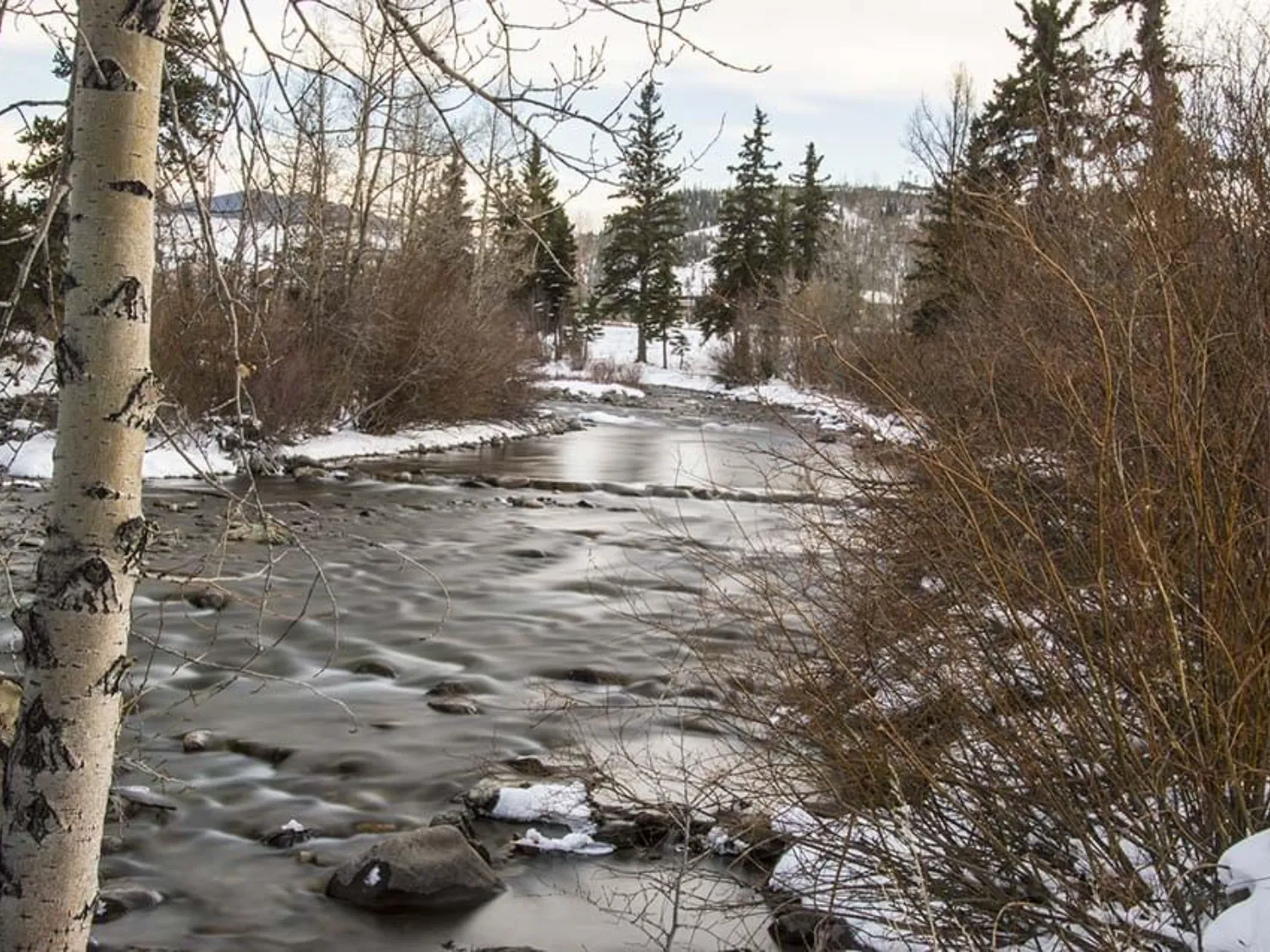
Winter dry fly presentation is the most demanding of the year. The water is calm and clear. Fish are holding in slow current with plenty of time to inspect your fly. Every element of your presentation, from the cast to the drift to the tippet, is under scrutiny.
Long Leaders, Light Tippet
Winter dry fly fishing calls for longer leaders and finer tippet than you’d use in other seasons. The goal is to keep your fly line as far from the fish as possible while still delivering the fly accurately.
- Leader length: 12 feet minimum. On flat, clear tailwater pools, 14 feet is better if you can turn it over cleanly.
- Tippet: 5X as a starting point for larger patterns (size 18 and above). Step down to 6X for sizes 20 and smaller. On heavily pressured tailwaters, 6.5X or even 7X may be necessary.
- Material: Monofilament only for dry fly fishing. Never fluorocarbon. Mono floats, fluoro sinks, and a sinking tippet pulls your dry fly under or creates an unnatural profile in the film.
A practical note on long leaders: if you can’t turn over a 14-foot leader cleanly, use the longest leader you can cast well. A bad cast with a long leader is worse than a good cast with a shorter one. Buy manufactured extruded long leaders (12-foot) rather than adding 5 feet of tippet to a 9-foot leader. The longer taper casts more naturally.
Minimal False Casts
Every false cast over winter fish risks spooking them. The flash of fly line in the air, the shadow on the water, the disturbance of the rod tip. All of it registers with trout holding in slow, clear water.
Limit yourself to one or two false casts, made off to the side of the fish rather than directly overhead. Better yet, use a water load (picking the line up off the water behind you and delivering forward in a single motion) to eliminate false casts entirely when conditions allow.
Short, Precise Drifts to Specific Risers
Winter dry fly fishing is not about covering water. It’s about targeting individual rising fish with short, accurate drifts. Here’s the sequence:
- Identify a riser. Watch for at least two or three rises to confirm the fish’s position and rhythm.
- Position yourself. Get within comfortable casting range (often 25-35 feet) without wading into the fish’s field of vision. Approach from downstream or at an angle.
- Deliver the fly 2-3 feet upstream of the rise. For slow-emerging insects like midges and BWOs, the fly needs time to drift naturally into the feeding lane.
- Watch the drift. If the fly passes through the rise zone without a take, let it drift well past the fish before picking up. Ripping the fly off the water near a feeding fish will put it down.
- Wait for the fish to rise again before recasting. Patience between casts is critical. Bombarding a fish with repeated casts is the fastest way to shut it down.
Drag-Free Drift Is Non-Negotiable
In the slow, even currents where winter dry fly fishing happens, any hint of drag is immediately obvious to the fish. The fly must drift at exactly the speed of the current, with no pulling, skating, or unnatural movement.
The key to achieving this in slow water is building slack into your cast rather than trying to mend it in after the fact. Two techniques work well:
The reach cast: As the line unfurls on the forward cast, move the rod tip upstream (or to the side) to place slack in the line between you and the fly. This gives the fly room to drift naturally before the current tightens the line.
The stop-and-drop cast: Stop the rod high on the forward cast and let the line and leader pile onto the water with S-curves built in. Those S-curves act as a slack reservoir, feeding out gradually as the fly drifts. This is particularly effective on flat tailwater pools where even a small amount of drag kills the drift.
Presentation Tips at a Glance
- Lead with the longest leader you can cast accurately
- Use 5X to 6X monofilament tippet (step finer on pressured water)
- Limit false casts to one or two, made to the side of the fish
- Deliver the fly 2-3 feet upstream of the rise form
- Build slack into the cast (reach cast or stop-and-drop)
- Wait for the fish to rise again before recasting
- Never rip the fly off the water near a feeding fish
Step 5: Put It All Together on the Water
Knowing the individual pieces matters, but winter dry fly fishing is ultimately about combining them into a coherent approach on any given day. Here’s how the full sequence works in practice.
Before You Go: Check the Conditions
Winter dry fly fishing is condition-dependent. Not every winter day will produce surface activity. The days that do share a few common traits:
- Mild temperatures: Air temps climbing into the 40s or above during the afternoon. You’re looking for the warmest day in a stretch, not necessarily a warm day by summer standards.
- Cloud cover: Overcast or partly cloudy days tend to produce better hatches than bluebird skies. Cloud cover reduces light penetration, making trout less wary and more willing to feed on the surface.
- Weather change: Fishing just before an incoming front can be highly productive. A warm-up day followed by a cloudy day is an ideal combination. The warm-up raises water temperature and triggers insect activity. The cloud cover on the following day gives trout confidence to feed in the open.
- Stable or rising water temps: Check whether water temperatures are trending above 38 degrees Fahrenheit. BWO hatches require this minimum, and midge hatches intensify as temps climb into the low 40s.
What to avoid: Stable, cold, high-pressure days with clear skies and wind. These conditions suppress insect activity and make trout reluctant to feed on the surface.
On the Water: The Observation Phase
Arrive during the warming window (roughly 10am to 1pm, depending on your phase of winter). Resist the urge to start casting immediately. Instead:
- Walk the bank and scan. Look for rise forms, especially in foam lines, eddies, and tailouts.
- Check the surface for insects. Are midges visible? BWO duns? If you can see insects on the water, the hatch is active or developing.
- Wait for the hatch to develop. Early in the hatch, you might see only a few scattered rises. Give it 10 to 15 minutes. If the hatch is building, you’ll see more fish come up as insect density increases.
- Read the rise forms. Open-mouth sips mean adults on the surface (fish a dry). Porpoising rises (back and dorsal fin, no mouth) mean emergers in the film (fish an emerger).
The Decision Point
This is where winter dry fly fishing requires honesty with yourself:
- If you see risers: Fish dries. You’ve found the window. Work the pod methodically, targeting individual fish with precise drifts.
- If you don’t see risers after 15-20 minutes of observation: The hatch hasn’t started, or conditions aren’t right for surface activity today. Fish subsurface (nymphs, eggs, worms) and stay alert. The window may open later in the afternoon.
- If risers appear while you’re nymphing: Be ready to switch. Having a small dry fly box accessible (not buried in your pack) makes the transition fast. Clip your nymph rig, tie on a dry, and get to work before the window closes.
Trout University
The Best Way to Master Fly Fishing for Trout
Everything you need to learn how to fly fish for trout.
From fly selection to presentation and location, all in one place.
8 Premium Courses
15 Video Classes
1-2hr Power Classes on Key Subjects and solidify your learnings
6 Streamside Courses
10+ Hours of Fishing to See Our Methods in Action
No Credit Card Required or Auto Renewal
Expect a Short Window
Winter dry fly windows are measured in minutes, not hours. A productive surface session might last 30 to 90 minutes before the hatch fades and fish drop back to the bottom. This is normal. Don’t be discouraged when it ends. You caught the window, and that’s the whole game.
On exceptional days, particularly mild, cloudy afternoons on productive tailwaters, the window can stretch longer. But plan for a short session and treat anything beyond that as a bonus.
Troubleshooting: When Winter Dries Aren’t Working
Even when conditions look right, things don’t always come together. Here are three common problems and their fixes.
Problem 1: Fish are rising but refusing your fly.
This usually means you’re fishing the wrong stage. If you’re throwing a dry and fish are porpoising (eating emergers in the film), switch to an emerger pattern. If you’re fishing an emerger and fish are sipping adults off the top, switch to a dun pattern. Also consider sizing down. Going from a size 20 to a size 22 can make the difference on pressured winter fish.
Problem 2: You see insects on the water but no fish are rising.
The hatch may not have reached critical density yet. Fish won’t commit to surface feeding until enough insects are present to make it worth the energy. Wait. If 15 to 20 minutes pass with insects on the water and still no risers, the fish may be eating emergers subsurface. Try a soft hackle or emerger pattern fished just below the film.
Problem 3: Your fly is dragging in slow water.
This is the most common presentation failure in winter dry fly fishing. Slow water makes even tiny amounts of drag visible. Lengthen your tippet, add more slack to your cast (stop-and-drop technique), and shorten your drift distance. A perfect 5-foot drift beats a dragging 20-foot drift every time.
Step 6: Build Your Winter Dry Fly Kit
You don’t need a massive fly box for winter dries. A small, focused selection covers everything you’ll encounter. Here’s what to carry.
The Winter Dry Fly Box
Midge Patterns (8-12 flies)
- Griffith’s Gnat: sizes 18, 20, 22 (2-3 of each)
- Parachute Midge or Smokejumper: sizes 20, 22, 24 (2 of each)
BWO Patterns (6-10 flies)
- Parachute BWO: sizes 18, 20, 22 (2 of each)
- CDC Comparadun BWO: sizes 18, 20 (2 of each)
Emerger Patterns (6-8 flies)
- RS2 or CDC Emerger: sizes 20, 22, 24 (2 of each)
- Renegade: sizes 18, 20 (1-2 of each)
Late Winter Addition (4 flies)
- Small Black Stonefly Dry: sizes 16, 18 (2 of each)
That’s roughly 24 to 34 flies. They’ll fit in a single small box, and that box covers every winter dry fly scenario you’re likely to encounter.
The Micro Fly Assortment is built around exactly this kind of small-profile, cold-water fishing. It includes midge and BWO patterns in the sizes that matter for winter work and doubles as a year-round micro fly box for tailwaters.
Gear Notes
- Rod: A 3-weight or 4-weight in the 8 to 9-foot range gives you the delicacy winter dries demand. If you only own a 5-weight, it works fine with a lighter touch.
- Leader: 12-foot tapered leader as your baseline. A thinner butt section (0.015 inches rather than the standard 0.020-0.025) helps dissipate casting energy and delivers softer presentations.
- Tippet: Carry 5X and 6X monofilament. Have 6.5X available for pressured tailwater fish.
- Floatant and desiccant: Essential. Winter dries are small and absorb water quickly. Reapply floatant frequently and use desiccant powder after each fish to restore flotation.
Winter Dry Fly Myths vs. Reality
Myth: Trout don’t eat dry flies in winter. Reality: Trout eat dry flies whenever insects are hatching on the surface. In winter, that window is narrow but it happens nearly every day on productive tailwaters.
Myth: You need specialized winter dry fly patterns. Reality: The same midge and BWO patterns you use in fall and spring work in winter. The key differences are in presentation (more delicate) and location (more precise), not in the flies themselves.
Myth: Winter dry fly fishing only works on warm days. Reality: Midge hatches occur even on cold days. BWO hatches require water temps above 38°F, but that threshold is met more often than you’d think on tailwaters. Cloud cover and weather change matter more than raw air temperature.
Conclusion: If You Only Remember 3 Things from This Article
First: Winter dry fly fishing happens in a narrow window, roughly 10am to 3pm during the warmest part of the day, and the entire menu is midges, BWOs, and (in late winter) small black stoneflies. Simplicity is your advantage.
Second: Location precision matters more in winter than any other season. Find the foam lines, eddies, and tailouts where insects collect, target pods of rising fish, and deliver your fly within inches of the feeding lane because trout won’t move far for a winter dry.
Third: Presentation must be maximally delicate. Long leaders, fine tippet, minimal false casts, and a drag-free drift built into the cast itself are what separate the angler who catches winter risers from the one who puts them down.
Winter dry fly fishing isn’t an everyday event. But the angler who understands the window, carries the right flies, and knows how to present them gets to experience something most people walk right past. It’s worth the patience.
If you want to build a complete dry fly skill set that covers every season, the Dry Fly Fishing Course walks through rise form reading, fly selection, leader setup, and presentation techniques in detail. And for the full winter fishing picture, including nymphing, streamer tactics, and location strategy, check out the other guides in our winter fly fishing series.
