Most trout anglers need far fewer flies than they own. A focused set of 8 to 12 patterns, chosen by job and season rather than by catalog browsing, covers the majority of situations you will actually face on the water. The problem is not a shortage of flies. It is a shortage of selection logic. Once you understand what each pattern is supposed to do and when that job is needed, a smaller box outperforms a larger random one every time.

How Many Trout Flies Do You Really Need?
How to cover more situations with fewer patterns
More Patterns Do Not Guarantee Better Coverage
Walk up to almost any experienced angler and look inside their vest. You will probably find boxes stuffed with hundreds of flies, many of them variations on the same basic theme, purchased one at a time over the years. Now ask them which ones they actually fish. The list shrinks fast.
Pattern accumulation without a framework is the most common mistake in fly selection. The logic usually goes something like this: if a few patterns work, more patterns must work better. But trout do not reward variety for its own sake. They respond to the right presentation of the right food form at the right time. A box full of random patterns does not cover more situations. It just makes it harder to find the right fly when it counts.
The four broad categories of trout flies (dries, nymphs, emergers, and streamers) map to four distinct jobs. Trout feeding on the surface need a surface fly. Trout holding deep in a pool need a nymph drifted at the right depth. Trout keying on insects in the film need an emerger. Trout chasing baitfish need a streamer. If your box has forty dries and two nymphs, you have a gap. If your forty dries are all variations of the same silhouette in different colors, you have redundancy dressed up as coverage.
The real gap in most fly boxes is not pattern count. It is category balance and situational logic. Sorting what you already own by job (not by species name or purchase date) usually reveals the truth: plenty of searching dries, a decent pile of attractor nymphs, and almost nothing for emergers or streamers. That gap is where fish get missed.
Build Around Jobs Seasons and Water
The most practical way to think about fly selection is to work backward from the job. Every fly fills a role. The role is shaped by the season, the water type, and what food is actually available. Species names matter less than you think until trout are being very specific about what they want.
Start with the season. In spring, trout in most Colorado rivers are keying on midges and Blue-Winged Olives. On a river like the Fryingpan, BWO hatches run from March through May and return again in September through November. Small nymphs and emergers in sizes 18 to 22 cover a lot of that ground. A Parachute Adams or RS2 Emerger in the right size handles most of the surface and film-feeding you will encounter.
By summer, the job changes. Caddis are hatching on rivers like the Animas and the Gunnison from June through August. Golden Stoneflies are relevant on the upper Gunnison through July and into August. Grasshoppers become a meaningful food source in July on the Fryingpan, the Gunnison, and plenty of freestone rivers across the state. Now your searching dry needs to be bigger and buggier. A Parachute Adams that worked in April does not fill that role as well as a larger attractor dry that can pass for a caddis, a stone, or a hopper depending on the trout's mood.
Fall narrows things again. BWOs come back, caddis wind down, terrestrials disappear. The box that served you well in August needs a quick adjustment in October, not a complete rebuild.
The point is that the job rotation across seasons is predictable. If you build your box around that rotation rather than around specific insect species, you need far fewer patterns to cover the year.
Choose a Durable Core
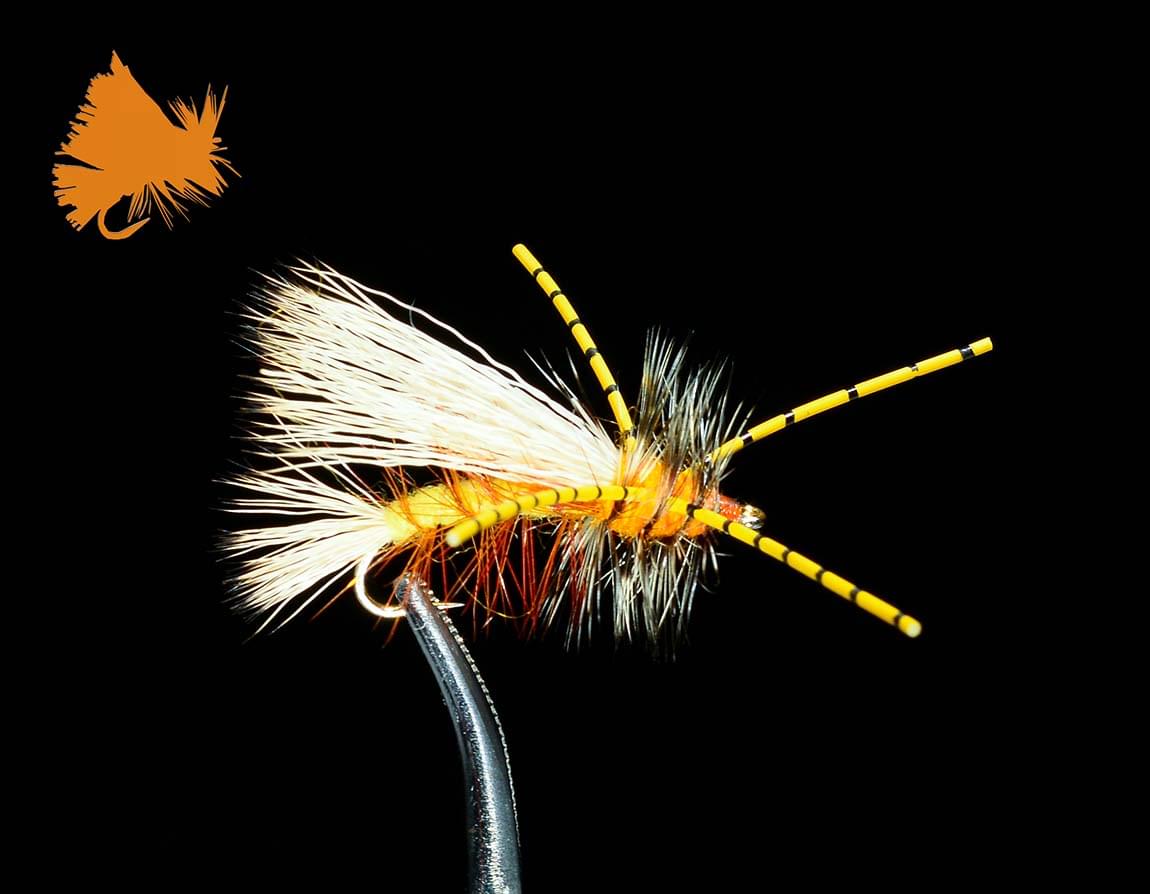
A durable core is a small set of patterns that each cover multiple jobs across multiple seasons. The Rubberleg Stimulator is a clear example of how one pattern can do heavy lifting across a long stretch of the season. It lands on the water with a profile that trout accept as a golden stonefly, a hopper, an oversized caddis, or just something large and alive that is worth eating. It floats high, holds up in fast water, and works as the dry in a dry-dropper rig when you want to fish a nymph underneath without adding a strike indicator. A black body with white overwings is particularly effective, and a foam overbody version handles riffles and pocket water without waterlogging.
That pattern alone covers the searching dry role from late spring through early fall, filling multiple insect-specific slots with a single fly in your box.
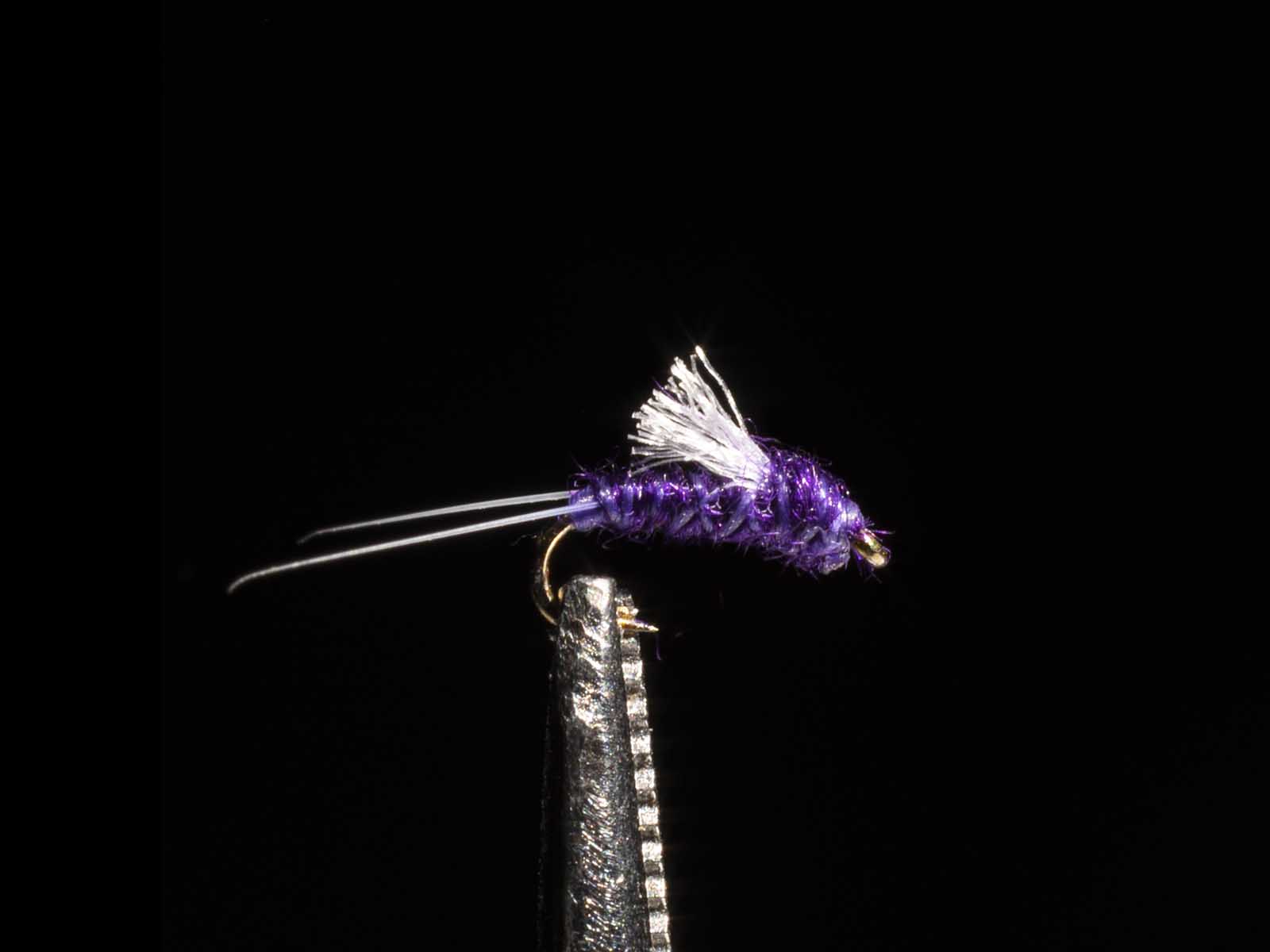
Conti's Confidence Nymph is the kind of pattern that fills the confidence nymph role on a rotating basis. Confidence patterns like this work because they present a convincing subsurface profile in situations where trout are eating but not locked onto a single species. Paired with a more imitative pattern when the hatch gets specific, it covers the exploratory nymph slot consistently.
The rest of a durable core should look something like this:
- Searching dry: Parachute Adams (sizes 14 to 18) – handles mayfly hatches and general surface feeding across spring and fall
- Emerger: RS2 Emerger – covers the in-film feeding that drives anglers crazy when surface rises are happening but standard dries get refused
- Attractor nymph: Copper John or Beadhead Pheasant Tail Nymph – subsurface searching in moving water across most seasons
- Caddis subsurface: Beadhead Caddis Larva – covers caddis bottom feeding from spring through summer
- Streamer: Beadhead Woolly Bugger – handles the streamer slot, searching cold water in early season, moving water in summer
That is six to eight patterns, each doing a specific job. Size and color adjustments inside those patterns extend their range considerably. Dropping from a size 14 Parachute Adams to an 18 or 20 changes its application entirely without adding a new pattern. Going from an olive Beadhead Woolly Bugger to a black one covers a different mood without taking up extra real estate in the box.
A Worked Small-Box Example
It is late July. You are on the Fryingpan River tailwater section. The water is clear, low, and running cold from the dam. It is mid-morning and nothing is rising yet.
You open a small box with ten flies: two sizes of Parachute Adams, a Rubberleg Stimulator in black and tan, an RS2 Emerger, a Copper John in size 16, a Beadhead Pheasant Tail Nymph in size 18, a Beadhead Caddis Larva, a Beadhead San Juan Worm, and a Beadhead Woolly Bugger.
The first decision: fish are not showing, so you start subsurface. You rig the Copper John as the point fly and drop the Beadhead Caddis Larva as a trailer. Caddis are active on the Fryingpan from May through September, so there is a good chance trout are keying on the larval stage even without adults in the air. You drift the rig through two runs and find a fish on the trailer in the second slot.
An hour later, you see a few rises in a slower tailout. Small, subtle, tight to the bank. BWOs are a reliable fall-off on the Fryingpan through the summer months. You switch to the RS2 Emerger in size 20 and work the rise forms. The emerger presentation gets you two more fish because trout in that feeding lane are taking bugs in the film, not on top.
By early afternoon, the air warms up and you start seeing larger naturals in the air. Grasshoppers are active on the Fryingpan in July and August, and the Flav hatch (a larger mayfly) is also relevant through this stretch of summer. You tie on the Rubberleg Stimulator and drop the Beadhead Pheasant Tail underneath as a dropper. You cover water faster now, working banks and riffles, and pick up fish on both ends of the rig.
That is the entire day. Three presentations, a total of six flies in use, and you fished through three distinct feeding windows without opening a second box or wondering what you were missing. The logic drove the decisions, not the fly count.
When Another Pattern Actually Adds Something
Knowing when to add a pattern is just as important as knowing when not to. The rule is simple: a new pattern earns its slot when it fills a job your current set cannot cover. It does not earn a slot because you want variety or because a guide mentioned it once.
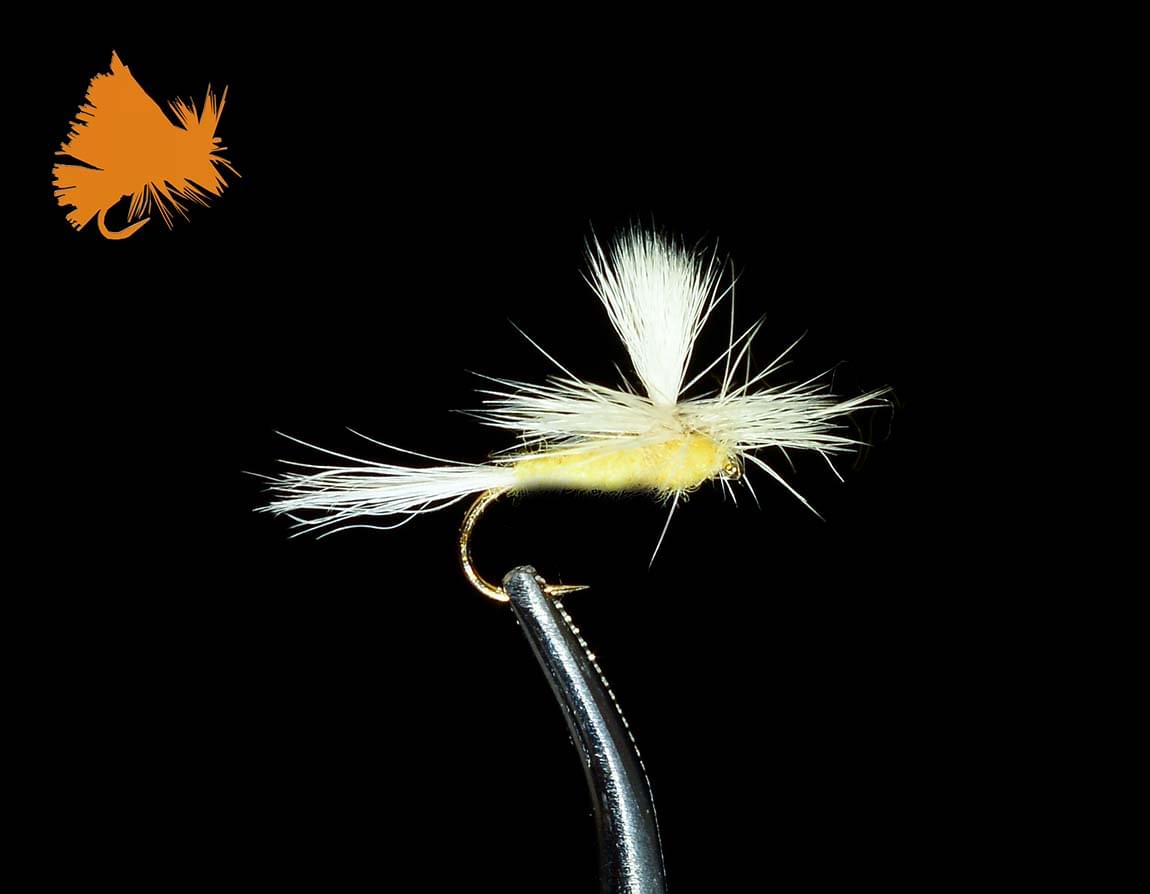
There are real situations where a dedicated pattern matters. The Fryingpan's Flav hatch in July and August is one of them. The Flav is a larger mayfly (Drunella flavilinea), and when it hatches in numbers, trout can become selective to its size and profile in a way that a Parachute Adams in size 18 does not satisfy. A correctly sized Flav dry or a dedicated Pale Morning Dun pattern in sizes 16 to 18 earns a slot for that specific window on that specific water.
Similarly, on technical tailwaters like the Fryingpan or the Arkansas, a Pale Morning Dun emergence in summer sometimes puts trout into a lockjaw mode where a Comparadun PMD in sizes 16 to 18 outperforms a general searching dry by a significant margin. That pattern earns its slot because the trout are being that specific.
The same logic applies to midge-heavy tailwaters in winter. A size 22 or 24 midge emerger covers a job that no searching dry does well. If you fish winter tailwaters regularly, that slot belongs in your box.
What does not earn a slot is the fourth or fifth variation of a pattern you already carry. If you have a Parachute Adams in size 14 and 18, adding a size 16 is reasonable if the gap matters to you. Adding three more Adams variations in slightly different colors is redundancy, not coverage. The same logic applies to buying every caddis dry on the shelf when one well-chosen caddis pattern with size variation handles the job.
The failure mode here is confusing confidence with coverage. Some anglers add patterns because they are not catching fish and assume the fly is the problem. More often, presentation, depth, or drift is the issue. A new fly does not fix a drag problem. When you are genuinely missing fish that you can observe feeding on something specific and distinct from what you carry, that is the signal to add. Not before.
A useful check before adding any pattern: lay out your box and ask whether you have at least one good option for each of these jobs – searching surface, in-film emerger, attractor nymph, imitative nymph, caddis subsurface, streamer. If you have all of those covered with one or two patterns each, your box is doing its job. If you have a gap in one of those categories, fill it. If all categories are covered and you still want to add, ask yourself honestly whether confidence is the real issue.
Trout University
The Best Way to Master Fly Fishing for Trout
Everything you need to learn how to fly fish for trout.
From fly selection to presentation and location, all in one place.
8 Premium Courses
~1,600 Pages & 30+ hrs of Video covering the most important topics
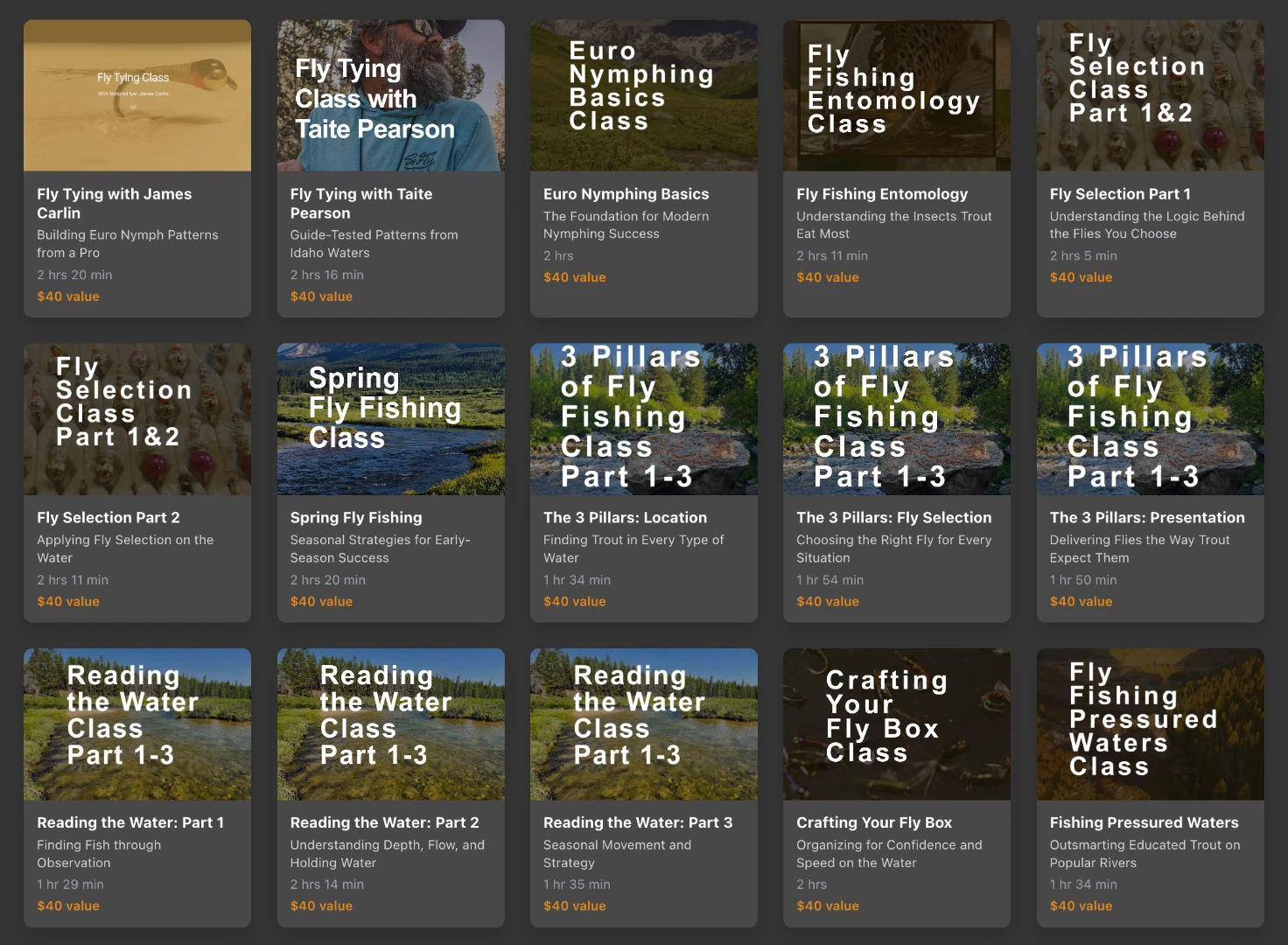
15 Video Classes
1-2hr Power Classes on Key Subjects and solidify your learnings
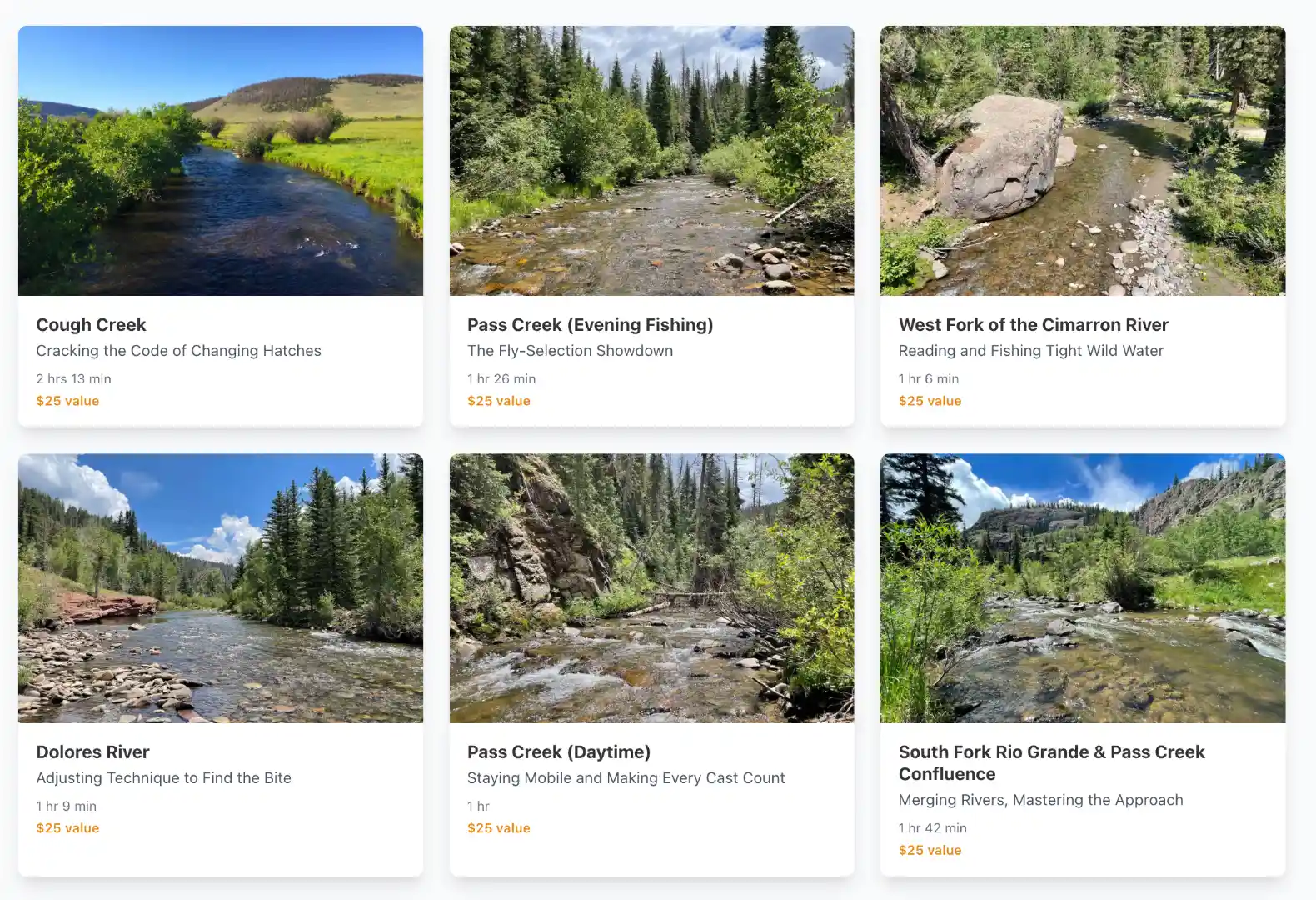
6 Streamside Courses
10+ Hours of Fishing to See Our Methods in Action
Recommended Reading
If the selection logic in this article resonates but your fly box still does not feel right when you open it, the problem is often structure rather than pattern count. Why a Full Fly Box Still Feels Empty works through that specific frustration directly, explaining why organization and purpose matter more than volume.
If you want to take the next step and build your selections around the actual insects trout are eating by season, Build Your Fly Box Around Insect Stages gives you a practical framework for thinking in stages rather than in species names.
For anglers who want to go deeper on the core patterns themselves, the Top Trout Flies Course covers the patterns that belong in a durable set, how to understand what each one does, and how to adjust for seasons, water types, and conditions. It is the structured version of the selection logic this article introduces. If you want a complete learning path that extends beyond fly selection into all three pillars of fly fishing, Trout University covers that ground with guided lessons built around the same practical approach.
The box you need is probably smaller than you think. The knowledge that runs it is what makes the difference.