Organize your fly box by insect stage, not by pattern name. That single shift changes how you shop, how you pack, and how fast you find the right fly on the water. Instead of asking "what patterns do I have?" ask "which stages are active right now, and do I have a fly for each one?" Mayflies move through nymph, emerger, dun, and spinner. Caddis move through larva, pupa, and adult. When your box maps to those stages, you stop fumbling and start fishing with a plan.

Build Your Fly Box Around Insect Stages
How to create better seasonal coverage
Why Pattern Names Make a Weak Filing System
Most anglers organize by what they know from the fly shop: Pheasant Tail, Elk Hair Caddis, BWO Parachute. Those names describe materials and tying styles. They tell you almost nothing about where an insect is in its life cycle or what job your fly needs to do at the moment fish are feeding.
The problem shows up clearly once a hatch starts. Say you've got a solid collection of Pheasant Tail variants in your box. You have the standard, the beadhead, and the soft hackle version. That's real coverage – but it's all nymph coverage. Every single one of those flies is working the same subsurface stage. If a Blue-Winged Olive hatch kicks off and fish start sipping in the film, you're suddenly looking through a box full of nymphs trying to find an emerger. If they switch to spent spinners at dusk, you have nothing.
The Blue-Winged Olive moves through four distinct stages: nymph, emerger, dun, and spinner. A box organized by pattern name might have three or four nymph options and zero emergers, because the angler was buying what looked productive or what was on sale, not what stage was missing from coverage.
Pattern names are a filing system built for the fly shop shelf. They make sense when you're buying. They break down when you're standing in the river trying to figure out why fish are refusing everything you throw.
The fix is simple, but it requires a mindset shift. Think of each insect as having a job description at each stage, and your fly box as a tool kit that needs to have the right tool for each job.
Map the Stages Trout Can Actually Eat
Before you can build a stage-first box, you need to know what the stages actually are. Two insect orders – mayflies and caddis – cover the bulk of what trout eat through most of the season, so start there.
Mayfly stages
Mayflies follow a four-stage arc that trout can target at every point.
- Nymph: Subsurface. The nymph lives on the riverbed and in the water column for most of its life. This is where the bulk of trout feeding happens, because nymphs are available year-round.
- Emerger: In the film or just below it. This is the transitional stage where the nymph is breaking out of its shuck and becoming an adult. Fish key on this hard because emerging insects are vulnerable and concentrated.
- Dun (Dry): The adult mayfly sitting on the surface drying its wings before flying off. This is what most people picture when they think "hatch."
- Spinner: The returned adult, spent on the surface after mating. Spinner falls often happen at dusk and can trigger selective feeding that requires a specific fly.
A well-mapped BWO box needs something for all four stages. The nymph is subsurface. The emerger is in the film. The dun is on top. The spinner is spent. Four jobs, four potentially different flies.
Caddis stages
Caddis follow a three-stage cycle with a behavioral variation worth noting.
- Larva: Subsurface, often case-building or free-swimming along the bottom. A reliable food source that trout eat all season long.
- Pupa: The transitional stage, rising through the water column toward the surface. This is where caddis patterns fished subsurface or on a swing become very effective.
- Adult: Surface. The adult caddis on the water, either newly hatched or egg-laying. The egg-layer variation is worth carrying separately, because fish respond to that skittering, dipping behavior differently than a dead-drifted dry.
Look at something like Tan Caddis or October Caddis and you'll see this pattern clearly. Subsurface data shows larva and pupa available from roughly May through October on many rivers, while the adult hatch window is distinct and seasonal. The larva and pupa stage is available to trout as a food source for months – much longer than the adult hatch. That's the kind of information a stage map gives you that a pattern name never will.
Build a Small Seasonal Coverage Plan
Once you understand the stages, the next step is laying them out across the season so you can see where you have coverage and where you have gaps. You don't need to carry every stage of every insect from January through December. You need the right stages available at the right times.
Here's a practical way to think about seasonal coverage using mayflies and caddis as the backbone.
Early Season (March – April)
The nymph slot is your workhorse. Pheasant Tail nymphs in various forms are year-round patterns for good reason – the mayfly nymph stage never really turns off. A Beadhead Pheasant Tail is a strong choice here because the bead gets it to depth when water is cold and fish are holding deep. The BWO Parachute becomes relevant as spring progresses and Blue-Winged Olive hatches begin, making the dun slot important to fill for the first time in the season.
Late Spring through Early Summer (May – June)
This is when stage coverage matters most. The Hatching Pupa (a generic mayfly emerger pattern) fills the in-between slot that a lot of anglers miss entirely. It can be fished in the film, on a swing through a riffle, or just below the surface under a dry fly. This is also when caddis larva patterns start carrying their weight, and when the Elk Hair Caddis becomes a reliable surface option from May through October.
The Egg Laying Elk Hair Caddis is worth carrying specifically for late spring and early summer evenings, April through June, when female caddis return to the surface to deposit eggs. There's not much visual difference between this fly and the standard Elk Hair Caddis, but that egg sac detail on the back end matters when fish are keyed in on that behavior.
Summer (July – September)
The emerger and adult stages are in full play for both mayflies and caddis. The CDC Elk Hair Caddis earns its spot here as a buggier, more versatile adult pattern. It works across multiple caddis species, including October Caddis when it's sized up. The Hatching Pupa remains relevant into September.
Fall (September – October)
The nymph slot stays strong year-round. October Caddis larva and pupa extend your subsurface caddis coverage through fall. This is also when BWO hatches get strong again on many rivers, making the dun and emerger slots worth refreshing heading into the back half of the season.
The point of this exercise isn't to create a rigid calendar. It's to scan the season and ask: at any given month, do I have something for the subsurface stages and something for the surface stages of the insects that are active? When you lay it out that way, gaps are easy to see.
A Worked Mayfly and Caddis Box
Let me walk through how this thinking plays out in a real situation. You're on the water in late May. Blue-Winged Olives are on the menu and a caddis hatch has been starting in the evenings. Here's how a stage-first box helps you work through the day.
Morning – Mayfly Nymph Stage
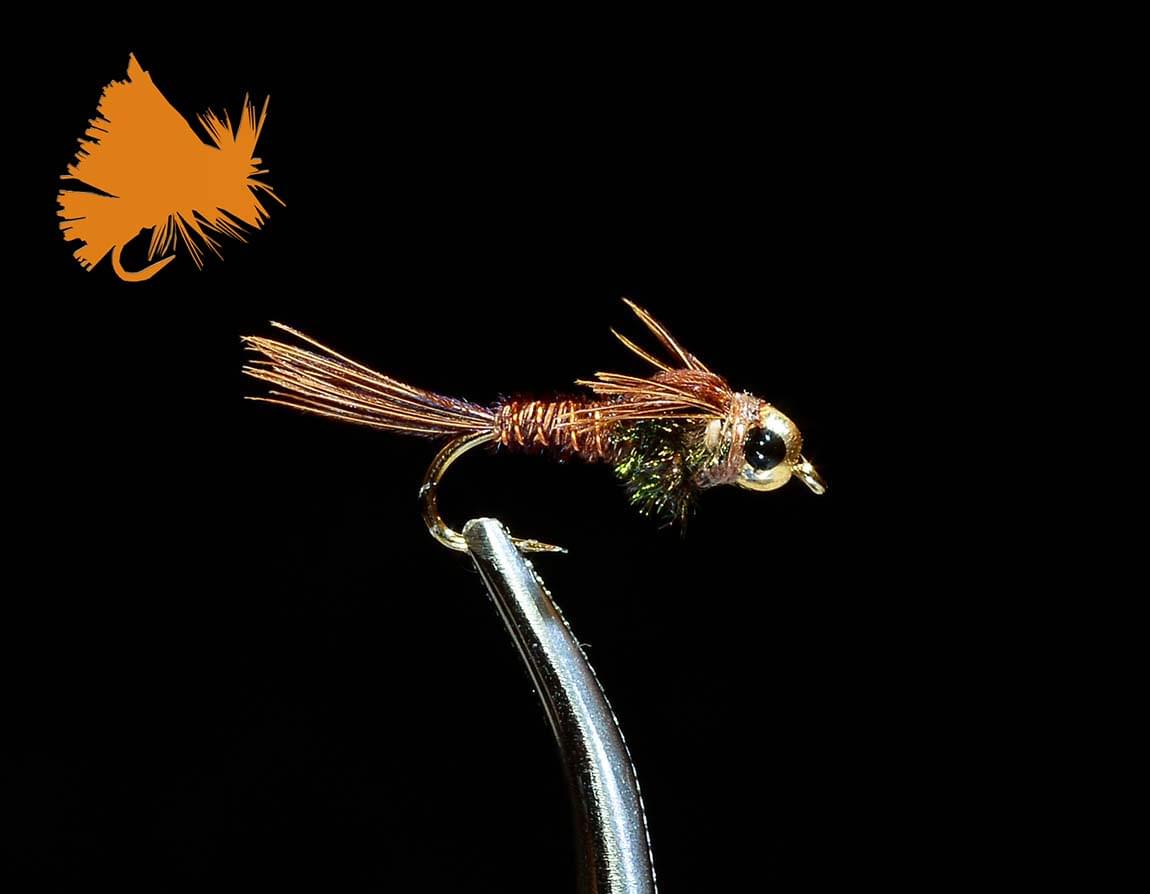
Before anything is hatching, fish are feeding subsurface. You start with a Beadhead Pheasant Tail as your point fly. It imitates multiple mayfly species at the nymph stage, including BWOs and PMDs, and the beadhead gets you to depth. The American Pheasant Tail Nymph is worth knowing about here too – it's designed to imitate a lot of insects at once without leaning too specific, which makes it a reliable option when you're not sure exactly what nymphs are in the system.
The BLM Mayfly is another nymph option worth having. It targets smaller mayfly species like BWOs and PMDs specifically, and the bead can be varied to put the fly at exactly the right depth.
Midday – Mayfly Emerger Stage
Olives start coming off the water. You notice fish rising, but they're not taking anything off the top cleanly. This is almost always the emerger stage. Fish are picking off bugs in the film before they can fully escape. The Hatching Pupa fills this slot directly – it's a generic mayfly emerger that works for a wide range of species. Fish it with a touch of floatant to keep it in the film, or let it hang just below a dry fly.
This is the stage most boxes miss. Three Pheasant Tails and a BWO Parachute don't give you an answer when fish are in the film.
Afternoon – Mayfly Dun Stage
Fish are now rising openly to duns sitting on the surface. The BWO Parachute takes over. It's a clean, simple imitation of the adult mayfly – color, profile, and silhouette are all right. The parachute post makes it easy to track on the water.
Evening – Caddis Shift
As light starts to drop, caddis activity picks up. If fish are eating subsurface early in the evening, a Beadhead Caddis Larva is the subsurface option for the caddis larva stage. As the hatch builds and adults are on the water, the Elk Hair Caddis handles standard adult caddis presentation from May through October. If it's a late spring evening and female caddis are egg-laying, the Egg Laying Elk Hair Caddis with its egg sac detailing can make a real difference.
For a buggier adult presentation, the CDC Elk Hair Caddis is worth carrying alongside the standard version. The CDC feather creates a more lifelike, mobile silhouette and works across multiple caddis species.
That's one day on the water, six or seven fly slots, each filling a specific stage of a specific insect at the right moment. None of that sequence would be obvious from a box organized by pattern name.
How to Handle Overlap and Missing Stages
Once you start building a stage-first box, two things happen that confuse anglers: some patterns seem to cover multiple stages or insects at once, and some stages seem to have no dedicated fly in the box. Here's how to think about both.
Overlap is a feature, not a problem
Some flies are deliberately designed to work across multiple insects or stages. The American Pheasant Tail Nymph is a good example. Its description is explicit: it imitates a lot of insects at once. It covers mayfly nymphs, stonefly nymphs, and midge nymphs without being exact about any of them. The Beadhead Pheasant Tail is similar, picking up mayfly and stonefly nymph coverage simultaneously.
The Beadhead Soft Hackle Pheasant Tail goes even further. It carries an emerger-stage designation because the soft hackle creates movement that can imitate a nymph, an emerger, or even a caddis rising in the water column. It crosses several categories on purpose.
The CDC Elk Hair Caddis does something similar on the adult side. It works wherever caddis are active, and it's versatile enough to imitate October Caddis species in addition to standard summer caddis, extending the range of one fly slot.
This isn't confusion. This is efficiency. A fly that covers multiple stages or insects in your box is a fly that earns its seat on every trip.
Missing stages are real gaps to fill
The flip side is identifying stages where you genuinely have no coverage. The most common example is the caddis pupa stage. Most anglers carry a caddis larva and an adult dry, but nothing for the pupa rising through the water column toward the surface. That's the stage just before the adult hatch, and trout can key on it hard. Soft hackle patterns and wet flies fill this slot well – a swung soft hackle through a riffle during a caddis hatch is covering the pupa stage with a presentation that matches how the pupa actually moves in the water.
The check is simple. Go through your box stage by stage for each major insect you fish. Nymph slot filled? Emerger slot filled? Dun slot filled? Spinner slot filled? If a stage has nothing, that's your next purchase. Start with the stage that gets skipped most on your home water, and add from there.
The Egg Laying Elk Hair Caddis is another example worth noting because it shows how one base pattern covers multiple behavioral jobs. The standard Elk Hair Caddis covers the adult at rest. The egg-laying version covers the adult actively depositing eggs on the surface. They look similar, but fish don't always treat them the same way, especially on evenings when females are dipping to the surface. Knowing that the egg-layer is a distinct behavioral stage – not just a variation – is exactly the kind of thing that closes a gap you didn't know you had.
When you review your box through this lens, you're not just counting flies. You're asking whether each job that trout are expecting to be available on the water has a fly to represent it. If the answer is yes across the season, you've got a box built around how trout eat, not around how patterns are named at the fly shop.
Trout University
The Best Way to Master Fly Fishing for Trout
Everything you need to learn how to fly fish for trout.
From fly selection to presentation and location, all in one place.
8 Premium Courses
~1,600 Pages & 30+ hrs of Video covering the most important topics
15 Video Classes
1-2hr Power Classes on Key Subjects and solidify your learnings
6 Streamside Courses
10+ Hours of Fishing to See Our Methods in Action

Recommended Reading
If this framework clicked for you, there are a couple of related reads worth your time.
Why a Full Fly Box Still Feels Empty gets at the root of why having a lot of flies doesn't automatically mean having the right flies. It's a good companion to this article for anyone who has stood at the water with a full box and still felt unprepared.
Knowing the Insect Is Only Half the Answer takes the stage framework a step further by looking at what else has to go right once you've identified the right insect and stage. Knowing which fly to tie on is one piece. Getting it in front of the right fish in the right way is the other half.
If you want a complete guided system for building deliberate fly boxes organized by water, season, insect, stage, and fishing job, the Crafting Your Fly Box Course walks through it all step by step with over 140 pages of detailed lessons and diagrams. It's designed to take the guesswork out of what to carry and why – which is exactly the problem this article started with. Trout University is the broader learning path if you're ready to work through the Three Pillars of fly fishing with guided instruction across a full curriculum.