Knowing the insect name is a good start, but it doesn't tell you which fly to tie on. A Blue-Winged Olive, for example, exists in four distinct stages: nymph, emerger, dun, and spent spinner. Each stage calls for a different fly, a different depth, and a different approach. The decision that actually matters on the water is not "what bug is this?" but rather "what is this bug doing right now, and where in the water column are the fish eating it?" Answer those questions first, and the right pattern becomes much easier to find.

Knowing the Insect Is Only Half the Answer
How to choose the right fly variation
Start With Stage Size Profile and Behavior
Before you even open your fly box, you need to know four things about the insect in front of you: its life stage, its approximate size, its profile in the water, and how it's behaving at this particular moment.
Stage is the most important of the four. An insect like the Blue-Winged Olive (BWO) or the Pale Morning Dun (PMD) goes through distinct phases that trout eat in completely different ways. The nymph drifts subsurface, often tumbling along the bottom or rising slowly toward the surface. The emerger is caught in transition, partially out of its shuck, hanging in the film. The dun (or adult) is sitting on the surface, wings upright, drying out before it can fly. The spinner has already mated and is returning to the water with wings flat, spent and dying. A trout feeding on emergers in the film is not the same fish, in the same feeding lane, doing the same thing as a trout eating duns on the surface. They're two different meals, two different presentations, and often two different fly patterns.
Size matters because trout in pressured water, like the technical tailwaters of Colorado's South Platte, are particularly size-sensitive. A fly that is a size or two too large can get consistent refusals even when the profile is right. BWOs run small, often in the size 18-22 range depending on the time of year and the river. PMDs tend to be a bit larger, typically size 14-18. When fish are being selective, getting the size within range is not optional.
Profile is about shape and silhouette. A Pheasant Tail Nymph has a slim, segmented profile that reads as a mayfly nymph to a trout. A Barrs Emerger has a partially emerged silhouette with a trailing shuck and a wing bud breaking the surface. A parachute dry has a different footprint than a comparadun or a traditional hackled fly. Profile determines what the trout sees when it looks up or sideways at your fly.
Behavior is about how the fly is moving. An emerger doesn't drift the same way a dead-drifted nymph does. A caddis pupa is actively swimming toward the surface, not drifting inertly. A spinner fall happens on calm water, often early morning, with flies that sit flat and motionless. Getting the presentation wrong can make even a perfect imitation invisible to a feeding fish.
On Clear Creek's Canyon Section, for instance, BWO adults are active from March through October, but BWO emerger activity peaks in summer. Those two windows call for different flies and different drift strategies even though the insect name is the same.
Why One Insect Creates Many Useful Flies
Here's the thing that trips up a lot of anglers: they learn that Blue-Winged Olives are hatching and think they need "a BWO." But a BWO isn't a fly. It's an insect with four fishable stages, and each stage has multiple effective patterns tied to imitate it.
Think of it like a menu at a restaurant. The chicken on the menu can come roasted, grilled, or fried. They're all chicken, but they're not the same dish. Similarly, a mayfly's life cycle is one insect that appears to a trout in completely different forms.
For BWOs specifically, the nymph stage is often covered well by a Beadhead Pheasant Tail Nymph or a Pheasant Tail fished subsurface. The emerger stage – that critical transition moment when the insect is most vulnerable – is where a Barrs Emerger or Soft Hackle BWO does its work. The emerger fished in or just under the film can be one of the most effective approaches during a hatch, and it's frequently overlooked by anglers who see adults on the surface and immediately switch to dry flies. The adult or dun stage might call for a parachute-style or comparadun dry. And the spent spinner stage, which often produces the most sustained and frustrating surface feeding, requires a low-profile spinner pattern with flat wings.
The PMD follows the same logic. A Beadhead Pheasant Tail Flashback covers the nymph stage well. The Barrs Emerger in PMD coloring handles the emerger. And adult PMDs in cream, yellow, and tan tones call for a dun-style dry. The South Platte sees PMD hatches from May through July, with Clear Creek running PMD emerger and adult activity from late May through October.
The practical lesson here is that a well-built fly box doesn't organize itself by insect name. It organizes itself by stage. Nymphs in one section, emergers in another, dries sorted by silhouette, and spinners kept separately because they're so often needed at different times than the other stages. That structure forces you to think about stage every time you open the box.
The Fly Variation Decision Process
The process is sequential, and it doesn't take long once you've practiced it. Here's how to work through it.
Step one: observe before you tie on anything. Look at the water surface, the air, and the shoreline. Are bugs in the air? Are they on the water? Are fish rising, and if so, how are they rising? A subtle sip with barely a ring is often a spinner or emerger take. A more aggressive splashy rise frequently indicates a caddis or a larger dun. No surface activity but fish obviously feeding means they're subsurface.
Step two: identify the stage that's active. If you see duns on the surface and fish rising with confident sips, the adult stage is what matters right now. If clouds just moved in and fish shifted from sipping to subtle porpoising, they may have moved to emergers. If you don't see surface activity but you know the hatch is coming (afternoon BWO hatch on the South Platte, for instance), fish the nymph stage until the hatch begins.
Step three: match the profile to that stage. Don't grab a dry fly because adults are out if the fish are clearly eating just below the surface. This is where most anglers go wrong. They see insects hatching and assume the fish are eating adults when they're actually taking emergers. A Soft Hackle BWO or Barrs Emerger fished just under the surface film will outperform a standard dry fly in those conditions.
Step four: check your size. Technical water like Cheeseman Canyon on the South Platte is known to require small flies. Fishing the right stage with a fly that's two sizes too large is still leaving fish on the table. When in doubt, go smaller.
Step five: make a few drifts and evaluate. If fish are clearly feeding and you're getting consistent refusals on a good drift, you likely have a stage, size, or profile mismatch. Change one variable at a time: try a smaller size of the same pattern, or switch from a dry to an emerger, or drop from an emerger to a nymph. Clear Creek's Canyon Section is a good reminder that the river has an on-and-off personality tied directly to weather, temperature, and bug activity. What works at 11am may not work at 2pm if the hatch has shifted stages.
Fly Explorer Pro
Find A Pattern| Tie Better Flies | Catch More Fish
Fly Explorer Membership
Over 550+ Patterns to Learn & Tie
- Explore and Learn 550+ Patterns and How to Tie Them
- Patterns for All Species on the Fly
- Integrated Entomology Info for Each Pattern
- Tying Recipes, Substitutions and More
- Expert Fishing Tips on Each Pattern
- and More!
Was $72/Year | Now Only $36/Year
Was $249 | Now Only $149 Lifetime Access
Worked Examples From Mayflies Caddis and Stoneflies
Mayflies: BWO and PMD
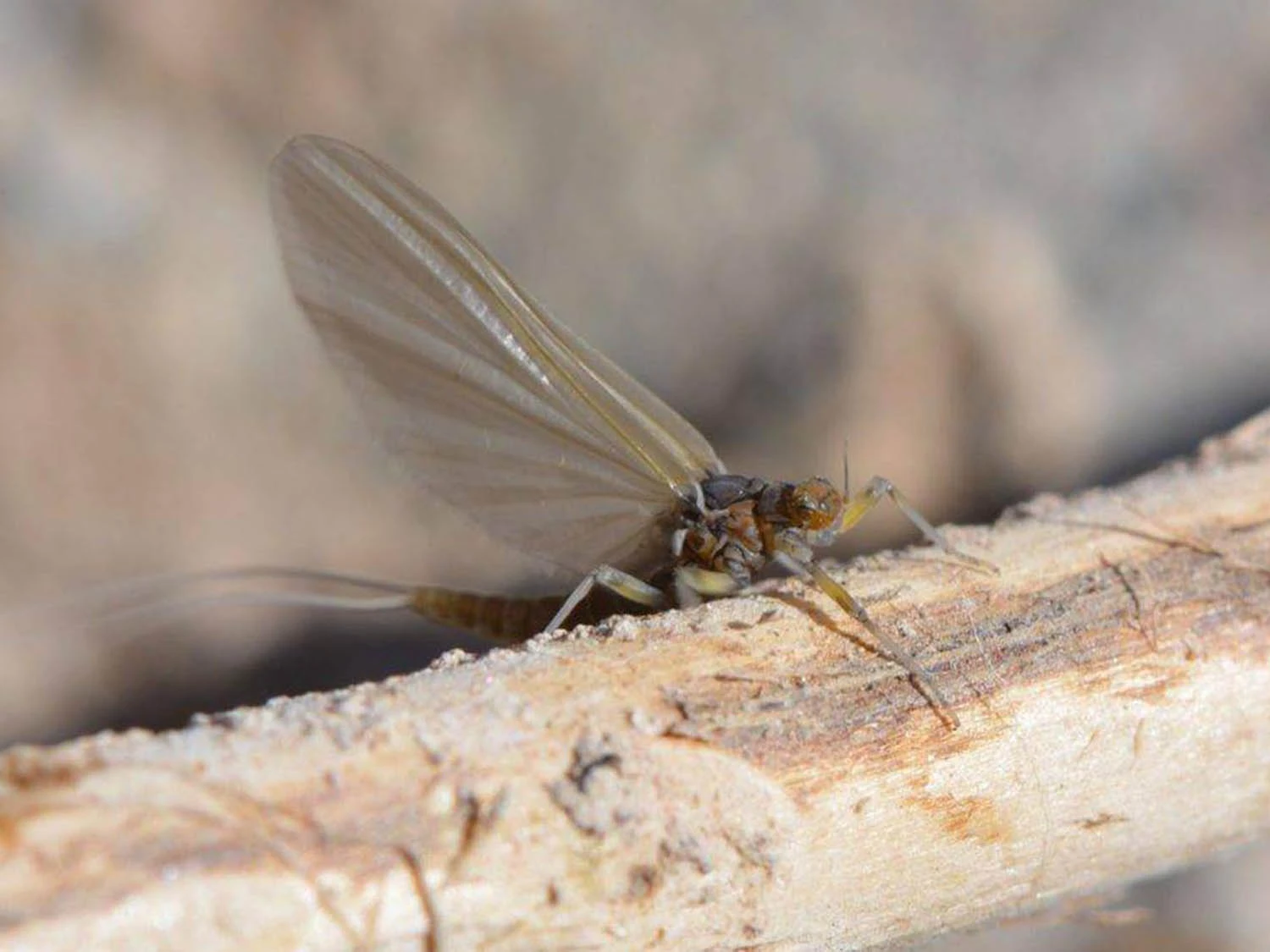
Picture a clear October afternoon on the South Platte near Deckers. The sky is overcast, the temperature has dropped slightly, and you start seeing small olive-colored bugs in the air. This is BWO territory, and the South Platte runs BWO hatches from January through April and again September through December.
Your decision process runs like this. You watch the surface: fish are rising, but the rises are subtle, just a slight break in the surface with almost no splash. That tells you the fish are eating in the film, not hammering adults off the top. The active stage is probably emerger, not dun. You tie on a Barrs Emerger in an olive BWO color, size 20. You fish it in the surface film with a drag-free drift through the feeding lane. If fish are still refusing after a few good presentations, you check size first, then profile, then consider whether they've shifted to the spent stage.
PMDs follow the same process but with a different seasonal window. On the South Platte, PMDs run May through July. On Clear Creek, PMD emergers appear in June and adults continue through October. When a PMD hatch is going, you might start with a Beadhead Pheasant Tail Flashback to cover nymphs early, transition to a Barrs Emerger as the hatch gets active, and move to a cream or yellow dry when fish start taking adults confidently off the surface.
Caddisfly
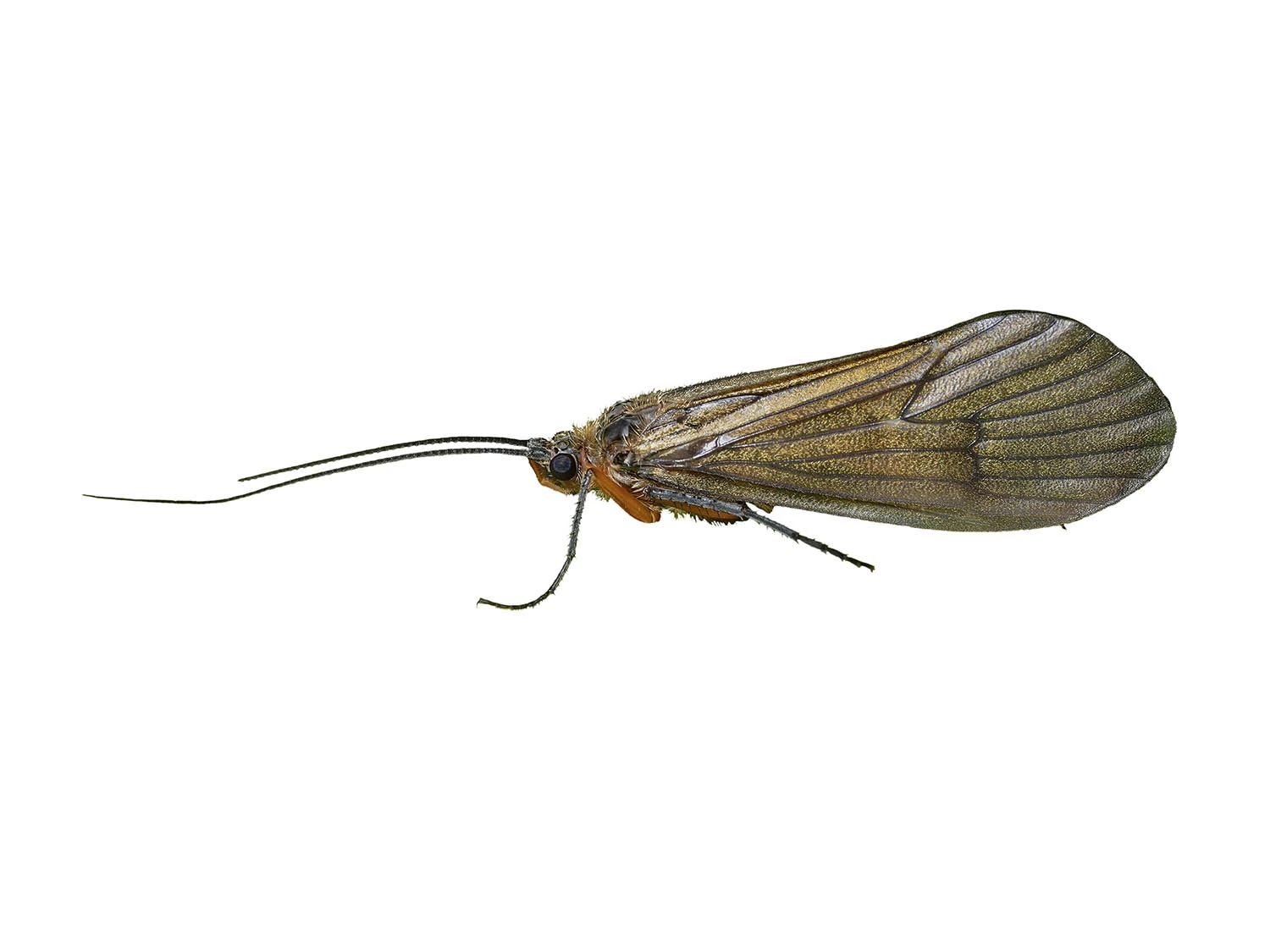
Caddis are fundamentally different from mayflies in one important way: they don't follow the same drifting-to-the-surface behavior. Caddis pupae actively swim upward and lateral to the surface, and caddis adults are erratic, skittering, and energetic. This changes both your fly choice and your presentation.
The South Platte sees Mother's Day Caddis in April and May, and Summer Caddis from May through August. During a caddis hatch, most anglers reach for the Elk Hair Caddis immediately. That's reasonable during the adult phase when fish are actively chasing and swatting caddis off the surface. But before and during the emergence, the pupa stage is often more productive. Caddis pupa patterns fished on a rising swing – letting the fly arc from dead drift to rising in the current – can be extremely effective because they mimic the natural behavior of a pupa swimming toward the surface.
If you're seeing caddis adults everywhere but the fish aren't rising to them, check the current stage more carefully. Fish may be keyed in on the pupa swimming in the water column below where you can see the action. Dropping to a pupa pattern and fishing it with some movement (a slight lift at the end of the drift, or a traditional wet-fly swing) often solves the problem.
Stonefly
Stoneflies behave differently from both mayflies and caddis. Most stoneflies spend the bulk of their life as nymphs, often two to three years, before crawling out of the water to hatch on rocks and vegetation. They don't emerge in the open water the way mayflies do. This means the nymph stage is almost always the most productive for fishing stoneflies subsurface, and it's fishable year-round wherever stoneflies are present.
Both Clear Creek and the South Platte hold Golden Stoneflies, and the stonefly nymph is a subsurface workhorse on those rivers. Patterns like the Pats Rubberleg Stonefly, Beadhead Kaufmans Stonefly, Beadhead Stonefly Nymph, and Kaufmans Rubberleg Stonefly all cover the nymph stage with different weights, profiles, and levels of movement from the rubber legs. The heavier beadhead versions get down quickly in faster water; the lighter versions work better in slower, more technical flows.
During the brief adult stonefly window in late spring, surface patterns can be productive, but the stonefly's flight is clumsy and erratic, and the adult window is short. For most of the year, if stoneflies are in the river, you fish the nymph.
Common Pattern Selection Shortcuts
The most common shortcut is matching by name alone. An angler hears that PMDs are hatching, grabs any PMD-labeled fly from the shop, and ties it on without asking which stage is active or what the trout are actually eating. Sometimes it works by luck. Often it doesn't, and the angler concludes that PMD patterns "don't work on this river" when the real problem was fishing an adult imitation during an emerger hatch.
The second shortcut is defaulting to a favorite pattern regardless of conditions. Every experienced angler has a fly that has caught fish in a lot of situations. That's actually a useful piece of information – it probably means the fly is a decent impressionistic match for multiple stages or insects. But when fish are visibly feeding on a specific stage and refusing your favorite, loyalty to that pattern is costing you fish. The adjustment is usually simple: match the stage.
The third shortcut is not size-checking. A size 14 PMD nymph might work in a lot of places, but on Cheeseman Canyon where fish are indicator-shy and require small flies, you may need to drop to a size 18 or 20 even with a reasonable profile and correct stage. Technical water demands tighter size matching than most anglers expect.
The fix for all three shortcuts is the same: slow down and observe before you tie on anything. A few minutes of watching the water tells you more about what to throw than any shortcut.
When nothing is working, change one variable at a time. First try a different stage. If that doesn't work, drop a hook size. If that doesn't work, evaluate your drift for drag. Clear Creek is a good reminder that changing conditions mean the insect activity changes too – what was producing an hour ago may have already shifted stages, and the fish have followed.
Recommended Reading
If this article raised as many questions as it answered, that's a good sign. The next step is understanding which flies work as starting points before a hatch is identifiable, and why the same pattern name tied two different ways can fish completely differently.
Both of these articles pick up where this one leaves off:
What Makes a Good Search Fly? – this one covers how to choose a productive fly before you know exactly what's hatching, which is most of the time on most days.
Why Two Flies With the Same Name Fish Differently – this one digs into why pattern name alone is an unreliable selection guide, which connects directly to everything covered here.
If you want to move beyond field observation and build a more systematic way to compare flies by insect, stage, profile, and weight, the Fly Explorer membership is built for exactly that. It lets you look at flies side by side with the stage and insect context attached, so you're not relying on pattern names to make selection decisions. For anglers who want structured instruction across the full set of fly-fishing skills – presentation, reading water, entomology, and fly selection together – Trout University provides a complete learning path that puts all the pieces in order.
The insect name is the beginning of the conversation. Stage, size, profile, and behavior are what actually close the deal.