A good search fly covers water efficiently, draws a response from fish that aren't actively feeding on something specific, and gives you information about where fish are holding. It works because of its visibility, profile, and the way it behaves in the current – not because of its name or reputation. The decision about which fly to use as a search pattern comes down to four things: water clarity, flow level, what food forms are in the river, and whether fish are showing any signs of selective feeding. Get those four reads right, and the fly choice becomes much simpler.

What Makes a Good Search Fly?
How attractors and imitators solve different problems
What a Search Fly Is Supposed to Do
Most anglers use "search fly" as shorthand for "the fly I tie on when I don't know what to use." That's a reasonable starting point, but it misses the real purpose.
A search fly has a job: to cover water and collect information. It's the fly you fish before you know what the fish want. Every cast teaches you something. Did you get a follow? A strike? Nothing? All of that is data. A good search fly is visible enough to get noticed, realistic enough not to be refused on sight, and fished in a way that covers the likely holding water efficiently.
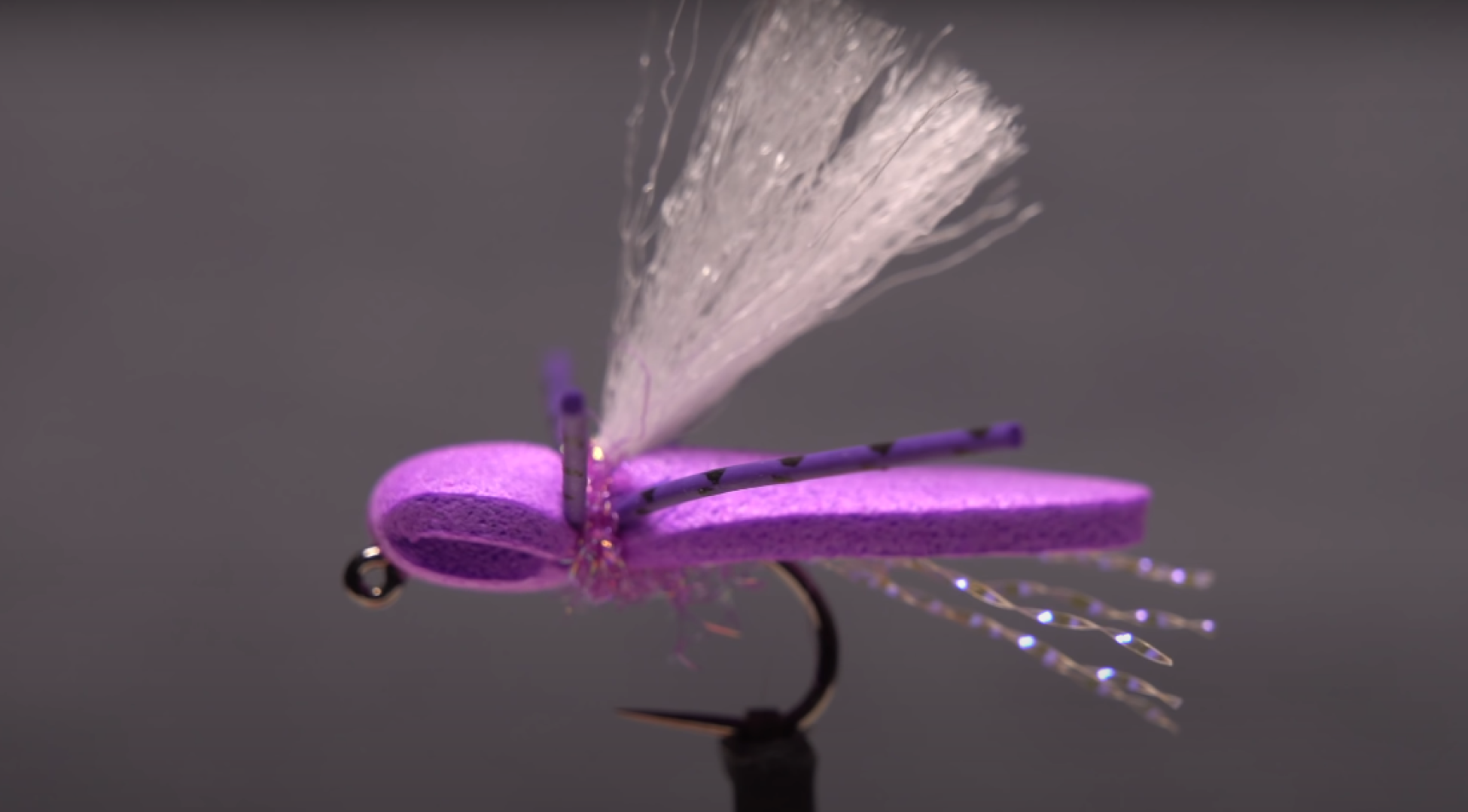
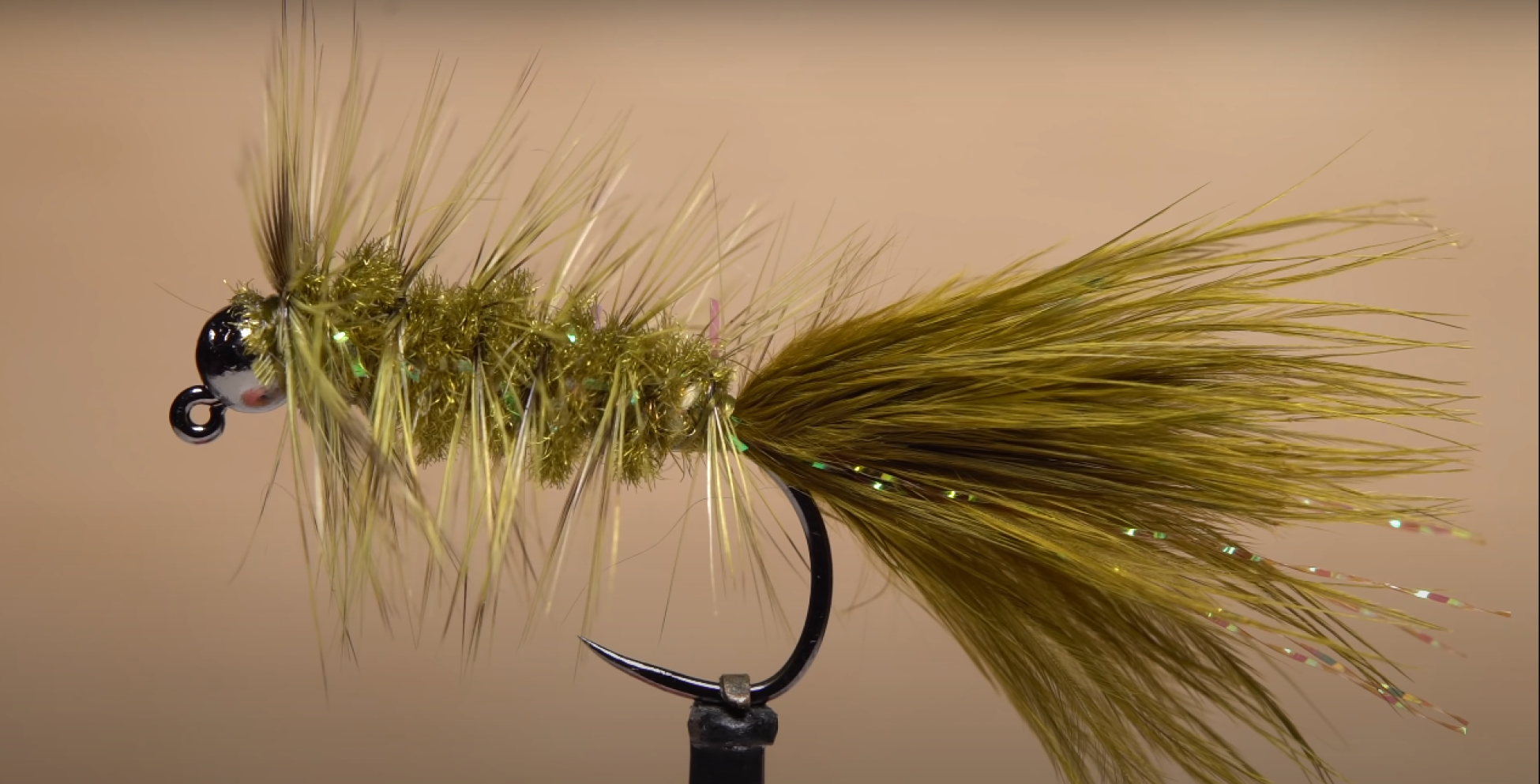
The Half Chubby Chernobyl is a good example of how this works on the surface. It's explicitly designed for search fishing – a buoyant, foam-bodied attractor that floats high and creates a visible surface disturbance. Fish see it, react, and you learn whether they're willing to commit to a big dry or whether they're tighter to a specific food form. The Eurobou Jig plays a similar role subsurface. It's described as a great attractor and search fly that represents not only bugs, but leeches and small baitfish. It's compact, versatile, and won't spook fish in low clear water. Both flies earn their place in a search role not just because they catch fish, but because they help you read the water.
That's the thing most people skip over. A search fly isn't just about catching fish – it's about figuring out where and how fish are willing to eat before you commit to a hatch-matching game.
Attractors and Imitators Solve Different Problems
The simplest way to think about fly selection is to imagine a dial. On one end you have pure attractors – flies that work because of movement, flash, silhouette, or color combinations that trigger a reaction. On the other end you have tight imitators – flies designed to match a specific insect, life stage, size, and color with precision. Most of the flies in your box sit somewhere in between.
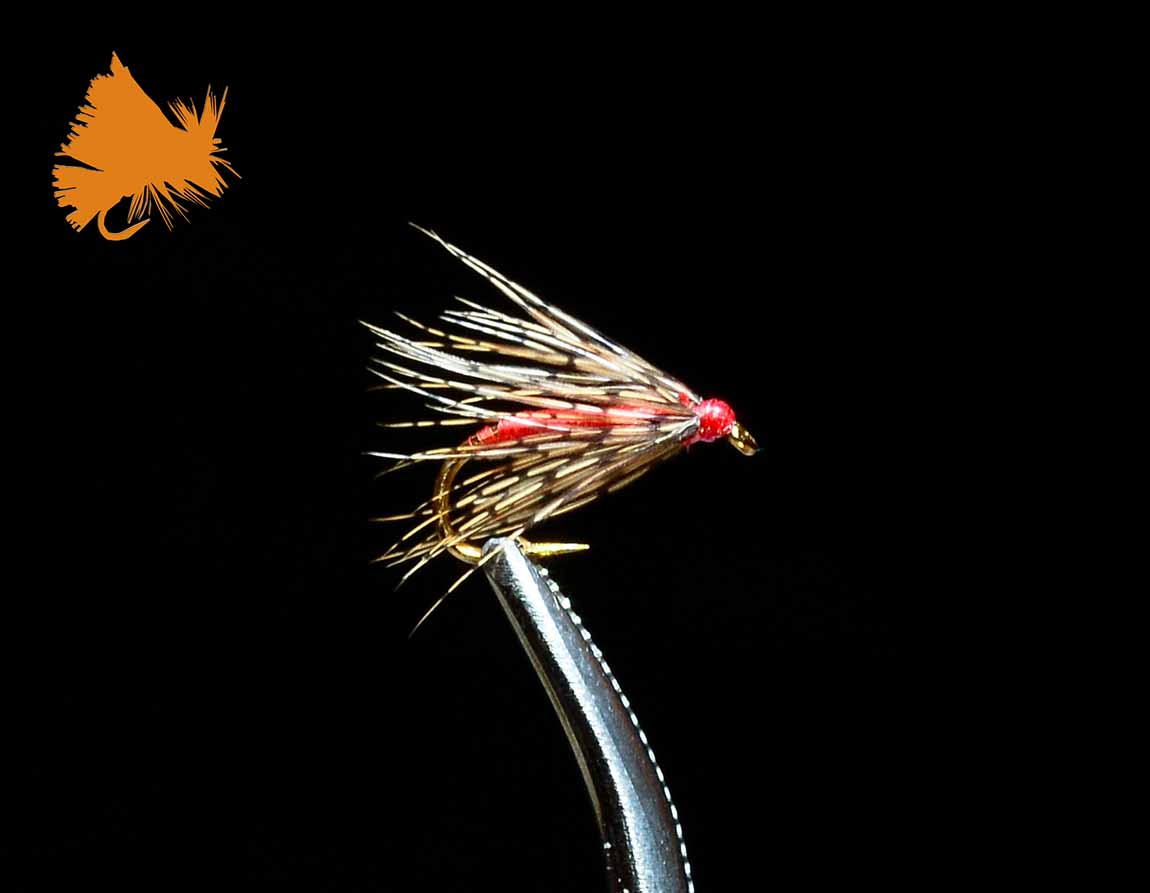
Attractors are the right tool when fish are not locked onto a single food form. In faster water, mixed-light conditions, or early in the season before reliable hatches begin, fish are opportunistic. They scan the drift for anything plausible and move to eat it. Patterns like the Soft Hackle Attractor Red and Soft Hackle Attractor Orange fall into this category – named attractor patterns that work through motion, color, and profile rather than tight imitation of a specific insect. The Purple Haze is another example: an attractor-style dry fly with broad enough appeal to draw fish that aren't locked onto a single species.
Imitators work when fish are selective. Once a hatch is on and trout are keying on a specific insect at a specific life stage, a general attractor often gets ignored. The BWO Parachute is the textbook example here. It's a tight imitation of a Blue-Winged Olive dun – precise color, taper, and profile. When spring BWOs are hatching and fish are rising selectively, this fly catches fish like a machine. But try it on a slow afternoon with no hatch activity and you're leaving a lot of fish in the river.
The interesting space is the middle ground – flies that have enough imitative realism to be credible, but enough flexibility to fish across a range of situations. The Guide's Choice Hare's Ear lives here. It works as a nymph imitation for mayflies, caddis, and stoneflies all at once, with the soft dubbing and flashback creating a subtle attractor element. The Hatching Pupa occupies a similar position – described as a generic mayfly emerger that resembles many different species. It can be fished dead drift, swung across shallow riffles, or suspended under a dry fly. The presentation style changes what it looks like to the fish.
Understanding where a fly sits on that dial is more useful than memorizing a list of search patterns by name.
Choose a Search Fly From the Water
Before you tie anything on, look at the river and answer four questions.
What is the water clarity? Clear water is unforgiving. Fish can see your fly from farther away, which means anything out of place gets rejected faster. In clear, low conditions, a smaller, less flashy search fly works better. The Eurobou Jig earns its reputation in exactly these conditions – the marabou tail moves naturally at low water speeds and doesn't create an aggressive presence. In stained or off-color water, you need something that reads better at a distance. The Diamond Braid Emerger is a good example: its sparkly pearl braid was designed specifically for days when the water is darker or stained, where contrast helps the fly get noticed through riffles and plunge pools.
What is the flow? High, fast, off-color water calls for a fly that can push water and hold the attention of a fish in a fraction of a second. The Articulated Stonefly Nymph is built for this scenario – its articulated tail moves and wiggles as it travels, putting on a show for trout looking for a big meal in murky, high-water conditions. Lower, cleaner flows call for something more subtle and natural.
What stage and season are you in? Early season before hatches start, you're generally searching. Later in the season during heavy hatch activity, you'll switch roles more often. In midsummer, a foam attractor like the Half Chubby Chernobyl can double as a dry-dropper indicator while covering the terrestrial window. A weighted nymph like the Copper John gets down quickly in the varied currents of that same season and works when fish are sitting deeper.
Are fish showing themselves? Rising fish narrow your choice immediately – start with something close to what they're eating. Fish that aren't visible could be anywhere in the water column, which is where a versatile search fly earns its keep.
Work through those four questions and your search fly choice gets clearer. You're not guessing anymore – you're making a decision based on what the river is telling you.
Fly Explorer Pro
Find A Pattern| Tie Better Flies | Catch More Fish
Fly Explorer Membership
Over 550+ Patterns to Learn & Tie
- Explore and Learn 550+ Patterns and How to Tie Them
- Patterns for All Species on the Fly
- Integrated Entomology Info for Each Pattern
- Tying Recipes, Substitutions and More
- Expert Fishing Tips on Each Pattern
- and More!
Was $72/Year | Now Only $36/Year
Was $249 | Now Only $149 Lifetime Access
A Worked Example Across Pocket Water and a Pool
Let's say it's a summer morning, moderate flow, water running clear. No obvious hatch activity. You're working upstream through a run that transitions from tight pocket water around boulders into a wider pool at a bend.
You start in the pocket water. The currents are fast and broken, fish have milliseconds to decide whether to eat. You want something buoyant, visible, and durable enough to float through the foam and seams without sinking. This is exactly where the Half Chubby Chernobyl fits. Its foam body floats high, the rubber legs create movement, and its broad silhouette reads well in broken current. You rig it as a dry-dropper with a smaller nymph trailing behind – a Copper John or an EZ Caddis if caddis are present. The dry tells you what's happening on the surface while the nymph covers the subsurface zone where most fish are feeding. You work each seam systematically, making sure the flies ride through the strike zones at the head and tail of each pocket.
You pick up a fish or two, get a couple of refusals on the dry, and notice the refusals seem to happen when the fly drags slightly on the faster inside current. Mental note: presentation is part of the search.
Now you move into the pool. The current slows. Fish have more time to inspect. A big foam attractor starts to look suspicious in clear, slow water. You switch your subsurface approach to a Guide's Choice Hare's Ear or a Beadhead Rubberleg Hares Ear – hybrid nymphs that have just enough realistic profile to pass muster in clear, slower water, but enough movement to draw fish that aren't locked onto a specific food form. You're still searching, but you've adjusted the dial slightly toward imitation.
If you see a fish rise in the pool, everything changes. Now you need to identify what it's eating and make a decision about whether to stay in search mode or switch to matching what's on the water. That's the transition point.
The pocket water to pool progression is a simple example, but the principle holds everywhere. The water tells you what kind of fly to fish. Your job is to read it and adjust.
When to Stop Searching and Start Matching
The search approach runs its course when fish give you clear evidence that they're locked onto something specific. Here are the signals to watch for.
Fish are rising in a defined rhythm. Random opportunistic rises look scattered and irregular. When fish start rising in steady, predictable rhythms – the same fish in the same lie, sipping at the same cadence – they're almost certainly keyed on a specific insect. That's the cue to stop searching and start watching the surface for what's hatching.
You're getting refusals, not interest. A complete lack of interest means fish aren't there or aren't active. Consistent refusals after the fish shows interest – it moves to the fly, looks at it, and turns away – means your pattern is close but wrong. That's a matching problem, not a searching problem.
Your search fly stops working mid-session. This happens regularly when a hatch comes on during the day. You might be catching fish on a general attractor nymph, and then suddenly the takes dry up. Look up and around – if there are insects on the water and fish are starting to move to the surface, a hatch has started and the fish have changed their behavior.
When you see any of these signals, move toward imitation. For a BWO hatch, that means a pattern like the BWO Parachute or a CDC BWO Tailwater Dun. For PMD activity, the CDC PMD Tailwater Dun. For mayfly emergers, the Hatching Pupa comes into play – it can be fished dead drift or swung through the film, and because it's a generic mayfly emerger, it works across multiple species without requiring you to nail the exact bug every time.
There's also a pressure component worth noting. On heavily fished tailwaters, fish sometimes refuse the most common modern patterns even when those patterns should logically match the hatch. The Gallagher Special is a good example of a pattern that does particularly well on pressured water – it's simple, slightly old-fashioned, and can be fished either dry or as a swung wet fly. When technical tailwater trout are overlooking the obvious patterns, a simple, understated fly can outperform a perfect imitation simply because fish aren't used to seeing it.
The transition from searching to matching is not a one-time event in a day of fishing. You might make that switch three times in a single session – searching in the morning, matching a midday hatch, searching again when the hatch ends, and matching again in the evening. The ability to move between those modes is one of the most practical skills in fly fishing.
Recommended Reading
Two articles pair naturally with this one and take the conversation further.
Knowing the Insect Is Only Half the Answer picks up where this one leaves off. Understanding which insect is hatching is important, but it's only part of the matching problem. Life stage, size, presentation, and drift quality all factor into whether the fish eats. That article works through the rest of the picture.
Why Two Flies With the Same Name Fish Differently addresses something that confuses a lot of anglers. A fly's name doesn't tell you much about how it actually fishes. Weight, hook style, material choices, and tying variations all change how a pattern behaves in the water. Two flies with identical names can fish completely differently depending on how they were tied.
If you want to take the pattern comparison process further, Fly Explorer lets you sort and compare flies by insect target, life stage, profile, weight, and materials instead of relying on pattern names alone. That kind of side-by-side comparison is useful when you're trying to understand why one version of a hare's ear works better than another in a specific situation, or how a soft hackle attractor relates to a straight imitator in terms of profile and movement. Trout University builds the broader framework around fly selection, reading water, and presentation through guided lessons if you want a structured path through those connected skills.
The search fly decision is a starting point, not an endpoint. Make it deliberately, read what the fish tell you, and adjust from there.