Two flies can share a name, come from the same tying tradition, and still fish completely differently. The difference lives in three things: weight, profile, and materials. These determine where the fly sits in the water column, how fast it gets there, what the fish sees, and how the fly moves. A Pheasant Tail with a tungsten bead and one tied on bare thread are not the same fly on the water, even though both will be called "a Pheasant Tail." Recognizing that gap is one of the most practical upgrades you can make to your fly selection.

Why Two Flies With the Same Name Fish Differently
How weight, profile, and materials change performance
A Pattern Name Hides Important Differences
Ask an angler to describe a Pheasant Tail Nymph and they will probably tell you the color, maybe the size, and which river it works on. Ask them whether their version is weighted or unweighted, and the answer is often a pause.
This is the core problem. A fly's name tells you the inspiration, not the function. It is shorthand for a tying tradition, not a precise description of what the fly does in the current. When you pull a fly from the box by name alone, you are skipping the most important questions:
- Does this fly have enough weight to reach the feeding zone before it passes the fish?
- Does the profile match what trout are looking for at this depth and current speed?
- Do the materials create the right movement and silhouette, or do they work against you in this water?
The name tells you what the fly is meant to imitate. Weight, profile, and materials tell you how it actually fishes. Those are different things, and conflating them leads to one of the most common failure modes in fly selection: picking the right pattern in the wrong version for the conditions in front of you.
Weight Profile and Materials Change the Job
Once you start thinking about flies in terms of function rather than name, three variables become the organizing framework for every selection decision.
Weight is the most obvious variable, and the most consequential. A fly with a tungsten bead will sink faster and deeper than the same pattern tied with a brass bead, which will sink faster than a version with no bead at all. This is not a marginal difference. In fast water with any real depth to it, the gap between a tungsten and an unweighted version can mean the difference between your fly reaching the feeding lane and riding high over every fish in the run.
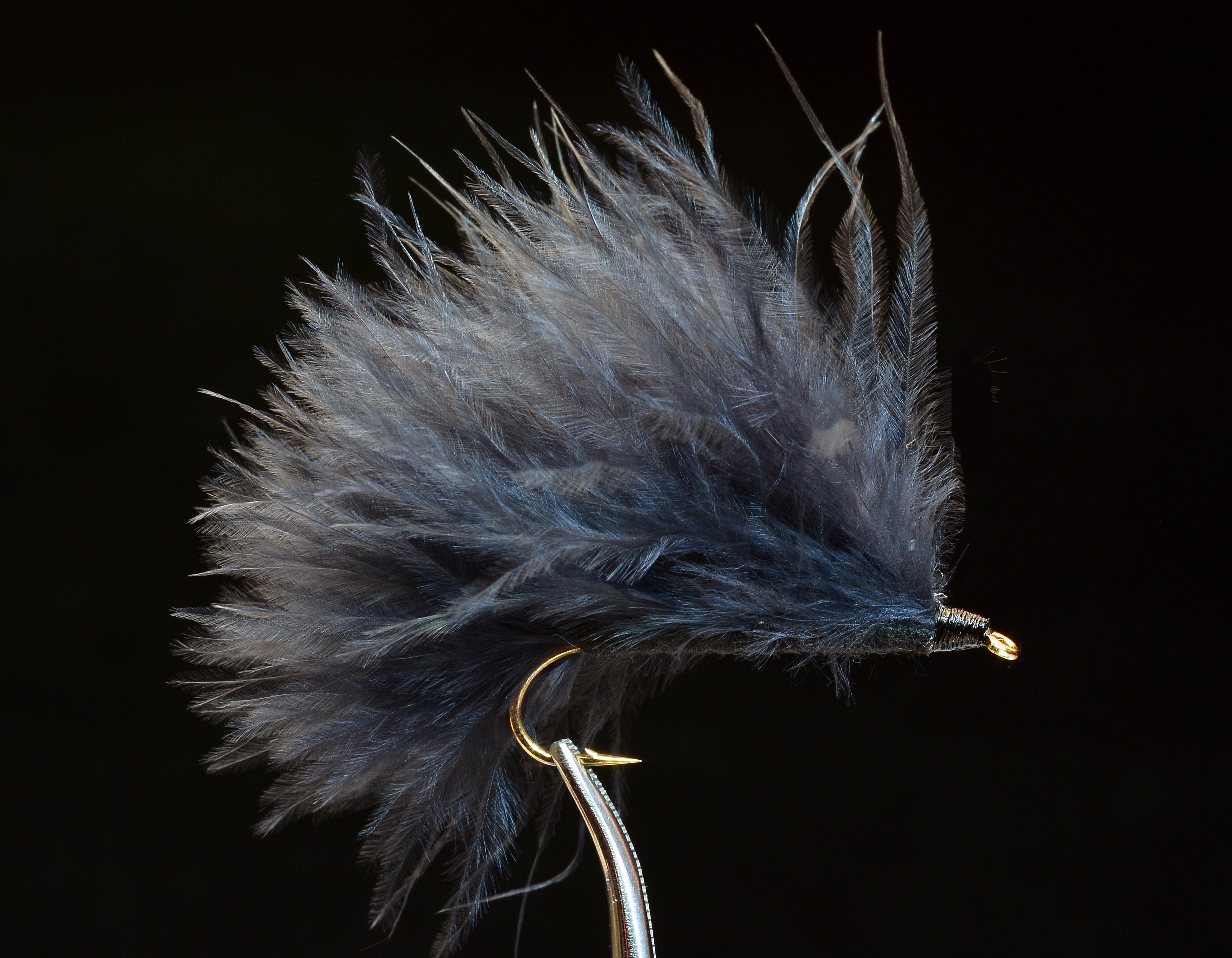
Weight placement matters just as much as weight amount. The Balanced Leech and Balanced Pine Squirrel Streamer illustrate this clearly. Both patterns use weight positioned beyond the hook shank and eye, so the fly hangs parallel to the bottom rather than nose-down like a conventional nymph under an indicator. That one design choice changes how the fly looks to a fish in still or slow water. A parallel hang is more lifelike. A perpendicular hang, where the fly points straight up and down, is not what a real leech looks like suspended in the water column. Same concept, different weight position, completely different presentation.
The Articulated Stonefly Nymph carries an explicit weight decision in its tying notes: feel free to skip the lead wire step entirely, or add heavier wire if you need to push the fly deeper. That is not an afterthought. It is an acknowledgment that the correct version of this fly depends on the depth and current you are fishing. A tyer who skips the wire step has a high-riding fly that works in shallow, fast pocket water. One who doubles the wire load has a fly that can track the bottom of a deep slot. They are both called the same thing, but they fish in different places in the water column.
Profile determines the silhouette the fish sees and how much water resistance the fly creates. A slim nymph body slips through current with minimal drag and sinks quickly. A wide, buggy thorax creates resistance and slows the sink rate while giving the fly a different visual mass. The Articulated Stonefly Nymph notes allow for tying it as slim or as buggy as you want. A slim version cuts through fast water and tracks deep. A buggy version pushes water, moves differently, and presents a bigger meal image in slower or stained conditions.
Materials affect movement, durability, and surface behavior. The Articulated Stonefly Nymph illustrates this in a way that applies broadly: lead wire added under the body changes not just weight but how the body material drapes and moves in the current. A tightly wound underbody of lead wire flattens the profile and stiffens the body segment, while skipping the wire leaves the body material free to pulse and flex with every change in current speed. Same materials, different underbody choice, different behavior in the drift. That principle extends to every pattern where a recipe offers a substitution or a tying option: each choice is a functional decision, not a cosmetic one.
None of these are decorative choices. Every material decision in a recipe either helps or hurts the fly's ability to do its job at a specific depth and current speed.
Compare Two Versions Before You Choose
The good news is that evaluating two versions of the same pattern before you choose one is a simple three-step process.
Step one: decide what depth and current speed you need to reach. Before you open your box, look at the water in front of you. Where are the fish likely to be? If you are looking at a fast run with two feet of water over a gravel bottom, you need a fly that sinks quickly and stays deep through the drift. If you are fishing a shallow, slow tailout, you need a fly that will stay in the mid-column without crashing into the bottom.
Step two: check whether the fly's weight and hook style will put it there. A standard nymph hook with no weight rides high. A tungsten-bead fly on the same hook sinks faster. A jig hook with a slotted bead rides hook-point-up and resists snagging, which is useful when you want to drag the fly along the bottom. The Balanced Leech uses exactly this setup: a slotted bead on a jig hook so the fly rides point-up and tracks along the bottom without constantly hanging up in rocks. The Balanced Pine Squirrel Streamer works on the same principle, giving you the same hook-point-up presentation with a different profile and material character.
Step three: consider what the profile and materials communicate at that depth. A slim profile at depth looks like a natural nymph in the feed lane. A wide, webby hackle at the surface tension looks like an emerging insect struggling to break through the film. Matching the profile and material behavior to the depth and life stage you are imitating is how a fly becomes convincing rather than just present.
The common failure mode here is skipping all three steps and simply reaching for the named pattern without asking which version. You tie on a streamer and find out twenty minutes later that the fly is riding too high in the water column for the conditions in front of you. The fix is not to change the fly entirely. It is to swap to the version built for that depth and current, which the recipe already accounts for.
Fly Explorer Pro
Find A Pattern| Tie Better Flies | Catch More Fish
Fly Explorer Membership
Over 550+ Patterns to Learn & Tie
- Explore and Learn 550+ Patterns and How to Tie Them
- Patterns for All Species on the Fly
- Integrated Entomology Info for Each Pattern
- Tying Recipes, Substitutions and More
- Expert Fishing Tips on Each Pattern
- and More!
Was $72/Year | Now Only $36/Year
Was $249 | Now Only $149 Lifetime Access
A Worked Side by Side Fly Comparison
Here is how this plays out on the water with a pattern almost every angler carries: the Pheasant Tail Nymph.
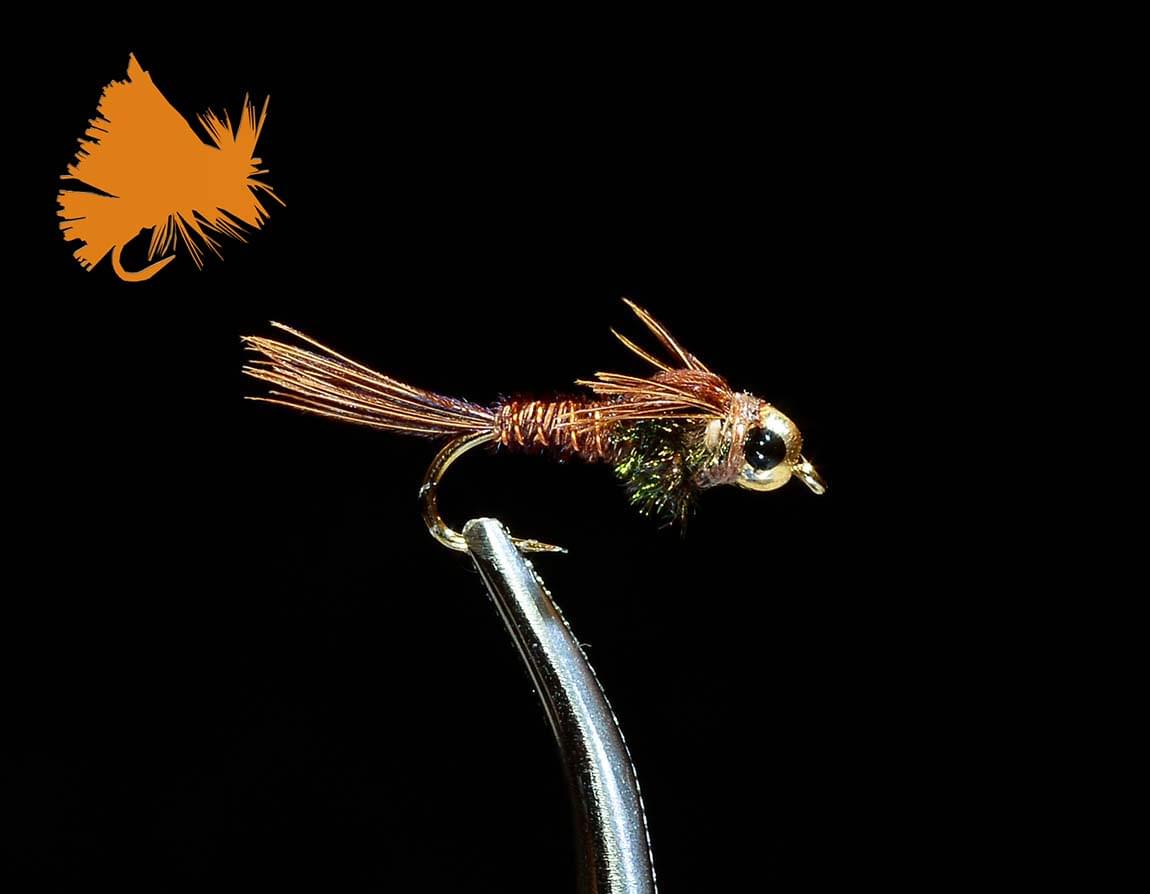
Picture a mid-depth run, maybe two feet of water, moving fast enough that you can see the riffles breaking over rocks upstream. You know pheasant tail nymphs are reliable on this water. You have two in your box. One is a standard unweighted Pheasant Tail with a thread head. The other is a Beadhead Pheasant Tail Nymph with a gold tungsten bead at the thorax.
The angler who ties on the unweighted version in this situation is fishing a fly that will spend most of its drift in the upper third of the water column. Even with split shot on the tippet, the fly itself provides no forward weight to drive the hook point down toward the bottom. It drifts naturally, but naturally means high when the current is fast. In a gentle spring creek or a slow flat, that version is exactly right. Here, in this fast run, it is riding over the feeding fish.
The beadhead version changes the equation. The tungsten bead sits at the thorax, forward of center, and drives the hook point down as the fly drifts. It sinks faster, reaches the bottom more quickly, and stays in the lower feeding zone through more of the drift. The bead also adds a small flash element at the head, which approximates the shiny wing case of a natural nymph. And because the bead sits over the thread head, it protects the tie-off point and makes the fly more durable.
Beyond the weight difference, the silhouette changes slightly. The beadhead version has more visual mass at the front. Whether that is a feature or a drawback depends entirely on the conditions. In clear, low water, that extra glint can spook pressured fish. In faster or stained water, it is an asset that helps trout locate the fly.
This is not a comparison of which fly is better. It is a comparison of which version fits the specific water in front of you. The beadhead belongs in fast, deeper runs. The unweighted version belongs in slow, shallow water, or in clear tailwaters where trout are watching carefully and a flash point at the head reads as wrong.
The decision takes thirty seconds once you know what to look for. It starts with the run in front of you, not the name on the fly.
Build Functional Variation Into a Fly Box
Understanding fly variations is only useful if your box reflects it. A well-organized fly box is not just a collection of named patterns. It is a set of functional options that cover different depths, water speeds, and presentations.
The simplest application is to carry both a weighted and an unweighted version of your most-used patterns instead of doubling up on the same version. Two Beadhead Zebra Midges and zero unweighted midges gives you one depth window on a midge hatch. A beadhead version and a standard thread-head version gives you two. When fish are feeding near the surface film during a midge hatch, the unweighted or lightly-weighted version fishes where the fish are. When the hatch has not started and trout are feeding subsurface, the beadhead sinks into their zone. Same pattern family, different functional coverage.
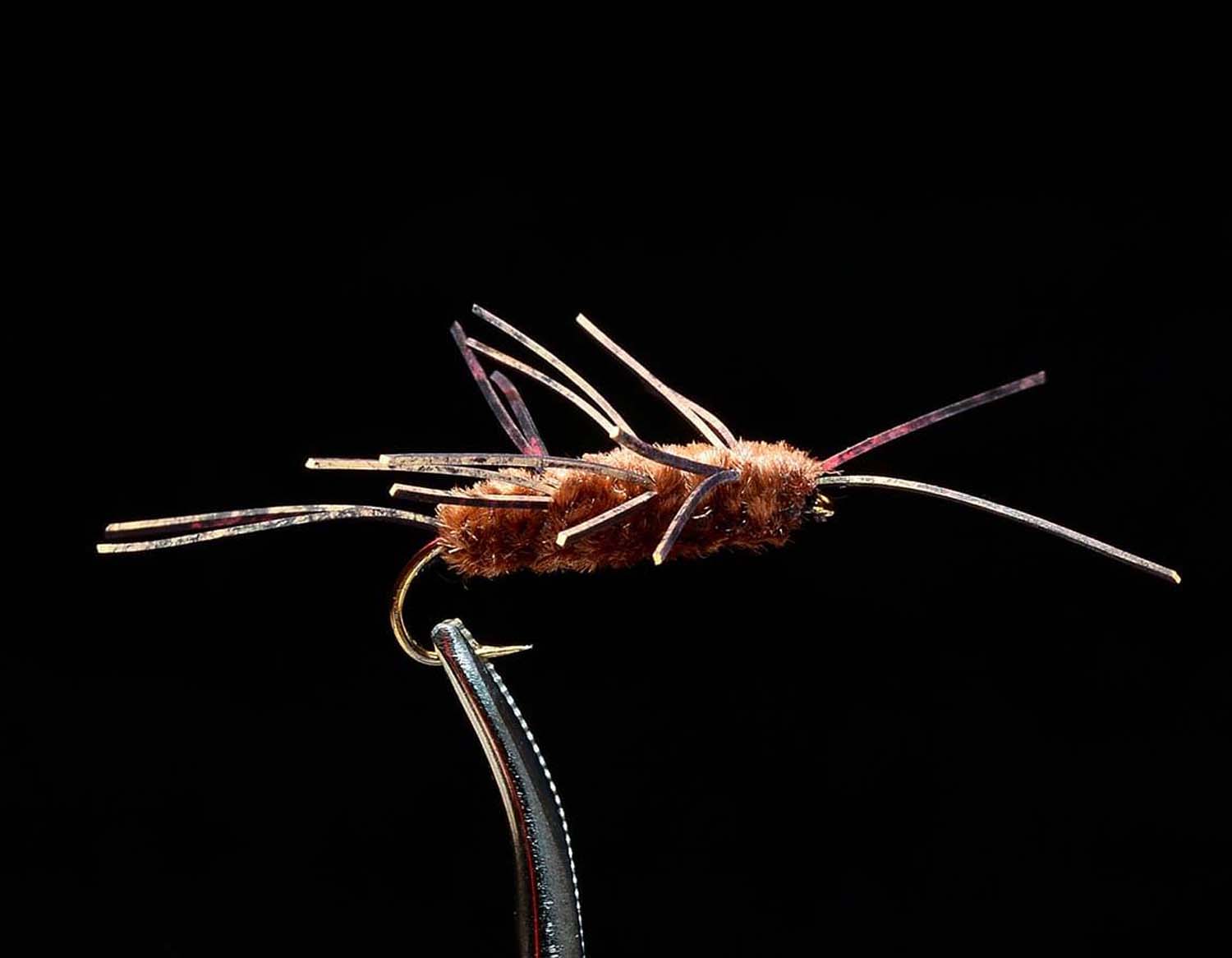
Pats Rubberleg Stonefly is a good example of a fly that earns its own dedicated slot based on functional role. It is weighted, has a wide profile from the rubberleg material, and pushes water. It is designed for fast, broken water where trout are looking for a large, high-calorie meal drifting through. A standard thread-body stonefly nymph fished in the same water simply does not reach the same depth or create the same movement. These are not redundant flies. They cover different conditions.
The Beadhead Woolly Bugger is another case where the beadhead changes the job rather than just adding a decoration. Without the bead, a Woolly Bugger rides higher and swings or strips through the mid-column. With a tungsten bead, the fly gets down faster and is more effective when trout are holding tight to the bottom in cold water or heavy current. Carrying both means you can fish the same style of fly in different conditions without rigging from scratch.
For stillwater or slow river work, the Balanced Leech and Balanced Pine Squirrel Streamer operate in a category of their own. Their weight-forward design on a jig hook creates a parallel hang under an indicator that no standard-hung streamer can replicate. Putting one of these in a box you plan to fish on a reservoir or a slow spring creek is not redundant with your other streamers. It is filling a specific presentation gap that conventional flies cannot cover.
Before a trip, go through your box one pattern at a time and ask what each fly actually does, not what it is called. What is its sink rate? What does the profile look like at depth? What does the material do in moving water versus slow water? Answering those three questions for each slot in your box will show you where you have real variation and where you have the same fly wearing different names.
If you want a tool that makes this comparison systematic rather than something you have to work out from scratch each time, Fly Explorer lets you filter and compare patterns by insect, life stage, profile, weight, and materials. It is built for exactly this kind of decision, so you are choosing by function rather than guessing by name.
And if you want to build the broader skills around reading water, understanding trout behavior, and connecting fly selection to presentation, Trout University walks through those concepts in sequence as a complete fly-fishing learning path.
Recommended Reading
Once you understand how fly variations change function, the next question is how to connect those functional choices to what the fish are actually eating. Knowing the Insect Is Only Half the Answer picks up exactly there, teaching why identifying the hatch is just the starting point and what else you need to know before you choose your fly.
If you are ready to apply both fly selection and water-reading skills together in a more active context, What Makes a Good Search Fly? is worth reading next. It walks through how to choose a fly that earns its place in the water before a hatch starts, which is where functional variation matters most.