
Euro Nymphing Guide – Spring Fly Fishing
A 3 Phase Approach to Euro Nymphing in Spring Conditions
Most anglers struggle in spring because they treat it as one season. They tie on the same flies in March that they fish in May, wonder why the results are inconsistent, and chalk it up to “tough conditions.” The reality is that spring is three distinct phases, each with different water conditions, different fish behavior, and different demands on your technique. Euro nymphing happens to be one of the most effective ways to fish all three of those phases, but only if you adjust your approach as the season evolves.
This guide breaks spring into early, mid, and late phases and walks through how to adapt your euro nymphing across all three pillars of fly fishing: location, fly selection, and presentation. Whether you have been euro nymphing for years or you are curious about trying tight-line methods for the first time, the goal here is the same. Give you a framework for making better decisions on the water so you catch more fish this spring.
You do not need a $900 rod to start. You do not need a competition-level leader formula. You need to understand how the technique works, why it works especially well in spring, and how to adjust as conditions change week to week.
If you want to build your skills with structured, step-by-step instruction, Trout University VIP gives you free access for 30 days to our full library of courses, including our complete euro nymphing curriculum.
Before diving into the phase-by-phase breakdown, it helps to understand why euro nymphing techniques are so well suited to spring conditions in the first place.
Euro nymphing (also called tight-line nymphing or contact nymphing) replaces the traditional strike indicator with a colored sighter section of monofilament. You maintain direct contact from your rod tip to your flies throughout the entire drift. No bobber. No slack. No guessing.
That direct connection creates three advantages that matter most in spring:
Better depth control. Spring trout spend a lot of time near the bottom, especially early in the season. Without an indicator sitting on the surface and dragging your flies through the water column at surface speed, your nymphs can sink faster and ride at the correct depth longer. The current at the bottom of a river can move up to five times slower than at the surface. An indicator forces your flies to move at surface speed. Euro nymphing lets them move at bottom speed.
Better strike detection. Cold-water takes in early spring are subtle. A trout might barely open its mouth. With a tight-line connection, you feel that hesitation or see the sighter pause. An indicator absorbs those micro-takes and you never know they happened.
Access to water other methods cannot reach. Euro nymphing works at close range, typically 10 to 20 feet. That close working distance lets you fish pocket water, tight seams behind boulders, narrow slots between rocks, and fast riffles that are nearly impossible to fish effectively with an indicator rig. On pressured rivers, this water often holds the most willing fish because nobody else can reach them.
These three advantages shift in importance across the spring phases. Early spring, sensitivity dominates. Mid spring, versatility and water coverage take over. Late spring, depth penetration and access to overlooked water become the edge. Understanding that progression is the key to fishing spring well with a euro rig.
The Three Phases of Spring Through a Euro Nymphing Lens
Spring fly fishing is not one season. It is three. Each phase is defined by changes in water temperature, clarity, flow, insect activity, and fish behavior. Recognizing which phase you are in on any given day drives every decision you make.
Early Spring
Early spring looks and feels a lot like late winter. Water is still clear and low. Temperatures are cold but rising. Fish are transitioning out of conservation mode, where they spent the winter holding in deep, slow pools to conserve energy. They are becoming more active, but they are not aggressive yet.
Insect activity is limited to midges and blue-winged olives (BWOs/Baetis). Takes are subtle and deliberate. Fish are concentrated in specific spots, not spread across the river.
Euro nymphing edge in early spring: The tight-line connection detects takes that indicators miss entirely. When a lethargic trout in 40-degree water barely opens its mouth on your size 20 midge, you need to feel that take or see the sighter hesitate. This is where euro nymphing earns its reputation.
Euro Nymphing Course
Catch Fish Consistently
Learn the art of Euro Nymphing
and Catch More Fish Than You Ever Thought Possible
- 9 Units & 38 Lessons
- 30+ HD Videos
- Learn from James Carlin with 11 yrs+ experience
- Master Tight-Line Techniques
- Lifetime access & coupons for over $225 in savings
- Perfect Your Gear Setup and Drift
Mid Spring
Mid spring is the transition. Water temperatures are climbing. Insect activity diversifies as caddis, larger mayflies, and stoneflies begin joining the midges and BWOs. Fish shift from survival mode to active feeding mode. They start spreading out into runs, pocket water, side channels, and riffles, because the increasing food supply justifies the energy cost of holding in faster water.
Euro nymphing edge in mid spring: Versatility and systematic water coverage. Fish are no longer concentrated in a few deep holes. They are scattered across many water types. Euro nymphing lets you move efficiently through varied water, adjusting depth and weight on the fly without stopping to re-rig an indicator setup. The competitive angling principle of “breaking apart the water” and fishing it methodically pays huge dividends in this phase.
Late Spring
Late spring approaches or enters runoff. Snowmelt pushes flows higher. Water becomes off-color, sometimes significantly stained. Temperatures continue rising. Fish become highly opportunistic because visibility is reduced and the abundance of dislodged food makes them less selective. They push to edges, behind structure, into side channels, and into any soft water adjacent to the main current.
Euro nymphing edge in late spring: Depth penetration and access. Heavy, tungsten-beaded euro nymphs punch through fast, turbid water to reach fish holding tight to the bottom behind structure. You can fish pockets and seams in heavy water that are completely unfishable with an indicator. The close working distance means you can wade into position and fish water that most anglers walk past.
Location: Where to Fish Each Phase
Location is the first pillar. If you are not fishing where the fish are, nothing else matters. Euro nymphing changes the location equation because it opens up water types that indicator rigs struggle with.
Trout University
The Best Way to Master Fly Fishing for Trout
Everything you need to learn how to fly fish for trout.
From fly selection to presentation and location, all in one place.
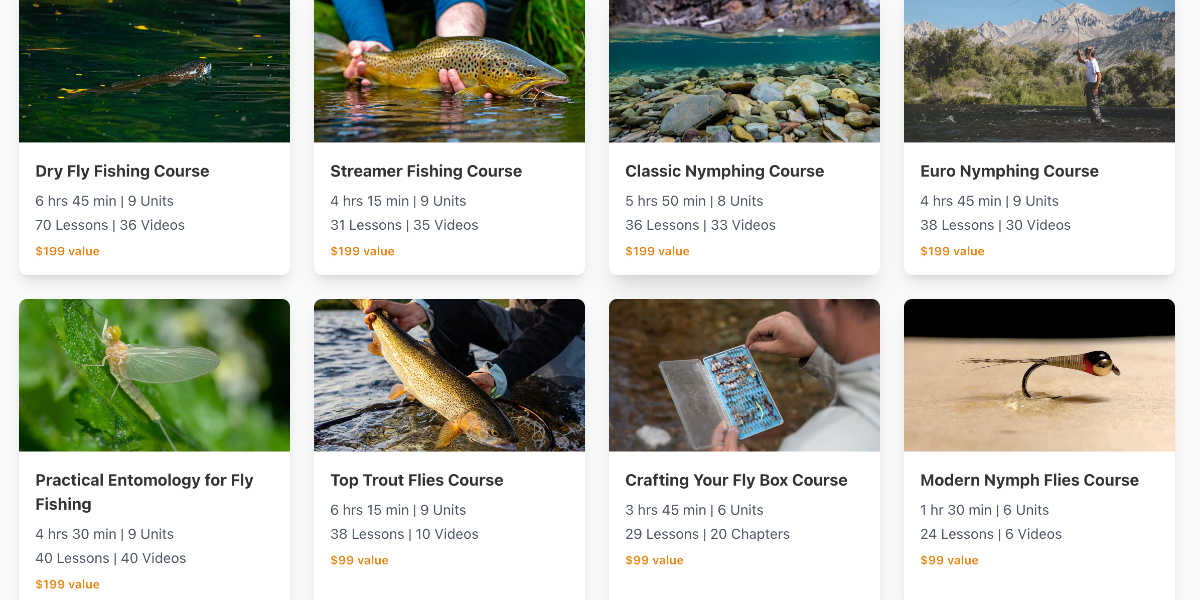
8 Premium Courses
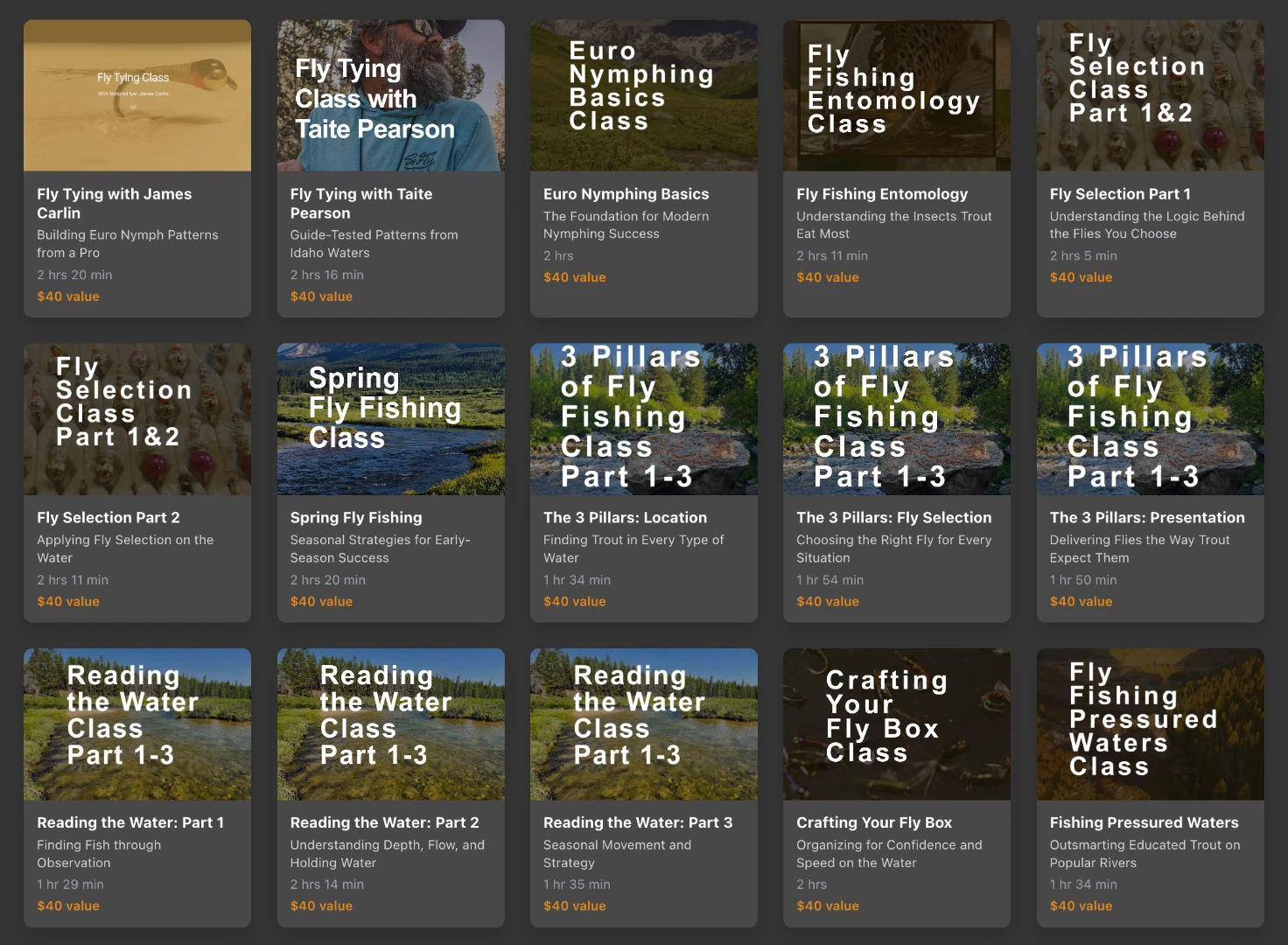
15 Video Classes
1-2hr Power Classes on Key Subjects and solidify your learnings
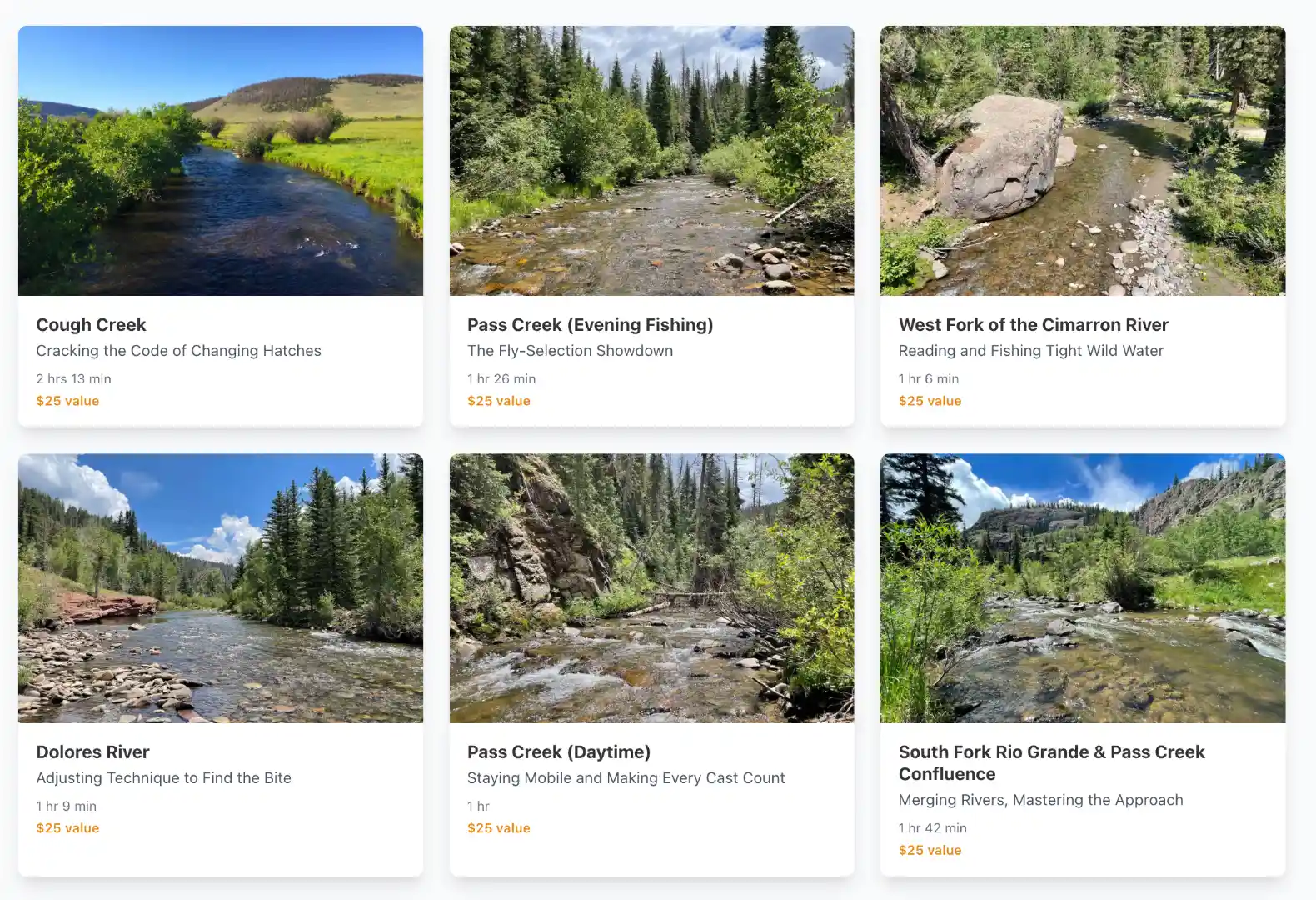
6 Streamside Courses
10+ Hours of Fishing to See Our Methods in Action
No Credit Card Required or Auto Renewal
Why Euro Nymphing Expands Your Water Options
A traditional indicator rig needs a certain amount of consistent current speed and depth to function well. The indicator needs room to float, the flies need time to sink, and the whole system works best in moderate runs and pools.
Euro nymphing works in all of that water plus pocket water, fast riffles, tight seams, shallow runs with broken surfaces, and the edges of heavy rapids. On pressured rivers, where every angler with an indicator is fishing the same obvious runs and pools, the ability to fish pocket water and tight structure is a massive advantage. Those pockets hold fish that rarely see a fly.
The close working distance of euro nymphing (typically 10 to 20 feet, sometimes closer) also lets you read water in finer detail. You can see the subtle current breaks, the depth changes, and the soft spots behind rocks that are invisible from 40 feet away.
Early Spring Location Strategy
In early spring, fish are concentrated. They are holding in the deepest, slowest water available, often in the same spots they occupied all winter. Think deep pools, slow runs, and the soft water at the heads and tails of pools where the current cushion provides a break.
Start close and easy. When you are learning euro nymphing or fishing unfamiliar water, begin with the closest, most accessible holding water. Deep, slow pools and the tops of buckets are ideal starting points because takes are most visible and the drift is easiest to manage.
Work outward systematically. Once you have fished the obvious holding water, expand to adjacent runs and the transitions between fast and slow water. Fish in early spring will not be far from their winter lies, but as temperatures tick up during the day, some will slide into slightly faster water to intercept emerging insects.
Key locations for early spring euro nymphing:
- Deep pools and slow runs (the same water that held fish in winter)
- Hydraulic cushions behind large boulders in moderate current
- The soft water at the head of a pool where faster water transitions to slower
- Tailouts where depth decreases gradually, concentrating drifting insects
- Any water where you can see or feel the bottom at 2 to 4 feet of depth
Mid Spring Location Strategy
As water warms and insect activity increases, fish spread out. This is the phase where euro nymphing’s ability to cover varied water types efficiently becomes the primary advantage.
Break the water into grids. Borrow the competitive angling approach of dividing a stretch of river into small sections and fishing each one methodically. Target every possible holding lie before moving on. This ensures you do not overlook fish that have moved into less obvious spots.
Side channels and braided sections. These receive almost zero fishing pressure on most rivers. As fish spread out in mid spring, side channels become prime water. They often have moderate depth, good structure, and plenty of insect activity. Euro nymphing is ideal here because the close working distance matches the typically narrower water.
Pocket water comes alive. As fish move into faster water to feed, the pockets behind and between rocks become productive. Each pocket is a small holding lie. Euro nymphing lets you drop a fly into a pocket the size of a bathtub, get it to the bottom in one or two seconds, and move to the next pocket. An indicator rig cannot do this efficiently.
Key locations for mid spring euro nymphing:
- Runs and feeding lanes with moderate current
- Pocket water behind and between boulders
- Side channels and braided sections
- Riffles where emerging insects concentrate
- Seams where fast water meets slow water
- The inside bends of the river where current slows and food collects
Late Spring Location Strategy
Late spring, especially during runoff, pushes fish to the margins. The main current is often too fast and too dirty for comfortable holding. Fish seek refuge in softer water while still positioning themselves to intercept the flood of dislodged food.
Fish the edges. Bank-side lies, eddies, and the soft water behind any structure become the primary targets. Fish will hold surprisingly close to the bank in high water. You can sometimes wade the edge and fish water that is literally at your feet.
Structure is everything. Every boulder, log, bridge piling, and bank indentation creates a current break. Fish stack behind these features. Euro nymphing lets you drop a heavy fly right into the cushion behind a rock in heavy current, something that is nearly impossible with an indicator.
Tributaries and smaller water. When the main river blows out, smaller tributaries often remain fishable. These streams may be running higher than normal but still clear enough to fish. Euro nymphing’s close-range effectiveness makes it ideal for smaller water.
Key locations for late spring euro nymphing:
- Soft edges along the banks
- Behind boulders and structure in heavy current
- Eddies and backwaters adjacent to the main flow
- Side channels that receive overflow from the main river
- Tributary streams that remain fishable during main-stem runoff
- Any pocket of slower water surrounded by fast current
When euro nymphing is not the right tool for location: If you are facing a wide, slow flat where fish are holding 40 to 50 feet away, euro nymphing struggles. The technique works best within about 20 feet. For wide flats, switch to an indicator rig or a dry-dropper setup with a tapered fly line. Some anglers carry a second reel with a tapered line for exactly this situation.
Fly Selection: Weight First, Pattern Second
Fly selection for euro nymphing follows a fundamentally different hierarchy than classic nymphing. Understanding this hierarchy is the single biggest shift in thinking for anglers coming from indicator fishing.
The Euro Nymphing Fly Selection Hierarchy
- Weight (most important): Does the fly get to the correct depth in the current you are fishing?
- Presentation: Is the fly drifting naturally at the right speed and depth?
- Size and profile: Does the fly approximate the size and shape of what fish are eating?
- Color (least important): Is the color in the right ballpark?
Weight dominates because a perfectly colored, perfectly sized fly that drifts two feet above the fish’s head will never get eaten. A fly that is the wrong color but at the right depth will get eaten regularly. This is not theory. It is the consistent experience of competitive anglers who have tested it under pressure across thousands of sessions.
Impressionistic by Design
Euro nymphs are built to be impressionistic rather than imitative. A well-tied Frenchie nymph could pass for a mayfly nymph, a caddis larva, or a generic aquatic insect depending on what the fish wants to see. A Walt’s Worm could be a cased caddis, a freshwater shrimp, or just “something edible.” The guiding principle is that close enough is good enough when nymphing.
This does not mean fly selection is irrelevant. It means you narrow the menu by season and conditions, pick a fly that is in the right ballpark, and then focus your energy on getting the weight and depth right. If you are not catching fish, adjust weight before changing the fly pattern.
Bead Weight as the Primary Variable
The key innovation of euro nymph design is tying the same pattern in multiple bead weights. A size 16 Frenchie tied with a 2.3mm tungsten bead fishes completely differently than the same fly tied with a 3.3mm bead. The pattern is identical. The depth it reaches in a given current is not.
In our experience at The Catch and The Hatch, carrying three bead weight variations per pattern and hook size covers the vast majority of spring conditions. For example:
- Light (2.3-2.5mm bead): Slow, shallow water; early spring low flows
- Medium (2.8-3.0mm bead): Moderate runs and pockets; mid spring general use
- Heavy (3.3-4.0mm bead): Fast, deep water; late spring high flows
This approach means you can fish the same trusted pattern across wildly different water types simply by swapping bead weight. It is more efficient than carrying dozens of different patterns.
Early Spring Fly Selection
Early spring insect activity is dominated by midges and blue-winged olives (BWOs/Baetis). These are small insects, and your flies should match that scale.
Sizes: #18 to #22 for nymphs. Some situations call for #24, but #18-20 covers most early spring fishing.
Bead weights: Lighter beads (2.3-2.8mm) for the slower, shallower water where fish are holding. Early spring water is typically low and clear, so you do not need the heaviest flies to reach the bottom.
Effective patterns:
- Thread body nymphs in olive, black, or brown (midge and BWO impressions)
- Small Frenchies in #16-18 (versatile searching pattern)
- France Fly in olive or brown #16-20 (excellent midge and Baetis impression)
- Perdigons in #18-20 (slim profile sinks fast even with lighter beads)
- Zebra midge or similar midge patterns in #18-22
Starting rig suggestion: A small BWO-style nymph (like a Mercury Baetis or olive France Fly) as the top/working fly, with a slightly heavier Frenchie or Perdigon as the bottom/anchor fly. This covers the two most likely food sources while keeping the rig light enough for early spring conditions.
Mid Spring Fly Selection
As water warms and insect diversity increases, your fly box needs to expand. Caddis, larger mayflies, and stoneflies join the menu alongside the continuing midge and BWO activity.
Sizes: #14 to #18 for most patterns. Stonefly nymphs can go to #10-12.
Bead weights: Medium range (2.8-3.3mm) as a starting point. Water is moving faster and fish are spreading into more varied current, so you need more weight to reach them.
Effective patterns:
- Frenchies in #14-16 (the quintessential euro searching pattern)
- Pheasant tail variations in #14-18 (natural profile, versatile)
- Walt’s Worm in olive or gray #14-18 (excellent movement in the water, covers multiple food sources)
- Perdigons in #14-16 (fast-sinking for riffles and faster runs)
- GTI Caddis or Carlin Caddis in #12-14 (as caddis activity increases)
- Pat’s Rubber Legs or similar stonefly nymph in #10-12 (anchor fly for deeper water)
- Worm patterns (Squirmy Worm, Sili Worm) in #10-12 as water begins to color up
The transition to larger flies: Mid spring is when you start carrying patterns that can serve as heavy anchor flies. A Pat’s Rubber Legs with lead wire and a 3.5mm bead gets deep fast and imitates the stonefly nymphs that are becoming increasingly active as they migrate toward the banks for emergence.
If you want a proven starting point for your euro nymph fly box, the Euro Nymph Assortment is built around the same patterns and weight variations we use on the water. It covers the core categories you need without requiring you to tie or source dozens of individual patterns.
Late Spring Fly Selection
Late spring, especially during or approaching runoff, calls for bigger, heavier, and often brighter flies. Fish are opportunistic. Visibility is reduced. The food supply includes dislodged worms, large stonefly nymphs, and anything else the high water rips from the substrate.
Sizes: #10 to #14 for most patterns. Worm patterns and stoneflies can go to #8.
Bead weights: Heavy (3.3-4.0mm). You need to punch through fast, turbid water to reach fish holding tight to the bottom behind structure.
Effective patterns:
- Heavy stonefly jig nymphs (Pat’s Rubber Legs, large Pheasant Tail variations) in #10-12
- Squirmy Worms and Sili Worms in red, pink, or chartreuse #10-12
- Blowtorch in #10-12 (bright attractor that stands out in murky water)
- Euro Hare’s Ear in #10-14 (bulkier profile for stained water)
- Egg patterns in peach or orange (effective when other food sources are dislodged)
- Large Frenchies or Megamay patterns in #12-14 with 3.5-4.0mm beads
Single fly vs. two-fly rigs: In very fast, turbulent pocket water during late spring, consider fishing a single heavy fly rather than a two-fly rig. A single fly is easier to control in chaotic currents, reduces tangles, and maintains better contact. When the water is this fast, conflicting currents can pull two flies in opposite directions, causing drag and missed strikes.
The Four Dominant Euro Pattern Categories
Competitive anglers’ fly boxes consistently contain the same four pattern styles, varied across weight, color, and size:
- Worm patterns (Walt’s Worm, Squirmy Worm, Sili Worm)
- Pheasant tail variations (Frenchie, CDC Pheasant Tail, Two-Tone Pheasant)
- Perdigon-style flies (Thread Body Perdigon, Quilldigon, QBD Perdigon)
- French-style nymphs (France Fly, Wingcase France Fly)
Add stonefly nymphs and caddis patterns for spring, and you have a fly box that covers 90% of situations. The key is not carrying one of each. It is carrying each pattern in multiple bead weights and two or three colors.
Building a Spring Euro Box: A Practical Summary
| Spring Phase | Primary Insects | Hook Sizes | Bead Weights | Key Patterns |
|---|---|---|---|---|
| Early Spring | Midges, BWOs | #18-22 | 2.3-2.8mm | France Fly, Thread Body, small Perdigon, small Frenchie |
| Mid Spring | Midges, BWOs, Caddis, Stoneflies | #14-18 | 2.8-3.3mm | Frenchie, Pheasant Tail, Walt’s Worm, Perdigon, Pat’s Rubber Legs |
| Late Spring | Stoneflies, Caddis, Worms, Attractors | #10-14 | 3.3-4.0mm | Heavy stonefly nymphs, Squirmy Worm, Blowtorch, Euro Hare’s Ear, Egg |
Our Euro Nymphing Course goes deep into fly selection strategy, including how to build a complete euro fly box organized by weight, pattern type, and season. It is the most comprehensive resource we offer on this topic.
Presentation: Where Euro Nymphing Separates from Everything Else
Presentation is the heaviest section of this guide because it is where euro nymphing fundamentally separates from classic nymphing. The mechanics are different. The casting is different. The way you control depth is different. And the way you detect strikes is different. Getting presentation right is what turns euro nymphing from “an interesting technique” into a fish-catching machine.
Why Removing the Indicator Changes Everything
This is worth understanding clearly, because it explains why euro nymphing works so well in spring.
A traditional strike indicator sits on the surface of the water. The surface current is the fastest current in the river. Your flies are near the bottom, where the current can be three to five times slower. The indicator drags your flies through the bottom zone at an unnaturally fast speed. Fish see your nymphs zipping past at a speed that no natural insect would travel. Some fish eat anyway, but many do not.
When you remove the indicator, the only thing connecting your rod to your flies is thin tippet and a sighter. There is almost no surface drag. Your flies can drift at the actual speed of the bottom current. They spend more time in the strike zone. They look more natural. And you detect strikes through direct contact rather than watching a bobber.
In spring, when water temperatures are cold and fish are not chasing food aggressively, that natural drift speed and extended time in the strike zone make a measurable difference in the number of fish you hook.
The Euro Cast
Euro nymphing does not use a traditional fly cast. There is no false casting, no tight loops, no hauling. The cast is more of a lob or a controlled flip that places the flies upstream and slightly across from your position.
The tuck cast is the most important cast to learn. You stop the rod high on the forward stroke, which causes the flies to “tuck” under the leader and enter the water first. Fly-first entry means your nymphs start sinking immediately rather than landing on the surface and slowly pulling under. In spring, when every second of depth penetration matters, the tuck cast is not optional. It is essential.
Casting distance is short. Most euro nymphing happens within 10 to 20 feet. This is an advantage, not a limitation. Short casts mean better accuracy, better contact, and better strike detection. If you are new to the technique, start even closer. Fish water that is 8 to 12 feet away until you develop a feel for the drift and the sighter.
Core Presentation Mechanics
These are the fundamentals that make euro nymphing work. They apply across all three spring phases, with adjustments for each.
Maintain a tight line at all times. From the moment your flies hit the water, there should be slight tension between your rod tip and your flies. Not so much tension that you pull the flies unnaturally, but enough that you can feel the bottom and detect a take. Slack is the enemy. If your sighter shows a U-shape or sag, you have lost contact and you are missing takes.
Your rod tip regulates depth. Lower the rod tip to let flies sink deeper. Raise it to fish shallower. This is the euro nymphing equivalent of moving your indicator up or down the leader, but you can do it instantly, mid-drift, without stopping to re-rig. In deep holes, you can even submerge the sighter into the water to gain additional depth. Fish do not appear to be spooked by sighter material in the water.
Match bottom speed, not surface speed. This is one of the most common mistakes anglers make when transitioning from indicator fishing. The surface current moves fast. The bottom current moves slow. Your flies need to move at bottom speed. Lead the flies through the water at a pace that lets them tick along the substrate naturally. If you are moving your rod tip at the same speed as the surface current, your flies are moving too fast.
Find bottom first, then raise up. On your first drift through a new piece of water, let the flies sink until you feel them tick the rocks on the bottom. Then raise your rod tip approximately six inches. This puts your flies in the strike zone, which is the narrow band just above the substrate where fish are feeding. Use the color transitions on your sighter to measure how much you raised up, so you can repeat the same depth on subsequent drifts.
Lead the flies. In euro nymphing, you lead the flies through the water rather than letting them drift freely. Your rod tip stays slightly ahead of or directly above the flies, guiding them through the current. This creates a slight amount of intentional drag, but it also maintains the tight-line connection that makes strike detection possible. In spring’s higher water, fish do not care about minor drag.
Trout University
The Best Way to Master Fly Fishing for Trout
Everything you need to learn how to fly fish for trout.
From fly selection to presentation and location, all in one place.
8 Premium Courses
15 Video Classes
1-2hr Power Classes on Key Subjects and solidify your learnings
6 Streamside Courses
10+ Hours of Fishing to See Our Methods in Action
No Credit Card Required or Auto Renewal
Strike Detection: The Skill That Takes Practice
Strike detection in euro nymphing is roughly 50% visual and 50% feel. Both channels work together.
Visual detection: Watch your sighter. Any pause, hesitation, twitch, or change in the sighter’s drift path could be a take. In cold early spring water, takes are extremely subtle. The sighter might pause for a fraction of a second. If you wait for a dramatic pull, you will miss most of your fish. Set the hook on anything that looks unusual.
Feel detection: As you develop experience, you will begin to feel takes through the rod. A slight tick, a momentary heaviness, a sensation that something changed. This “feel” is one of the most rewarding aspects of euro nymphing, and it develops faster than most people expect. Heavier flies in faster water transmit feel more clearly, which is one reason we recommend starting with heavier setups.
The default rule: When in doubt, set the hook. A gentle upward lift of the rod is all it takes. If it was a rock, you lose nothing. If it was a fish, you just caught one you would have missed with an indicator.
Early Spring Presentation Adjustments
Early spring demands patience and sensitivity. Fish are sluggish. Takes are soft. The water is slow and clear.
- Fish slow and deep. Use lighter flies (2.3-2.8mm beads) but give them time to sink. Longer drifts through deeper water are more productive than quick passes.
- Default to a 90-degree presentation. Cast directly upstream or slightly upstream and across. This gives your flies the longest possible drift through the strike zone.
- Extend your drifts. In slow water, let the drift continue past you and into the swing. The swing phase, where flies naturally lift off the bottom, can mimic emerging insects and trigger takes from fish that ignored the dead drift.
- Expect subtle takes. Cold-water trout barely move to eat. Your sighter might hesitate for half a second. Stay focused and set on anything.
- Start with the easiest water. Deep, slow pools and bucket tops are the best places to develop your feel for the technique. Takes are most visible, the drift is most forgiving, and you can focus on fundamentals without fighting heavy current.
Mid Spring Presentation Adjustments
Mid spring is when euro nymphing starts to feel dynamic. Fish are more active, water is more varied, and you need to cover ground.
- Increase bead weight. As water speeds up and fish spread into faster lies, step up to medium beads (2.8-3.3mm) to maintain bottom contact.
- Use upstream presentations with intent. Cast upstream at an angle, establish contact immediately, and track the flies through the target zone. Every cast should have a plan: which seam are you targeting, what depth are you trying to reach, where do you expect the take.
- Jig the flies. Euro rigs allow you to give flies movement by subtly lifting and dropping the rod tip during the drift. This jigging action can trigger strikes from fish that are actively feeding but ignoring a dead-drifted fly. It is especially effective with soft hackle patterns and Walt’s Worms, where the materials pulse with each movement.
- Apply the three-drift rule. If a fly has not produced a response in three good drifts through a promising piece of water, change something. Adjust weight first. Then change the working fly (the top fly in a two-fly rig). Then move to new water. Do not spend 20 minutes fishing the same spot with the same setup hoping for a different result.
- Fish systematically. Break a section of water into small grids and work each piece. Start at the bottom of a run and work upstream, covering every seam and pocket. This ensures no holding lie is overlooked and prevents you from spooking fish by wading through water you have not yet fished.
Late Spring Presentation Adjustments
Late spring is about power and access. The water is high, fast, and often stained. Finesse gives way to getting deep and staying in contact.
- Go heavy. Use 3.3-4.0mm beads without hesitation. In fast, deep water, light flies will never reach the bottom. A U-shape in your sighter means your flies are too light. You should feel at least one fly ticking the rocks.
- Fish one fly in tight pockets. In turbulent pocket water, a single heavy fly maintains better contact than a two-fly rig. Conflicting currents pull two flies in different directions, creating slack and missed strikes. A single heavy Perdigon or stonefly nymph dropped into a pocket behind a boulder is devastatingly effective.
- Consider drop shot rigging. For extreme depth in fast water, place split shot at the bottom of your tippet with two flies tied above it on tags. This gets small flies deep without needing oversized weighted patterns. Drop shot rigging works with both euro and indicator setups.
- Get close. In off-color water, you can approach fish much more closely without spooking them. Positions of 10 to 15 feet, sometimes even closer, are possible during runoff. The closer you are, the shorter your cast, and the better your contact.
- Tippet diameter affects sink rate. Thinner tippet cuts through the water faster. In late spring’s heavy flows, dropping from 4X to 5X tippet can noticeably improve how quickly your rig reaches the bottom. Balance this against the increased risk of break-offs on larger fish.
Depth Control: The #1 Spring Euro Nymphing Skill
If there is one skill that separates productive euro nymphers from frustrated ones, it is depth control. Across all three spring phases, the most common reason for not catching fish is not being deep enough.
The default adjustment when you are not catching fish is to add weight, not change flies. This is worth repeating because it contradicts the instinct most anglers have. When the fishing is slow, the first impulse is to open the fly box and try something different. Resist that impulse. Instead, ask yourself: am I actually reaching the fish?
Signs your flies are too light:
- A U-shape or sag in your sighter (you have lost direct contact)
- You never feel the flies tick the bottom
- You are not snagging occasionally (some snags mean you are in the zone)
Signs your flies are too heavy:
- You are snagging constantly and losing flies
- You are catching fish only on the top fly (the bottom fly is dragging on the rocks while the top fly is at the right depth)
- You know fish are higher in the water column (during a hatch, for example) but you keep bouncing bottom
The adjustment sequence:
- Check your drift. Is the tight line maintained? Is the sighter angle correct?
- Adjust depth with your rod tip (raise or lower).
- Change bead weight (swap to a heavier or lighter version of the same pattern).
- Only then consider changing the fly pattern itself.
Getting Started Without Breaking the Bank
You do not need specialized gear to try euro nymphing. Here is the minimum to get started:
- Rod: A 9-foot 4-weight you already own works for initial experimentation. It is not ideal, but it lets you learn the mechanics before investing in a dedicated rod.
- Essential purchases: Sighter material and tippet rings. Total cost is approximately $25 to $50. The sighter replaces your indicator. Tippet rings connect your leader sections cleanly.
- When to upgrade: Once you have confirmed you enjoy the technique and want to commit, prioritize rod length. A 10-foot or longer rod provides significantly more reach and line control. A 10-foot 3-weight or 4-weight is the standard recommendation.
Rig conversion tip: A well-designed euro rig can be converted to fish dry flies or small streamers without a complete re-rig. The flexibility of the system means you can adapt to changing conditions or a surprise hatch without carrying multiple rods. A 3-weight tapered fly line on a 10-foot euro rod makes an excellent dry fly setup for delicate presentations.
Euro Nymphing vs. Indicator Nymphing: When Each Wins
This is not an either/or decision. Both systems have strengths, and the best spring anglers know when to use each one.
| Factor | Euro Nymphing Advantage | Indicator Nymphing Advantage |
|---|---|---|
| Pocket water and tight seams | Strong advantage. Close range, precise placement, immediate depth control. | Difficult. Indicator needs room to float and drift. |
| Deep, slow pools | Works well with submerged sighter. | Works well. Indicator suspends flies at consistent depth. |
| Wide, slow flats | Struggles beyond 20 feet. | Strong advantage. Can cast 30-50 feet and maintain drift. |
| Fast riffles | Strong advantage. Heavy flies punch through quickly. | Indicator gets pulled under or dragged. |
| Strike detection in cold water | Strong advantage. Direct contact detects subtle takes. | Indicator absorbs micro-takes. |
| Ease of learning | Steeper initial learning curve. | Easier for beginners to start catching fish. |
| Wind | Struggles. Light leader and sighter are affected by wind. | Better. Weighted fly line handles wind. |
| Pressured rivers | Strong advantage. Access to unfished water types. | Limited to the same runs everyone else fishes. |
The practical takeaway: If you fish rivers with varied structure, pocket water, and moderate to fast current, euro nymphing will catch you more fish in spring. If you primarily fish wide tailwater runs or slow pools at distance, indicator nymphing may be more practical for those specific situations. Many experienced anglers carry both setups or a rig that can convert between them.
Putting It All Together: The On-River Decision Process
Knowing the theory is one thing. Applying it on the water is another. Here is the decision process that ties the three pillars together for a spring euro nymphing day.
Pre-Trip Planning
Before you leave the house, answer three questions:
- What spring phase am I in? Check water temperatures, recent weather trends, and flow data. Is the water still low and clear (early spring)? Warming with increasing flows (mid spring)? High and off-color (late spring)?
- What insects are likely active? Use seasonal knowledge. Early spring means midges and BWOs. Mid spring adds caddis and stoneflies. Late spring is opportunistic.
- Is my fly box organized by bead weight? You should be able to quickly find the same pattern in light, medium, and heavy versions. If your box is organized only by pattern name, reorganize it by weight within each pattern.
Observation Protocol: The First 10 Minutes
When you arrive at the water, spend 10 to 15 minutes observing before you start fishing.
The menu method: Flip over rocks to see what insects are living on the substrate. If you find slim brown nymphs the size of a #16 hook, you know mayfly nymphs are present. If you find green cased caddis, caddis patterns should be in your rotation. If you flip 20 rocks and find nothing, the river may not support a healthy trout population. Consider moving to different water.
The dinner plate method: Use a bug seine to collect what is actively drifting through the water column. This tells you not just what lives in the river, but what is currently available to fish. Match your flies to what the seine reveals.
Visual scan: Look for rising fish, insect activity on the surface, and birds feeding over the water. In early spring, look for slow, methodical rises in slower water, which almost certainly indicate midges or BWOs.
The Starting Sequence
- Rig based on your seasonal phase assessment. Early spring: light two-fly rig with small patterns. Mid spring: medium-weight two-fly rig with a searching pattern on top and an anchor on the bottom. Late spring: heavy single fly or two-fly rig with a stonefly anchor.
- Start with your best guess. You will not always guess right. That is fine. The goal is to start with a seasonally appropriate setup and adjust from there.
- Fish the closest, most promising water first. Work upstream, covering water systematically.
The Diagnostic Flow
When fish are not cooperating, follow this sequence:
- Adjust depth first. Lower your rod tip. Submerge more sighter. Swap to a heavier bead. Make sure you are reaching the bottom.
- Change the working fly. Keep your anchor fly and swap the top fly to a different pattern, size, or color. This tests whether the fish want something different without losing your depth control.
- Move water. If three to five good drifts through promising water produce nothing, move. Do not fall into the trap of fishing the same spot for 45 minutes hoping something changes. Fish are often concentrated in specific feeding zones, and spending too much time in unproductive water lowers your overall catch rate.
- Re-seine the water. Conditions change throughout the day. What was drifting at 9 AM may not be drifting at noon. Sample again every one to two hours.
Pattern Recognition
One fish is luck. Two fish from similar water on similar flies is a pattern forming. Three fish confirms it.
When you catch your first fish, note everything: the water type, the depth, the fly, the bead weight, the current speed, and where in the drift the take happened. When you catch a second fish under similar conditions, you have a hypothesis. When the third fish confirms it, commit. Spend the majority of your remaining time fishing that pattern in that type of water.
This is the competitive angling mindset applied to recreational fishing. You do not need to catch 50 fish. But the process of identifying what is working and then repeating it is what turns a two-fish day into a ten-fish day.
Gear and Fly Box Checklist
Rod, Reel, and Line
- Dedicated euro rod: 10-foot to 10.5-foot, 3-weight or 4-weight. Longer rods provide more reach and line control. A 4-weight offers slightly more backbone for larger fish.
- Starting without a dedicated rod: A 9-foot 4-weight or 5-weight works for initial experimentation. You will lose some reach and sensitivity, but you can learn the mechanics.
- Reel: Any reel that balances the rod. Euro nymphing reels do not need a strong drag system because you fight fish by hand (stripping line) rather than putting them on the reel.
- Line: A euro-specific level line or a standard fly line. Many euro anglers use a thin, level monofilament running line rather than a tapered fly line. If you are starting with a standard rod, use whatever fly line you already have.
Leader, Sighter, and Tippet
- Sighter material: Colored monofilament (typically bi-color or tri-color) that replaces the strike indicator. This is the visual reference for detecting strikes.
- Tippet rings: Small metal rings that connect leader sections. They make it easy to swap tippet without shortening your leader.
- Tippet: Fluorocarbon is preferred for euro nymphing. It sinks faster than monofilament, is less visible, and provides better abrasion resistance.
- Tippet sizing for spring:
- Early spring (clear, low water): 5X to 6X
- Mid spring (moderate flows): 4X to 5X
- Late spring (high, off-color water): 3X to 4X. Fish are more forgiving in stained water, and heavier tippet reduces break-offs on larger flies and bigger fish.
Spring Euro Fly Box Summary
Early Spring (carry 4-6 of each in your primary patterns):
- France Fly, olive and brown, #16-20, 2.3-2.8mm beads
- Thread Body Nymph, olive and black, #18-20, 2.3-2.5mm beads
- Small Frenchie, #16-18, 2.3-2.8mm beads
- Perdigon, #18-20, 2.3-2.8mm beads
Mid Spring (carry 4-6 of each):
- Frenchie, #14-16, 2.8-3.3mm beads
- Pheasant Tail variations, #14-18, 2.8-3.3mm beads
- Walt’s Worm, olive and gray, #14-18, 2.8-3.3mm beads
- Perdigon, #14-16, 2.8-3.3mm beads
- Pat’s Rubber Legs or stonefly nymph, #10-12, 3.3-3.8mm beads
- GTI Caddis or Carlin Caddis, #12-14, 2.8-3.3mm beads
Late Spring (carry 4-6 of each):
- Heavy stonefly nymphs, #10-12, 3.5-4.0mm beads
- Squirmy Worm / Sili Worm, red and pink, #10-12, 3.3-3.8mm beads
- Blowtorch, #10-12, 3.3-3.8mm beads
- Euro Hare’s Ear, #10-14, 3.3-3.8mm beads
- Egg patterns, peach and orange, #10-12, 2.3-3.3mm beads
- Large Frenchie or Megamay, #12-14, 3.5-4.0mm beads
Essential Accessories
- Bug seine (for identifying what fish are eating)
- Forceps (for hook removal and split shot placement)
- Nippers
- Tippet spools in 3X through 6X
- Small fly box organized by bead weight within each pattern
- Net with rubber mesh (easier on fish, and flies often fall out without manual removal)
Conclusion: Your Spring Euro Nymphing Field Checklist
Euro nymphing’s spring advantage comes down to three things: sensitivity when fish are subtle, versatility when fish are spreading, and depth penetration when the water gets big. The technique aligns with each spring phase differently, and the anglers who adjust their approach as the season progresses are the ones who catch fish consistently from March through May.
This guide is one of four in our spring fly fishing series. The companion guides cover classic indicator nymphing, dry fly fishing, and streamer techniques for spring. Each uses the same three-phase seasonal framework and three-pillar structure, so you can build a complete spring strategy across all methods.
If you want the full step-by-step curriculum on euro nymphing, from rigging and leader construction through fly selection and advanced presentation, our Euro Nymphing Course covers it all in approximately six hours of instruction. And if you want to build your fly box with proven patterns in the right weight variations, the Euro Nymph Assortment is the same selection we keep in our own boxes.
Quick-reference checklist for your next spring euro nymphing trip:
- Identify which spring phase you are in (early, mid, or late) based on water temperature, clarity, and flow
- Organize your fly box by bead weight within each pattern, not just by pattern name
- Spend 10 to 15 minutes observing before you start fishing: flip rocks, seine the water, scan for activity
- Adjust depth before changing flies. Weight is the #1 variable, not pattern.
- Apply the three-drift rule: three good drifts with no response means change something or move
- Fish close. Euro nymphing works best within 20 feet. Get as close as you can without spooking fish.
- Set the hook on anything unusual. Subtle sighter pauses in cold water are fish.
Tight lines this spring.
This guide is one of four in our spring fly fishing series. If you’re looking for the complete picture, check out all of our guides below
Euro Nymphing Course
Catch Fish Consistently
Learn the art of Euro Nymphing
and Catch More Fish Than You Ever Thought Possible
- 9 Units & 38 Lessons
- 30+ HD Videos
- Learn from James Carlin with 11 yrs+ experience
- Master Tight-Line Techniques
- Lifetime access & coupons for over $225 in savings
- Perfect Your Gear Setup and Drift
