
Dry Fly Fishing Guide – Spring Fly Fishing
A 3-Phase Guide to Dry Fly Fishing in Spring
Most anglers think of spring dry fly fishing as a single thing. You wait for bugs, bugs show up, fish eat on top, you catch them. Simple.
It is not simple.
Spring is not one season. It is three distinct phases, and the dry fly opportunities in each phase look completely different. The insects are different. The water is different. The fish behave differently. And the presentation that works in early March will fail in late May.
Here is the other thing most guides will not tell you: spring dry fly fishing is not always the right call. There are days, sometimes weeks, when the smartest move is to put the dry fly box in your pack and fish subsurface. Knowing when to fish dries and when to put them away is not a concession. It is a skill, and it is one of the most important skills a dry fly angler can develop.
This guide walks you through spring dry fly fishing across all three phases, organized around the three pillars that drive every fishing decision: Location, Fly Selection, and Presentation. Each pillar shifts as spring progresses, and understanding those shifts is what separates a frustrating spring from a rewarding one.
If you want to go deeper on dry fly fundamentals, presentation mechanics, and hatch-matching strategy beyond what we cover here, our Dry Fly Fishing Course walks through the full system step by step.
Before we get into tactics, you need to understand the seasonal framework. Spring breaks into three phases, and recognizing which one you are in on any given day drives every decision you make.
Early spring looks and feels a lot like late winter. Water is cold, clear, and low. Insect activity is limited to midges and Blue-Winged Olives (BWOs), and even those hatches tend to be brief afternoon events. Fish are still sluggish, holding in slower water, and they are not willing to move far for a surface meal. Your dry fly windows are narrow, sometimes only 30 to 60 minutes on a good day. Most of the day is better spent nymphing. But the windows that do exist can produce excellent fishing if you are in the right spot with the right fly.
Mid spring is the transition. Water temperatures climb into the productive range. Hatches become more frequent and more diverse. Caddis begin appearing alongside continued BWO activity. Pale Morning Duns (PMDs) may start showing depending on your region. The dry fly window expands from a brief afternoon event to multi-hour opportunities. Fish are more willing to commit to surface feeding because their metabolism supports it.
Late spring is the most complex phase. Stonefly adults, including salmonflies and golden stones, can create explosive dry fly fishing. Green drakes may appear. Early terrestrials enter the picture. But rising water from snowmelt runoff can shut down surface feeding entirely. The best and worst dry fly days of the entire spring can happen within the same week. Reading conditions becomes critical.
The single most important spring skill for the dry fly angler is recognizing which phase you are in and whether conditions support surface fishing that day.
| Phase | Water Temp | Typical Hatches | Dry Fly Viability |
|---|---|---|---|
| Early Spring | Cold (low 40s to low 50s F) | Midges, BWOs | Narrow windows, usually afternoon; nymphing is primary |
| Mid Spring | Warming (low 50s to upper 50s F) | BWOs, caddis, early PMDs | Multi-hour windows; dry fly fishing becomes consistently productive |
| Late Spring | Variable (upper 50s to mid 60s F) | Stoneflies, green drakes, caddis, early terrestrials | Explosive when conditions align; shut down during high/muddy runoff |
Pillar 1: Location, Where to Fish Dries Across Spring
When you are nymphing, you are looking for where fish hold. When you are fishing dries, you are asking a more specific question: where are fish actively feeding on the surface right now? Those are not the same places.
A deep, slow pool might hold a dozen trout, but if no insects are collecting on the surface there, none of those fish are looking up. Meanwhile, a foam line at the tail of a riffle might have only two fish, but both are rising steadily. The dry fly angler fishes where the surface feeding is happening, not where the most fish live.
Early Spring: Slow, Sheltered Water
In early spring, target the places where insects collect and fish can sip without burning calories they cannot afford. Tailouts, slow pools, protected eddies, and foam lines where midge clusters and BWO duns accumulate are your primary targets.
Avoid fast riffles and pocket water during this phase. Brief hatches blow through fast water too quickly for fish to commit to surface feeding when their metabolism is still low. The fish that do rise in early spring tend to set up in predictable feeding lanes in slower water, eating with a steady, rhythmic cadence.
Mid Spring: Expanding the Map
As hatches intensify, fish move into feeding lanes in runs, seams, and moderate riffles to intercept emerging insects. The productive water expands significantly compared to early spring.
Look for transition zones where slower water meets faster current. Fish position themselves where they can hold comfortably while intercepting drifting insects. These seams are the sweet spots of mid spring dry fly fishing. Eddies and backwater areas where spent insects collect become secondary targets after a hatch winds down.
Dry Fly Fishing Course
Master the most iconic and exciting technique
to catch trout with expert instruction from Dave Karczynski
- 9 Units & 70 Lessons (38 Chapters)
- 36 HD Videos
- Learn from Dave Karczynski (21 Years Experience)
- Master the Art of Dry Fly Fishing
- Lifetime Access and Coupons to Save $225+
- Get Expert Answers on Fly Fishing as Course Member
Late Spring: Banks, Edges, and Tributaries
During runoff, surface-feeding fish push to softer edges, side channels, back eddies, and tributary mouths where the water is calmer and clearer. If the main river is blown out, smaller tributaries and spring creeks may offer the best dry fly fishing of the entire spring.
During stonefly activity, fish the banks aggressively. Adult stoneflies fall from bankside vegetation, and fish key on the bank-water interface. Get your fly as tight to the bank as possible. Inches matter.
The Observation Protocol
Before you make a single cast, spend time watching. Scan the surface for rise forms. Note where insects are collecting. Identify foam lines and current seams where food accumulates.
Use the three-eat rule: observe a rising fish eat at least three times before casting to it. This tells you the feeding lane, the rhythm, and the cadence. Casting to a fish you have not studied is casting blind, and blind casts to rising fish put them down more often than they produce hookups.
Trout University
The Best Way to Master Fly Fishing for Trout
Everything you need to learn how to fly fish for trout.
From fly selection to presentation and location, all in one place.
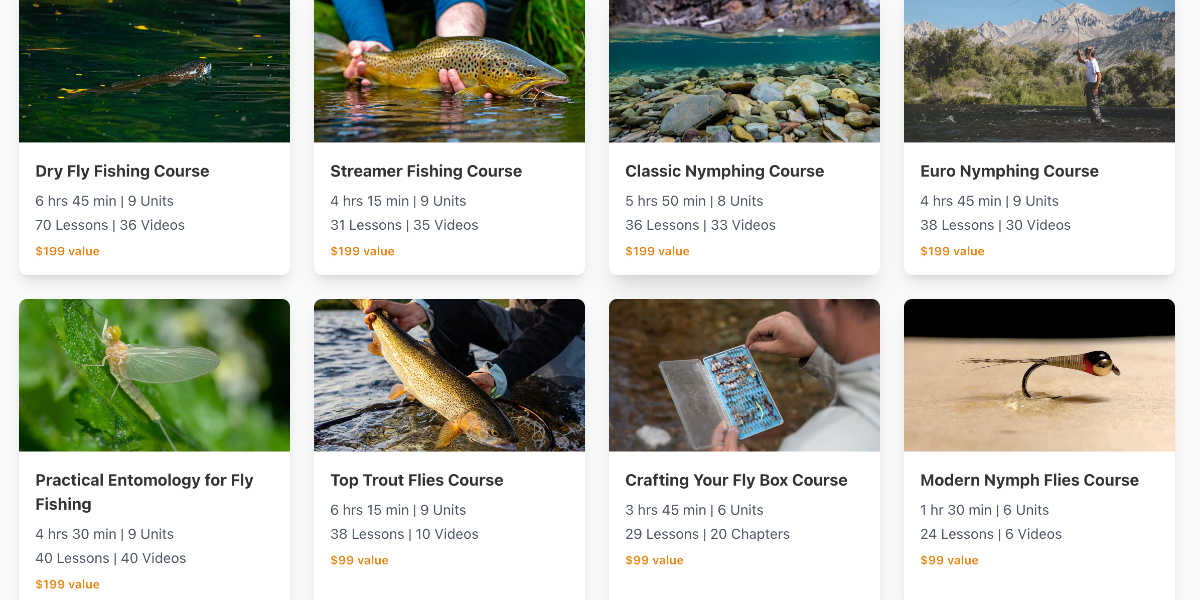
8 Premium Courses
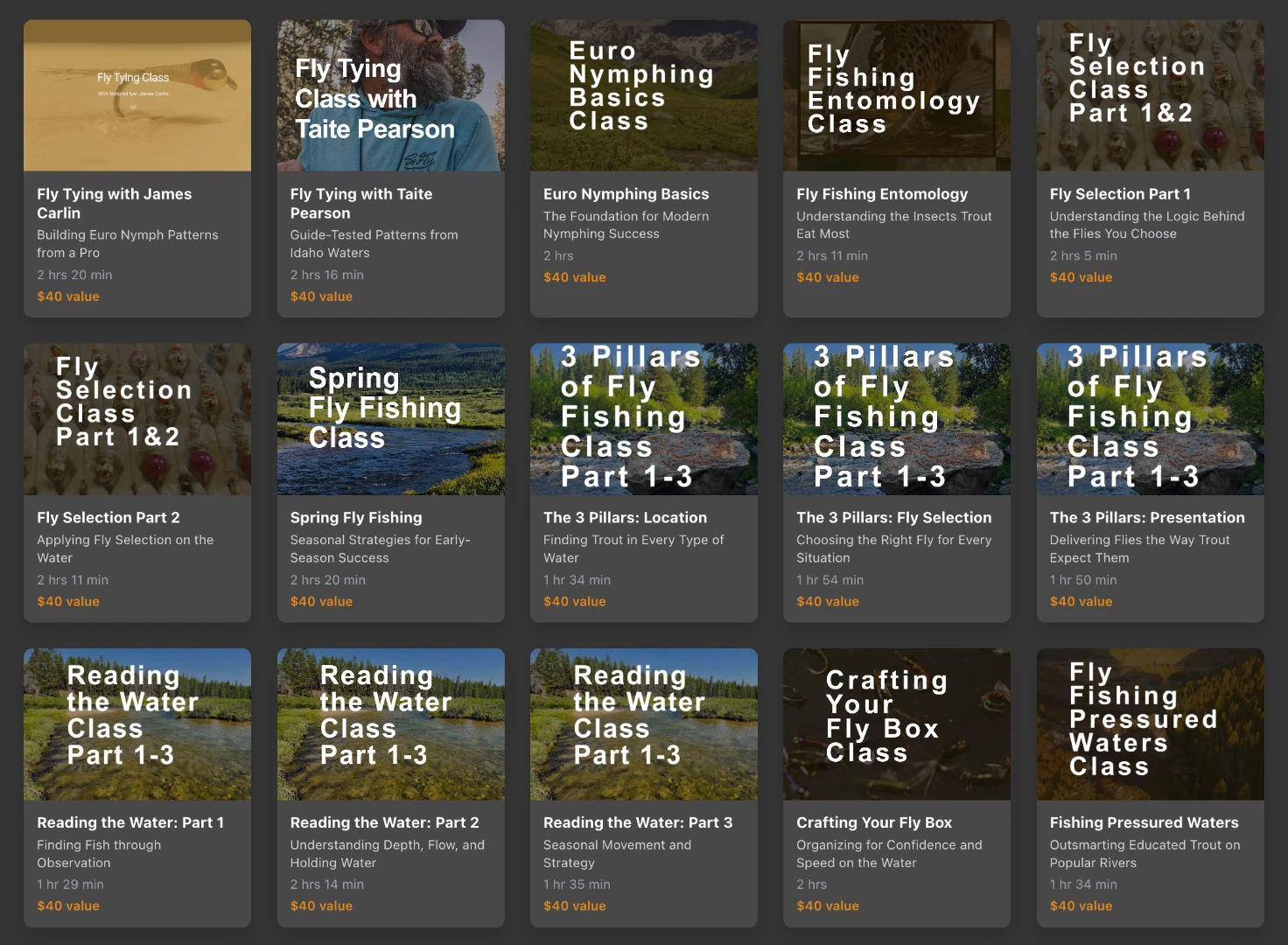
15 Video Classes
1-2hr Power Classes on Key Subjects and solidify your learnings
6 Streamside Courses
10+ Hours of Fishing to See Our Methods in Action

No Credit Card Required or Auto Renewal
Pillar 2: Fly Selection, What to Fish on Top Across Spring
Fly selection is where most spring dry fly anglers get it wrong. Not because they pick the wrong insect, but because they pick the wrong stage of the right insect.
Here is the priority order for matching the hatch with dry flies: stage first, then size, then color, then profile. A size 18 BWO emerger pattern will outfish a size 18 BWO dun pattern when fish are keyed on emergers, even if the dun is a more “realistic” tie. Getting the stage right is the first and most important decision.
Early Spring Fly Selection
The surface menu in early spring is short: midges and BWOs. That is it. But within those two categories, stage selection makes all the difference.
Midge dries and cluster patterns (#18 to #22) are the primary surface opportunity. Griffith’s Gnats, Smokejumpers, and similar patterns that sit in or just below the film work well. Fish are keyed on these during afternoon warming windows when midge activity peaks.
BWO duns and emergers (#18 to #22) are the classic early spring dry fly. Carry both dun and emerger versions, because fish often prefer emergers stuck in the film over fully hatched adults. If you see fish rising but cannot see what they are eating, they are almost certainly eating emergers. A Parachute BWO or Foam-Wing BWO in olive covers the dun stage. A Barr’s Flashback Emerger or BWO Loop-Wing Emerger covers the emerger stage.
Sparse, low-riding patterns that sit flush in the film tend to outperform bushy, high-floating dries in the slow, clear water of early spring. Start small and scale up. A large fly slapping calm early spring water will spook fish and eliminate the opportunity to downsize.
If you want a ready-made selection that covers both BWO and general mayfly situations in spring, our BWO & Adams Fly Assortment is built around exactly these patterns in the sizes and stages that matter most.
Mid Spring Fly Selection
Mid spring is when the dry fly box starts earning its keep. The menu expands, and so do your options.
Caddis dries (#14 to #18) become a major player. Elk Hair Caddis, CDC Caddis, and Sparkle Caddis patterns all produce. Carry both dead-drift and skittering-style caddis, because caddis behavior on the water ranges from sitting still to sputtering across the surface. Our Caddis Fly Fishing Assortment covers the full lifecycle from larva through adult, which matters because fish often eat caddis emergers just as aggressively as adults.
BWOs continue, and PMD duns and emergers (#16 to #20) may begin appearing depending on your water and region. PMDs are yellow-bodied mayflies that produce some of the best mid-to-late spring dry fly fishing in many western watersheds.
Searching patterns become viable. A Parachute Adams in #14 to #18 covers a lot of ground when multiple insects are active simultaneously. When you are not sure what fish are eating, an impressionistic pattern like the Adams lets the fish decide what it looks like.
Double dry rigs shine in mid spring. When both caddis and mayflies are active, rig one of each to let the fish tell you what they prefer. Put the mayfly pattern as the lead fly and the caddis as the trailer. Caddis naturally skitter, so the trailing position allows you to add movement at the end of the drift without dragging the lead fly.
For broader mayfly coverage across the stages and species that show up from mid spring onward, the Mayfly Assortment covers nymphs, emergers, dries, and spinners with seasonally relevant patterns.
Late Spring Fly Selection
Late spring is big-fly season.
Stonefly dries (#6 to #10) match the large adults falling from bankside vegetation. Salmonfly patterns, golden stone dries, and Stimulators are the workhorses. These are the biggest dry flies of the spring season, and fish eat them with authority. Our Stonefly Assortment covers both nymph and adult stages of golden stones and salmonflies, which is important because stonefly nymph activity ramps up well before the adults appear.
Green drake dries (#8 to #12) where applicable offer another large-profile opportunity. Yellow sally patterns (#14 to #16) provide a smaller stonefly option that can be effective throughout the day.
Early terrestrials begin appearing. Carry a few ants and beetles in #14 to #18 as an exploratory option. You may not need them, but when a fish refuses every aquatic imitation and eats a small ant, you will be glad you had one.
Attractor dries earn their place in late spring. Stimulators, humpies, and chubby-style foam flies work when fish are feeding aggressively and water is off-color. Exact imitation matters less when visibility is reduced.
When the water is too high or dirty for dries: put the dry fly box away and switch techniques. This is not a failure. This is good decision-making.
The Four Dry Fly Categories Applied to Spring
Understanding which category of dry fly to reach for saves time on the water:
- Imitative dries: For selective fish during active hatches. Match the specific insect in stage, size, and color. Primary tool in early and mid spring when water is clear and fish are picky.
- Impressionistic dries: When multiple insects are active or you are not sure what fish are eating. Parachute Adams, Comparaduns. The mid spring workhorse.
- Searching dries: General patterns that could pass for several insects. Useful when prospecting water with no visible rises. Mid to late spring.
- Attractor dries: Big, visible, reaction-provoking patterns. Stimulators, foam flies. Late spring, off-color water, aggressive fish.
Pillar 3: Presentation, How to Fish Dries Across Spring
A drag-free drift is the single most important element of dry fly presentation. A generic fly presented with a proper drag-free drift will outperform an exact imitation cast sloppily. This is not a suggestion. It is the foundational rule.
In nymphing, the primary presentation challenge is depth. In dry fly fishing, it is drag management and landing softness. Everything in your presentation should serve those two goals.
Gear and Rigging
Rod selection: A slower-action rod produces softer landings and protects light tippet. A 3-weight or 4-weight is ideal for small flies and spooky fish in early spring. Step up to a 5-weight for longer casts, wind, and larger late spring patterns.
Leader construction: The compound taper leader for dry flies uses a thinner butt section (0.015 inches) than conventional leaders. This reduces turnover energy and builds slack into the cast. Start with 15-pound monofilament at 0.015 inches diameter for the butt, stepping down through 12-pound, 10-pound, and 8-pound sections before reaching your tippet.
Tippet selection:
- Early spring small flies (#18 to #22): 5X to 6X
- Mid spring (#14 to #18): 4X to 5X
- Late spring large patterns (#6 to #12): 3X to 4X
Leader length: Longer leaders (12 to 14 feet) for pressured fish in clear, slow water. Standard 9-foot leaders work for pocket water and faster runs. If you cannot cast a 14-foot leader cleanly, use the longest leader you can turn over effectively. A bad cast with a long leader is worse than a good cast with a shorter one.
Fly Fishing Entomology
Fish With Confidence
Master the 13 key trout foods and
never guess which fly to use again
- 8 Lessons, 100+ pages
- Learn to identify any insect stage and category
- Match it to any fly in your box
- Works for any river and region trout live
- Lifetime access & coupons for over $225 in savings
- Detailed Regionalized Hatch Charts
Early Spring Presentation
Soft, delicate landings are critical. Calm, clear water magnifies every mistake.
Build slack into the cast itself. Execute a standard cast, stop the rod, let the leader turn over in the air, then drop the rod tip as the fly and leader begin to fall. This creates S-curves in the tippet that provide drag-free drift before the current has a chance to grab your line.
Minimize false casts over the target. Each pass risks spooking fish in clear water. Fish upstream to rising fish, positioning yourself below and to the side of the feeding lane. Keep drifts short and precise rather than long and sweeping.
Key point: In early spring, you are fishing to individual rising fish in specific feeding lanes. This is precision work, not water coverage.
Mid Spring Presentation
As water picks up speed and color, presentation can be slightly less delicate. Fish become more forgiving as their metabolism increases and more food is available.
The reach cast becomes essential. Cast across current and reach the rod upstream to extend the drag-free drift window. Combined with a longer leader, this significantly extends drift quality over complex currents.
When fishing caddis patterns, allow intentional movement at the end of the drift. Skitter, twitch, or skate the fly to imitate natural caddis behavior. This is one of the few times drag can work in your favor. Caddis are active insects, and fish expect them to move.
Two-fly rigs require more casting energy. Adjust your stroke and be deliberate about presentation rather than just lobbing two flies out. A sloppy two-fly cast is worse than a clean single-fly cast.
Late Spring Presentation
Larger flies land with more splash. This is acceptable and even desirable when imitating stoneflies crashing onto the water. Fish in stonefly mode expect a splashy entry.
In fast, turbulent water, use high-floating, buoyant patterns you can track visually. If you cannot see your fly, you cannot detect strikes.
When fishing banks during stonefly activity, land the fly as tight to the bank as possible. Within inches. Stonefly adults fall from vegetation directly into the bank-water interface, and fish set up right along the edge waiting for them.
In off-color water, upsize flies for visibility. A #16 midge is invisible in stained water, both to you and to the fish. A #10 Stimulator gives both of you something to work with.
Dry Fly Maintenance on the Water
This is the practical skill that separates anglers who fish dries effectively from those who spend half the day fighting a sinking fly.
After catching a fish, the fly absorbs significant moisture and must be restored:
- Squeeze the fly against your shirt or pant leg to wring out bulk moisture
- Apply desiccant powder to draw out remaining water from fibers and hackle
- Brush out the fibers to restore the fly’s profile and flotation
Reapply desiccant every several drifts as needed. False cast between spots to air-dry flies while moving between positions.
Signs the fly needs maintenance: sitting on its side, not flipping upright on landing, hair body wicking water, or the fly riding lower in the film than it should.
When a fly will not float despite treatment: swap it out. Keep backup patterns ready. Fighting a waterlogged fly wastes time you could spend fishing.
Should You Fish Dries Today? A Decision Framework
Before you rig up a dry fly, run through this quick assessment:
- What phase of spring are you in? Early spring means narrow windows. Mid spring means expanding opportunity. Late spring means reading conditions carefully.
- Are fish visibly rising? If yes, fish dries. If no, move to step 3.
- Do conditions support a hatch? Consider time of day, cloud cover, water temperature, and seasonal phase. Overcast afternoons in early spring are prime midge and BWO windows. Warm evenings in mid spring favor caddis. If conditions look favorable, prospect with searching or attractor dries.
- Is the water fishable for dries? If the water is too high, too fast, or too muddy, surface fishing will not be productive. Fish subsurface and be ready to switch when conditions change.
- If you start fishing dries and nothing happens after 30 minutes of good conditions: reassess. The hatch may not materialize, or fish may be feeding subsurface on emergers rather than adults.
This is not a flowchart to memorize. It is a way of thinking that becomes automatic with practice.
The Diagnostic Sequence: When Fish Rise but Refuse Your Fly
This is the moment that defines dry fly fishing. Fish are eating on the surface. You can see them. Your fly is in the right zone. And they will not touch it.
Work through this sequence before you break a rod over your knee:
- Change size first. Downsize before upsizing. Going one size smaller solves the problem roughly 90% of the time when the insect category is correct.
- Change stage. Switch from dun to emerger, or emerger to dun. If fish are rising but you cannot see what they are eating, they are almost certainly eating emergers.
- Change insect category. Switch from mayfly to caddis, or caddis to stonefly. Multiple insects are often active simultaneously, and fish may be keyed on something you have not identified yet.
- Try a trailing nymph behind the dry. Sometimes fish are feeding just below the surface, and a small unweighted nymph dropped 12 to 18 inches behind your dry fly picks up fish that refuse the surface pattern.
- Try an attractor pattern as a last resort. A small ant, a purple-bodied Adams, or something the fish have not seen can occasionally jar a stubborn fish into eating.
The pattern recognition rule: One fish on a dry is encouraging. Two fish confirms the pattern is working. Three fish means you have figured it out. Now refine and ride it.
If you want the full system for reading hatches, selecting flies, and presenting dries with confidence, our Dry Fly Fishing Course covers every piece of this in detail, from entomology through advanced presentation techniques.
Gear and Fly Box Checklist for Spring Dry Fly Fishing
Rod: 3-weight to 5-weight depending on conditions and fly size. Slower action preferred for delicacy in early spring. Step up in weight for late spring wind and larger flies.
Reel: Matched to rod weight with smooth drag for light tippet protection.
Leader: Compound taper dry fly leaders in 9-foot and 12-foot lengths. Extra tippet spools in 4X, 5X, and 6X.
Dry fly box contents by phase:
- Early spring: Midge dries, midge clusters, BWO duns, BWO emergers, CDC patterns, Smokejumpers (#18 to #22)
- Mid spring: Add caddis dries (Elk Hair Caddis, Sparkle Caddis, CDC Caddis), PMD duns and emergers, Parachute Adams in multiple sizes (#14 to #20)
- Late spring: Add stonefly dries (salmonfly, golden stone), Stimulators, green drakes, yellow sallies, early terrestrials (ants, beetles), foam attractors (#6 to #16)
Accessories: Desiccant powder, floatant (paste or liquid for pre-treatment), nippers, fine-point forceps, bug seine, magnifying lens for small flies.
Apparel: Layering system for variable spring weather. Rain gear accessible. Polarized sunglasses for spotting rises and reading water. Mountain temperatures can swing 20 to 30 degrees within a single day, so carry an insulating layer even on warm mornings.
Your Next Trip Plan: Three Things to Try This Weekend
Spring dry fly fishing rewards the angler who reads conditions, matches the seasonal phase, and adapts across all three pillars. The progression from narrow early spring midge windows to explosive late spring stonefly action is one of the most satisfying arcs in fly fishing.
Here are three specific things to focus on the next time you hit the water:
-
Spend the first 10 minutes watching, not casting. Scan for rise forms. Check the air for insects. Flip a rock or two. Seine the water if you have one. Let the river tell you what is happening before you decide what to throw. This single habit will improve your dry fly fishing more than any new pattern or technique.
-
Carry emerger patterns for every dry fly insect you expect to encounter. If you have BWO duns, make sure you also have BWO emergers. If you have caddis dries, carry caddis emergers. When fish are rising and refusing your dun, the emerger is usually the answer. Stage is the most common fly selection mistake in spring dry fly fishing, and it is the easiest one to fix.
-
Practice the stop-and-drop cast. On your next outing, make five casts where you deliberately stop the rod, let the leader turn over, and drop the tip to create slack in the tippet before the fly lands. Watch how the fly drifts compared to your normal cast. The difference in drag-free drift time is often dramatic, and it is the single fastest way to improve your dry fly presentation.
Knowing when to fish dries and when not to is as important as knowing how. That honesty with yourself about conditions is what turns a spring of frustration into a spring of memorable fish.
This guide is one of four in our spring fly fishing series. If you’re looking for the complete picture, check out all of our guides below.
Trout University
The Best Way to Master Fly Fishing for Trout
Everything you need to learn how to fly fish for trout.
From fly selection to presentation and location, all in one place.
8 Premium Courses
15 Video Classes
1-2hr Power Classes on Key Subjects and solidify your learnings
6 Streamside Courses
10+ Hours of Fishing to See Our Methods in Action
No Credit Card Required or Auto Renewal
