
Streamer Fishing Guide – Spring Fly Fishing
A 3-Phase Approach to Spring Streamer Fishing
If you’ve been throwing streamers in spring and getting inconsistent results, you’re not alone. Streamer fishing is the technique most likely to produce the biggest trout of the season, but it’s also the most misunderstood method in the fly angler’s toolkit. Most anglers either fish streamers the same way all spring long or abandon them too quickly when the first hour doesn’t produce.
Here’s the reality: spring streamer fishing is condition-dependent. When conditions align, 40 to 50 fish days are genuinely possible. When they don’t, you might catch one or two fish per hour of focused effort. The skill isn’t just in the cast or the fly. It’s in reading the phase of spring you’re in, choosing the right water, and discovering the retrieve that fish want on that specific day.
Spring isn’t one season. It’s three distinct phases, each with different water conditions, fish behavior, and streamer opportunities. And your success with streamers depends on three pillars: Location, Fly Selection, and Presentation. This guide walks through all of it so you can fish streamers with intention instead of guesswork.
If you want to go deeper on streamer techniques, water reading, and advanced tactics, Trout University VIP gives you access to our full library of courses and guides.
Before we dive into the details, here’s the complete picture at a glance. Scan this checklist, then read the deep dives below for the nuance that makes each point work on the water.
- Recognize your spring phase. Early spring (clear, cold, low water) demands small, slow presentations. Mid spring (warming water, increasing flows, slight color) opens up aggressive streamer fishing. Late spring (off-color, high flows, pre/post-spawn) is prime time for big articulated patterns.
- Think like a predator, not a feeder. Streamer water is transition water. Look for changes in depth, light, current speed, and clarity. Those edges are where big trout ambush prey.
- Profile and color beat pattern and size. The two biggest variables in spring streamer fishing are the fly’s silhouette and its color. Minor size differences between hook sizes rarely decide the day.
- Change flies every 20 minutes if nothing is happening. Adjust profile and color first. Don’t force the same look for an hour.
- Retrieve is discovered, not predetermined. Change speed, pause length, cadence, and direction until fish tell you what they want. A follow lasting 10 or more seconds means you’re in the right zone.
- Fish lower-light windows seriously. Cloud cover, early morning, and late evening transitions amplify predatory behavior. These windows matter more than fishing pressure.
- Cover water. Streamer fishing is an opportunity game. More water covered equals more fish found, more transitions encountered, more reactions triggered.
- Know when to commit and when to switch. Streamers are always viable, but on days when fish are locked into insect feeding, nymphs and dries will outperform. Reading that distinction is part of the skill.
Now let’s break down the three pillars across all three spring phases.
The Three Phases of Spring Through a Streamer Lens
Understanding which phase of spring you’re fishing changes everything about your streamer approach.
Early spring closely resembles late winter. Water is clear and low. Fish are still in conservation mode, holding in deeper, slower water and not yet willing to chase aggressively. Streamer success is lower overall during this phase. Smaller streamers fished slowly tend to outperform large, aggressive presentations. Your best windows are low-light transitions: early morning, late evening, and heavy cloud cover.
Mid spring is where streamer fishing starts to compete with nymphing. Water temperatures are climbing, flows are increasing, and slight color changes begin appearing. Fish shift from survival mode into active feeding mode, spreading into runs, seams, and pocket water. Baitfish become more active. Transition moments like weather fronts and light changes create predatory windows that weren’t available a few weeks earlier.
Late spring is prime streamer territory. Off-color water from runoff, increased flows, and pre-spawn or post-spawn behavior all push fish into aggressive, opportunistic feeding. Murky water makes trout more comfortable chasing prey. Large articulated streamers come into their own. Fish are willing to eat bigger meals, and the reduced visibility means they rely more on profile and vibration than fine visual detail.
The key point across all three phases: streamers are always a viable option regardless of conditions. But the real decision is whether streamers are the best use of your day compared to nymphing or dry flies given current insect activity and trout behavior.
| Early Spring | Mid Spring | Late Spring | |
|---|---|---|---|
| Water Conditions | Clear, cold, low flows | Warming, rising flows, slight color | Off-color, high flows, runoff |
| Fish Behavior | Lethargic, holding deep, won’t chase far | Transitioning to active feeding, spreading out | Aggressive, opportunistic, willing to chase |
| Streamer Approach | Small flies, slow presentations, target structure | Mixed sizes, experiment with retrieves, cover transition water | Large articulated patterns, aggressive retrieves, bang the banks |
| Best Windows | Low-light transitions only | Expanding windows, especially cloud cover and fronts | Nearly all day in right conditions |
Location: Think Like a Predator
Streamer fishing is fundamentally different from nymphing when it comes to reading water. You’re not looking for where trout sit and wait for drifting insects. You’re looking for where a large trout would ambush prey.
Streamer Fishing Course
Big Flies – Big Fish
Master the most explosive and exciting way to catch trout
and more with the definitive Streamer Fly Fishing
- 9 Units & 31 Lessons
- 35+ HD Videos
- Learn from Kubie Brown with 25 yrs+ experience
- Master Retrieval Techniques
- Lifetime access & coupons for over $225 in savings
- Advanced Topics for Big Trout
The Core Principle: Transition Water
The biggest key to finding productive streamer water is identifying where one condition shifts into another. Trout are ambush predators. They position themselves where transitions create vulnerability for prey. These transitions include:
- Fast current meeting slow current
- Shallow water dropping into deep water (and vice versa)
- Bright water meeting shaded water
- Structure breaks that interrupt current or visibility
- Stained water edges meeting clearer flow
Reframe how you read the river. Instead of seeing “holes and riffles,” see a series of predatory opportunity zones. Almost any river has these transitions. Your job is to find them and put a streamer through them.
How Location Shifts Across Spring
Early spring: Fish are still concentrated in deeper, slower water. Target the same holding lies you’d nymph, but approach them differently. Focus on structure like boulders, log jams, and undercut banks where large fish feel safe. In cold water, trout won’t move far to chase, so the streamer needs to come to them. Make precise casts tight to cover and let the fly work slowly through the zone.
Mid spring: As water warms and insect activity increases, fish spread into runs, seams, and feeding lanes. Transition water becomes more abundant. Current edges, drop-offs, and mid-river structure all become viable streamer targets. This is when covering water pays off. Streamer fishing is a numbers game of opportunities. The more water you cover, the more fish you find, and the more transitions you encounter.
Late spring: During high water and runoff, fish push tight to banks, into side channels, and behind any structure that breaks the main current. The bank-water interface becomes the primary target. Baitfish get displaced by higher flows and end up in the softer edges, and predatory trout stack up right behind them. Cast as tight to the bank as possible and strip the streamer away from the edge. Give each spot one or two casts and move on. In high water, 90 percent of strikes will come within a few feet of shore.
Boat vs. Wading
Boats allow you to cover dramatically more water and present flies at angles unavailable to wading anglers. On rivers, drifting and stripping along banks is the most efficient way to cover water with streamers. If you’re wading, work systematically through transition water, moving downstream and covering each seam and structure point before advancing.
The Eight-Step Field Framework
Use this decision sequence every time you fish streamers:
- Decide whether to fish streamers. Assess whether fish behavior suggests streamers will compete with dries or nymphs today.
- Look for transition water. Think like a predator. Identify changes in depth, light, current speed, and clarity.
- Fish lower-light windows seriously. Cloud cover, morning, and evening transitions improve odds.
- Treat retrieve as a variable, not a rule. Change speed, pause, cadence, and direction until fish communicate what they want.
- Prioritize profile and color. These usually matter more than small size differences.
- Use articulated flies when movement and big-fish appeal matter most. Use single hooks when simplicity and fish care are the priority.
- Change streamers roughly every 20 minutes if no interest. Keep learning rather than forcing the same look.
- Cover water. Find more fish, more transitions, more reactions.
Fly Selection: Profile and Color Over Pattern Matching
Streamer fly selection is not “matching the hatch” in the traditional sense. Streamers trigger predation, opportunism, territoriality, and movement response rather than imitating a specific insect. The mental model is completely different from choosing a nymph or dry fly.
The two biggest factors are profile and color. Profile is the fly’s identity as seen by the fish: slim baitfish, bulky sculpin, undulating leech. Color is the primary visual trigger. The working rule is dark days call for dark flies and light days call for light flies. That’s a starting point, not a law. Testing and adjustment always take priority.
Early Spring Fly Selection
Small bead-head streamers in sizes 8 through 14 outperform large articulated patterns in clear, cold water. Smaller, more natural-looking profiles get more responses from lethargic fish. Woolly Buggers, Conehead Woolly Buggers, Clouser Minnows, and Zonkers in this size range are workhorses.
These smaller streamers can double as nymphs. Fished on an indicator or euro rig, they effectively imitate sculpins, small baitfish, and leeches. Subdued, natural colors work best in clear water: olive, brown, black, white, and gray.
Mid Spring Fly Selection
As water gains color and fish become more aggressive, begin sizing up. Both small streamers and larger articulated patterns become viable. Carry both and let conditions dictate.
Articulated streamers replicate the S-motion of natural baitfish swimming, which larger trout key in on. Patterns like the Sex Dungeon, Circus Peanut, and Barely Legal move more fish overall and are especially effective for targeting bigger trout. Dark flies (black, brown, rusty olive) for cloudy or dark days. Light flies (olive, white, yellow) for sunny days.
As water clarity drops, flash becomes less effective. Switch to darker silhouettes that create contrast against murky backgrounds.
Late Spring Fly Selection
Large articulated streamers with heavy weight come into their own. Size 2 through 6, double-hook designs with cone heads or sculpin heads. Off-color water means fish rely more on profile and vibration than visual detail. Bulkier patterns that push water get more attention.
Dark silhouettes dominate in murky water because they create the strongest contrast. Patterns like the Dolly Llama, Sculpzilla, and Junkyard Dog are built for these conditions.
Topwater streamers like mouse patterns and poppers become viable in slower sections and during low-light windows. Slim-profile topwater flies tend to combine aggressive strikes with feeding responses better than large, bulky surface patterns.
The Trailer Trick
A streamer with a small nymph trailer is one of the most effective spring rigs. Tie a size 12 to 14 Pheasant Tail Nymph on 16 to 20 inches of tippet behind the streamer. The streamer draws attention and the nymph gets eaten by fish that follow but won’t commit to the larger fly. This rig is especially productive in mid spring when fish are transitioning between modes.
Articulated vs. Single Hook
Articulated flies shine when movement and big-fish appeal matter most. The S-motion signature is the key advantage. They move more water, create more visual presence, and trigger more aggressive responses.
Single-hook patterns win when simplicity, fish care, and smaller presentations are the priority. They’re easier to cast, less likely to foul, and cause less damage during catch and release.
Both have a place in the spring streamer box. In our experience at The Catch and The Hatch, carrying a mix of both gives you the flexibility to match whatever the day demands.
Streamer Pattern Selector by Spring Phase
- Early Spring: Woolly Bugger (#8-12), Zonker (#8-12), Clouser Minnow (#8-12), Sparkle Minnow (#10-14). Colors: olive, brown, black, white.
- Mid Spring: Sex Dungeon (#4-8), Circus Peanut (#4-8), Woolly Bugger (#6-10), Slumpbuster (#6-10). Colors: black, olive, brown, white, yellow.
- Late Spring: Dolly Llama (#2-6), Sculpzilla (#2-6), Junkyard Dog (#2-6), Game Changer (#2-6), Mouse patterns. Colors: black, dark olive, brown, chartreuse.
Presentation: Where Most Anglers Fail
Streamer presentation is where the majority of spring streamer fishing breaks down. The fly itself is rarely the problem. The retrieve is.
This is worth repeating: streamer failure is usually retrieve failure, not fly failure. If you’re not catching fish on streamers, the first thing to change is how you’re moving the fly, not which fly you’re throwing.
Retrieve is not fixed. It is discovered. Treat it as a variable and change speed, pause length, cadence, twitch intensity, drift phase, and swing phase until fish communicate what they want. A follow lasting 10 or more seconds indicates the retrieve is in the right zone. Refine from there rather than changing everything.
Trout University
The Best Way to Master Fly Fishing for Trout
Everything you need to learn how to fly fish for trout.
From fly selection to presentation and location, all in one place.
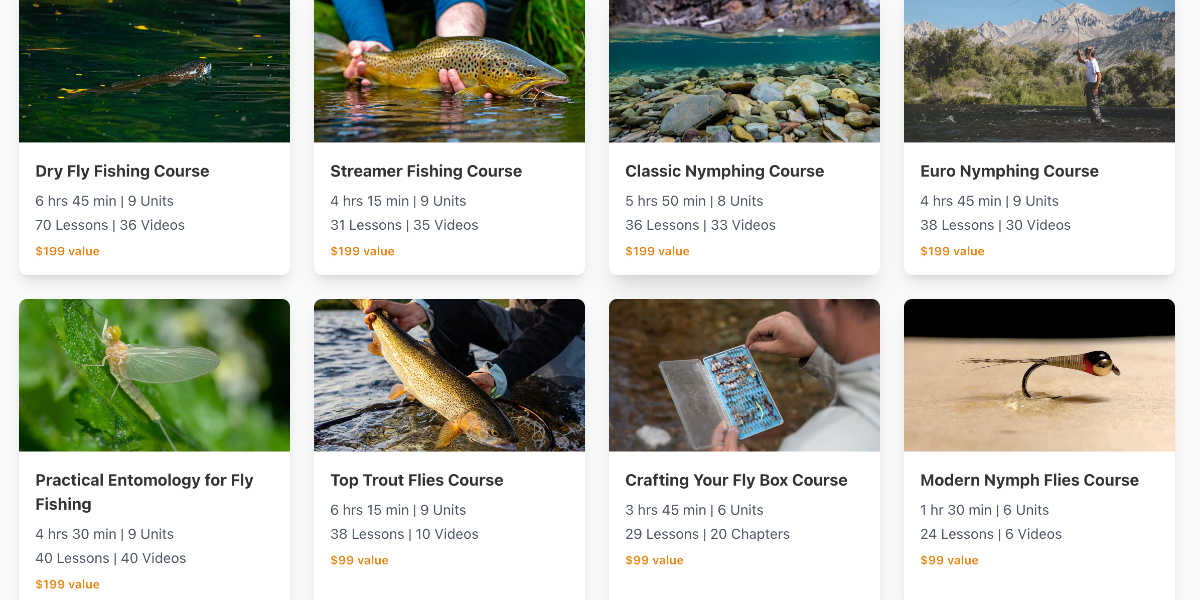
8 Premium Courses
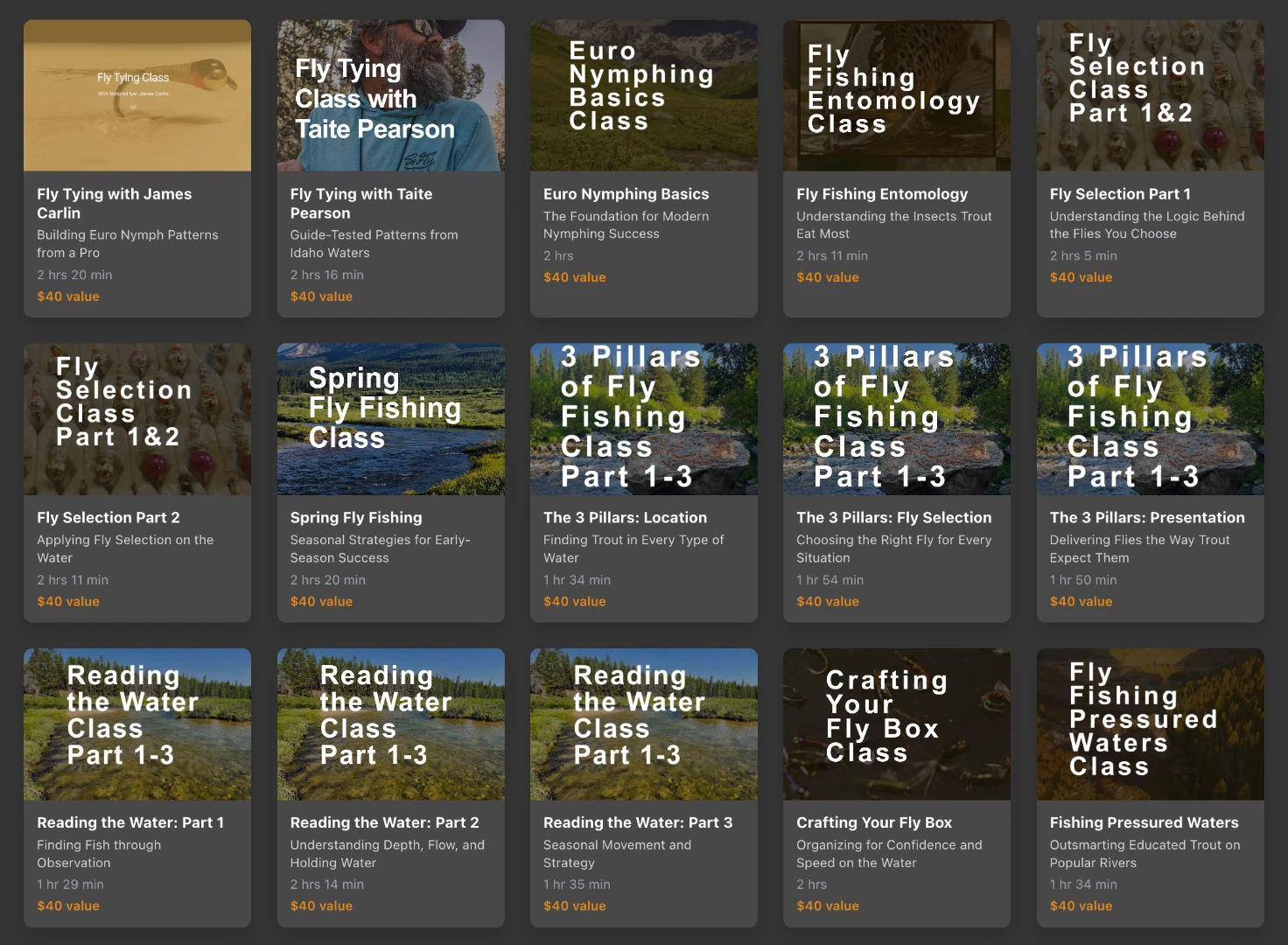
15 Video Classes
1-2hr Power Classes on Key Subjects and solidify your learnings
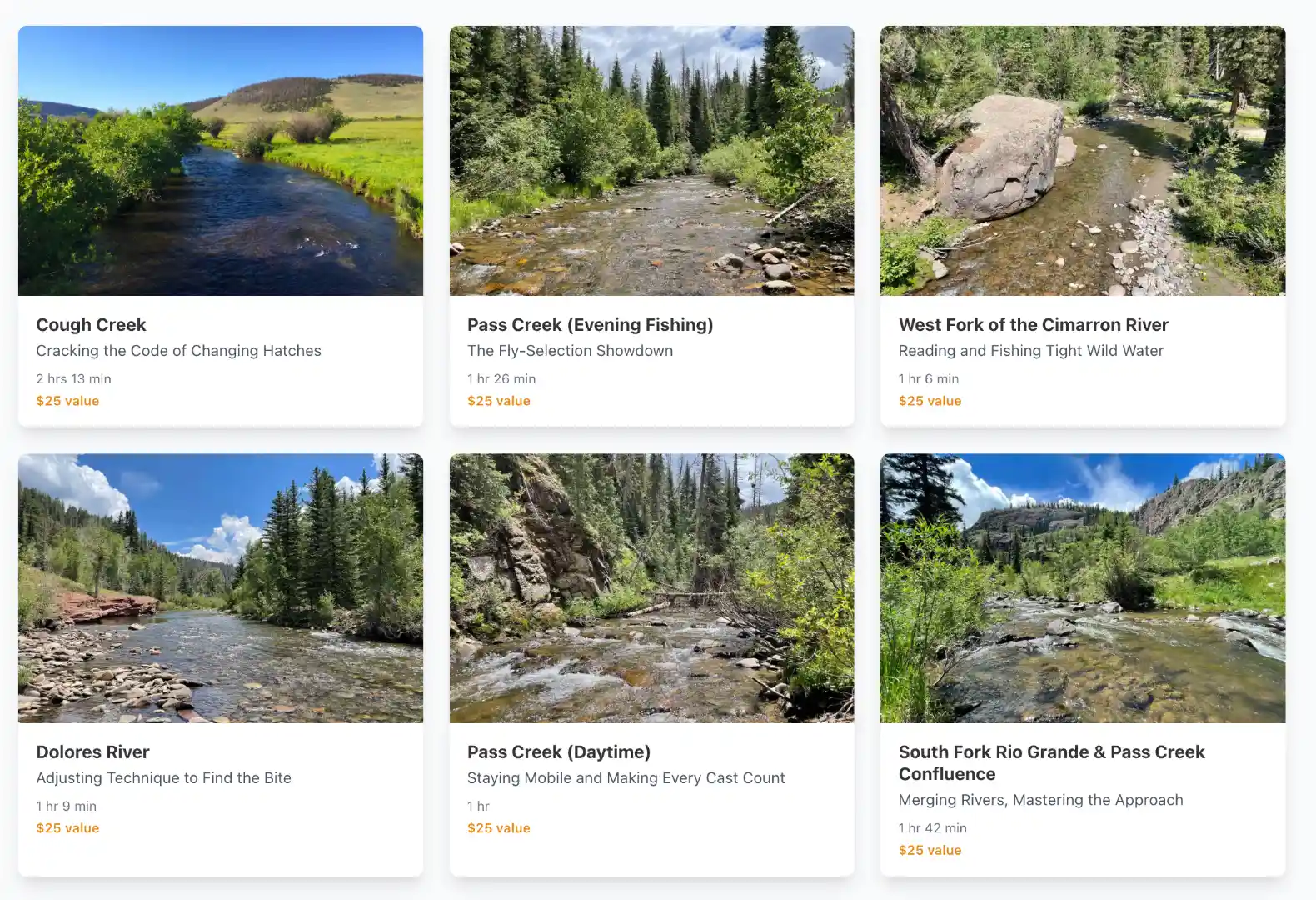
6 Streamside Courses
10+ Hours of Fishing to See Our Methods in Action
Gear and Rigging Essentials
Knot: Use a non-slip mono loop knot so the streamer has freedom to move and swim naturally.
Leader length: 4 to 6 feet is standard. As short as 4 feet in off-color water where fish can’t see the line.
Tippet: 0X to 3X. Trout chasing streamers are not making delicate inspection decisions. They’re charging out to kill something. Spring conditions (higher, faster, off-colored water) allow heavier tippet because fish are more forgiving regarding drag and line visibility.
Line selection: A floating line gives you versatility to switch between streamers, nymphs, and dries. A sink-tip line (1 to 3 inches per second sink rate, with the first 20 to 30 feet sinking) is the dedicated streamer choice for getting the fly down and maintaining better depth control. Full sinking lines are generally unnecessary on rivers and are reserved for deep stillwater situations.
Core Retrieve Techniques
Stripping is the most common technique. Vary strip length (short, long, erratic, controlled), speed, and pause duration. The biggest mistake is getting locked into one rhythm. If you’ve been stripping the same way for 15 minutes with no response, change something.
The jerk strip moves the fly with the rod tip, not the stripping hand. The strip recovers slack while the rod tip provides animation. This produces sharper, more lifelike movement than hand stripping alone. Baseline movement is roughly 12 inches per jerk, 6 inches for twitches.
Swinging involves casting at roughly 45 degrees downstream and letting the fly arc across the current. It’s effective for covering water systematically. Add rod tip pulses during the swing for extra action. When the fly reaches the hang-down position directly below you, pulse the rod tip several times or pull the line upstream and let it drop back. These actions trigger strikes from trout that have followed the streamer across the river.
Dead drifting lets the streamer drift naturally like a dead or dying baitfish. This is especially effective in cold early spring water when fish won’t chase. It can be fished under an indicator or on a tight line.
The Struggling Streamer Technique
This deserves its own callout because it’s one of the most effective and underused spring streamer presentations.
Position yourself above a run. Cast downstream and feed line to let the streamer dead-drift down through the target zone. Then use mends to slide the fly slowly back and forth across the current. Mend left, let the current push the fly right. Mend right, let it drift back left. The fly spends extended time in the fish’s field of view, moving slowly and vulnerably with repeated direction changes.
This technique works because it keeps the streamer in the strike zone for far longer than a standard strip-and-recast approach. Eventually, a trout’s willpower breaks down. You can cover an entire hole in roughly 20 minutes without casting more than once after the initial cast. It excels in early spring when fish are sluggish and in mid spring when you’ve found a productive run but standard retrieves aren’t closing the deal.
Presentation by Spring Phase
Early spring: Slow down. Cold-water fish won’t chase fast-moving streamers. Dead drift and slow strip are the primary retrieves. Let the fly sink and drift naturally before adding movement. Fish streamers like nymphs: on an indicator or euro rig, jigging small streamers through deep runs and along structure. The struggling streamer technique excels here because it keeps the fly in the strike zone for extended periods without requiring the fish to chase.
Mid spring: Increase retrieve speed and aggression as water warms and fish become more active. Experiment constantly. If one retrieve isn’t producing after 15 to 20 minutes, change it. Stripping and swinging become primary techniques. Mix in pauses and direction changes to trigger following fish. When fish follow but won’t commit, slow down, add a pause, and give them more time to inspect. A small twitch after a pause often closes the deal.
Late spring: Aggressive retrieves match aggressive fish. Fast strips, sharp jerks, erratic movement. In off-color water, the streamer needs to move water and create vibration because fish are locating prey by feel as much as sight. Bank-oriented presentations dominate: cast tight to the bank and strip the streamer away from the edge, imitating baitfish fleeing from cover. Give each spot one or two casts and move on.
Hook Sets
When stripping streamers, use a strip set, not a trout set. Keep the rod tip down and increase the force and length of your strips until you’re tight to the fish. Large trout often attempt to stun their prey before consuming it, so lifting the rod immediately can yank the fly away before the fish has fully committed.
When a trout takes a swung streamer, resist setting too quickly. Offer a small loop of slack in your rod hand. When you feel the strike, drop the loop and let the fish turn and run with the fly. The hook catches perfectly in the corner of the mouth when the line comes tight.
Night Fishing: The Late Spring Trophy Opportunity
The largest trout in any water are almost always nocturnal. Casting a streamer after dark in late spring may be your best chance at a trophy. Large brown trout become increasingly nocturnal as they grow older and larger, and fishing late, up to and after dark where legal, is highly relevant for trophy hunting.
Fish only water you know well. Always fish with a partner. Carry powerful flashlights for moving but keep light off the water. Fish by sound and feel. Be more methodical, slower, and more calculated than during daylight. Topwater and bulky patterns that move water are most effective because they create attention through vibration and splash.
Common Spring Streamer Mistakes
Mistake 1: Fishing the same retrieve all day. The retrieve that worked at 9 AM may not work at noon. Treat every session as an experiment. Change speed, pause, and cadence regularly.
Mistake 2: Only fishing deep holes. Many anglers cast into the deepest, darkest water and ignore everything else. Trout are ambush predators, not open-water chasers. Transition water, banks, structure edges, and drop-offs often produce more fish than the center of a deep pool.
Mistake 3: Forcing streamers when conditions don’t support them. If fish are dialed into a heavy midge hatch and rising consistently, switching to a nymph or dry fly is the smarter play. Knowing when to commit to streamers and when to switch is part of the skill.
Mistake 4: Not changing flies often enough. If 20 minutes pass with no interest, change the streamer. Adjust profile and color first. Don’t spend an hour throwing the same pattern into unresponsive water.
Mistake 5: Setting the hook too fast on topwater takes. The explosive surface strike is often the trout trying to stun its prey. Wait until you feel the weight of the fish before setting.
Putting It All Together
Before you head to the water, run through this diagnostic sequence:
- Check conditions. Flows, weather, seasonal phase. Do conditions favor streamers (off-color water, transition weather, low light, pre/post-spawn timing)?
- Decide whether to commit. Streamers are always an option, but the real question is whether they’re the best use of the day. On days when fish are locked into insect feeding, nymphs and dries will often outperform.
- Choose your water. Think transition zones, not just deep holes. Match your location strategy to the spring phase.
- Select your flies. Profile and color first. Match the phase: small and natural for early spring, mixed for mid spring, large and dark for late spring.
- Discover the retrieve. Start with a reasonable guess based on water temperature and fish activity, then adjust every 15 to 20 minutes until you find what works.
- Cover water. Don’t camp on one spot. Move, cast, experiment, repeat.
40 to 50 Fish Day Conditions: These exceptional days happen when multiple factors align. Off-color water with rising flows. Active baitfish. Pre-spawn or post-spawn aggression. Overcast skies with stable barometric pressure. Warming water temperatures pushing fish into feeding mode. When you recognize these conditions converging, commit fully to streamers and cover as much water as possible.
Spring Streamer Gear Checklist
- Rod: 6-weight or 7-weight, 9 feet. A 7-weight handles large articulated flies and tandem rigs more comfortably.
- Reel: Mid-arbor or large-arbor with a smooth drag. You’ll need it when a big fish runs.
- Lines: Floating line for versatility. Sink-tip (1 to 3 inches per second) for dedicated streamer days. Consider a spare spool.
- Leader: 4 to 6 feet, 0X to 3X. Shorter in off-color water.
- Tippet: 0X to 3X fluorocarbon.
- Fly box by phase: Small naturals (Woolly Buggers, Zonkers, Clousers in #8-14) for early spring. Mixed sizes including articulated patterns (#4-8) for mid spring. Large articulated patterns (#2-6) and topwater flies for late spring.
- Trailer nymphs: Pheasant Tail Nymphs #12-14 for dropper rigs.
- Accessories: Medium to large rubber-mesh net with a longer handle. Multitool or line clippers. Floatant for topwater patterns. Split shot or sink putty for depth adjustment.
If you want the full step-by-step on streamer techniques, water reading, depth control, and advanced tactics like night fishing and stillwater streamer strategies, our Streamer Fishing Course covers all of it in detail with video instruction.
Conclusion: If You Only Remember Three Things
1. Spring streamer fishing is a three-phase game. Early spring demands small flies and slow presentations. Mid spring opens up experimentation. Late spring rewards aggression, big flies, and bank-oriented tactics. Match your approach to the phase.
2. Retrieve failure is the most common reason streamer fishing doesn’t produce. Change your retrieve before you change your fly. Speed, pause, cadence, and direction are all variables to be discovered on the water, not decided at home.
3. Cover water and fish transitions. Streamer fishing is an opportunity game. The more transition water you put your fly through, the more predatory reactions you’ll trigger. Don’t camp on one hole. Move, cast, adjust, and let the fish tell you where they are.
This guide is one of four in our spring fly fishing series. If you’re looking for the complete picture, check out all of our guides below.
Trout University
The Best Way to Master Fly Fishing for Trout
Everything you need to learn how to fly fish for trout.
From fly selection to presentation and location, all in one place.
8 Premium Courses
15 Video Classes
1-2hr Power Classes on Key Subjects and solidify your learnings
6 Streamside Courses
10+ Hours of Fishing to See Our Methods in Action
No Credit Card Required or Auto Renewal
